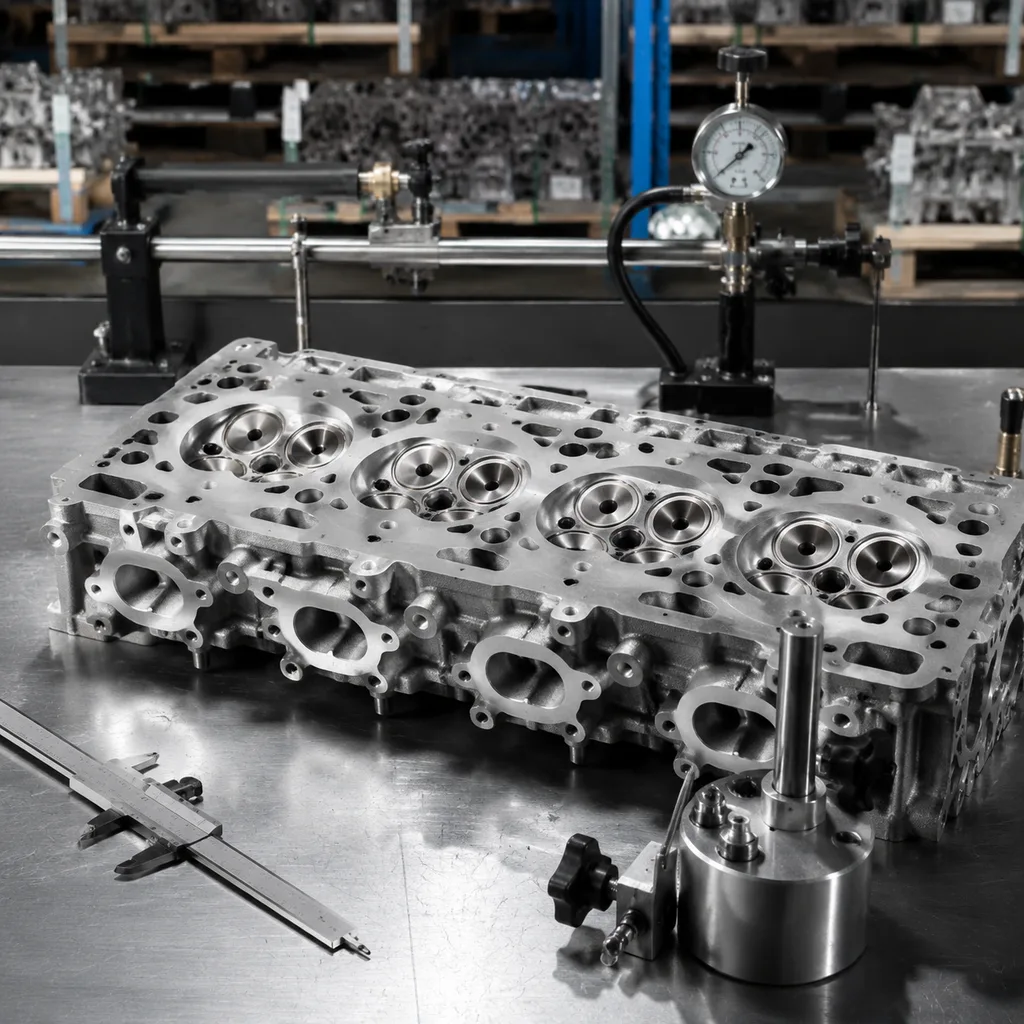
A warped cylinder head is often reported after overheating, coolant loss, repeated head gasket failure, or compression imbalance. For distributors, repair chains, and remanufacturing buyers, the issue is not only technical; it affects warranty screening, supplier selection, and return rates. A cylinder head that appears visually acceptable can still have sealing-face distortion, cam bore misalignment, or localized softening around exhaust bridge areas. These defects may only become clear after pressure testing, flatness measurement, and hardness checks. This article outlines a practical diagnostic path from symptom to cause, then from inspection result to repair or replacement decision. It is written for procurement and technical teams assessing aftermarket supply of new cylinder heads, not for vehicle owners. Driventus is an independent aftermarket manufacturer; brand names are referenced for fitment only.
Typical symptoms and failure patterns
Cylinder head distortion usually follows an abnormal thermal event. Aluminium heads are more sensitive because their thermal expansion rate is higher than cast iron blocks, and clamping load can change quickly when cooling is uneven. A warped cylinder head cylinder head complaint may appear in a warranty file under several descriptions rather than one clear label.
Common field symptoms include:
Coolant pressurisation shortly after cold start
White exhaust vapour after warm-up
Repeated head gasket failure after recent repair
Oil and coolant cross-contamination
Misfire on adjacent cylinders
Combustion gas detected in the coolant circuit
Uneven compression or leak-down results
External coolant seepage at the head gasket line
These symptoms do not prove head distortion by themselves. Similar complaints can come from incorrect bolt torque, poor gasket selection, liner protrusion issues, block deck distortion, cracked castings, or intake-side coolant leaks. For B2B buyers, the important point is to define a repeatable inspection rule before accepting warranty returns or approving replacement stock.
Where a repair chain operates across multiple sites, the same engine family may generate different return conclusions unless inspection steps are standardised. A written process reduces unnecessary scrapping and helps separate installation defects from component defects.
Symptom-to-cause diagnostic table
The table below links common observations to likely causes and inspection actions. It is useful for distributors and technical buyers reviewing returned cylinder heads from workshops or remanufacturing partners.
Observation
Likely technical cause
Inspection action
Procurement implication
Head gasket burned between cylinders
Loss of clamping load, surface distortion, poor finish
</tr></thead><tbody> </tbody></table>Flatness alone is not enough. A head can be resurfaced flat while still having cam bore distortion or reduced material hardness. That is why inspection should cover geometry, pressure integrity, and material condition before reuse is approved.
For catalogue-based sourcing, buyers can review related engine parts in our catalog and narrow enquiries through the engine components category where applicable.
Inspection steps before approving reuse or replacement
A practical inspection sequence should be simple enough for field screening but strict enough to protect warranty performance. Driventus recommends separating visual, dimensional, pressure, and material checks.
Recommended inspection checklist
Record engine code, mileage, failure description, coolant condition, and overheating history.
Remove gasket residue using non-aggressive methods that do not cut into the deck face.
Check for corrosion tracks, fire-ring fretting, bolt-hole distortion, and local erosion.
Measure deck flatness with a calibrated straightedge and feeler gauges, or with a CMM where available.
Inspect surface finish. Many modern multi-layer steel gaskets require a controlled smooth finish, not a visibly rough milled face.
Pressure test coolant passages at a documented pressure and temperature where the test bench allows.
Check camshaft rotation and bore alignment on overhead-cam heads.
Measure head height against specification after any resurfacing operation.
Perform hardness checks on aluminium heads exposed to severe overheating.
Inspection limits vary by engine design, gasket type, and material. Procurement specifications should therefore reference controlled drawings and supplier-agreed limits rather than a single universal value. For production supply, Driventus controls dimensional verification through its IATF 16949:2016 and ISO 9001:2015 certified quality system.
A replacement decision is generally preferred when cracking, severe softening, cam bore misalignment, or excessive machining allowance is found. Resurfacing may be acceptable for minor deck distortion only when the head height and surface finish remain within agreed specification.
What causes distortion in service
Most cylinder head distortion begins with a thermal or clamping-load problem. Procurement teams should consider these root causes when analysing high return rates.
Overheating and coolant loss are the most common triggers. Blocked radiators, failed water pumps, air pockets, thermostat failure, or incorrect coolant mix can create rapid temperature gradients. The deck face may move more than the block, reducing gasket sealing load.
Incorrect installation practice is another frequent cause. Reused torque-to-yield bolts, unclean bolt holes, wrong lubricant on threads, or non-sequential tightening can create uneven clamp force. A new cylinder head can fail quickly if installed against a distorted block deck.
Poor surface preparation can also create repeat failures. Abrasive discs may leave embedded particles or an uneven finish. Excessive roughness can damage gasket coatings; an overly polished surface may reduce gasket grip on some designs.
Combustion abnormality such as detonation or incorrect fuelling can increase local temperature around exhaust valves and fire rings. In turbocharged applications, high exhaust gas temperature increases risk near narrow bridge areas.
For sourcing engineers, the conclusion is clear: a warranty file labelled as warped cylinder head cylinder head should not automatically be assigned to part quality. The return analysis should compare installation evidence, cooling-system condition, and part inspection data.
Replacement cylinder head sourcing criteria
When replacement is required, buyers should specify more than fitment. A cylinder head is a sealing, combustion, cooling, and valvetrain alignment component. Dimensional match and process stability matter.
Key sourcing criteria include:
Material grade and heat-treatment control for aluminium or cast iron castings
Deck flatness and surface finish limits agreed by drawing
Valve seat and guide concentricity checks
Cam bore alignment verification for OHC and DOHC applications
Coolant and oil passage pressure testing
Thread quality for spark plug, injector, sensor, and accessory holes
Compatibility with MLS or composite gasket requirements
Traceability by batch, casting lot, machining date, and inspection record
Packaging protection for deck faces, dowel holes, and machined journals
Environmental and compliance expectations also matter in export supply. Depending on market and customer requirements, documentation may need to address REACH (EC) No 1907/2006 for substances of concern and IMDS-style material data requests from OEM or Tier-1 programmes. Certification to IATF 16949:2016 supports automotive production process discipline, while ISO 9001:2015 supports documented quality management.
For buyers needing private-label, dimensional adaptation, or programme-specific validation, Driventus can support custom manufacturing based on drawings, samples, or agreed inspection plans. Driventus is an independent aftermarket manufacturer; brand names are referenced for fitment only.
How Driventus supports problem reduction
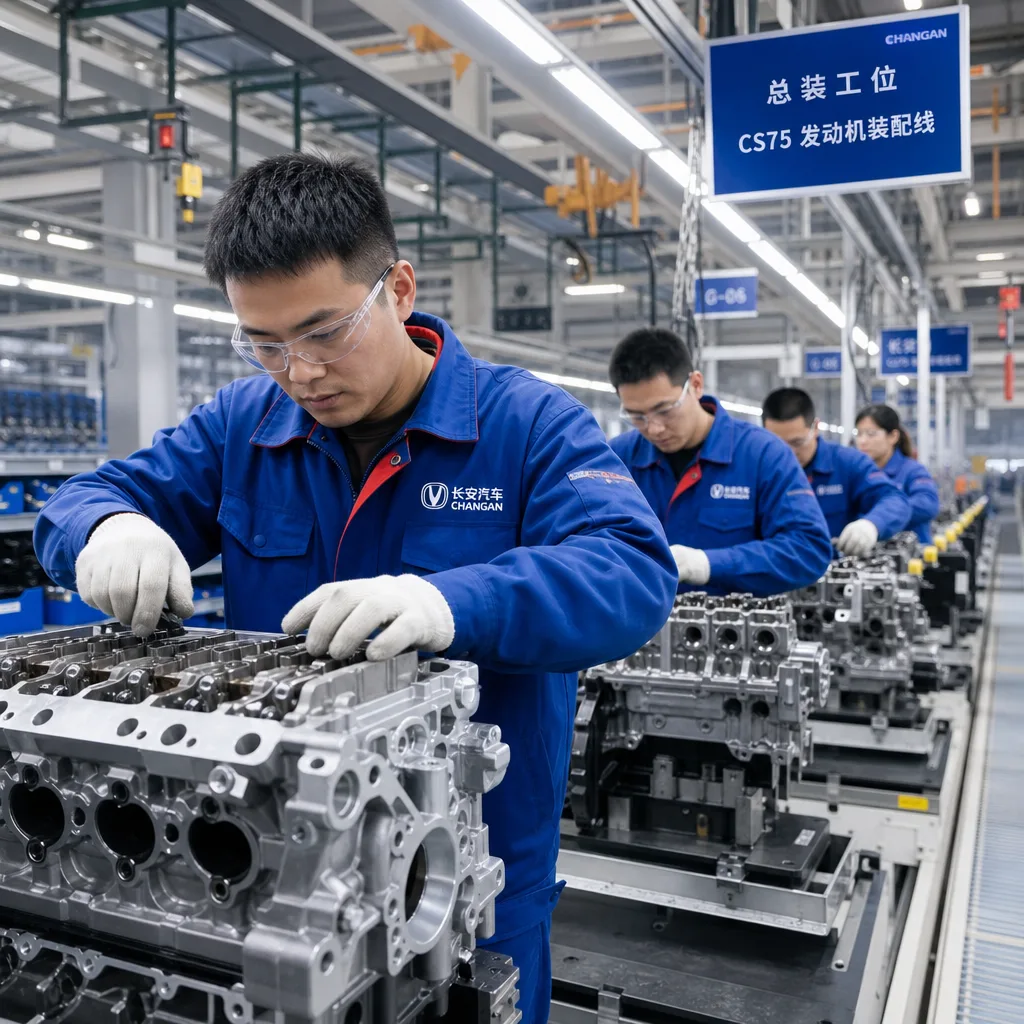
Driventus manufactures engine and powertrain components in Taizhou, Zhejiang, with export supply to more than 60 countries. For cylinder head programmes, the focus is on repeatable casting quality, machining control, pressure integrity, and packaging suitable for international distribution.
A typical B2B supply package can include:
Fitment mapping by engine family and buyer catalogue structure
Sample approval before batch shipment
Dimensional inspection reports for critical features
Pressure test records where specified
Batch traceability and carton labelling to distributor requirements
Export packaging with corrosion and impact protection
Support for warranty analysis using photos, measurements, and return data
For a warped cylinder head cylinder head concern, Driventus can help buyers compare field symptoms with inspection evidence and decide whether the problem is linked to overheating, installation, resurfacing, or component condition. This is especially useful for repair chains and wholesalers handling mixed claims from different workshops.
If an OE part-number cross-reference is required, buyers should provide their own fitment data, such as OE 06A… or OE 11251… references, drawings, or samples. Driventus does not claim approval or endorsement by any vehicle manufacturer. Cross-references are used only to identify fitment and catalogue compatibility.
Frequently asked questions
No. Resurfacing only corrects the deck face. If the casting is cracked, softened by overheating, below minimum height, or has cam bore misalignment, replacement is usually the safer option for warranty control.
Request material control, deck flatness limits, pressure test method, critical dimension reports, batch traceability, packaging details, and certification status such as IATF 16949:2016 and ISO 9001:2015.
Yes. Driventus supports aftermarket distributors, OEM/Tier-1 buyers, and repair chains with catalogue supply or custom manufacturing based on samples, drawings, and agreed inspection plans.
If you are reviewing cylinder head returns or planning a replacement sourcing programme, send Driventus the engine family, annual volume, and inspection requirements. You can [request a quote](/contact.html).