cylinder head · 2026-06-18

Cylinder Head Volvo Wholesale: Sourcing Guide

A cylinder head Volvo wholesale programme fails or succeeds on fitment control, not on catalogue breadth. The hard part is separating similar-looking applications that differ in engine code, casting design, combustion chamber geometry, valve train configuration, deck finish, pressure-test evidence, and packaging consistency across repeat shipments. For Volvo applications, the most common sourcing risks are small dimensional differences between engine variants, inconsistent machining on aftermarket castings, and weak traceability once order volumes increase. Driventus supplies cylinder heads as an independent aftermarket manufacturer based in Taizhou, Zhejiang, exporting to 60+ countries with production aligned to IATF 16949:2016 and ISO 9001:2015. Driventus is not affiliated with Volvo; brand names are referenced for fitment identification only. This guide focuses on decision points, failure modes, and supplier comparison so wholesale buyers can reduce receiving risk before they place volume orders.

Start with fitment, not price

The safest wholesale process is to validate the application before comparing quotations. A cylinder head that appears correct on a vehicle listing can still fail in production if the engine code, OE reference, bore layout, valve arrangement, or gasket pattern does not line up exactly.

Use this order of checks:

  • Confirm the engine family and suffix first: fuel type, displacement, emissions generation, turbo configuration, and regional variant.
  • Match the OE reference and service notes against the exact vehicle application.
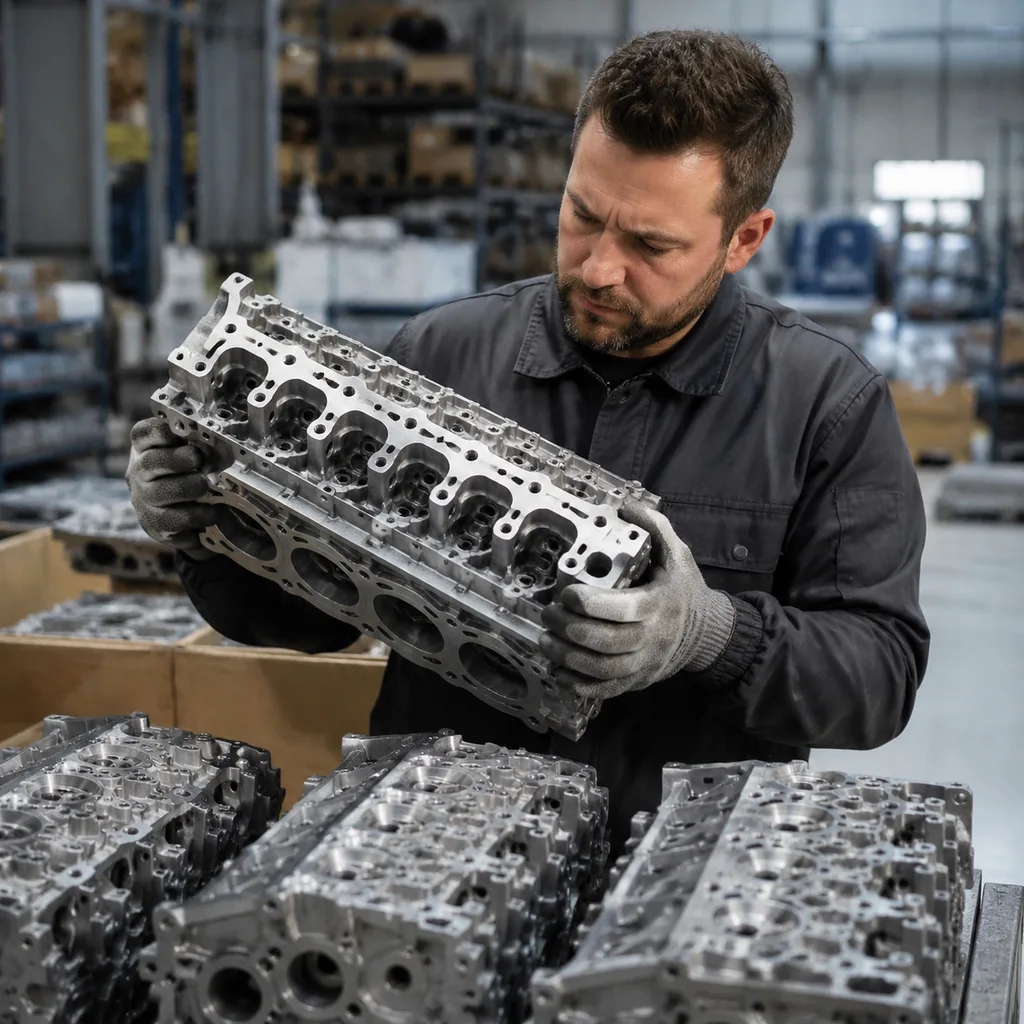
  • Verify build state: bare casting, machined bare head, or assembled head with valves, springs, seals, guides, and related hardware.
  • Check the functional geometry: combustion chamber shape, intake and exhaust port layout, coolant and oil passage alignment, and gasket compatibility.
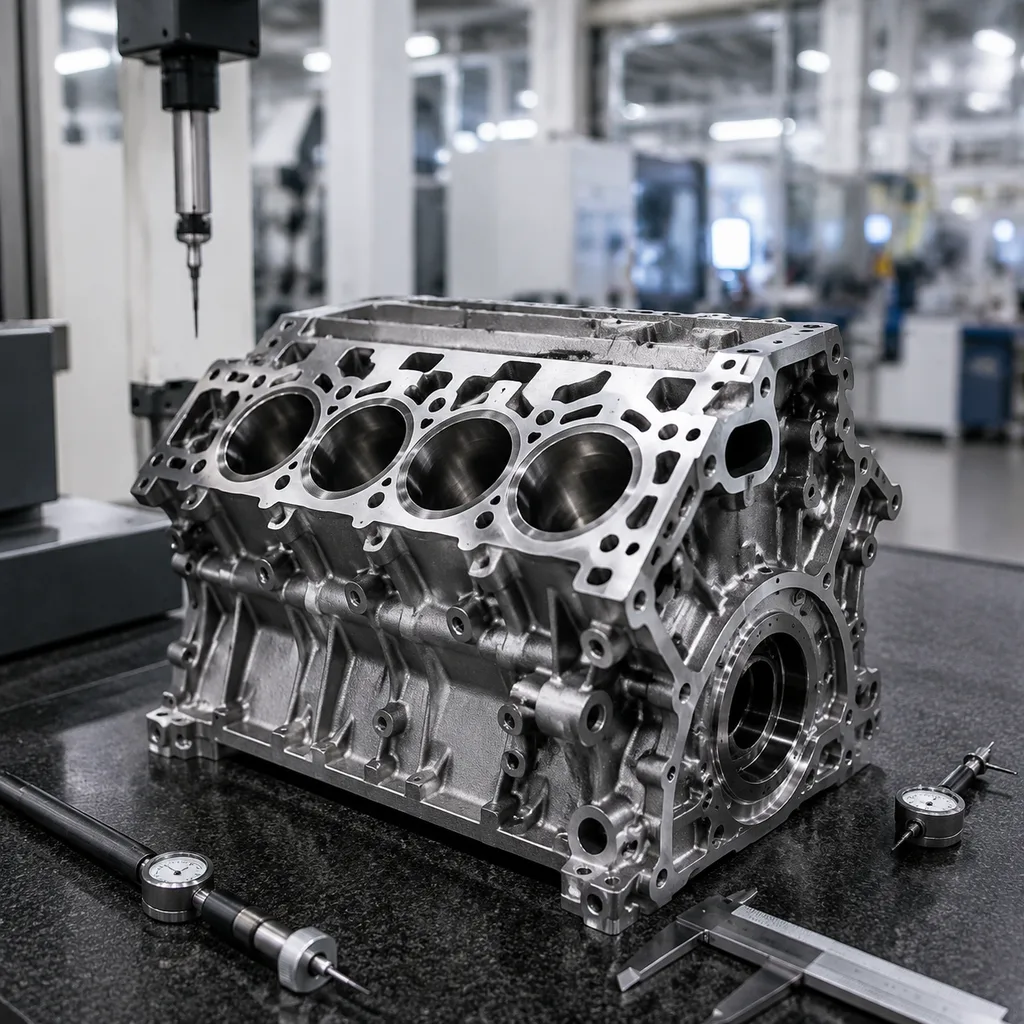
  • Review machining references: deck flatness, surface roughness, valve seat concentricity, guide bore tolerance, cam bore alignment, and bolt-hole positioning where applicable.
  • Ask for traceability: heat or batch number, inspection report, pressure-test confirmation, and carton label format.

For Volvo replacement programmes, dimensional match matters more than broad catalogue coverage. One model range may use several petrol, diesel, turbocharged, or naturally aspirated engines, so the purchasing team should start from the engine suffix and OE reference before approving volume. If you source related engine components together with cylinder heads, you can review our catalog for broader powertrain coverage.

Where wholesale programmes break down

Most sourcing problems do not start with the invoice. They start when a supplier can ship a part that looks right but lacks the process control needed for repeat production.

Common failure modes include:

  • Variant confusion: one model year, multiple engine codes, and one incorrect cross-reference.
  • Machining drift: deck finish, valve seat geometry, or guide position slowly moving out of tolerance.
  • Missing evidence: pressure-test results, dimensional reports, or batch coding not available when a claim appears.
  • Inconsistent build state: mixed bare, machined, and assembled heads inside the same order line.
  • Packaging weakness: moisture damage, pallet movement, or carton crush during export handling.
  • Change without notice: casting, supplier, or packaging changes that arrive in a repeat order without approval.

Wholesale buyers should treat each of those as a process risk, not a one-off defect. If the supplier cannot explain how it prevents recurrence, the lowest unit price usually becomes the most expensive option after returns, rework, and customer downtime. For a supplier with repeat-order controls, review the details of our quality system, especially if your scorecard requires documented process control, corrective-action procedures, and traceability evidence.

What the factory must prove

A cylinder head is a sealing, cooling, and combustion-critical part. That means the factory has to prove control at three stages: casting, machining, and final release.

</tr></thead><tbody> </tbody></table>Driventus operates as a vertically integrated supplier, which keeps casting, machining, inspection, and packaging inside one coordinated control system. That matters for import managers because fewer handoffs usually mean clearer accountability, more stable lead times, and better consistency between repeat orders. Before you commit to a long-running wholesale programme, check whether the factory can supply the evidence your internal team will ask for later, not just the sample you approve today.

Choose the right commercial model

Cylinder head Volvo wholesale sourcing works best when commercial terms follow forecast demand instead of urgent spot buying. MOQ, lead time, and final pricing can change depending on whether the head is stocked, newly cast, fully machined, or supplied as an assembled unit.

Planning points that matter:

  • MOQ depends on casting family, machining setup, assembly content, and packaging configuration.
  • Lead time depends on stock status, production queue, required testing, assembly state, and export inspection timing.
  • Sampling is more important for new OE cross-references, new markets, or private-label programmes.
  • Forecasting over 90 or 180 days helps stabilize raw material purchasing, machining slots, and shipping schedules.
  • Container mix can improve freight utilization when high-volume cylinder heads ship with related engine components.
  • Commercial scope should cover Incoterms, payment terms, warranty expectations, labelling requirements, and documentation needs before quotation.

Buyers in the EU, UK, US, Canada, Australia, Brazil, and other active replacement markets should also account for duty classification, inland haulage, port charges, warehouse handling, and any channel-specific testing or relabelling. If your programme needs a custom carton, private label, barcode format, assembly variation, or market-specific documentation pack, use our custom manufacturing page to define the request before quotation. Clear scope at the start reduces approval delays, freight surprises, and specification changes later.

Receiving checks that catch avoidable claims

Incoming inspection should be fast enough for operations and strict enough for warranty control. The goal is not to re-run the factory, but to confirm that the shipment matches the approved specification before it enters the sales or repair network.

A practical receiving sequence:

1. Confirm part number, OE reference, engine application note, and build state against the purchase order. 2. Inspect outer cartons, pallets, moisture protection, inner supports, and impact indicators where used. 3. Check barcode labels, carton markings, country-of-origin details, and batch identification for receiving-system compatibility. 4. Measure critical deck, bolt-hole, port, and gasket-interface dimensions against the approved drawing or golden sample. 5. Review pressure-test results for coolant and oil passages where applicable. 6. Inspect visible casting and machining quality, including deck finish, combustion chamber areas, valve seats, and threaded holes. 7. Check valve train assembly consistency, spring seat depth, guide fit, and installed components when buying assembled heads. 8. Record sample serial numbers or batch codes for traceability and future claims handling.

If you need additional endurance, surface, or material verification, request the supplier’s test method and acceptance criteria before shipment. Relevant compliance references may include REACH (EC) No 1907/2006 for material compliance in the EU, while SAE J2527 is more commonly associated with exterior coating durability and should only be cited when it is relevant to a specific validation requirement. Driventus can support documentation requests for wholesale and B2B review so importers and distributors have clearer records before goods arrive.

Receiving checks that catch avoidable claims

How to compare suppliers without guesswork

A useful supplier comparison looks beyond the line-item price and asks whether the supplier can hold specification over time. The right question is not, “Who is cheapest?” It is, “Who will cost less after inspection, claims, and repeat orders?”

Compare suppliers on these points:

  • OE cross-reference discipline: clear mapping to engine codes and OE references without unsupported fitment claims.
  • Specification control: consistent handling of bare, machined, and assembled head options within the same engine family.
  • Inspection depth: pressure-test evidence, hardness checks, machining records, dimensional reports, and final visual criteria.
  • Change management: notification before casting, machining, supplier, or packaging changes affect repeat orders.
  • Export readiness: durable cartons, pallet stability, moisture control, accurate commercial documents, and scannable labels.
  • Engineering support: drawing review, sample approval, technical clarification, and corrective-action follow-up.
  • Capacity planning: realistic lead times, forecast support, spare production capacity, and responsiveness during demand spikes.
  • After-sales handling: clear warranty review process, photo and measurement evidence requirements, and batch-level traceability.

Driventus is an independent aftermarket manufacturer; Volvo and other brand names are referenced for fitment identification only. For buyers managing multi-location repair chains, national distribution, or regional import programmes, the real value is stable specification and predictable supply rather than one-off shipment pricing. If your programme needs a revised port shape, valve configuration, packaging structure, or private-label format, use our request a quote page to begin the specification review.

Frequently asked questions

Yes. Driventus supplies B2B programmes for distributors, OEM and Tier-1 buyers, importers, and repair networks. Availability depends on engine family, build state, current stock, and forecast volume, so the best starting point is an OE reference, engine code, target quantity, and destination market.

Ask for the inspection report, batch traceability, pressure-test confirmation where applicable, and confirmation of production alignment with IATF 16949:2016 and ISO 9001:2015. For regulated markets, also confirm material, packaging, and labelling compliance requirements before shipment.

Yes. Custom packaging, carton marking, barcode formats, private-label requirements, and specification changes can be handled through OEM-style development. Submit the requirement on the contact page so the technical and commercial scope can be reviewed and quoted together.

If you are building a cylinder head Volvo wholesale programme, share the OE reference, engine code, target quantity, build state, and destination market. We will review the fitment and quotation scope at /contact.html.

Request a Quote
Area What to check Why it matters
CastingAlloy specification, melt control, porosity checks, heat treatment disciplineHelps reduce cracking, coolant leakage, and premature fatigue
MachiningCNC capability, datum control, tool-wear monitoring, fixture repeatabilityProtects gasket sealing, valve alignment, and camshaft operation
InspectionPressure testing, hardness checks, dimensional inspection, visual defect criteriaCatches nonconforming parts before packing and shipment
TraceabilityBatch coding, lot records, retained samples, inspection links to shipmentSupports claims analysis, recall control, and customer audits
Quality managementIATF 16949:2016 and ISO 9001:2015 alignmentShows that automotive process control and documentation are part of routine production