How to Verify Timing Chain Kit Quality for Sourcing
A timing chain kit can pass a catalog search and still fail in the engine. One wrong guide profile, weak rivet, soft sprocket tooth, or tensioner that bleeds down after shutdown can turn a low-cost buy into valve damage, labor claims, and lost customer confidence. The kit is a system: chain, sprockets, guide rails, tensioner, bolts, seals, and sometimes variable valve timing parts all have to match the engine application and each other. For B2B sourcing teams, the useful question is how to verify timing chain kit quality before approval, shipment, or repeat supply. The answer is not a single certificate. It is a sequence of fitment control, material evidence, functional checks, supplier audit, and incoming inspection. Driventus is an independent aftermarket manufacturer; brand names are referenced for fitment only.
Decision Gate 1: Prove the Kit Fits Before Testing It
Start with application accuracy. Laboratory data cannot rescue a kit built around the wrong chain pitch, guide geometry, tensioner stroke, sprocket tooth count, or installation hardware.
For each part number, request a controlled bill of materials and verify:
- Engine code, displacement, fuel type, and production year range
- Chain type, pitch, number of links, plate thickness, and pin diameter
- Crankshaft and camshaft sprocket tooth count
- Guide rail material, wear surface material, and fastening points
- Hydraulic or mechanical tensioner type, stroke range, ratchet design, and oil feed design
- Included bolts, seals, gaskets, washers, and single-use fasteners
- OE part-number cross-reference format where applicable, such as OE 06A… or OE 11251…, without implying vehicle manufacturer approval
Do not rely on one catalog match. Check cross-references against multiple data sources, returned samples, and physical OE-service parts where available. The supplier file should show how supersessions, engine variants, and market-specific applications are controlled. One bad crossover can create repeat claims across hundreds of kits.
Buyers can review timing chain kits and related engine components in our catalog. If the programme needs a modified kit, alternative packaging, or a private-label specification, confirm that the supplier can support custom manufacturing with version-controlled drawings, approval samples, and documented change control.
Spec Deep-Dive: What the Chain Must Prove
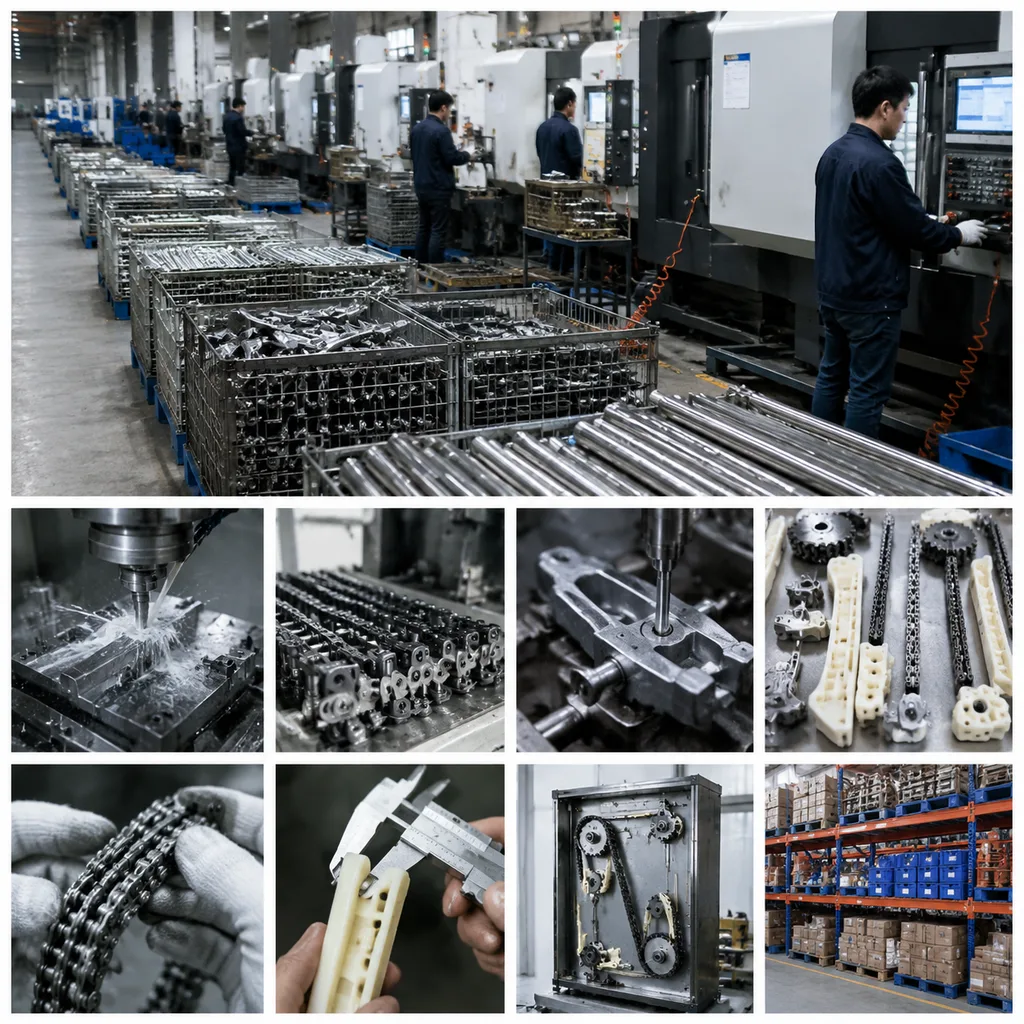
The chain carries the load, so a visual check is not enough. Verification should cover steel grade, heat treatment, pin and bushing hardness, plate geometry, riveting quality, and surface condition. Ask for material certificates and process records tied to the production batch. Generic certificates from another run should be rejected.
A practical inspection plan should include:
| Item to verify | Typical method | Why it matters |
|---|---|---|
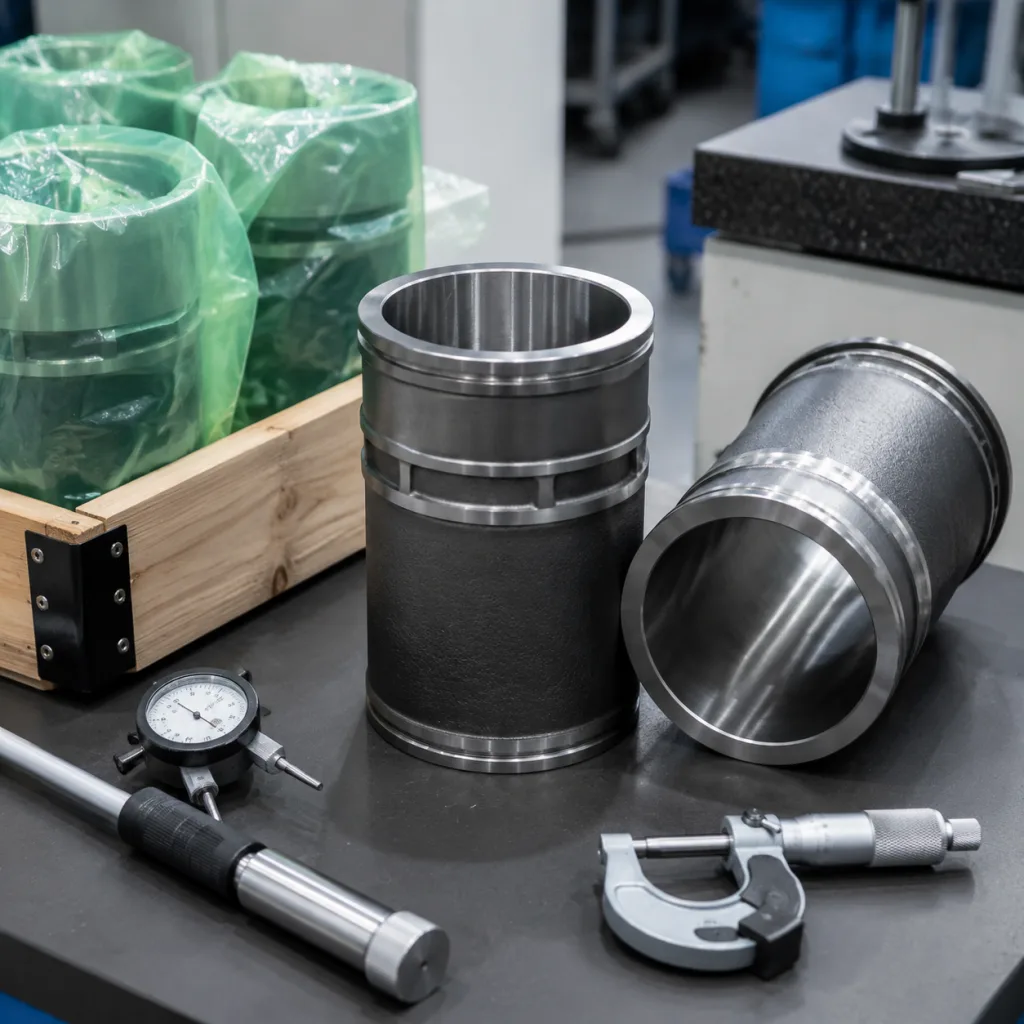
| Plate thickness and width | Micrometer or optical measurement | Controls tensile capacity and guide fit |
| Pin diameter and roundness | Micrometer, V-block, or optical system | Affects articulation, elongation, and wear |
| Chain pitch | Calibrated gauge over specified links | Prevents timing error and sprocket mismatch |
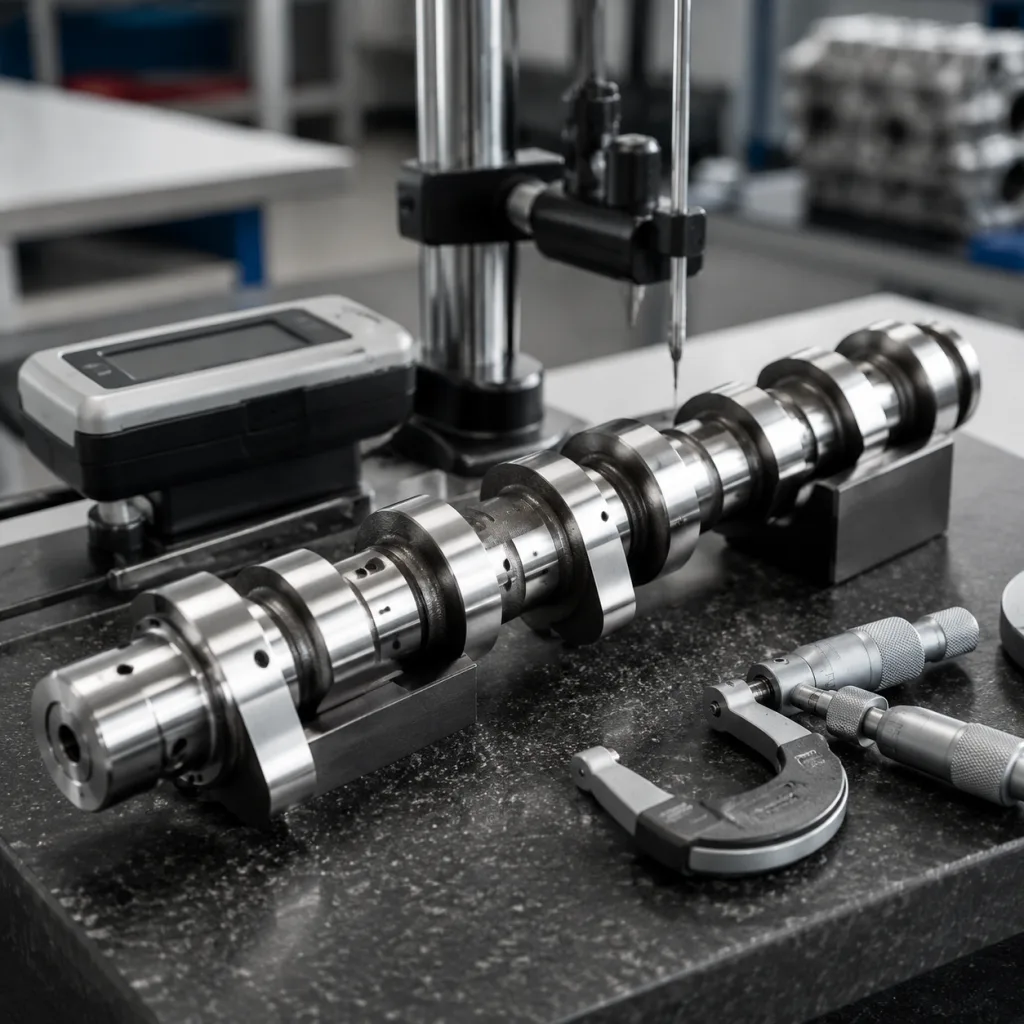
| Hardness | Rockwell or Vickers test | Confirms heat treatment consistency |
| Case depth where specified | Metallographic section or supplier report | Reduces pin and bushing wear |
| Tensile load | Batch test report | Screens weak riveting, poor material, or wrong heat treatment |
| Surface defects | Visual and magnified inspection | Finds burrs, cracks, scale, dents, and corrosion |

| Test or document | Expected content | Procurement use |
|---|---|---|
| Dimensional report | Critical dimensions from approved drawings | Confirms fitment control |
| Material certificate | Steel, polymer, rubber, and coating data by batch | Links material to production |
| Hardness report | Pin, plate, sprocket, and relevant wear surfaces | Confirms heat treatment |
| Tensile or fatigue test | Load, cycle count, failure mode, sample size | Screens chain strength |
| Wear test | Elongation or guide wear after defined conditions | Predicts service durability |
| Oil and temperature exposure | Polymer, seal, and tensioner behaviour | Checks hot-engine compatibility |
| Salt spray or corrosion data | Coated bolts, sprockets, and metal-backed guides | Supports storage and transport reliability |
| Traceability record | Lot code, production date, operator or line | Enables containment if defects appear |