Lower engine gasket sets are low-cost items compared with a complete engine repair, but quality variation can create expensive warranty exposure for distributors, rebuilders, and repair chains. A lower set usually includes oil pan gaskets, crankshaft seals, timing cover gaskets, O-rings, and selected sump or lower block seals. These parts must resist oil, coolant, crankcase pressure, heat cycling, and uneven flange loads.
This guide explains how to verify lower engine gasket set quality before placing volume orders or approving a new supplier. It is written for procurement and technical teams that need evidence, not sales claims. The same checks apply to aftermarket range development, private-label projects, and OE-reference cross-checking. Driventus is an independent aftermarket manufacturer; brand names are referenced for fitment only.
1. Confirm application scope and kit content first
Quality verification starts with the bill of materials, not the laboratory. A lower engine gasket set can vary by engine code, model year, sump design, crankshaft seal type, and emissions configuration. A kit that is dimensionally correct for one variant may create leakage or installation delays on another.
For each target application, request a kit layout sheet showing:
Engine family and displacement coverage
Production year range and market coverage
Included gasket, seal, O-ring, washer, and ancillary items
Material specification for each item
Critical dimensions and tolerances
OE cross-reference logic, where applicable, using generic references such as OE 06A… or OE 11251… only when provided by the buyer
Supersession control and revision history
Target vehicle build split when the engine has multiple sump or seal revisions
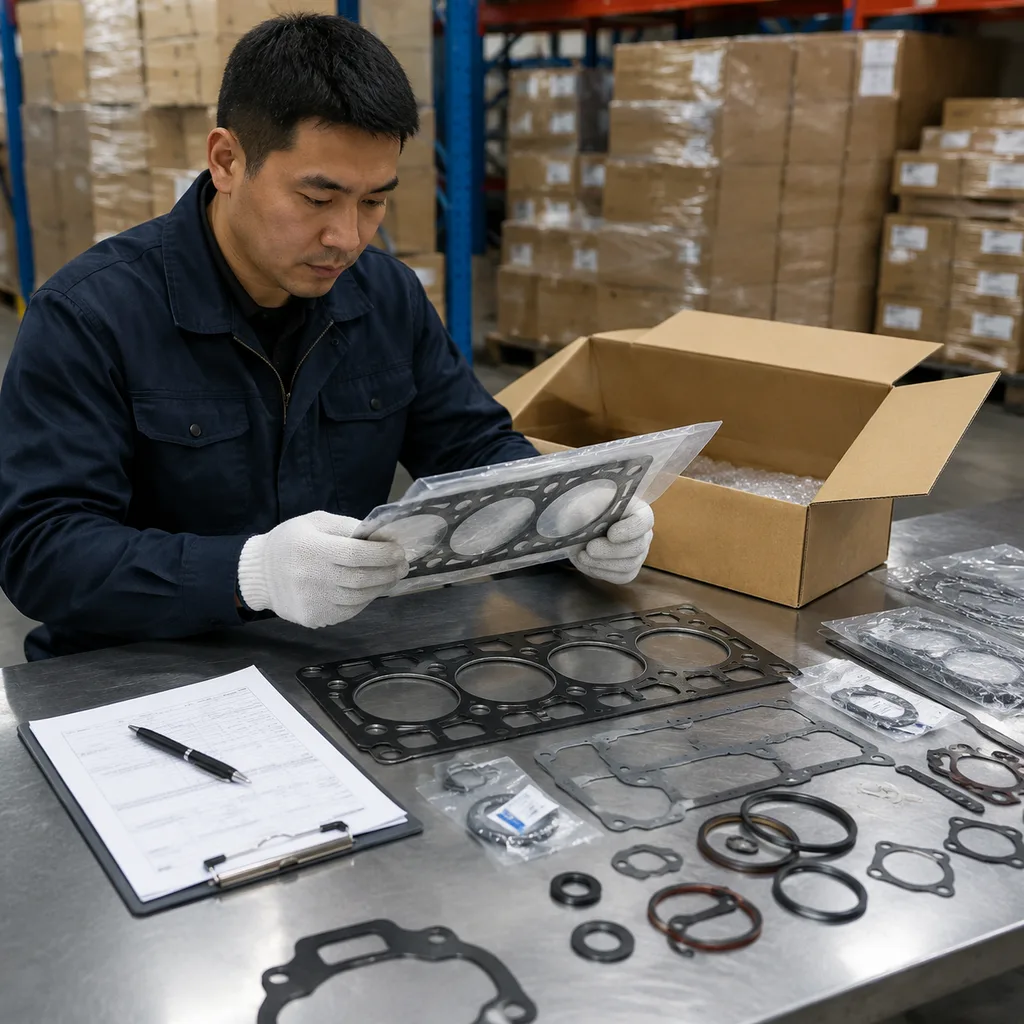
A procurement team should compare the supplier list against service information, sample tear-downs, and demand history. Missing small items, such as drain plug washers or oil pickup O-rings, often create field complaints even when the major gasket is acceptable. For example, a kit that matches the main oil pan gasket but omits a 12.0 mm drain plug washer can still trigger a return if the installer cannot finish the job. Buyers should also define whether a “complete lower set” means all engine variants for one family or a subset tied to one VIN breakpoint.
When screening quotations, ask for a kit-by-kit content matrix with part count, net weight, and packaging count per master carton. A practical commercial target is to control part-count deviation at zero on audited samples and packaging count at 100% against the approved BOM. If the supplier offers multiple variants, require a clear revision code and hold all superseded versions from mixed shipment.
Driventus lower set programs are listed in our catalog, with engine component capability shown under engine components. Custom kit structure can also be reviewed through custom manufacturing for private-label or region-specific assortments.
2. Check material suitability for oil, heat, and flange design
Material selection should match the sealing location. A single lower set may contain formed rubber, coated steel, paper-fibre composite, aluminium-rubber bonded parts, PTFE, FKM, NBR, ACM, silicone, and moulded elastomer seals. The quality question is not whether one material is generally better, but whether each material is correct for the operating environment.
Component in lower set
Common material options
Main verification point
Typical risk if incorrect
Oil pan gasket
Rubber-coated steel, moulded NBR/ACM, composite
Compression set and oil resistance
Oil seepage after heat cycling
Front/rear crankshaft seal
FKM, PTFE, ACM, NBR
Lip geometry, shaft compatibility, spring retention where used
Early shaft leakage or lip wear
Timing cover gasket
Coated metal, composite, moulded rubber
Coating adhesion and bolt-hole alignment
Localised leaks at cover corners
O-rings
FKM, NBR, silicone, EPDM where specified
Fluid compatibility and hardness
Swelling, cracking, extrusion
Drain or service washers
Copper, aluminium, bonded washer
Annealing, coating, thickness
Reuse complaints or plug leakage
</tr></thead><tbody> </tbody></table>For oil-contact parts, ask for material test evidence including hardness, tensile strength, elongation, compression set, heat ageing, and fluid immersion. ASTM and ISO methods may be used depending on the material and buyer requirement; the key is consistency between specification, test method, and acceptance value. A buyer can use concrete acceptance bands to separate production-ready suppliers from sample-only suppliers. Typical screening tolerances are ±5 Shore A for elastomer hardness, less than 15% compression-set drift after heat ageing, and no visible cracking, delamination, or edge lift after immersion or thermal cycling, unless the OE benchmark is tighter. For coated metal parts, define coating thickness and adhesion by part type and insist on a repeatable reference method, such as cross-hatch or peel testing where applicable.
Environmental compliance should also be checked, including REACH (EC) No 1907/2006 where applicable for EU supply chains. If the order will enter multiple regions, ask the supplier to declare whether the same material compound is used across all markets or whether compounds are localized by region, because that affects both traceability and warranty comparability.
3. Measure critical dimensions and sealing features
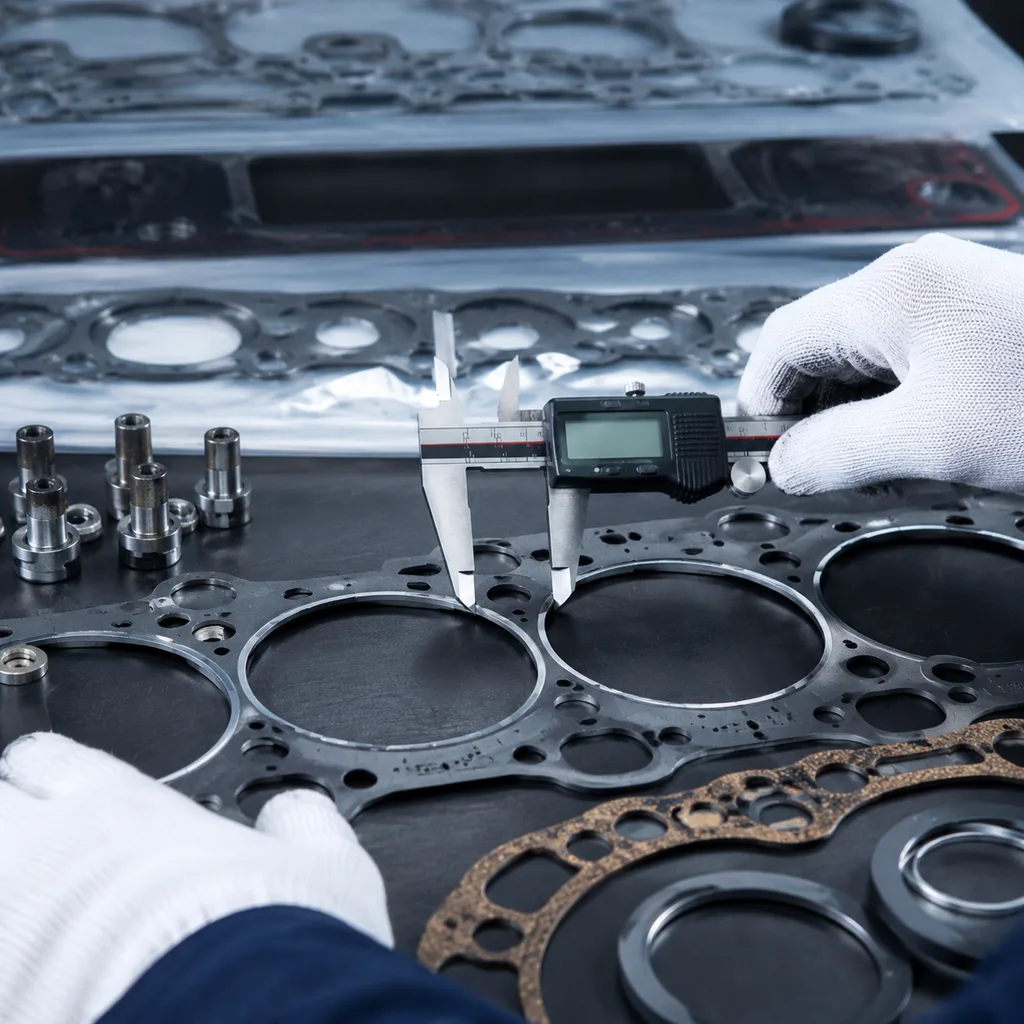
Dimensional inspection is a practical way to detect weak suppliers before a field issue occurs. For production approval, review at least first-article samples from a controlled batch. For ongoing supply, require lot-based inspection records and retain samples for dispute resolution.
Critical checks include:
Bolt-hole location and diameter on oil pan and cover gaskets
Overall gasket profile compared with mating flange
Seal outside diameter, inside diameter, width, and lip position
Carrier flatness for metal or bonded gaskets
Coating thickness and uniformity
O-ring cross-section and inside diameter
Mould flash, parting line quality, and trimming condition
Chamfer, dust lip, and spring groove quality on rotary seals
For crankshaft seals, small deviations can matter. The lip contact point must match the shaft running surface. If it lands on a worn groove or outside the intended contact zone, leakage may occur soon after installation. PTFE seals also require correct forming and packaging because the sealing lip can be damaged by poor handling. A buyer should request the shaft-contact position relative to the seal face, not just the outer dimensions, and should compare the actual contact band with the engine drawing or a validated sample.
A useful incoming inspection plan is to measure 3 to 5 samples per component for pilot orders and adjust the sampling level after process capability is proven. For a pilot lot, a practical rule is to accept only if all critical dimensions are within tolerance and no more than one minor cosmetic defect appears in the sample set. For recurring supply, move to lot-based AQL control with tighter sampling on dynamic seals, moulded gaskets, and parts with asymmetric geometry. Where a lower set contains more than 20 items, focus tighter inspection on high-risk components and use reduced checks for simple washers and static O-rings after their first-article approval is stable.
For buyer specifications, define dimensional tolerances by function rather than by blanket requirement. As a starting point, many lower-set programs use ±0.20 mm for gasket profile features, ±0.10 mm for critical hole-to-hole locations on small gaskets, ±0.05 to ±0.10 mm for rotary seal lip or shaft-contact features, and concentricity or runout limits aligned to the engine’s seal land. If the supplier cannot measure these values consistently with calibrated tools, the lot should not be released.
4. Review supplier process controls and traceability
A good sample is not enough. Buyers need evidence that the supplier can repeat the same result at scale. Ask how incoming rubber compounds, coated metal, adhesives, inserts, and packaging materials are controlled. For moulded parts, process variables such as cure temperature, cure time, pressure, tool maintenance, and post-cure handling affect sealing performance.
Supplier evidence should include:
IATF 16949:2016 or ISO 9001:2015 certificate scope covering relevant manufacturing processes
Incoming material inspection records
Batch traceability from raw material to finished kit
Tooling maintenance records for moulded parts
In-process inspection instructions
Final inspection reports by production lot
Non-conformance and corrective action records
Change control procedure for materials, tooling, and subcontractors
Defined reaction plan for out-of-spec dimensions or compound variation
Driventus operates under an automotive quality system aligned with IATF 16949:2016 and ISO 9001:2015. For procurement teams, the important point is not only the certificate but whether the control plan, inspection records, and traceability codes are available for the actual gasket set program being purchased.
Where the order is private-label or high-volume, request a process flow diagram and control plan before tooling release. This reduces later disputes about inspection responsibility, allowable cosmetic conditions, and approval criteria. Buyers should also ask for lot coding format, retention sample policy, and whether the supplier can trace a field claim back to the raw compound lot within 24 hours. If the supplier cannot state how many kits are held for retention and for how long, the traceability system is too weak for volume sourcing.
Commercially, process control also affects cost structure. If the supplier uses fully traceable compounds, lot-level inspection, and pre-shipment photo records, expect a higher piece price but lower claim risk. If the supplier gives only a generic certificate without actual lot records, the unit price may look attractive but the buyer carries the quality cost. A well-run supplier should be able to quote distinct pricing for sample, pilot, and production lots, and explain what changes between those tiers.
5. Validate packaging, shelf life, and logistics condition
Lower engine gasket set quality can be damaged after production. Thin gaskets can deform if stacked incorrectly. PTFE seal lips can be distorted. Paper-based or composite gaskets can absorb moisture. Rubber parts can degrade if exposed to ozone, heat, ultraviolet light, or incompatible packaging materials.
A packaging review should cover:
Individual protection for crankshaft seals and fragile formed gaskets
Flat support for oil pan and timing cover gaskets
Separator sheets where coatings may stick together
Bag material compatibility with rubber and coating systems
Desiccant use where moisture sensitivity is identified
Carton compression strength for export pallets
Label clarity for part number, batch number, quantity, and country of origin
Barcode format if required by the distributor or warehouse system
Pallet overhang, strap tension, and corner protection for sea freight
Shelf-life control is also important. Many elastomer materials remain serviceable for years when stored correctly, but buyers should still request a declared shelf-life policy, storage conditions, and first-in-first-out controls. For warehouse importers, this is part of warranty risk management. As a practical commercial rule, ask the supplier to state the storage life in months for each material family and the ship date window allowed for each purchase order. A common sourcing setup is 12 months shelf life for standard elastomer kits with no special storage requirement, with shorter stated life if the supplier uses coated or PTFE-sensitive components that need stricter handling.
If the lower set is shipped by sea, ask for palletisation photos, carton drop-test approach, and humidity protection. A set that passes dimensional inspection at the factory can still reach the buyer with bent carriers, compressed seals, or mixed labels if packaging is uncontrolled. Before final approval, require a transit-condition sample or at least a packed sample review after simulated vibration and compression. For distributors selling through regional warehouses, this step often catches damage that the factory inspection never sees.
6. Use a practical approval checklist before volume orders
A structured approval process helps purchasing and engineering teams reach the same conclusion. The following checklist can be used for supplier qualification, range expansion, or periodic revalidation.
Lower gasket set verification checklist
1. Confirm application data, engine variants, and OE-reference logic. 2. Compare kit content with service requirements and market demand. 3. Review material specifications for every component in the set. 4. Inspect first-article samples for dimensions and visual defects. 5. Test high-risk materials for hardness, compression set, heat ageing, and fluid resistance. 6. Check crankshaft seal lip geometry, packaging protection, and shaft-contact location. 7. Verify supplier certification scope against IATF 16949:2016 or ISO 9001:2015. 8. Review control plan, traceability, batch records, and change control. 9. Approve packaging after transport simulation or real shipment review. 10. Record acceptance criteria before releasing the purchase order.
For multi-country distributors, add documentation checks for REACH (EC) No 1907/2006 and any market-specific labelling or importer requirements. For repair chains, include installation feedback from pilot branches before broad rollout.
This process is also useful when comparing quotations. A lower price may be acceptable if materials, dimensions, and traceability are equivalent. It is not acceptable if the supplier cannot identify compound grade, batch history, or inspection criteria. Buyers can request a quote with target engine coverage, kit content, and annual volume to obtain a documented review. To make the quote comparable, give the supplier a target MOQ, packaging format, and forecast horizon. For many lower-gasket programs, a pilot MOQ of 200 to 500 kits is enough to validate fitment and packaging, while production MOQ may move to 1,000 to 3,000 kits depending on tooling, part count, and carton mix. Lead time for stocked programs is often 15 to 30 days after order confirmation, while private-label or new tooling can require 45 to 90 days or more depending on sample approval and packaging setup.
Price should be read together with claim risk and service level. Ask each supplier to quote three tiers: sample lot, pilot lot, and annual volume. A meaningful comparison includes unit price, tooling amortization, packing method, warranty terms, and whether the supplier can hold safety stock. If a supplier offers a low price but cannot meet the requested MOQ or lead time, the quote is not actually comparable. Use the same checklist for all bidders so procurement can compare like-for-like offers rather than separate claims.
Frequently asked questions
Start with kit content, material specification, and first-article dimensional inspection. If these three areas are weak, detailed laboratory testing is unlikely to solve the sourcing risk. Dynamic seals and moulded oil pan gaskets should receive the closest inspection. For a quick commercial screen, ask for BOM completeness, compound declaration, and a pilot-lot inspection report before discussing price.
IATF 16949:2016 is preferred for automotive production, while ISO 9001:2015 is a baseline quality management standard. Buyers should also check that the certificate scope matches the actual manufacturing activity and that batch records are available. For higher-risk programs, request evidence of process audits, change control, and traceability back to the raw compound lot.
Not usually. Focus laboratory testing on oil-contact elastomers, crankshaft seals, coated metal gaskets, and parts with known field risk. Low-risk washers and simple static gaskets can often be controlled through material certificates, dimensions, and visual inspection. A practical approach is to test the critical parts at qualification, then use incoming lot checks and periodic revalidation once the process is stable.
If you are qualifying a lower gasket set supplier or developing a private-label range, Driventus can review drawings, samples, and target applications before quotation. Send your requirements through /contact.html