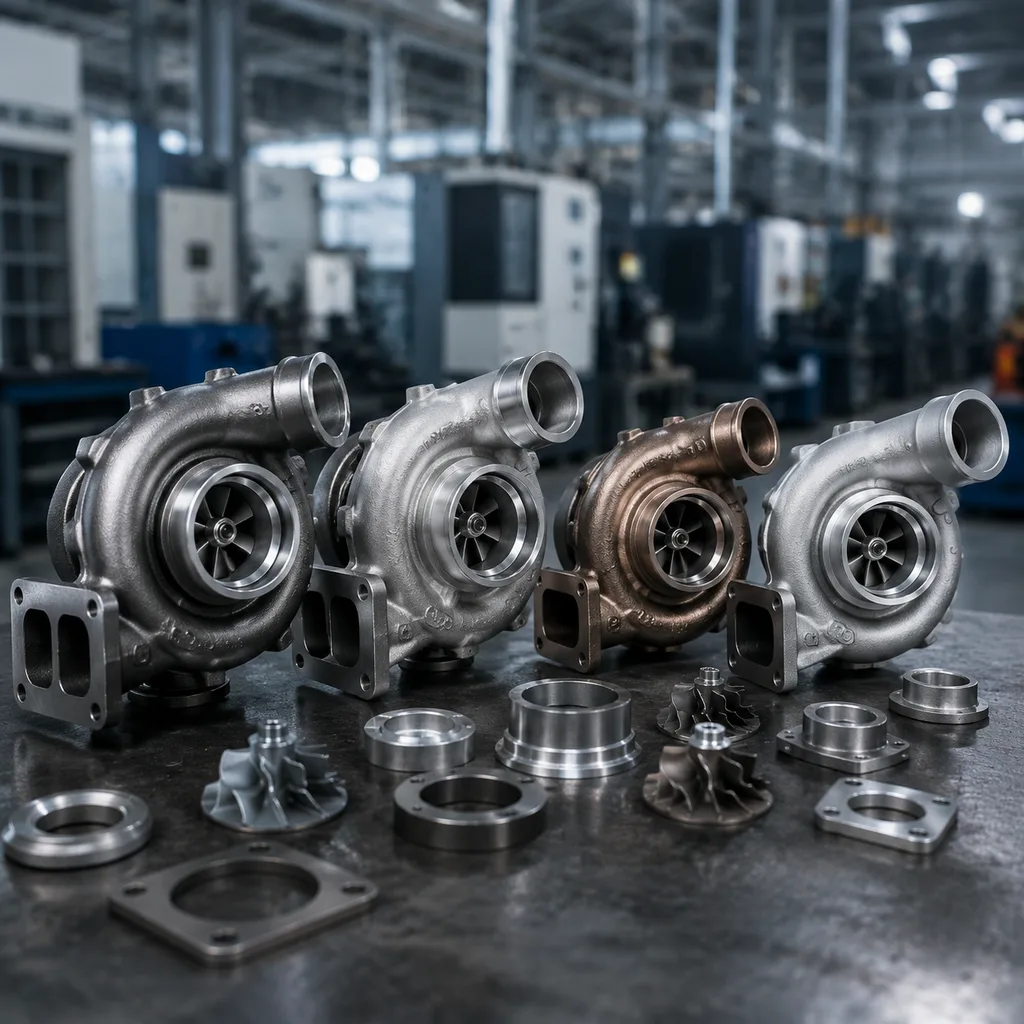
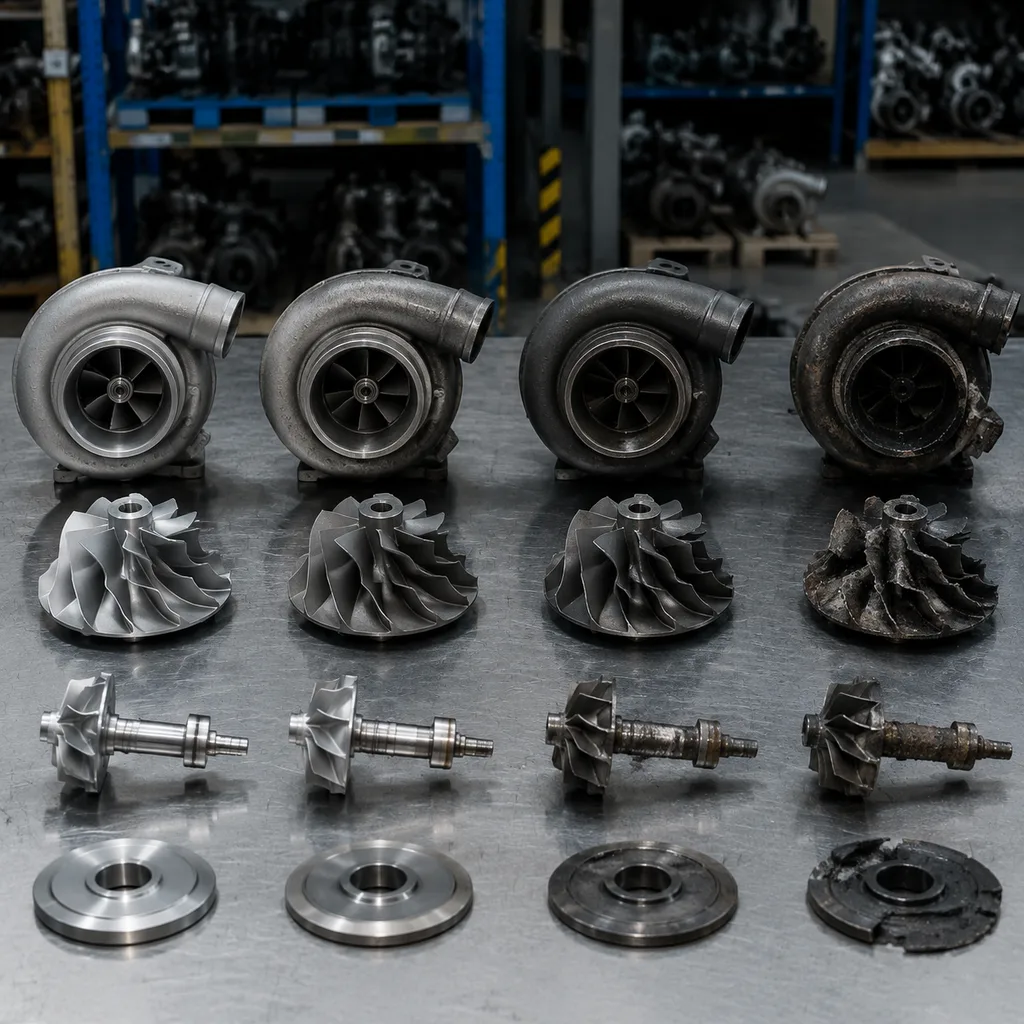
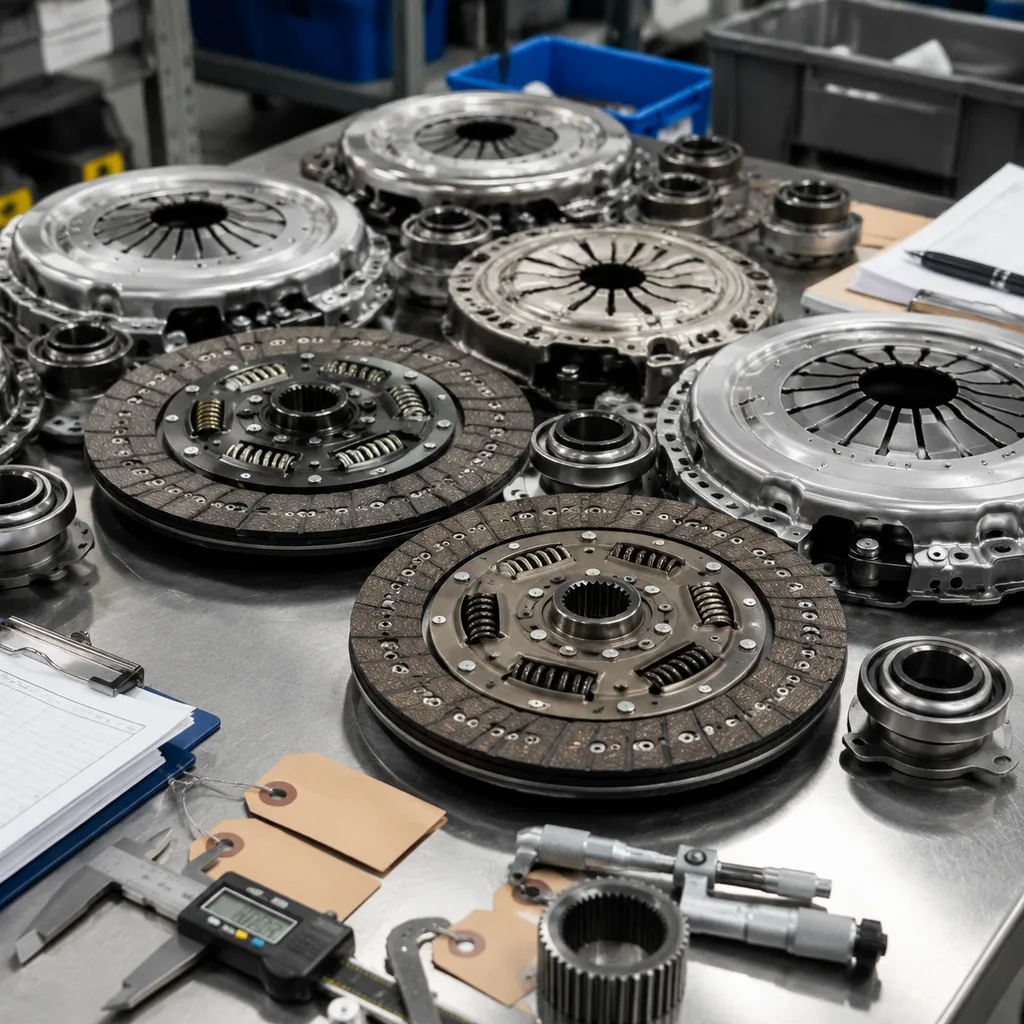
Turbocharger material selection determines heat resistance, creep life, oxidation resistance, shaft stability, balance retention, and landed cost. For procurement teams, the right grade depends on the housing, rotor, shaft, bearing system, fastener duty cycle, target volume, and validation plan—not on a single premium label. A cast ductile-iron turbine housing, a nickel-based alloy turbine wheel, a forged alloy-steel shaft, and a heat-resistant clamp each address different failure risks.
A practical turbocharger material grade comparison starts with exhaust gas temperature, boost level, shaft speed, duty cycle, fuel type, expected warranty life, and the inspection records a supplier can provide with each batch. Driventus is an independent aftermarket manufacturer; brand names are referenced for fitment only. We manufacture turbocharger components under IATF 16949:2016 and ISO 9001:2015 control, with export supply into more than 60 countries. For buyers comparing suppliers, the key question is whether the chosen grade meets chemical limits, dimensional targets, balance limits, heat-treatment windows, endurance requirements, MOQ, price, and lead-time expectations under the same operating profile.
Decision framework: what changes with each grade
Turbochargers face thermal cycling, exhaust-gas attack, oil contamination, vibration, and shaft speeds commonly above 100,000 rpm. Small passenger units may exceed 180,000 rpm; heavy-duty units usually run slower but at higher sustained exhaust temperature.
Material grade changes six sourcing outcomes:
Heat resistance and creep strength on the turbine side, especially above 750–850°C exhaust gas temperature
Fatigue strength and fracture margin in rotating parts under overspeed and surge events
Oxidation, sulphidation, and corrosion resistance under diesel, gasoline, LPG, CNG, EGR, or marine exposure
Dimensional stability after casting, heat treatment, welding, machining, and thermal cycling
Machinability, tool wear, casting scrap, rework rate, and final piece price
MOQ, sampling cost, and production lead time, because uncommon alloys and castings require larger melts or longer raw-material booking
A grade that works for a light-duty passenger vehicle may be unsuitable for towing, commercial delivery, high-altitude operation, remapped engines, or off-highway use. For sourcing, ask for chemistry, tensile data, hardness range, heat-treatment method, casting or forging route, balance report, and the test basis used for the quoted part.
Relevant controls often include IATF 16949:2016, ISO 9001:2015, REACH (EC) No 1907/2006, RoHS where requested by the market, and application-specific validation such as thermal cycling, gas-stand endurance, burst containment, and overspeed testing. For critical parts, request lot traceability from melt or heat number through machining, final inspection, and packaging.
Grade-by-grade comparison
Part
Common grade family
Typical working range
Main advantage
Main limitation
Typical buyer use
Turbine housing
Ductile iron, high-silicon molybdenum iron, Ni-resist iron
700–950°C depending on alloy and duty cycle
Good casting economics and thermal-shock resistance
Heavy; cracking risk if chemistry, wall thickness, or stress relief is weak
Galling or relaxation if material and coating are mismatched
V-band clamps, actuator brackets, service kits
</tr></thead><tbody> </tbody></table>This table is a starting point, not a universal rule. A valid turbocharger material grade comparison uses expected exhaust gas temperature, shaft speed, boost pressure, mass flow, duty cycle, and warranty target against the supplier’s process control. Ask whether the quoted part is sand cast, shell mould cast, investment cast, forged, billet-machined, welded, or machined from bar stock, because grain structure, porosity, residual stress, and fatigue life change with the route.
For RFQ comparison, require the same measurement basis from every supplier. Examples include housing flatness within 0.05–0.10 mm on sealing faces, shaft journal roundness within 0.003–0.005 mm where applicable, wheel runout below 0.03 mm unless the drawing states otherwise, VSR or core balance data at application-relevant speed, and hardness windows such as HRC 28–36 for many quenched-and-tempered shaft steels. Final limits must follow the approved drawing, but quoting without numerical tolerances usually creates later disputes.
When to step up to a higher grade
A higher-cost material is justified when the duty cycle creates measurable risk. Common cases include:
Sustained exhaust gas temperature above the standard replacement design range, especially near 850–950°C for gasoline or heavy-load diesel service
Long idling followed by hard acceleration, which increases thermal shock and oil-coking risk
High boost pressure, performance remapping, towing, mountain operation, or commercial fleets with repeated hot shutdowns
Marine, agricultural, construction, generator, or off-highway service with long periods at high load
Warranty targets above normal aftermarket replacement expectations, such as fleet programmes requiring low failure rates over long mileage or operating-hour windows
For these uses, buyers often move from standard ductile iron to high-silicon molybdenum iron or Ni-resist housing material, from standard cast aluminium to forged or billet compressor wheels, from generic shaft steel to controlled quenched-and-tempered alloy steel, or from basic stainless fasteners to higher-temperature clamp materials. The upgrade should be supported by endurance testing, dimensional stability checks after thermal cycling, and batch inspection—not by sales claims.
Price impact depends on the part family. A housing alloy upgrade may raise unit cost through lower casting yield and machining wear; a nickel-based turbine wheel can add meaningful cost because raw alloy, investment casting, and balancing scrap are expensive; a forged or billet compressor wheel may cost more but reduce rotating mass and improve blade consistency. If a part family is being developed for a new programme, our custom manufacturing team can align material selection with target life, sample approval, tooling, MOQ, and launch timing.
Step-by-step sourcing checklist
Use the same checklist across all bids:
1. Confirm the application, engine code, fuel type, emissions level, OE-style cross-reference, and whether the unit is for stock replacement, heavy-duty service, or upgraded output. 2. Request the exact alloy standard or internal material code, chemical limits, heat-treatment range, hardness window, and whether substitutions are allowed only with written approval. 3. Check whether the supplier provides a mill certificate, chemical analysis, heat number, and incoming inspection record, or only a generic alloy name such as Inconel or high-temp iron. 4. Compare dimensional reports against the same drawing revision, including critical datums, sealing faces, bearing bores, shaft journals, thread gauges, and actuator mounting positions. 5. Compare balance data for the rotating assembly, not just individual parts; for CHRA supply, ask for low-speed balance, high-speed VSR balance, residual imbalance limit, test speed, and correction method. 6. Review validation records such as salt spray, thermal cycle, gas-stand endurance, containment/burst, overspeed, oil-leak, and actuator calibration tests when the programme risk justifies them. 7. Confirm traceability, anti-rust oil or VCI packaging, FOD control, export carton strength, pallet plan, REACH compliance, and any market-specific labelling requirements.
Commercial logic should be compared with the same discipline as metallurgy. For common aftermarket references, trial MOQ may be 20–50 pcs, standard production MOQ often 100–300 pcs, and mixed-container or annual-call-off pricing may improve once demand reaches 500–1,000 pcs per SKU. Custom castings, new compressor wheels, or upgraded turbine materials may require tooling charges, sample charges, and larger first-batch quantities because foundry melts and balancing fixtures must be scheduled. Typical lead time is 2–4 weeks for stocked catalog items, 6–10 weeks for repeat production after PO and deposit, and 10–16 weeks for new tooling, PPAP-style sample approval, or uncommon alloy procurement.
If the supplier cannot state the grade clearly, the comparison is incomplete. This is especially important for imported turbocharger assemblies, where two visually similar parts may share fitment but differ in alloy, heat treatment, coating, balance process, and life expectation. A buyer should lock the approved material in the purchase specification, not only in email discussion.
Failure modes that justify an upgrade
A higher-grade material usually makes sense only when you can tie it to a failure mode. That keeps the spec from drifting into unnecessary cost.
Typical failure patterns include turbine housing cracking from thermal shock, turbine wheel creep from sustained heat, compressor blade damage from foreign object impact, shaft twist from overspeed, journal wear from oil starvation, and clamp relaxation from repeated heat cycles. If the field complaint is repeated hot shutdown after towing, the housing and clamp matter more. If the issue is overspeed after remapping, the wheel and shaft deserve the most attention.
This is where a turbocharger material grade comparison becomes practical rather than theoretical. Match the grade to the failure mode, then ask the supplier what process controls stop that failure. For example, a stronger alloy is not enough if balance limits are loose, wall thickness varies, or heat treatment is inconsistent.
The most common mistake is paying for a premium alloy while leaving the rest of the system unchanged. A good approval package should cover material, geometry, balance, coating, traceability, and test evidence together.
Buyer checks before order release
Before release, verify the following against the supplier quote, drawings, and control plan:
Nominal dimensions, critical tolerances, datum scheme, thread gauges, surface roughness, and any CTQ dimensions agreed for the application
Rotor balance limit, VSR test speed, residual imbalance record, balancing machine calibration status, and whether correction marks are acceptable
Alloy designation or internal material code, chemical limits, heat number traceability, heat-treatment batch, and hardness test location
Surface treatment, passivation, coating, anti-rust process, salt-spray target, and corrosion protection for sea freight or long warehouse storage
Certificate scope under the supplier’s quality system, including IATF 16949:2016, ISO 9001:2015, inspection report format, non-conformance handling, and change-notification rules
Packaging method to prevent FOD, wheel-blade dents, thread damage, actuator movement, moisture exposure, and mixed-part errors during transport
Commercial terms including MOQ, sample cost, tooling ownership, Incoterms, payment schedule, warranty handling, repeat-order lead time, and forecast flexibility
For catalog sourcing, review our catalog and compare the listed turbocharger family with any service-pack, CHRA, actuator, gasket, clamp, or full-assembly option. If the part is being purchased as part of a broader engine programme, engine components may also need matching material, quality, packaging, and traceability controls.
A practical approval file should include drawing revision, signed specification, material certificate, dimensional inspection report, balance report, photo record, packaging approval, and sample test result. Driventus is an independent aftermarket manufacturer; brand names are referenced for fitment only. Published claims should be backed by the supplier’s own test records and inspection reports, not by vehicle-brand endorsement.
Frequently asked questions
Nickel-based turbine wheel alloys usually handle the highest exhaust-side temperature, often around 850–1,050°C depending on alloy and duty cycle. Housing material must also tolerate thermal cycling, so high-silicon molybdenum iron or Ni-resist iron may be justified for hotter applications. The best choice depends on measured EGT, duty cycle, validation data, and cost target.
Yes. Parts can match external dimensions but differ in alloy, heat treatment, coating, casting route, balance process, and expected life. Buyers should compare chemistry, hardness, dimensional reports, balance records, and endurance evidence before approving a substitute.
Request the material specification, mill or chemical certificate, heat-treatment and hardness record, dimensional inspection report, balance data, packaging standard, and compliance evidence such as IATF 16949:2016, ISO 9001:2015, and REACH where applicable. For new programmes, also request sample approval records, change-control rules, MOQ, tooling terms, and lead-time confirmation.
If you are comparing grades for an existing programme or a new sourcing bid, send the application details, target volume, duty cycle, material preference, and required launch date through our request a quote page: /contact.html