Serpentine Belt Change: B2B Replacement Guide
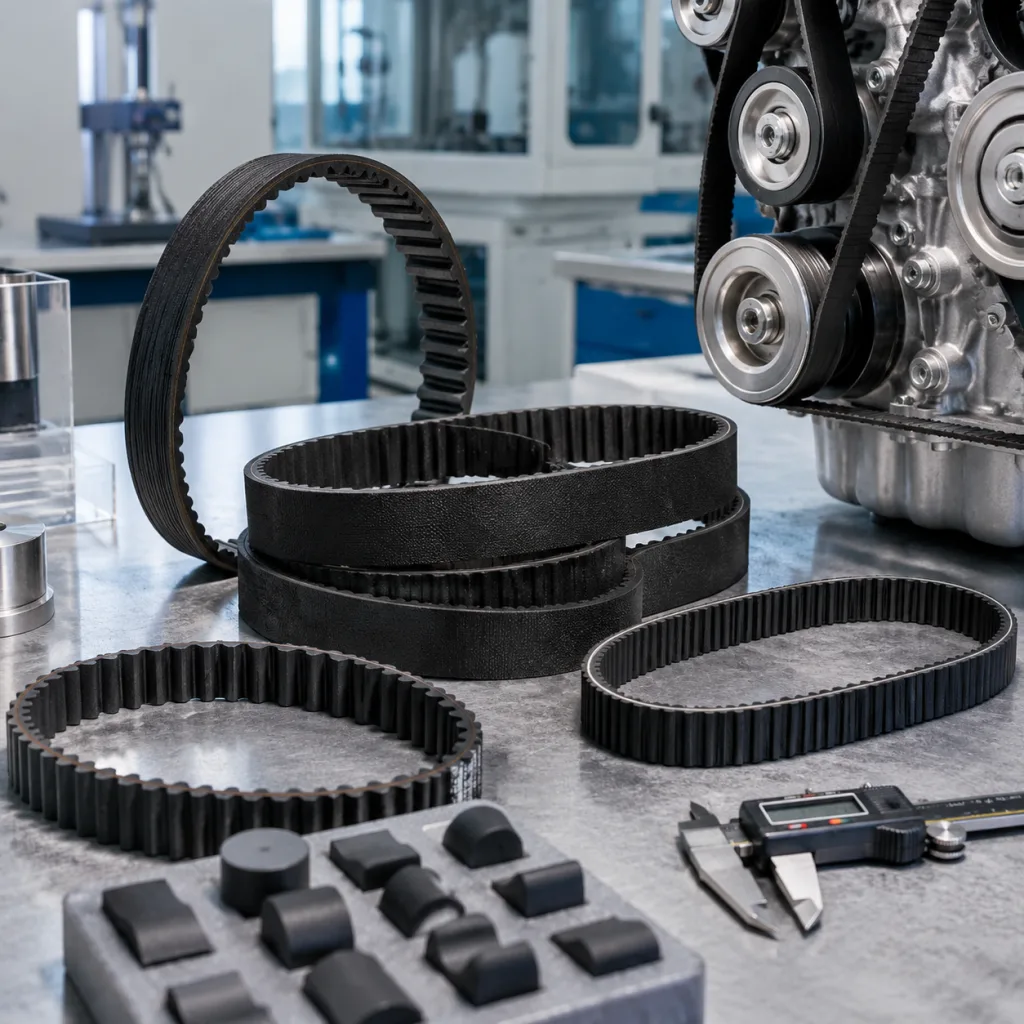
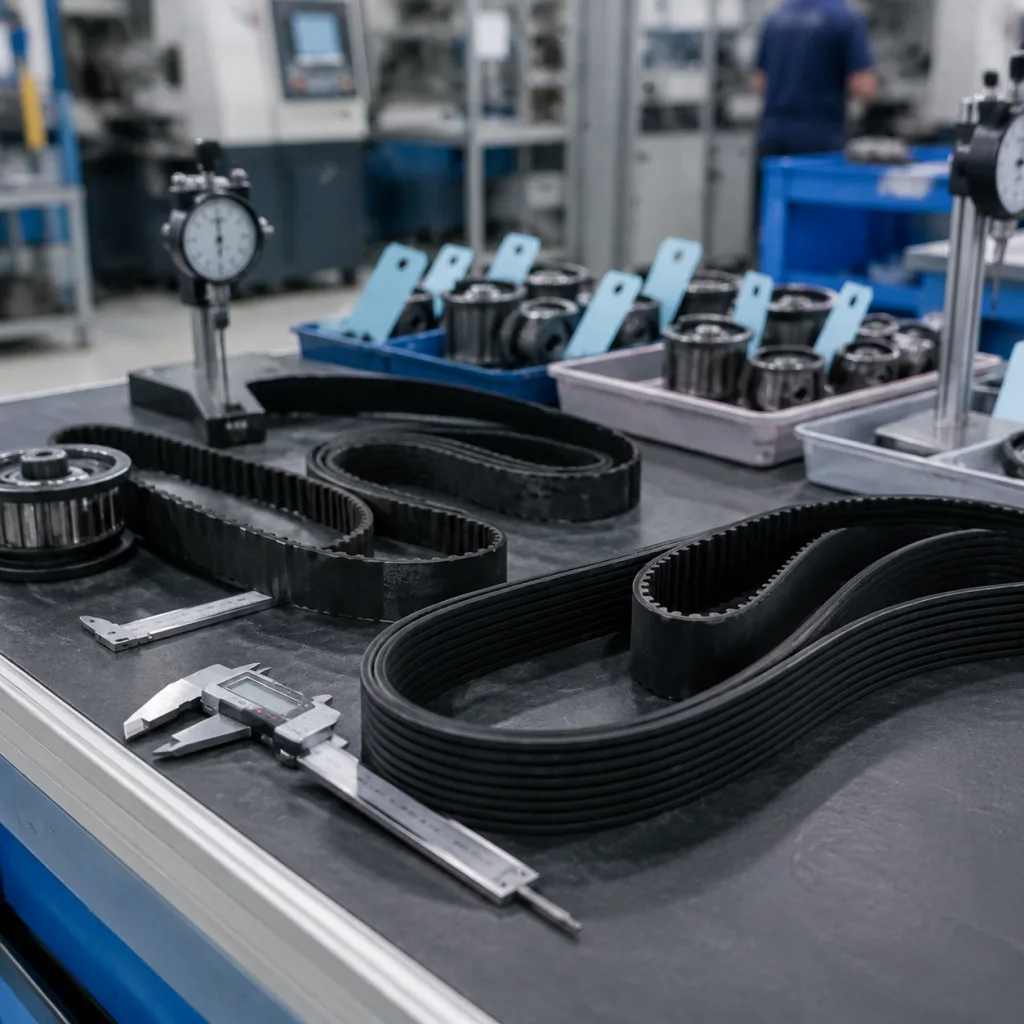
A serpentine belt change is routine in the workshop, but for distributors, repair chains, fleet operators, and import teams it is also a sourcing and quality-control decision. A belt that is close in appearance but not matched to the accessory-drive layout can cause noise, reduced alternator output, water-pump slip, premature tensioner wear, or repeat service visits. Buyers therefore need more than a vehicle application list. They need controlled effective length, consistent rib geometry, stable rubber compounds, reliable packaging data, and evidence that replacement belts are validated against OE-style duty cycles. This guide explains how to specify and source serpentine belts for aftermarket replacement programmes, with a focus on dimensional fit, OE-equivalent performance, and supplier validation. Driventus is an independent aftermarket manufacturer; brand names are referenced for fitment only.
Replacement Intent: What Buyers Need to Control
In the workshop, a belt replacement is usually triggered by mileage, cracking, glazing, squeal, accessory repair, or preventive maintenance. In a B2B supply programme, the same service event becomes a repeatable specification. The belt must install without excessive force, track correctly across every pulley, run quietly, and maintain grip through heat, vibration, moisture, and changing accessory loads.
Key purchasing controls include:
- Application coverage: verify engine code, model year range, pulley count, accessory layout, and tensioner type.
- Effective length: control finished belt length so the tensioner stays within its intended operating window.
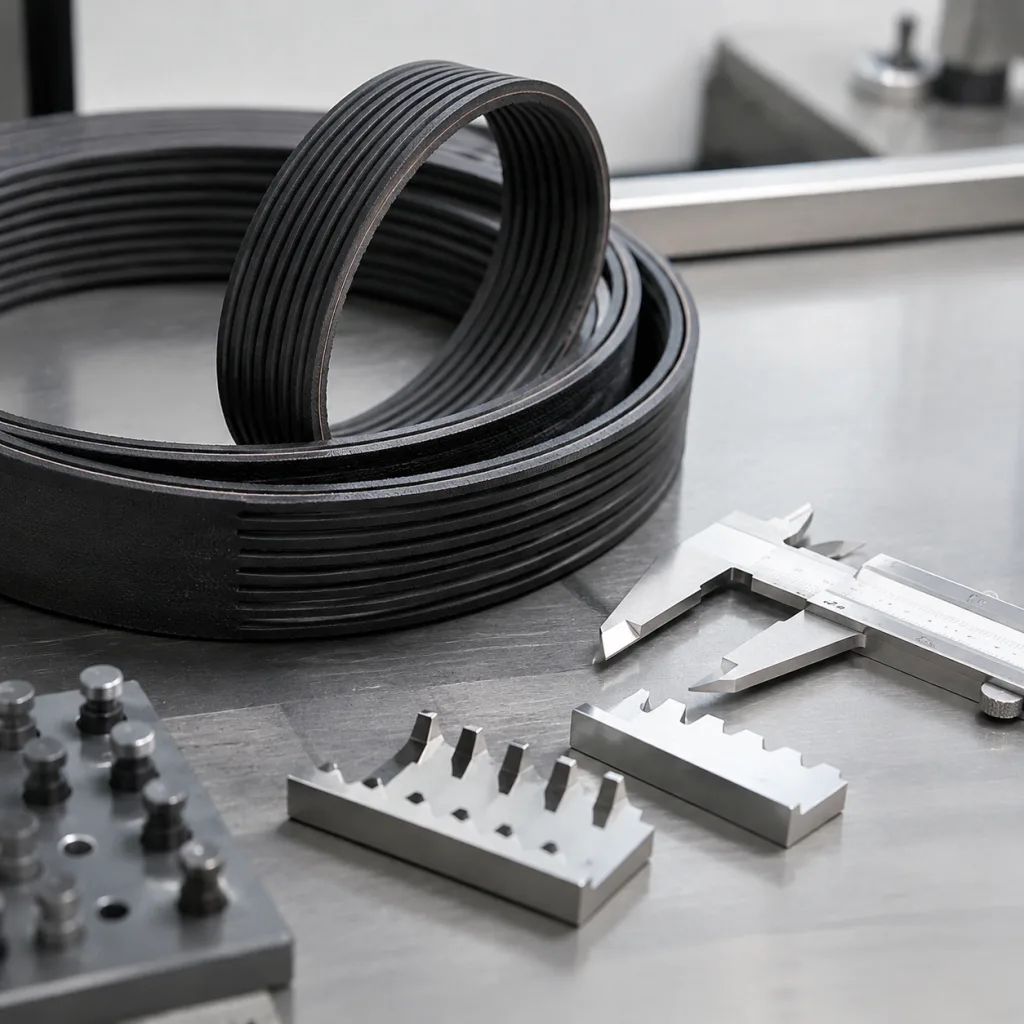
- Rib count and pitch: match pulley grooves precisely to prevent belt walk, edge wear, or rib shear.
- Compound selection: use EPDM-based construction or an approved equivalent for heat, ozone, and ageing resistance in modern multi-rib belts.
- Cord stability: require low tensile-cord elongation under repeated load cycles.
- Traceability: identify batch, mould or tooling reference, production date, inspection status, and packaging lot.
A high-volume serpentine belt change programme should not depend on carton labels alone. Buyers should require dimensional inspection records, ageing data, and production-sample approval before launch. Where belt families overlap across multiple engines, cross-reference data should be maintained in a controlled application file and updated when repair networks report fitment feedback.
OE-Equivalent Fit: Dimensions and Construction
Dimensional compatibility is the core replacement requirement. A belt that is only 5–10 mm outside the intended effective length may still be installable, but it can shift the automatic tensioner beyond its correct working angle. The result may be chirp, bearing overload, reduced pulley wrap, or slip on a driven accessory.
| Specification item | Procurement check | Risk if uncontrolled | |
|---|---|---|---|
| Rib count | Match approved application data exactly | Belt walk, rib shear, poor pulley engagement | |
| Effective length | Measure against the approved drawing or master sample | Noise, slip, tensioner misalignment | |
| Rib profile | Confirm pitch, angle, and rib-height consistency | Groove mismatch, edge abrasion, uneven contact | |
| Tensile cord | Check material, lay, and elongation data | Length growth and reduced tension in service | |
| Rubber compound | Confirm EPDM or approved equivalent | Heat cracking, ozone ageing, glazing | |
| Backside fabric or coating | Verify design where the belt contacts backside idlers | Backside wear, dusting, and noise |
| Sourcing model | Suitable use | Advantages | Main procurement risk |
|---|---|---|---|
| Spot purchase | Low-volume or emergency replenishment | Fast access when stock is available | Variable origin, mixed batches, limited test records |
| Distributor stock programme | Regional aftermarket coverage | Better availability, demand planning, and SKU continuity | Requires accurate forecasting and slow-mover control |
| Private-label programme | Multi-location repair chains and wholesalers | Brand control, packaging consistency, planned QA | Higher setup work and MOQ alignment |
| Drawing-based custom supply | OEM, Tier-1, or special application | Controlled dimensions, materials, and validation | Longer development and approval lead time |