Engine Drive Belt Replacement: B2B Sourcing Criteria
Engine drive belt replacement is a high-volume service category, yet procurement risk is easy to underestimate. A belt that is 2 mm short, has inconsistent rib geometry, or uses the wrong rubber compound can lead to noise, accessory slip, early cracking, warranty returns, and installer dissatisfaction. For distributors, repair chains, and importers, the buying decision should go beyond catalogue coverage. It should confirm dimensional equivalence, material construction, ageing performance, packaging traceability, and batch-level inspection records. This article outlines practical sourcing criteria for aftermarket engine drive belt replacement programmes, including specification checks, validation tests, supplier documentation, and launch controls. Driventus is an independent aftermarket manufacturer; brand names are referenced for fitment only.
Replacement Demand and Fitment Risk
Engine accessory drives operate in demanding conditions: heat, oil mist, pulley misalignment, dust, water splash, vibration, and repeated flexing. Service intervals differ by vehicle design and duty cycle, but many repairers inspect belts during every scheduled service and replace them when they find cracking, rib glazing, edge fraying, contamination, or tensioner noise.
For B2B buyers, demand is rarely the problem. The larger risk is inconsistent fitment across applications that look similar in catalogue data. Small variations in effective length, rib count, rib pitch, profile, or belt width can affect alternator output, air-conditioning compressor engagement, power-steering assistance, and water pump speed where the pump is belt-driven.
A reliable engine drive belt replacement programme should map each SKU to verified application data rather than a broad engine family alone. Cross-reference data may include generic OE-style references such as OE 06A… or OE 11251… when those references already exist in buyer data, but supplier catalogues should not imply approval, endorsement, or supply status with a vehicle manufacturer.
Typical failure modes found in warranty analysis include:
- Squeal after installation: incorrect effective length, worn tensioner, rib mismatch, contaminated pulleys, or insufficient wrap.
- Edge wear: pulley misalignment, damaged flanges, incorrect belt width, or unstable tracking.
- Rib cracking: heat ageing, ozone exposure, high flex stress, or unsuitable compound formulation.
- Rib separation: weak adhesion between tensile cord, cushion layer, and rubber body.
- Premature glazing: slip under accessory load, incorrect tension, or unstable friction characteristics.
Dimensional Equivalence and Material Specification
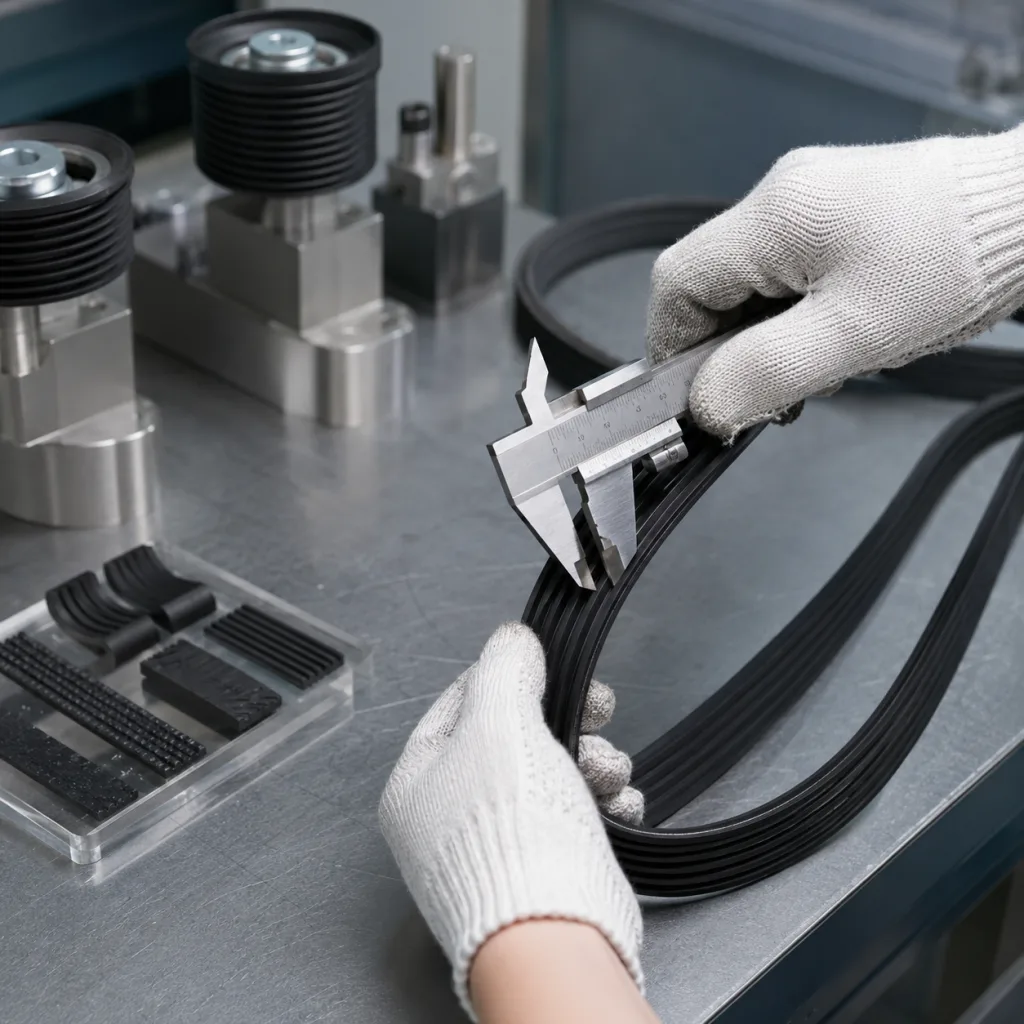
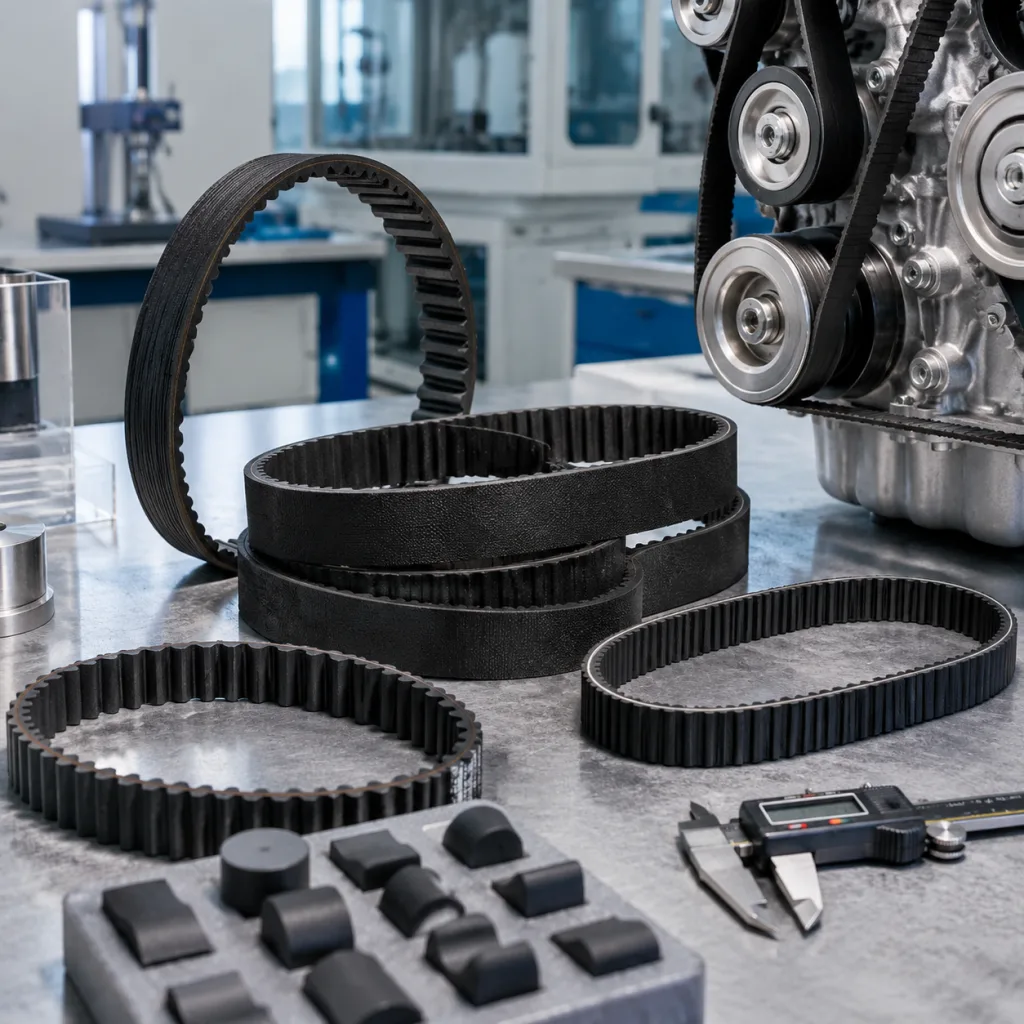
Replacement belts must match the functional geometry of the original application. For multi-rib serpentine belts, the procurement file should define rib count, effective length, top width, rib pitch, belt thickness, profile angle, and allowable manufacturing tolerance. For V-belts, width, height, angle, datum length, and cord position are critical because they determine how the belt seats in the pulley and carries load.
| Specification item | Procurement check | Why it matters |
|---|---|---|
| Rib count | Match application data exactly | Prevents partial pulley contact and edge loading |
| Effective length | Control by SKU-specific tolerance | Maintains the correct tensioner operating range |
| Rib pitch and angle | Verify with profile gauges | Reduces noise and slip on matching pulleys |
| Belt thickness | Measure across production lots | Controls flexing heat and pulley seating |
| Tensile cord position | Inspect sectioned samples | Supports stable length under load |
| Compound type | Specify EPDM or approved equivalent | Affects heat, ozone, and crack resistance |
| Marking and label | Confirm SKU, batch, and direction if required | Enables traceability and returns analysis |
| Test or inspection | Typical method | Buyer value |
|---|---|---|
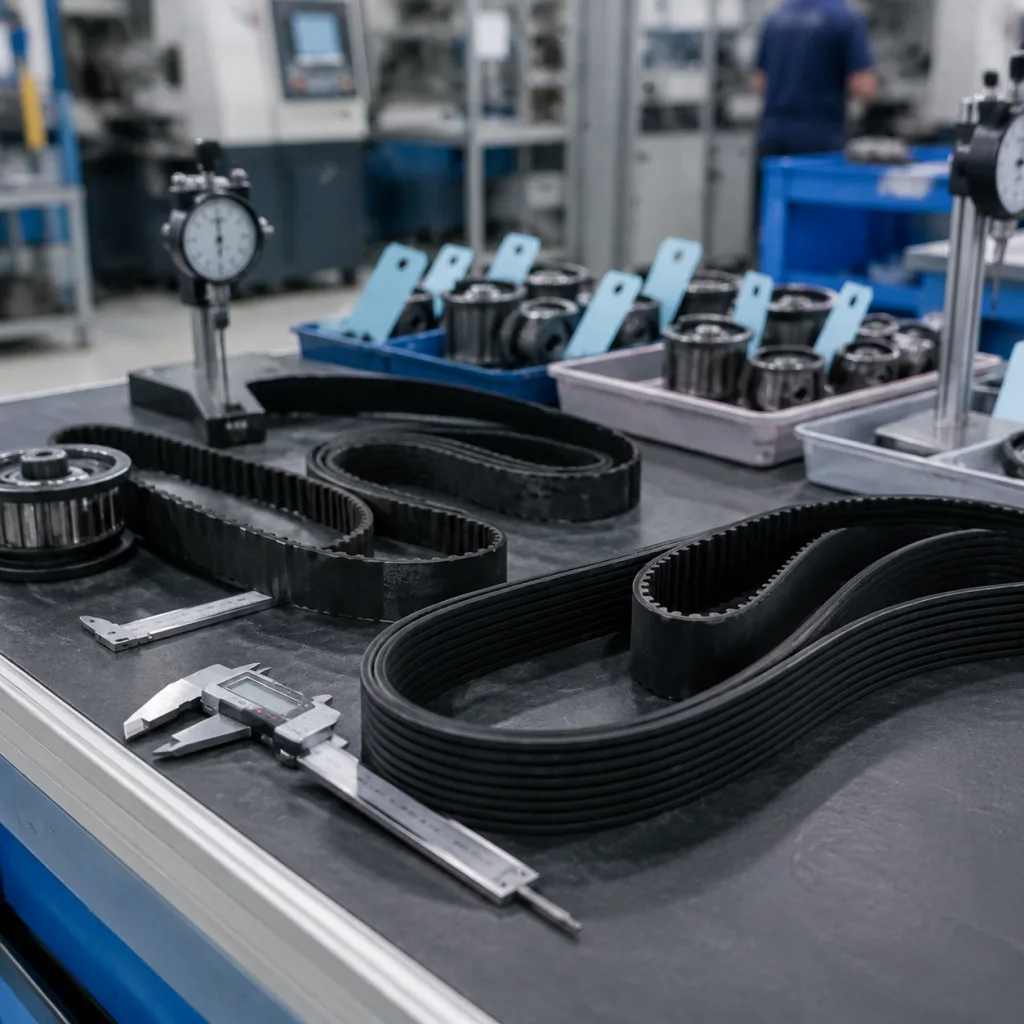
| Dimensional inspection | Calipers, profile gauges, length fixtures | Confirms catalogue and drawing match |
| Tensile strength check | Controlled pull testing | Verifies cord strength and adhesion |
| Heat ageing | Elevated-temperature exposure | Screens compound stability |
| Ozone resistance | Controlled ozone chamber test | Reduces cracking risk in storage and use |
| Flex fatigue | Repeated pulley cycling | Evaluates crack initiation and rib durability |
| Noise evaluation | Bench or vehicle-level assessment | Reduces installer complaints |
| Batch traceability review | Lot records and inspection reports | Supports claim investigation |