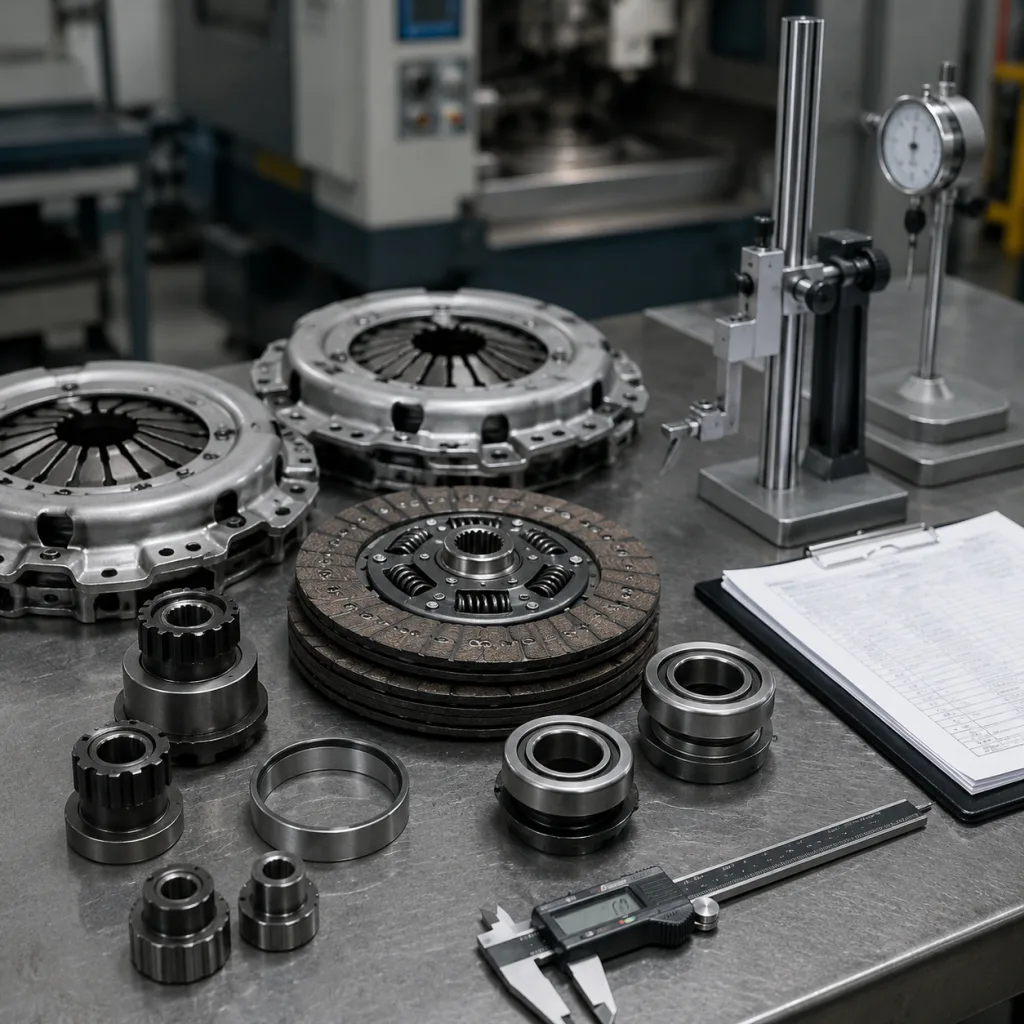
A scored cylinder wall cylinder liner is rarely a stand-alone parts problem. It is usually the visible result of another fault: abrasive dust, oil-film collapse, piston clearance error, overheating, ring-pack mismatch, coolant-side instability, poor washing, or installation damage. Replace the liner without isolating that fault and the next warranty claim often looks the same.
For sourcing teams, the commercial risk is bigger than one failed bore. Scoring can trigger repeat labor claims, rejected kits, disputed supplier debits, and lost confidence from repair chains. The useful question is not “is the bore marked?” but “what pattern is present, what measurement confirms it, and what replacement specification prevents recurrence?”
This guide is built as a diagnostic and sourcing framework for B2B buyers, category managers, importers, and remanufacturing engineers. It covers symptom triage, failure-pattern reading, inspection workflow, replacement-liner specifications, supplier evidence, MOQ and lead-time logic, and claim controls. Driventus manufactures wet, dry, and semi-finished cylinder liners in Taizhou, Zhejiang, under IATF 16949:2016 and ISO 9001:2015 controls. Driventus is an independent aftermarket manufacturer; brand names are referenced for fitment only.
Start with the Evidence, Not the Scratch
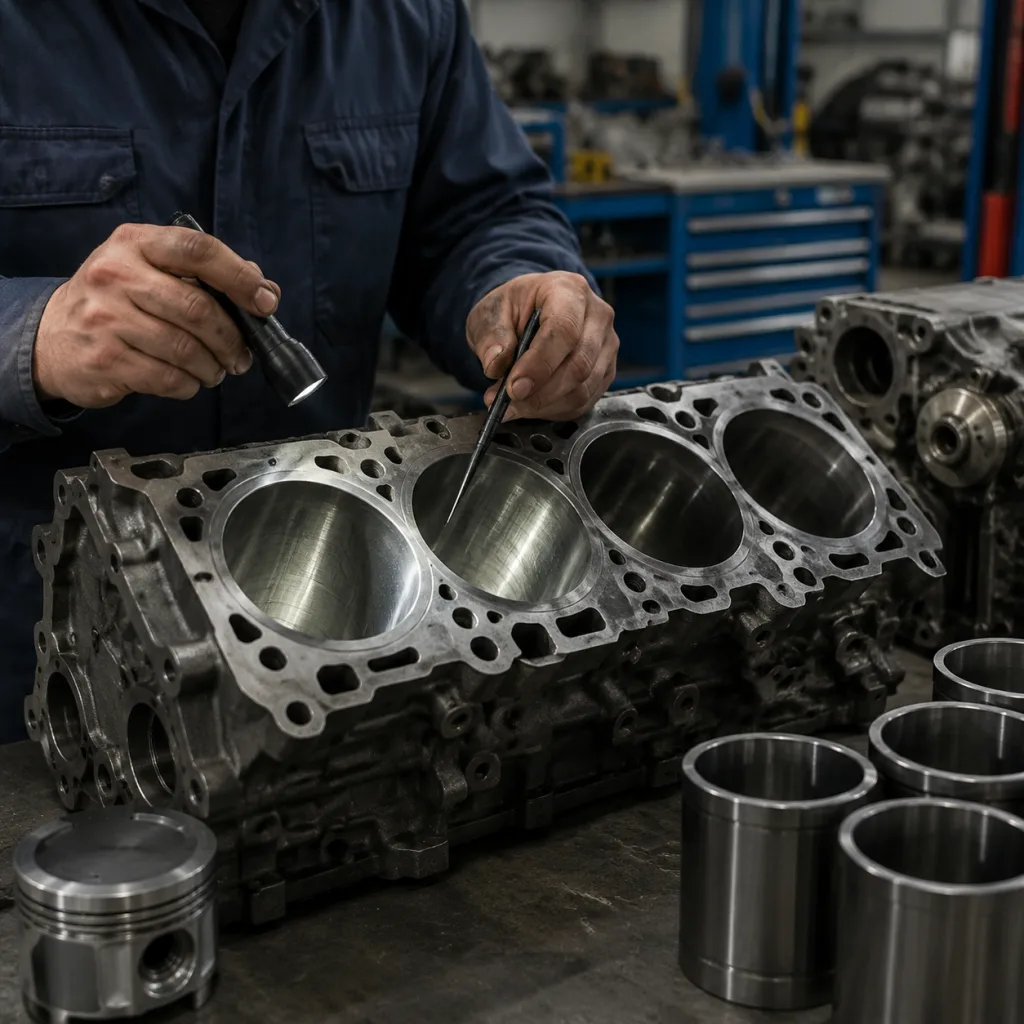
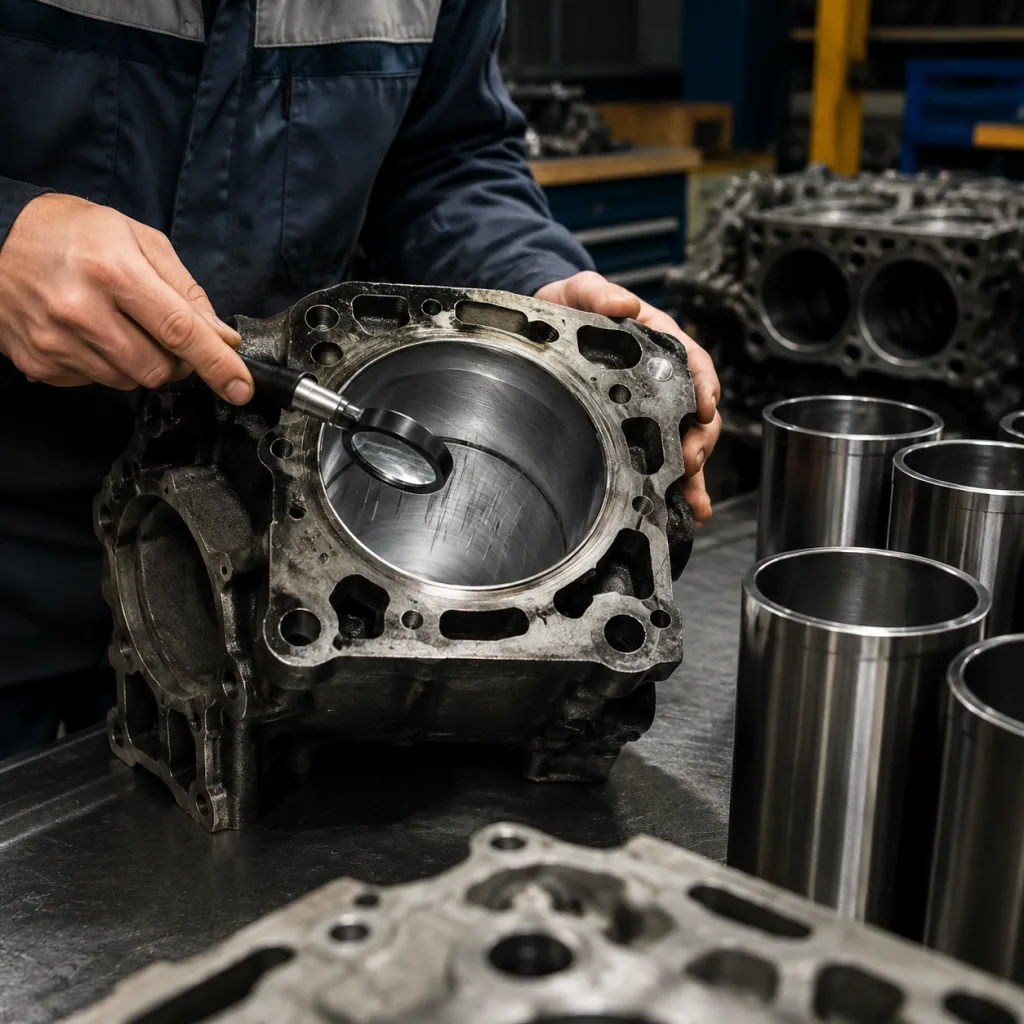
Scoring is often found after an oil-consumption complaint, smoke report, compression issue, or teardown. Do not clean the liner first. Carbon tracks, aluminium transfer, oil staining, heat marks, and polishing bands can show the failure sequence. Photograph the bore with a cylinder tag, ruler, and angled light from two directions so both groove direction and severity are visible.
Field symptoms that should trigger a scored cylinder wall cylinder liner inspection include:
Oil consumption moving sharply above the fleet baseline, such as 0.2–0.4 L/1,000 km increasing to more than 1.0 L/1,000 km on light-duty applications
Blue smoke after warm-up, especially after idle, deceleration, or sustained load
Compression spread above the engine builder’s limit, or more than about 10–15% cylinder-to-cylinder where no model limit is available
Crankcase blow-by above service limit, often with oil mist at the breather
Metallic cold-start noise, piston slap, or load-related knock from one cylinder
Oil analysis showing elevated iron, aluminium, chromium, or silicon
Piston skirt seizure marks aligned with vertical grooves on the thrust or anti-thrust side
Uneven crosshatch loss, local glazing, dark heat staining, or polishing near the top ring reversal area
Visual review is only a screen. Light witness marks may be acceptable if they do not catch a fingernail, show no aluminium transfer, and leave bore geometry inside the service limit. Grooves that catch a fingernail, show measurable depth on a profilometer, or remain obvious after solvent cleaning need full measurement. Deep grooves, heat discoloration, seizure bands, aluminium smearing, or broad crosshatch loss usually justify replacement and root-cause review.
For distributors and repair chains, the minimum claim file should include 8–12 images per failed cylinder: full liner bore, thrust-side close-up, anti-thrust close-up, top ring reversal area, piston skirt both sides, ring pack, air filter outlet, and oil or coolant contamination evidence. Add the liner, piston, rings, and installation records to one failed-cylinder report number. Otherwise the debate shifts from facts to assumptions.
Read the Pattern: Seven Failure Modes Buyers See Repeatedly
A broad label such as “scored liner” does not help purchasing, warranty, or engineering teams. The scoring pattern matters because each pattern points to a different corrective action. Buyers should expect the supplier to support technical teams with a failure-mode reference so claim decisions stay consistent across markets and workshops.
Observed liner condition
Probable cause
Inspection focus
Procurement action
Fine vertical scratches across the full stroke, often many parallel lines
Abrasive dust ingestion or poor washing after machining
Air filter seal, intake hose, turbo dusting, silicon in oil, liner cleanliness
Specify wet-liner fit, protrusion range, packing, and coolant guidance
</tr></thead><tbody> </tbody></table>Two repeat-failure causes dominate: abrasive contamination and incorrect piston-to-bore clearance. Both can destroy a correctly manufactured liner. Red flags include silicon rising with iron in oil analysis, dust trails downstream of the filter, blocked piston cooling jets, ring gaps below manual limit, and taper or out-of-round above service limit.
The supplier side still matters. Incorrect bore diameter, poor roundness, unsuitable surface roughness, low or inconsistent hardness, damaged flange geometry, wrong protrusion behavior, or dirty packaging can accelerate scoring even when the engine is assembled well.
For B2B sourcing, convert the failure mode into controls. A useful 5D/8D response separates stock containment from verified root cause, then lists measurable actions: 100% recheck of bore diameter for the affected batch, wash-fluid monitoring, revised bore-cap protection, or tighter carton drop-test requirements.
Inspection Workflow Before You Approve Replacement
A structured inspection prevents two expensive mistakes: blaming a good liner for a system fault, or reusing a damaged liner because the marks look minor. It also tells the buyer whether the repair package should include only liners or also pistons, rings, bearings, gaskets, oil jets, air-intake parts, or cooling components.
Use this sequence before approving replacement or supplier debit:
1. Record the operating complaint. Capture mileage or hours, oil consumption, overheating history, coolant loss, service interval, load profile, fuel concerns, previous repairs, and whether the failure happened during break-in. 2. Check lubrication evidence. Review oil level, oil grade, pressure history, pump condition, filter collapse, bypass-valve function, blocked oil jets, bearing distress, and oil analysis. Keep 50–100 ml of oil if a claim may proceed. 3. Inspect intake sealing. Look for dust tracks after the filter, cracked hoses, loose clamps, damaged turbo compressor blades, poor airbox sealing, missing service plugs, and silicon in oil analysis. 4. Measure bore geometry. Check diameter, taper, and out-of-round at top, middle, and bottom positions in thrust and non-thrust directions. A common map uses 10–15 mm below top ring reversal, mid-stroke, and 10–15 mm above the bottom of ring travel. The engine manual takes priority. 5. Assess the surface. Record crosshatch retention, groove depth, metal transfer, heat discoloration, polishing, corrosion, and cavitation. Where available, measure Ra/Rz/Rpk/Rk/Rvk on a cleaned reference area and on the suspect zone. 6. Review mating parts. Inspect piston skirt, ring gaps, ring lands, ring faces, wrist pin alignment, connecting rod straightness, injector condition, and head-gasket evidence. Check ring end gap in the actual bore at the specified depth. 7. Confirm installation conditions. Review cleaning, liner protrusion or flange seating, dry-liner press fit, wet-liner O-ring lubrication, torque sequence, coolant fill, oil priming, and break-in procedure. 8. Decide containment. If stock from the same batch remains, quarantine it until dimensions, hardness, finish, cleanliness, and packaging are checked against the approved specification.
Replacement should be based on measurement. Deep scoring, aluminium transfer, heat damage, or geometry outside the engine builder’s service limit normally supports replacement. Where no service limit is available, many remanufacturing buyers treat taper or out-of-round above 0.03–0.05 mm on light-duty bores, or above the agreed drawing tolerance on heavy-duty bores, as an engineering-review trigger.
Wet liners need extra checks: sealing lands, liner protrusion, O-ring grooves, coolant-side corrosion, and cavitation damage. Typical protrusion windows often sit around 0.03–0.12 mm, but the model-specific manual must control because head-gasket clamp load is sensitive to protrusion spread.
For aftermarket programs, Driventus can support part-family matching through our catalog, including common diesel and petrol engine liner applications. For non-standard engines, drawings and sample parts can be reviewed through custom manufacturing. Send the old liner, piston, rings, block counterbore data, and any OEM drawing or service limit before quoting when the application is claim-sensitive.
Specification Deep-Dive: What Must Be Locked in the RFQ
A liner can fit the block and still fail early. Nominal bore size is only one line of the specification. Material, hardness, flange geometry, installed geometry, finish, interference, cleanliness, and packaging decide whether the replacement survives.
Control these items in the RFQ:
Material: grey cast iron or alloy cast iron selected for thermal load and wear demand; common aftermarket references include pearlitic grey iron or alloyed cast iron with controlled graphite structure
Hardness: defined by material and process route; many programs target roughly 180–260 HB depending on engine family, but the drawing or approved sample should govern
Bore diameter: supplied as finished, semi-finished, or rough bore; finished bores need final-size tolerance, while semi-finished bores need machining allowance stated clearly
Roundness and taper: measured at defined heights and orientations, not one convenient location; controlled programs often specify ≤0.01–0.03 mm depending on bore size and supply condition
Flange height and seating face: critical for wet liners, protrusion, and head-gasket clamp load; include seating face flatness, flange thickness, and chamfer condition
Surface finish: plateau-honed finish with application-specific Ra, Rz, Rpk, Rk, Rvk, and crosshatch targets; common finished-liner targets may use Ra about 0.4–0.8 µm and 35–55° crosshatch, subject to ring-pack requirements
Outer diameter and interference: essential for dry-liner press-fit retention, block contact, and heat transfer; state target interference or installed bore dimension rather than only free-state OD
Chamfers and edge protection: needed to reduce ring damage, installation burrs, and handling marks; port-edge deburring is especially important on two-stroke and ported designs
Cleanliness and corrosion protection: sealed packaging, rust preventive, protected edges, and clean internal surfaces; specify no loose chips, no abrasive residue, and a visual or particle-count cleanliness target
Finished versus semi-finished liners
Finished liners suit direct replacement programs and repair kits where speed and consistency matter. Semi-finished liners suit remanufacturing operations that final-hone after installation. Rough-bore castings give maximum machining flexibility but shift more risk to the buyer’s process.
Supply condition
Typical use
Advantage
Risk to manage
Finished bore
Direct replacement programs and repair kits
Faster installation and simpler stocking
Requires bore protection, logistics control, and careful handling
Semi-finished bore
Engine remanufacturing and block-dependent repairs
Final honing after fitment controls installed geometry
Requires skilled machining, allowance control, and inspection discipline
Rough bore casting
OEM, special build, or low-volume engineering
Maximum machining flexibility
Longer process-control chain, tooling cost, and higher scrap exposure
</tr></thead><tbody> </tbody></table>When buyers source a scored cylinder wall cylinder liner replacement, the RFQ should state supply condition in plain terms. Ambiguous RFQs create false price comparisons because machining content, inspection effort, packaging protection, and scrap risk differ.
A complete RFQ line includes engine code, liner type, bore size, supply condition, material and hardness target, drawing tolerance, annual volume, first-order quantity, packaging requirement, inspection documents, and sample availability.
Evaluate MOQ, price, and lead time together. Existing Driventus parts with tooling and gauges available usually allow lower MOQ, faster sampling, and lower unit price than custom liners. Custom or drawing-controlled liners are driven by casting batch size, machining fixtures, honing setup, gauge preparation, inspection requirements, and packaging print quantity. Separate one-time tooling or fixture cost, sample cost, unit price, documentation cost, and export packaging cost before comparing suppliers.
Supplier Evidence: What Separates a Quote from a Controlled Program
Certification is the audit framework. Product evidence is the buyer’s protection. A credible liner supplier should show control from casting or blank sourcing through machining, honing, washing, inspection, marking, and packing. Define the required documents at sample approval, mass production, and shipment stage so the quotation includes the real workload.
Driventus operates under IATF 16949:2016 and ISO 9001:2015. Relevant customer requirements may also include material declarations aligned with REACH (EC) No 1907/2006 for EU supply chains. For regulated engine programs, emissions-related conformity is managed by the vehicle or engine system owner, not by an aftermarket liner manufacturer.
Useful supplier evidence includes:
Control plan for casting or blank control, machining, honing, cleaning, inspection, marking, and packing
Dimensional inspection report covering bore, flange, outer diameter, height, counterbore seating, chamfer, and sealing features
Material certificate or casting batch traceability record, including grade, chemistry where applicable, and batch identification
Surface roughness and crosshatch record where specified, ideally showing Ra/Rz and plateau parameters on approved equipment
Hardness record by batch or sampling plan, with test location and method stated
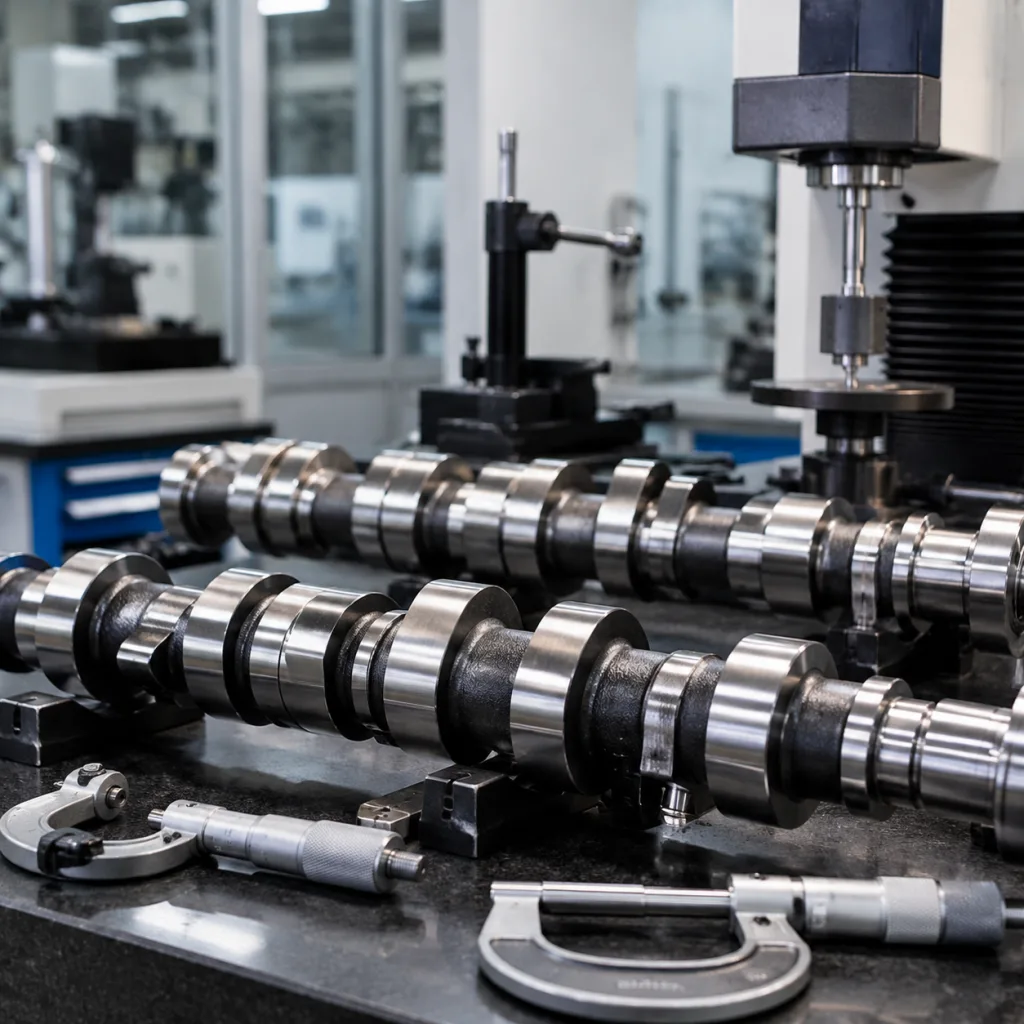
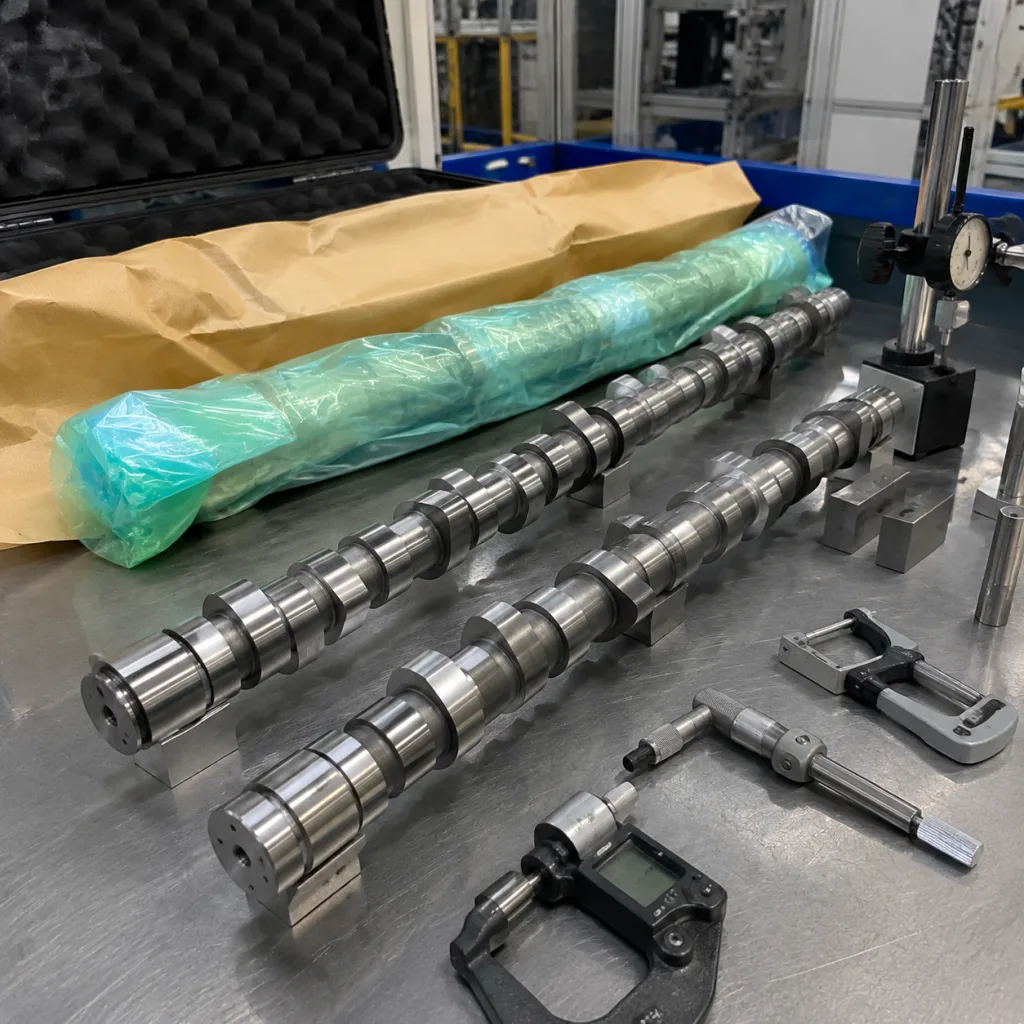
Gauge calibration records linked to ISO 9001:2015 procedures for bore gauges, micrometers, height gauges, roughness testers, and hardness testers
Packaging specification for sea freight, humidity, impact, corrosion prevention, carton strength, palletization, and warehouse storage
Nonconforming-product and change-control procedure for material, tooling, process, outsourced operation, inspection method, or supplier changes
Pre-shipment inspection checklist with sample size, AQL level, critical dimensions, appearance limits, marking, quantity, and carton condition
Ask how each critical characteristic is controlled during production, not only how it is checked at the end. Typical controls include incoming casting review, rough turning, aging or stress control where applicable, finish turning, flange grinding or facing, bore honing, deburring, washing, rust prevention, final measurement, marking, bagging, carton packing, and pallet protection.
If the part is semi-finished, the supplier should state machining allowance and protected surfaces clearly. Too little stock leaves no correction room after installation. Too much stock raises machining time and scrap exposure.
Buyers can review Driventus process controls through our quality system. For higher-risk programs, agree a pre-shipment inspection plan before order release, including 100% checks for critical bore or flange features on launch batches and reduced sampling after stable performance. For claim-prone applications, request retained samples or retained inspection records by batch.
Scenario: Building a Liner Program for Claim-Prone Repair Chains
Consider a distributor selling liner kits into several repair-chain branches. One branch reports scoring after rebuild. Another sees oil consumption after 2,000 km. A third returns kits with damaged bore edges. The distributor sold the liner, but the actual causes may include intake dust, ring mismatch, poor washing, blocked oil jets, coolant contamination, storage corrosion, or installation practice.
This is where sourcing control becomes operational control.
Build the program around these rules:
Define application coverage by engine code, bore size, liner type, supply condition, repair market, and whether the liner is sold alone or inside a piston-ring-liner kit
Use OE part-number cross-references only for fitment mapping when supplied by the buyer, and verify dimensions before listing
Require batch traceability on cartons and part markings where space allows, linking production date or lot code to inspection records
Specify export packaging for humidity, impact, corrosion prevention, edge protection, barcode labeling, and 6–24 months of warehouse dwell time
Agree AQL or inspection sampling before shipment; many buyers classify bore size, flange height, OD, and protrusion-related features as critical or major characteristics
Align warranty evidence requirements with repair-chain procedures, including photos, measurements, oil and coolant evidence, and return-part timing
Maintain change control for material, tooling, supplier, machining route, honing stone, washing chemistry, rust preventive, and finish changes
Keep installation notes consistent across cartons, catalogs, technical bulletins, and online product data
Set MOQ and replenishment around engine parc demand, not only container utilization, so slow-moving sizes do not exceed rust-prevention or packaging assumptions
Price comparison should use landed cost per usable liner, not ex-works price alone. Include scrap allowance, incoming inspection, sea freight, duty, local warehousing, and expected warranty debit. A cheaper liner becomes expensive if it requires heavier inspection, causes installation rejects, or lacks batch evidence for claim defense.
Repeat catalog liners usually allow mixed-SKU orders with carton-level traceability. Custom liners usually require a minimum production batch because casting, machining setup, honing setup, and inspection programming are not economical at very low quantity.
Driventus exports engine and powertrain components to more than 60 countries and supplies B2B customers including aftermarket distributors, OEM/Tier-1 procurement teams, and multi-location repair chains. Product scope includes cylinder liners, pistons, crankshafts, gaskets, water pumps, turbochargers, and related engine components.
A typical launch path is application list review, drawing or sample confirmation, feasibility check, quotation with MOQ and lead time, sample production, dimensional approval, packaging approval, pilot order, and repeat production with agreed inspection records. For scored cylinder wall cylinder liner programs, this process gives technical teams a defensible basis for approval, rejection, and claim prevention.
Frequently asked questions
Possibly, if marks are superficial, do not catch a fingernail, bore geometry remains within the engine builder’s service limit, and there is no aluminium transfer, heat damage, corrosion, or abnormal wear pattern. Reuse decisions should be based on measured diameter, taper, out-of-round, surface finish, and crosshatch condition, not visual review alone.
Common causes include abrasive dust ingestion, poor cleaning after machining, incorrect piston-to-bore clearance, blocked oil jets, overheating, wrong ring gap, unsuitable oil, coolant problems, or poor break-in. Replacing the liner without correcting the root cause often leads to another failure.
Yes. Driventus can review drawings, samples, material requirements, dimensional tolerances, surface-finish targets, MOQ, packaging needs, and inspection plans for custom cylinder liner programs. Manufacturing feasibility depends on liner type, volume, machining content, tooling, gauges, and validation requirements.
If you are reviewing a liner program or investigating recurring scoring claims, share the application list, drawings, samples, target MOQ, annual volume, packaging requirements, and inspection standards. Contact Driventus to [request a quote](/contact.html).