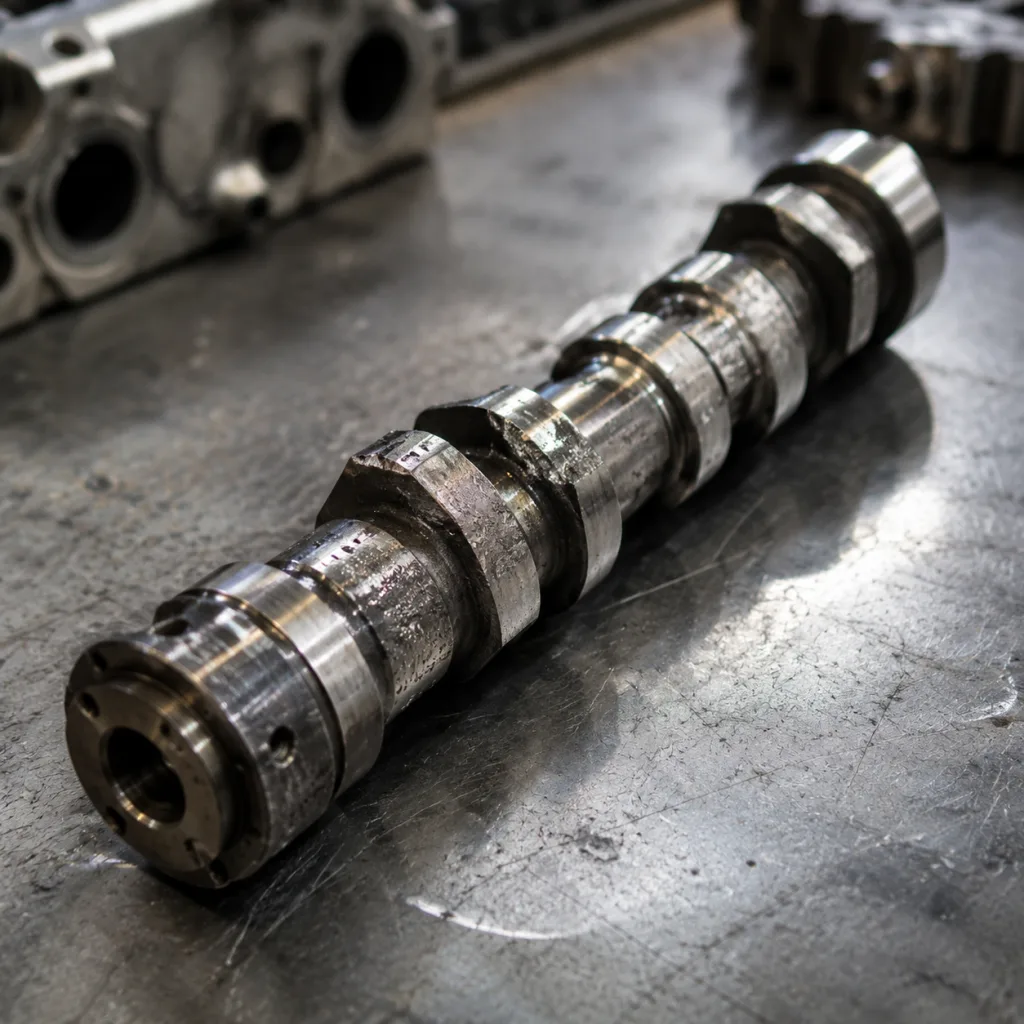
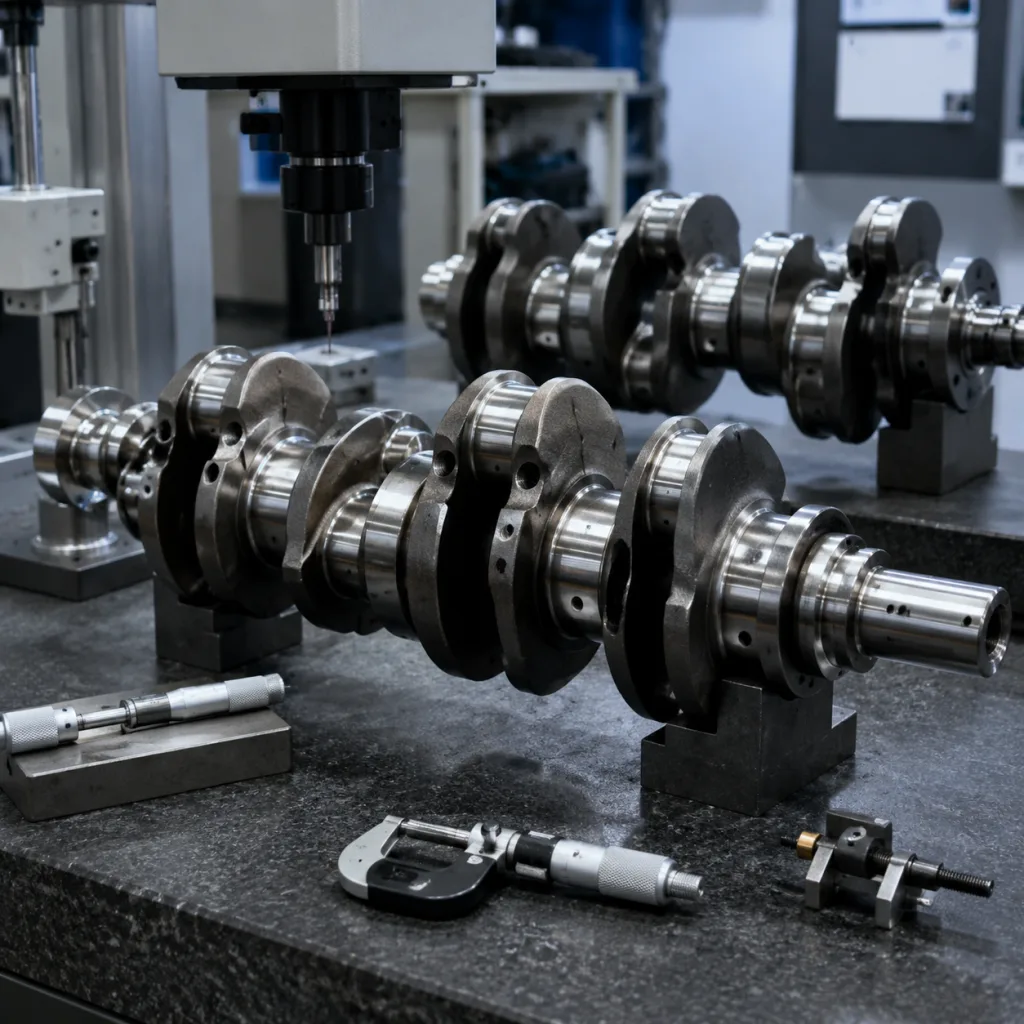
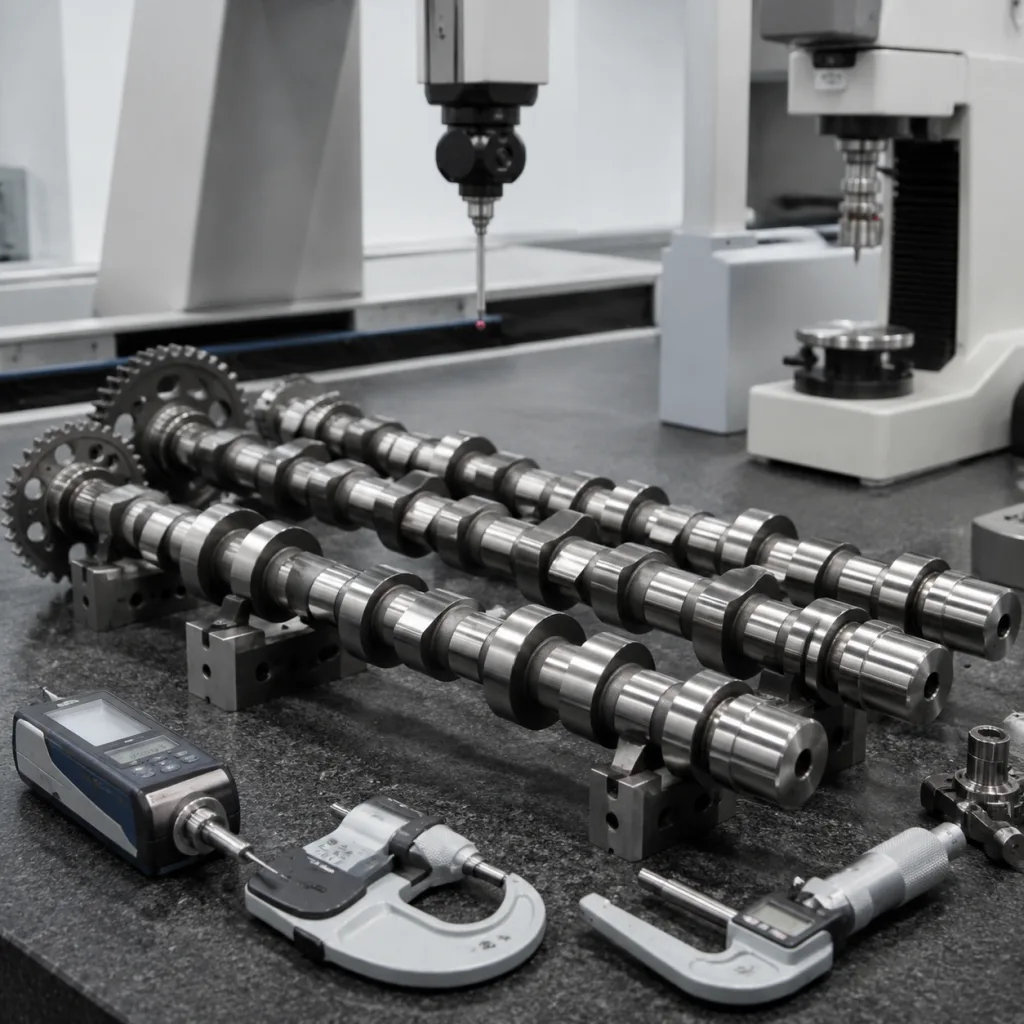
A camshaft for Acura RDX aftermarket replacement is not a simple metal shaft bought by length and diameter. It controls valve timing, carries the sensor relationship the ECU expects, feeds oil through specific passages, and runs directly on precision journals under high contact stress. If the lobe profile, trigger orientation, bearing journals, oil holes, or surface hardness drift, the problem usually appears later as noise, fault codes, installation rejection, or warranty claims.
For importers, repair-chain buyers, and engine component distributors, the sourcing decision should start with repeatability. Can the supplier separate intake and exhaust variants? Can it prove the datum used for timing features? Can each batch be traced through material, heat treatment, grinding, inspection, packing, and shipment? Unit price matters, but a low-cost camshaft with weak measurement evidence can turn into a high-cost programme.
Driventus manufactures engine and powertrain components in Taizhou, Zhejiang for B2B aftermarket and OEM-channel customers in more than 60 countries. For camshaft programmes, we focus on controlled metallurgy, dimensional repeatability, surface hardness, grinding quality, practical documentation, and export-ready packaging. Driventus is an independent aftermarket manufacturer; vehicle brand names are referenced only to identify fitment. This article gives sourcing teams a sharper way to evaluate Acura RDX aftermarket camshafts before committing to volume orders.
Start With the Fitment Decision, Not the Price
The first buying decision is whether the part actually belongs in the application range. Acura RDX coverage varies by model year, market, engine family, camshaft position, valve-control layout, sensor trigger design, oil-feed path, and timing sprocket interface. Treating these as “close enough” creates catalogue errors that are expensive to unwind after stock arrives.
A reliable approval file should answer four questions before a SKU is opened:
Which engine code, displacement, model years, and markets are covered?
Is the part intake-side, exhaust-side, or position-specific in another way?
Which physical features prove the match: trigger end, sprocket end, oil holes, journal sequence, and actuator relationship?
What evidence supports the cross-reference: buyer sample, drawing, 3D scan, measurement report, or verified application data?
Catalogue teams should use OE-style references only as fitment aids, not as proof of vehicle manufacturer approval. Buyer-supplied numbers still need to be checked against samples, drawings, or measured geometry. The safest file includes a known-good sample, engine-code confirmation, intake/exhaust marking, and clear photos of both ends, all oil drillings, and the journal order.
Failure usually starts with overbroad coverage. A listing such as “RDX 2.3/2.4 all years” may look convenient, but it hides the exact split that matters to workshops. A small error in trigger orientation or oil-feed location can put the part on the shelf successfully and still cause fault codes, delayed installation, or early wear in service.
Separate technical risk from commercial risk. Sample orders often cost more because inspection, reverse measurement, and packaging confirmation are not spread across volume. Repeat-order MOQ may be driven by machining batch, blank batch, heat-treatment lot, carton printing, or label setup. For private-label programmes, plan 90–120 days of forecast visibility even when production itself is shorter.
For broader sourcing, buyers can review our catalog and engine components. Projects requiring buyer drawings, modified packaging, or private-label identification can be handled through custom manufacturing with controlled project documentation.
Geometry Deep-Dive: The Dimensions That Decide Pass or Fail
A replacement camshaft is a timing component first and a machined component second. Visual similarity is not enough. Small changes in lobe lift, base circle, journal concentricity, phasing, or trigger-wheel position can affect idle quality, diagnostic trouble codes, oil-film stability, valve-train noise, and wear.
For Acura RDX aftermarket replacement demand, buyers should ask for measured confirmation against an approved drawing or master sample:
Feature
Procurement check
Typical control target
Cam lobe lift
Match approved master sample or drawing
Often controlled within ±0.03–0.05 mm where drawing allows
Base circle diameter
Confirm within drawing tolerance
Commonly checked to ±0.02–0.04 mm
Bearing journal diameter
100% or statistical inspection by batch
Usually controlled to micron-level drawing tolerance
Journal runout
Check on precision centres
Typical buyer limit: ≤0.03–0.05 mm TIR
Lobe phasing
Measure against datum feature
Angular deviation normally held within drawing limit
Sensor trigger position
Confirm angular orientation
Critical-to-fitment feature; verify against master sample
Oil hole position
Inspect visually and dimensionally
Must align with head oil-feed path and groove layout
</tr></thead><tbody> </tbody></table>The datum plan matters as much as the numbers. One common method is to set the front journal or specified locating end as the axial datum, use journal centres for rotational measurement, and report lobe angle, trigger angle, and oil-hole position against the same zero reference. Without agreed datums, two suppliers can submit similar reports while measuring from different references.
Not every feature needs the same inspection level. Journal diameter, straightness, trigger position, oil-feed drilling, and timing-related geometry are usually critical characteristics. Non-functional lengths or external reliefs may be sampled by lot. A sensible receiving plan uses full first article inspection for the first order, then agreed AQL or statistical sampling on repeat batches if no material, tooling, heat-treatment, grinding, or packaging change occurs.
Driventus normally works from buyer drawings, approved samples, or confirmed application data. Where drawings are unavailable, reverse engineering should include sample measurement, material analysis, 3D comparison where appropriate, trial grinding data, and buyer approval before tooling release.
Where Cheap Camshafts Usually Fail
Most camshaft failures do not begin with a dramatic break. They begin with shortcuts that are hard to see in a warehouse: the wrong blank route, uneven hardening, poor grinding control, insufficient deburring, weak rust protection, or unverified straightness after heat treatment.
Durability depends on the combination of substrate strength, surface hardness, lubrication compatibility, and final surface finish. Depending on the original design and customer specification, aftermarket camshafts may use cast iron, chilled cast iron, forged steel, or assembled steel construction. The correct route depends on follower type, contact stress, oil environment, target service life, and agreed cost level.
A useful purchase specification should name the controls, not just request “good quality”:
Material grade or approved equivalent, supported by chemical composition records for each heat or casting lot.
Heat-treatment method and target hardness range for lobes and journals, such as HRC 55–62 where the drawing and material route require hardened steel surfaces.
Case depth where induction hardening or a similar process is specified, defined at a named hardness threshold.
Surface roughness limits on lobes and bearing journals, for example Ra 0.2–0.4 µm for ground functional surfaces when required by the drawing.
Straightness and runout criteria after final grinding, not only before heat treatment.
Rust-prevention oil, VCI protection, desiccant use where needed, and export packaging method.
Process control should be visible. Hardness testing and metallographic checks need defined sampling points: first piece after setup, per furnace or induction batch, and after any parameter change. Surface finish should be measured with calibrated equipment. A polished lobe with the wrong hardness can pass a visual check and still fail under normal contact stress.
Ask how the supplier controls distortion after heat treatment and how finish grinding is separated from rough machining. A robust route normally includes blank inspection, rough machining, stress relief or heat treatment where applicable, straightening control, finish grinding, oil-hole deburring, washing, anti-rust treatment, final inspection, and protected packing.
A lower quote may reflect a different blank type, fewer hardness checks, looser grinding control, or lighter corrosion protection. For private-label and warranty-sensitive channels, compare total landed cost with claim exposure, not FOB price alone. Driventus manufacturing controls are managed within an IATF 16949:2016 and ISO 9001:2015 framework; buyers can review our quality system for how incoming inspection, in-process checks, nonconforming material handling, and traceability are structured.
Validation Scenario: From Sample Approval to Repeat Batch
Imagine a distributor adding an Acura RDX camshaft line to a regional repair-chain programme. The first sample looks correct. The carton looks acceptable. The price fits the target. That is not enough to launch.
The validation file should prove that the first sample can become a repeatable production part:
First article inspection report covering lobe lift, base circle, journals, runout, phasing, oil holes, and trigger features.
Material certificate for each heat or casting batch, with chemical composition traceable to the blank lot.
Hardness report for lobes and journals, including test position, scale, and acceptance range.
Surface roughness report on functional surfaces, with Ra values and instrument identification.
Runout and straightness results taken after final grinding.
Timing feature and trigger-position verification against the approved datum.
Packaging drop or vibration check for export cartons where required.
Batch traceability record linking production date, operator, inspection, heat-treatment batch, packing date, and shipment.
For a new SKU, buyers should normally review 3–5 sample pieces before the first mass-production order. The samples should be checked dimensionally and, where practical, through installation-oriented review. A pilot order can reduce risk before a large consolidated shipment, especially for national distributors or repair-chain networks.
Tie every decision to a revision level. If pilot feedback leads to a change in trigger machining, grinding method, rust protection, label design, or carton support, the first article report and approved sample file should be updated. Otherwise, the second order can quietly drift from the validated standard.
Camshaft timing accuracy can influence vehicle-level emissions behavior because it affects engine operation, although the camshaft itself is not certified as an emissions device. For markets using UNECE or similar rules, buyers should understand the relevance of ECE R-83 to complete vehicle emissions outcomes without treating a replacement camshaft as an independently approved emissions component.
If friction or wear validation is required, define the test before production: load profile, lubricant, running time, oil temperature, speed cycle, follower type, acceptance criteria, and reporting format. Vague requests for “endurance testing” usually create disputes after the batch is already made.
Documentation and Packaging: What Customs, QA, and Warehouses Need
Import paperwork for camshafts is usually simpler than for electronics or safety-regulated assemblies, but it still has to be disciplined. Good documentation supports customs clearance, restricted-substance review, incoming quality control, and customer audits in the EU, UK, North America, Australia, Brazil, and other regulated markets.
Document
Typical use
Buyer action
Commercial invoice and packing list
Customs and receiving control
Match SKU, quantity, net/gross weight, and carton count
Certificate of origin
Tariff and trade documentation
Confirm country-of-origin wording before shipment
Material certificate
Metallurgy verification
Link heat or casting batch to production lot
Dimensional report
Incoming quality approval
Check critical features against agreed tolerances
Heat-treatment record
Durability evidence
Confirm hardness range and batch identity
REACH declaration
EU chemical compliance review
Include oil, coating, and packaging substances where relevant
IMDS-style material data, when requested
OEM-channel material reporting
Agree data format before production release
</tr></thead><tbody> </tbody></table>For EU-bound supply, REACH (EC) No 1907/2006 may apply to declarations covering oils, coatings, packaging materials, and substances of very high concern. RoHS is usually not the main framework for a mechanical camshaft, but customer-specific restricted-substance lists can still apply when the part enters an OEM-channel or private-label audit system.
Packaging has one job: keep the lobes and journals clean, separated, and corrosion-free until installation. A practical export specification may require anti-rust oil, VCI sleeve or wrap, molded pulp, foam, or plastic supports, and separation that prevents metal-to-metal contact. Outer cartons should keep gross weight manageable, often below 18–22 kg for manual handling unless palletized packing is agreed.
Labels should show buyer SKU, part description, quantity, country of origin, batch or lot number, and barcode format if required. Private-label artwork needs approval before mass packing, including dielines, print position, warning text, and carton strength. A weak carton can turn a fully inspected camshaft into a damaged warranty claim before it reaches the workshop.
Buyer Q&A Before You Release the Purchase Order
Before adding an Acura RDX camshaft replacement line to a wholesale, e-commerce, or repair-chain programme, use the purchase order review as a final risk gate. Price comparison is useful only after the technical file is credible.
What must be locked before production?
Confirm the exact application range, engine code, intake/exhaust position, model years, and market restrictions. Lock the approved sample, drawing or measurement report, datum definition, critical dimensions, label artwork, packaging specification, inspection level, and revision history. Written change control should be required before any change to blank supplier, material grade, heat-treatment route, grinding wheel specification, trigger machining, oil-hole process, or packaging structure.
Which dimensions deserve special attention?
Prioritize cam lobe lift, base circle, journal diameter, runout, trigger feature position, lobe phasing, and oil-hole alignment. These features affect fitment, timing accuracy, lubrication, noise, and service life. Ask which are 100% inspected and which are sampled by AQL or agreed statistical rules.
What should the quote actually include?
Define whether pricing is EXW, FOB, CIF, or DDP. Confirm whether neutral or private-label packaging is included, whether tooling or fixture costs apply, and whether labels, barcode rules, carton markings, document preparation, and pallet requirements are part of the unit price. MOQ may be low for standard stock items, but custom references, new packaging, or buyer-specific markings often require higher quantities.
How should lead time be planned?
Separate sample lead time, first production lead time, and repeat-order lead time. First orders often need extra days for measurement approval, packaging proofing, artwork review, document confirmation, and pilot feedback. Repeat orders move faster when forecast, inspection criteria, packaging, and documents are already frozen.
Can related parts be consolidated?
Yes, when the sourcing plan supports it. Driventus can supply standard aftermarket camshaft programmes and develop customer-specific references when samples or drawings are available. Category buyers building wider engine-component coverage can combine camshafts with related gaskets, timing parts, water pumps, and rotating components to simplify supplier management, documentation review, shipment consolidation, and MOQ planning.
Frequently asked questions
Yes. Driventus supports private-label packaging, carton markings, barcode rules, and customer SKU mapping for qualified B2B programmes. Application data, sample approval, label content, carton artwork, MOQ, and packaging specifications should be confirmed before mass production.
Buyers should request a first article inspection report, material certificate, hardness report, runout data, surface roughness results, timing-feature verification, and batch traceability record. For new programmes, sample approval should precede production release, and critical dimensions should be measured against agreed datums and tolerances.
No. Driventus is an independent aftermarket manufacturer; brand names are referenced for fitment only. We do not claim approval, endorsement, sponsorship, or authorization by any vehicle manufacturer.
If you are sourcing a camshaft for Acura RDX aftermarket replacement or building a wider engine-components programme, send your application list, samples, drawings, target MOQ, packaging needs, and forecast volume to [request a quote](/contact.html).