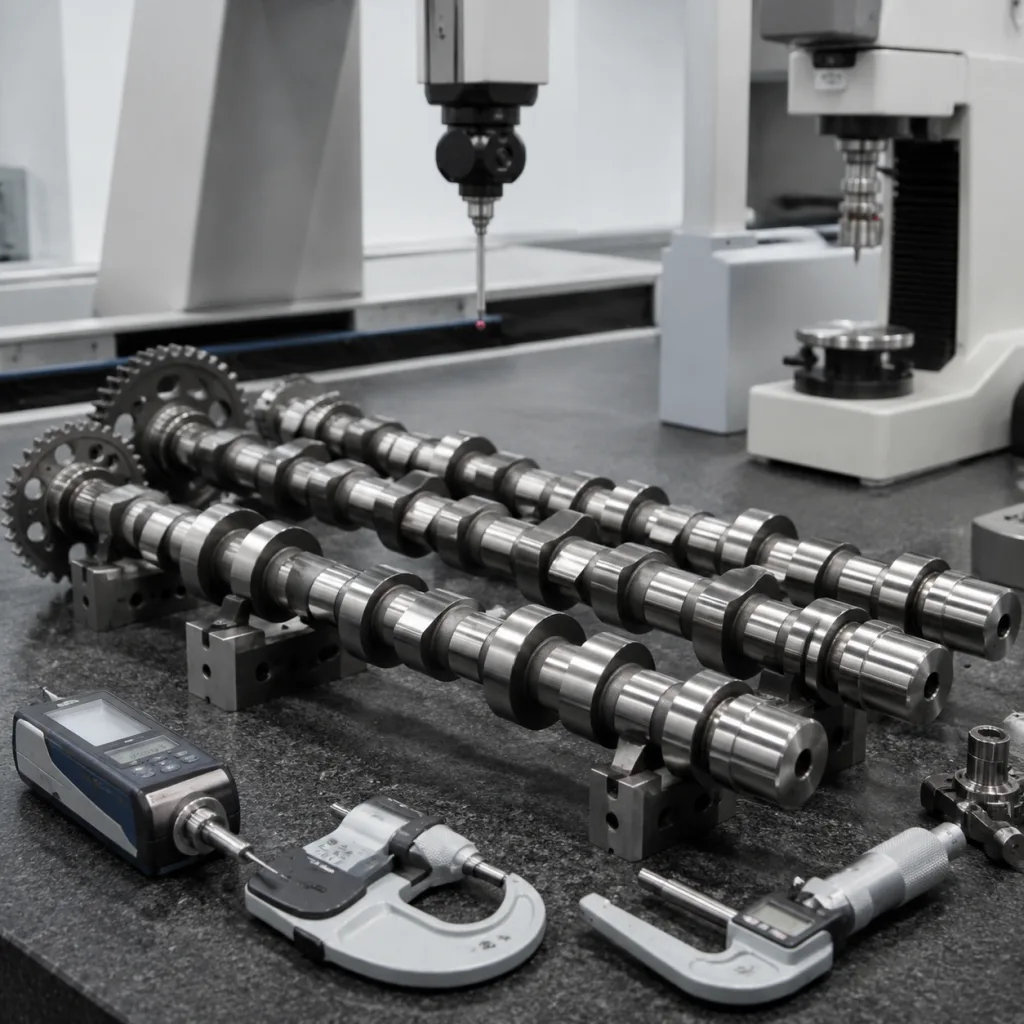
A camshaft programme for Iveco engine applications can fail even when the part number looks correct. The risk usually sits deeper: datum mismatch, unstable lobe grinding, heat-treatment distortion, weak rust protection, or batch records that cannot support a claim. Procurement teams need a supplier that can connect engineering control with export discipline.
This guide is for importers, aftermarket distributors, repair-chain buyers and Tier-1 sourcing teams comparing a camshaft Iveco OEM supplier in China with regional distributors or contract manufacturing options. It explains how Driventus structures commercial vehicle camshaft projects around sample review, dimensional control, inspection records, packaging and repeat supply. Driventus is based in Taizhou, Zhejiang, and supplies engine and powertrain components to more than 60 countries. Driventus is an independent aftermarket manufacturer; brand names are referenced for fitment only.
Start With the Buying Scenario, Not the Part Number
A clean RFQ begins by naming the job the camshaft range must do. One high-runner reference, a slow-moving mixed-SKU pallet and a private-label launch all create different risks. Treating them as the same purchase is how buyers end up with the wrong MOQ, weak packaging, or inspection records that do not match the claim process.
Driventus supplies camshafts within its engine component range, alongside pistons, crankshafts, gaskets, timing parts and water pumps. Buyers can review related product categories in our catalog and the broader engine range at /products/engine-components.html.
Use the scenario to set the sourcing rules:
High-runner replenishment: prioritise stable tooling, short production slots, repeat inspection format and carton-level traceability
Mixed aftermarket range: group slow movers by material route, fixture availability and practical production windows
Private-label programme: confirm artwork MOQ, carton testing, batch labels and launch timing before price approval
Service-channel supply: align inspection reports, replacement rules and claim containment before the first shipment
New development: separate sample measurement, drawing creation, tooling, pilot parts and mass-production release
Typical commercial ranges are 50–100 pcs for active references with existing fixtures and 200–500 pcs where new casting, forging or packaging setup is required. Sample or stocked references may move in 7–15 days. Normal production usually takes 45–60 days. New development with tooling and validation can require 60–90 days.
A camshaft Iveco OEM supplier should therefore be judged on repeatability, not only unit price. Ask how the supplier controls turning, drilling, straightening, heat treatment, grinding, deburring and final inspection across future orders. For an actionable RFQ, provide annual demand by reference, order frequency, target landed-cost range, packaging style, preferred Incoterms and the sample-approval timeline you can actually support.
The Spec Deep-Dive: What Must Be Measured
The dangerous assumption is that a camshaft can be copied from a reference number alone. It cannot. Procurement should start with application data, drawing basis and inspection level. When an OE drawing is unavailable, buyers usually provide a physical sample, fitment list, engine-code reference and the OE part-number cross-reference already used in their database.
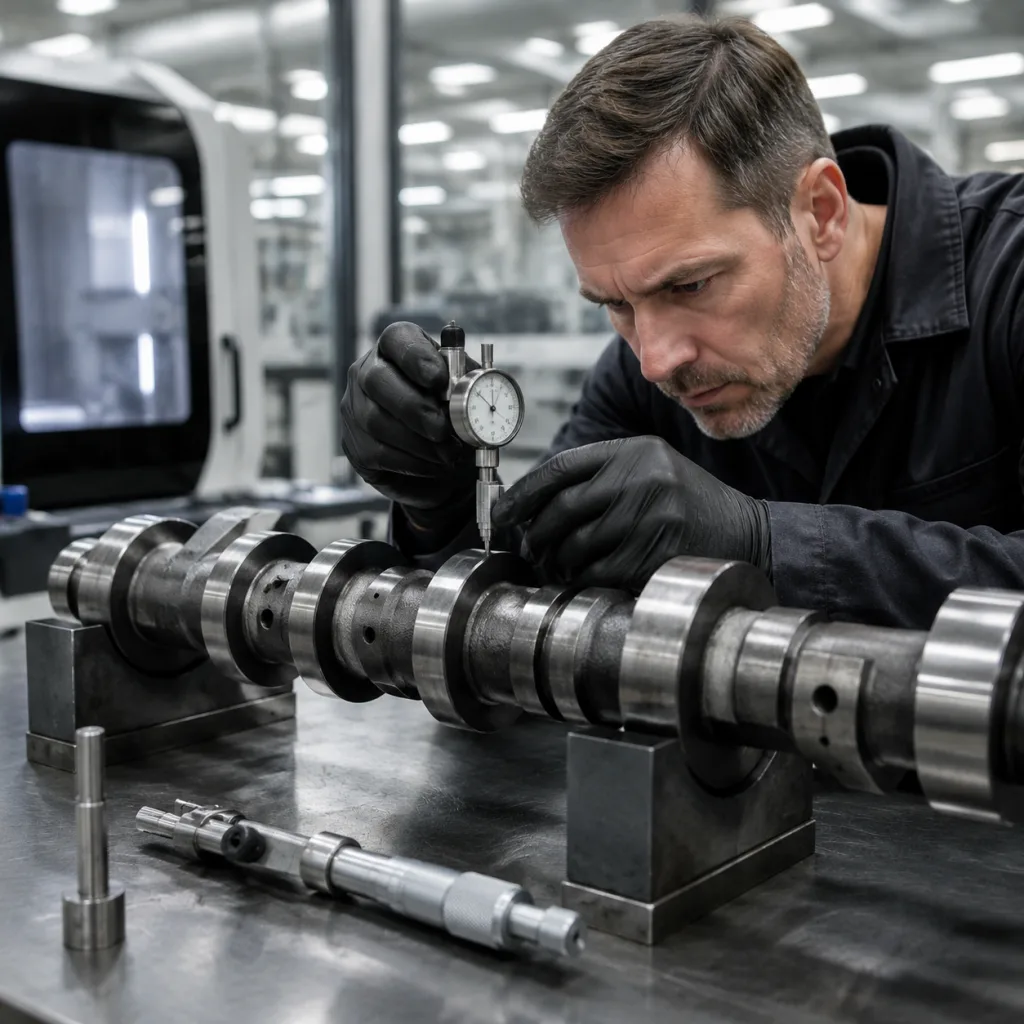
Driventus confirms the datum scheme before reverse measurement. That step matters because the journal axis, thrust face, timing slot and gear interface must not be measured from inconsistent references.
A practical RFQ should define the following items:
RFQ item
Why it matters
What Driventus checks
Base material
Affects lobe wear, toughness and machinability
Chemical composition, microstructure and certificate review
Journal diameter
Controls oil film and bearing clearance
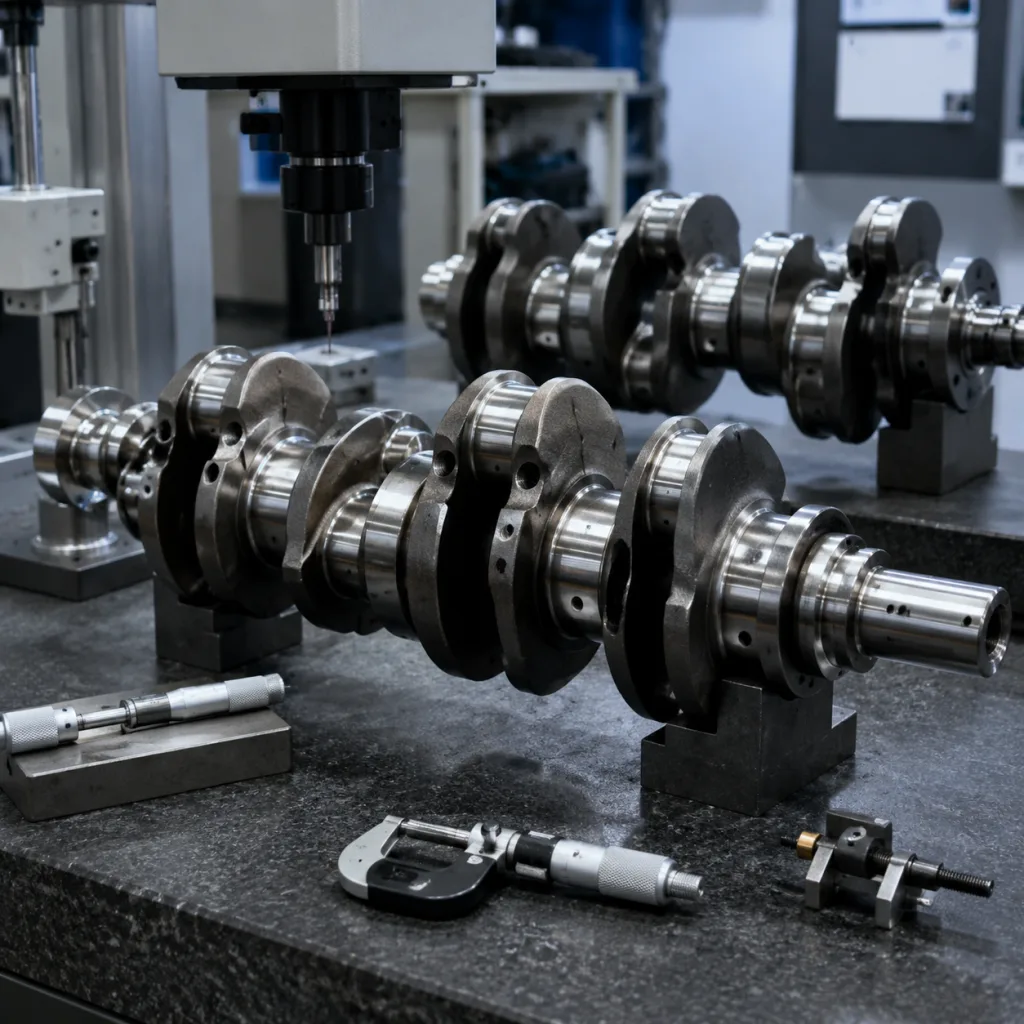
Micrometer, air gauge or roundness checks at agreed points
Lobe lift and profile
Affects valve timing and engine output
Profile measurement against master sample or drawing
Straightness/runout
Prevents binding and abnormal bearing load
Runout inspection on V-blocks or centres
Surface hardness
Supports wear resistance
HRC/HV testing after heat treatment or induction hardening
Surface finish
Reduces scuffing risk at journals and lobes
Ra inspection on ground areas where specified
Timing datum
Prevents installation error
Keyway, gear interface, dowel hole or sensor reference check
</tr></thead><tbody> </tbody></table>For many diesel and light-commercial applications, buyers request ±0.01 mm to ±0.03 mm on critical ground journals and ±0.03 mm to ±0.05 mm on selected thrust or locating features, subject to drawing confirmation. Common control targets include journal roundness within 0.005–0.010 mm, total indicated runout within 0.03–0.05 mm, lobe lift variation within 0.02–0.04 mm and ground surface finish around Ra 0.2–0.8 µm depending on the contact area. Hardness may be specified as HRC 55–62 or an equivalent HV range on lobes after heat treatment, but final values must follow the drawing, material and hardening route.
Where procurement teams need development from sample, Driventus can support reverse measurement, drawing creation, 2–5 pcs sample production, dimensional reporting and controlled sample approval through custom manufacturing. This service does not imply approval or endorsement by any vehicle manufacturer.
Audit the Failure Modes Before You Audit the Factory
A useful audit asks one question repeatedly: how could this camshaft fail before the buyer detects it? The answer should lead you through incoming material, machining, heat treatment, grinding, inspection, packing and export loading.
Driventus operates under IATF 16949:2016 and ISO 9001:2015 quality management frameworks. Buyers can review the company approach to inspection, traceability and corrective action through the quality system.
Focus the audit on failure containment:
Wrong material or mixed heats: check steel bar, casting or forging verification, supplier certificate review, PMI or chemical checks where required, and segregation of non-conforming material
Heat-treatment instability: confirm hardness targets, case depth where applicable, furnace or induction records, quench control, tempering records and distortion checks
Geometry escape: verify journal size, lobe height, runout, thrust width, oil-hole position, chamfer condition, burr control and visual standards
Export damage or mix-up: inspect anti-rust treatment, carton marking, mixed-SKU separation, drop resistance and pallet loading plans
For higher-volume programmes, buyers may request control plans, process flow diagrams, FMEA summaries and capability studies on critical characteristics. A practical launch inspection plan is 100% visual and anti-rust check, 100% runout check for launch batches, and AQL or agreed sampling for stable repeat orders. Critical dimensions should be controlled more tightly than cosmetic points. For key characteristics, buyers often request Cpk ≥1.33 after process stabilisation; for new projects, initial capability should be reviewed separately from routine production data.
Driventus can provide inspection reports aligned with agreed drawings and approved samples. European importers should also define material disclosure expectations under REACH (EC) No 1907/2006 where relevant to the supplied article and packaging materials.
Do not leave the audit without seeing how defects are contained before shipment. Common risks include lobe pitting, incorrect phasing, burrs at oil holes, excessive runout, rust spots, mixed references in packing and carton damage during consolidation. Clear work instructions, calibrated gauges, batch-level traceability and 8D-style corrective action reduce the chance that these problems reach the buyer’s warehouse.
MOQ and Lead Time: A Planning Framework
Commercial vehicle camshaft demand is rarely smooth. One reference may move by the pallet while another sells a few pieces per month. That is why MOQ and lead time should be negotiated by part family, tooling status and production route—not applied as one blanket number across the range.
Plan around the real cost drivers:
Existing tooling: 50–100 pcs MOQ and 30–45 days production lead time when fixtures, gauges and approved packaging already exist
New development: 60–90 days for sample measurement, drawing confirmation, tooling, pilot production, heat-treatment validation and approval
Material route: forged, cast or billet routes affect minimum heat, casting or bar-purchase quantity and therefore price breaks
Packaging: neutral cartons may start at production MOQ, while private-label cartons commonly require 300–1,000 pcs per artwork depending on print setup
Inspection level: enhanced dimensional reporting, profile checks or 100% runout inspection add quality time but reduce receiving risk
Shipping mode: sea freight suits scheduled replenishment; air freight is usually reserved for samples, launch parts or urgent shortages
Price comparison should separate the numbers that often get bundled together: sample cost, tooling cost, unit price at 100/300/500 pcs, packaging cost and freight term. Existing-tooling references usually price lower because fixture amortisation is complete. New references may include tooling charges, sample charges or a higher first-batch price. Larger orders reduce setup cost per part, but excessive MOQ can quietly move cost into the buyer’s inventory.
For repeat aftermarket orders, a workable model is a 12-month rolling forecast, quarterly volume review, monthly call-off and 4–8 weeks of safety stock for top-moving references. Slow movers can be grouped into mixed-SKU production windows to avoid repeated setup losses.
Before appointing a camshaft Iveco OEM supplier, compare the quoted lead time with the actual process route. A short lead time may be realistic for stocked references. It is not realistic for a new programme that still needs sample approval, heat-treatment validation and private-label packaging. Driventus separates sample lead time from mass-production lead time so buyers can plan launch dates, catalogue updates and container consolidation more accurately.
Scenario: The Part Passes Inspection but Fails in Transit
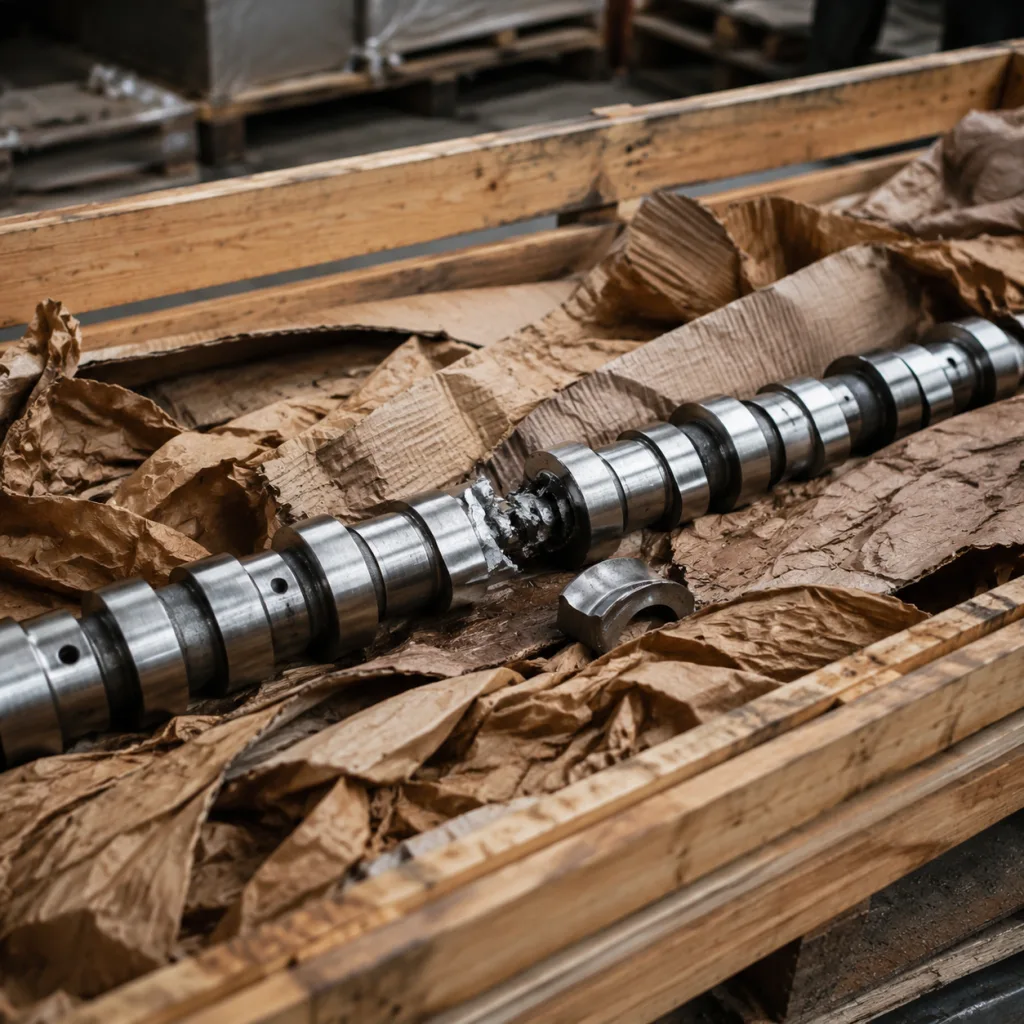
A camshaft can leave the inspection bench correct and still arrive unusable. Rust, bent cartons, edge impact, loose mixed-SKU packing and missing batch labels all create cost after the technical work is done. Importers should specify corrosion protection, part separation and carton strength suitable for long-distance transport.
Validation should combine dimensional inspection with application checks. Depending on the programme, Driventus may use master-sample comparison, drawing-based inspection, hardness testing, lobe-profile checks, timing-datum verification and controlled trial assembly checks. For launch batches, buyers should consider a 3–5 piece pre-shipment approval set with full dimensional report before releasing the balance of the order. Where buyers have their own warehouse inspection process, Driventus can align carton labels and batch references to support receiving checks.
Import readiness should cover:
Commercial invoice and packing list with consistent part references, quantities, net weight and gross weight
Country-of-origin marking according to buyer instruction and destination-market practice
Neutral or private-label packaging artwork approval before mass packing
Anti-rust oil, VCI bag or VCI paper protection suitable for 6–12 months of expected storage and transit conditions
Batch labels that connect cartons to inspection records, heat numbers and production lots
Export cartons checked for weight, stacking strength, handling conditions and mixed-SKU separation
A practical packing method is individual sleeve or bag protection, end protection on gear or timing interfaces, carton separators for multi-piece cartons, moisture control for sea shipments and pallet wrapping with corner protection. Heavy cartons should normally be limited to warehouse-safe handling weights agreed with the buyer, often 15–25 kg depending on local practice.
Camshafts are not approved as standalone emissions-control devices under standards such as ECE R-83. However, incorrect valve timing or lobe geometry can affect engine performance and emissions. Control the fitment data carefully, verify engine-code coverage and avoid mixing references across engine variants.
Supplier Shortlist Q&A for Procurement Teams
When should price be compared?
Only after drawings, samples, inspection responsibility, packaging and warranty handling are clear. A low quotation without batch traceability may increase total cost through claims, sorting work, emergency air freight and delayed customer deliveries.
What evidence separates a serious supplier from a trader?
Use this comparison table:
Evaluation point
Preferred evidence
Quality certification
IATF 16949:2016 and ISO 9001:2015 certificates
Engineering support
Drawing review, sample measurement, datum confirmation and fitment confirmation
Process control
Control plan, gauge list, tool-life rules and heat-treatment records
Batch traceability
Lot number from material heat to production order and export carton
Commercial flexibility
MOQ by reference, mixed-SKU shipment, price breaks and forecast planning
Export experience
Documentation for EU, UK, US, Canada, Australia and Brazil shipments
After-sales handling
Containment, replacement decision rules and 8D-style corrective action
</tr></thead><tbody> </tbody></table>What should be scored after the first response?
Response time, sample accuracy, report completeness and willingness to separate tooling, unit price, packaging and freight assumptions. These behaviours often predict how the supplier will handle a launch delay or claim.
What RFQ data should be sent first?
Send the OE cross reference, engine code, sample availability, annual volume, first-order quantity, target launch date, inspection level, packaging artwork, destination port and Incoterms such as FOB Ningbo or CIF destination port.
Driventus supports buyers that need a camshaft Iveco OEM supplier for aftermarket distribution, private-label ranges or controlled sourcing programmes. The strongest results come when procurement and engineering teams share sample parts, expected annual volume, target market, packaging requirements and any existing inspection standard at RFQ stage.
Frequently asked questions
Provide engine application, sample or drawing, OE cross reference, expected annual volume, first-order quantity, target market, packaging type, inspection requirements and preferred Incoterms. Photos alone are not enough for an accurate quotation.
Yes. Private-label packaging can be supported after artwork approval, MOQ confirmation and carton testing. Batch labels can be aligned with the buyer’s warehouse receiving and traceability process.
No. Driventus is an independent aftermarket manufacturer; brand names are referenced for fitment only. The company supplies parts to agreed drawings, samples and inspection requirements without claiming endorsement by any vehicle manufacturer.
For camshaft sourcing, sample review or a structured RFQ, share your application list, target volume and packaging requirements. You can [request a quote](/contact.html) or contact the team at /contact.html