RoHS Testing for Turbocharger Assemblies
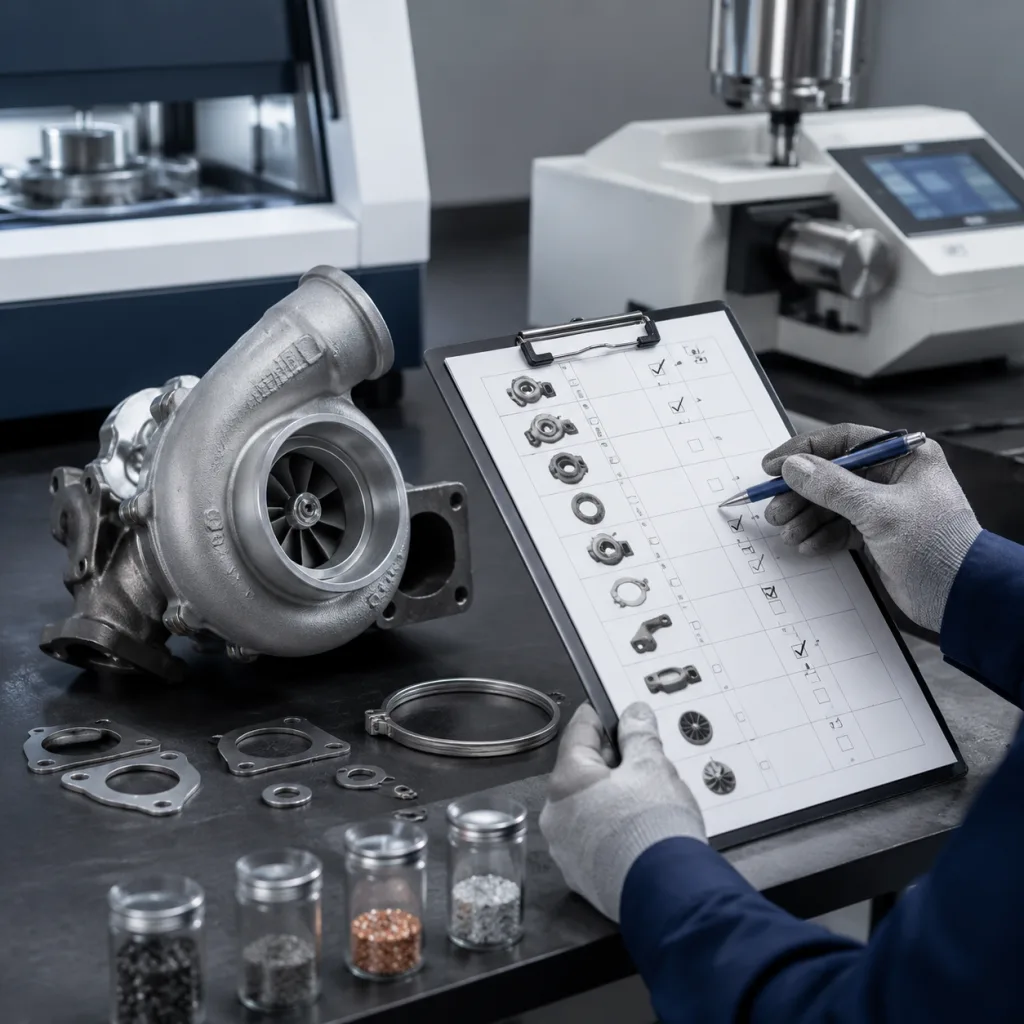
Requests for **rohs testing for turbocharger** programs come up regularly in EU and UK sourcing, but they are often applied too broadly or aimed at the wrong subcomponent. A conventional mechanical turbocharger is mostly a metallic assembly. Once you add an actuator, the picture changes: wiring, connectors, polymer housings, position sensors, PCB-based electronics, labels, adhesives and conversion coatings can all affect the compliance scope.
That is why procurement teams need a repeatable process. First, confirm whether the supplied configuration is actually within RoHS scope. Then break the build into homogeneous materials, collect controlled supplier declarations, and use laboratory testing only where documentation or material risk justifies it.
For importers and OEM purchasing teams, the biggest risk is not always a failed lab screen. More often, the exposure comes from weak document control, an incomplete BOM, an unapproved sub-tier change, or testing carried out on the wrong subassembly. This article sets out a practical verification method for turbocharger sourcing, with reference to Directive 2011/65/EU, Delegated Directive (EU) 2015/863, the IEC 62321 test-method series, and REACH (EC) No 1907/2006. It is written for buyers assessing complete turbocharger assemblies, CHRAs, actuator subassemblies and related hardware, where the compliance file needs to map to the exact build being purchased, including drawing revision, finish code, actuator variant and approved source list.
Where RoHS applies in a turbocharger program
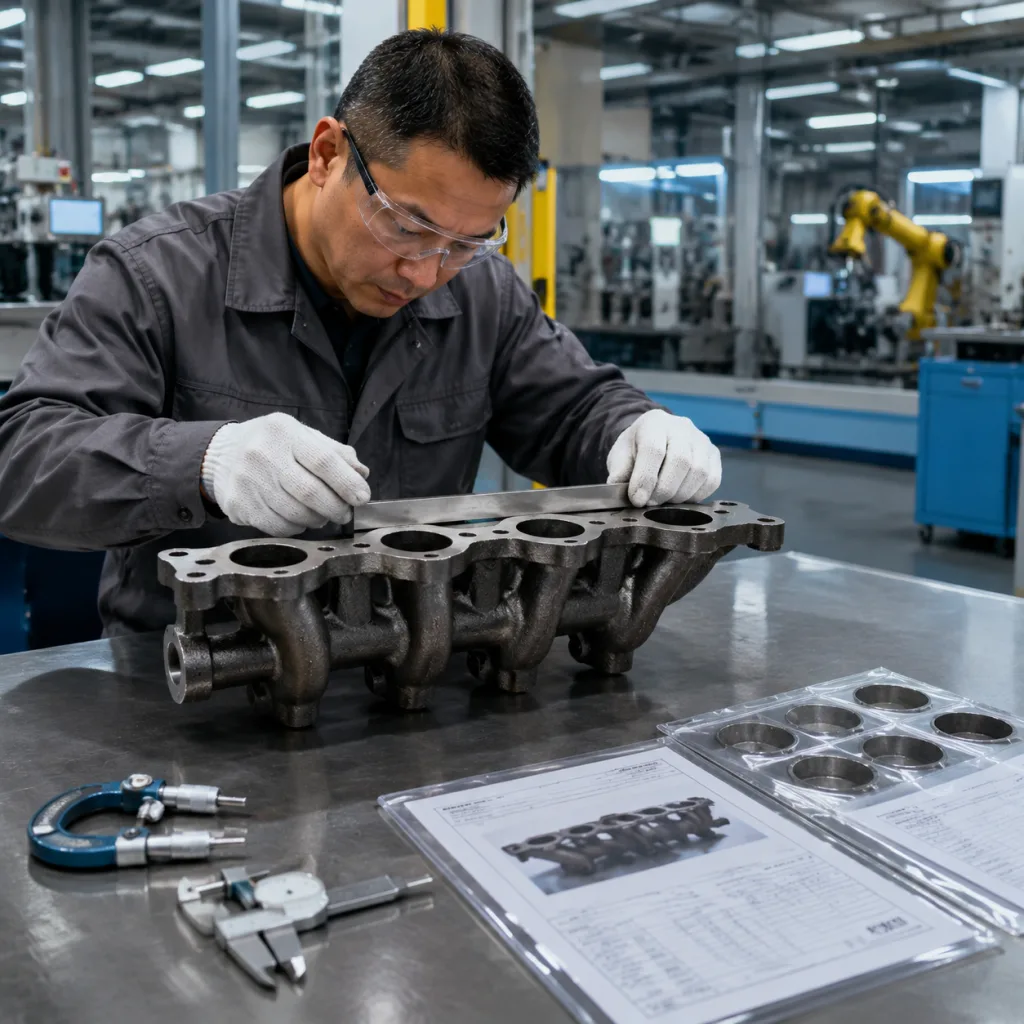
The first step is to separate mechanical content from electrical or electronic content. That distinction tells you whether the task is mainly document review or whether targeted analytical testing is worth doing. It also avoids wasting lab time on low-risk castings while keeping attention on the materials that are more likely to create a non-conformance.
For a turbocharger supply package, the usual split looks like this:
- Low RoHS risk: cast iron turbine housings, aluminium compressor housings, steel shafts, stainless heat shields, machined flanges
- Medium RoHS risk: plated fasteners, conversion-coated brackets, rubber grommets, polymer clips, sealants, adhesive labels
- High RoHS risk: electronic actuators, position sensors, connectors, cable insulation, overmoulded harnesses, internal PCB assemblies
In the EU, RoHS is governed by Directive 2011/65/EU and later amendments, including Delegated Directive (EU) 2015/863, which added four phthalates to the restricted substance list. The maximum concentration values are generally 0.1% w/w (1,000 ppm) in each homogeneous material for lead (Pb), mercury (Hg), hexavalent chromium (Cr6+), PBB, PBDE, DEHP, BBP, DBP and DIBP, and 0.01% w/w (100 ppm) for cadmium (Cd). These limits apply at the homogeneous-material level, not across the full turbocharger assembly.
That detail matters. The same sales part number can be built with different content depending on actuator type, coating source, wire specification, connector family or destination market. A mechanical CHRA may have limited RoHS exposure beyond coatings and small hardware. An electronically controlled actuator package, by contrast, can introduce solder alloys, brominated flame-retarded plastics, PVC or TPE cable jackets, and plated terminal systems. Buyers should therefore define scope by drawing revision, BOM, approved manufacturer list and production configuration, not just by the sales description.
A practical working definition of homogeneous material is a material that cannot be mechanically separated into different materials. Examples include a plastic connector housing, a solder joint, a zinc-flake topcoat, a cable insulation layer or a steel substrate. For turbocharger parts, common homogeneous materials that deserve separate review include:
- trivalent or hex-chrome passivation layers on fasteners
- zinc-nickel, zinc-flake or phosphate coatings
- elastomer compounds in seals and grommets
- polyamide, PBT, PPS or PVC polymer housings
- solder on actuator PCBs or sensor leads
- adhesive-backed labels and printing inks
In many turbocharger programs, the commercial request is driven by customer specification even when the assembly is not sold as stand-alone electrical and electronic equipment. In practice, import managers still need a controlled declaration file, especially where the supplied unit includes an electronic actuator or sensor. That is why RoHS checks are usually reviewed alongside quality system controls, incoming inspection plans, PPAP records and drawing-revision management.
Build the compliance file before sending samples to a lab
Testing should not be the starting point. Begin with documentation. A lab result from one cut sample does not replace material traceability, and it will not protect the program if the sample is not representative of serial production.
The goal is to build a compliance file that clearly shows what was bought, what was declared, what was tested and which manufacturing sources were approved. For turbochargers, that file should link the top-level part number to the actuator variant, material stack-up, finish specification, wire set, connector code and revision level. Without that connection, a pass report may be analytically sound but commercially useless.
Buyer checklist
1. Confirm the exact part scope: full turbocharger, CHRA, actuator only, harness only, or hardware kit. 2. Request a structured BOM that identifies subcomponents and, where practical, the likely homogeneous materials. 3. Collect supplier declarations for base metals, platings, polymers, elastomers, labels, adhesives and electronics. 4. Verify whether any RoHS exemptions are being claimed and whether they are applicable to the supplied part. 5. Match declarations to drawing level, part revision, approved sub-supplier and production lot or date code. 6. Review whether REACH (EC) No 1907/2006 SVHC communication is also required. 7. Define which items need lab confirmation and which can be accepted on controlled declarations. 8. Record the approved source for coatings, solder, elastomer compounds, connector systems and cable compounds. 9. Tie the compliance pack to part labels, packing IDs, PO lines and traceability records.
For turbocharger buyers, the weak spots are usually surface-treatment suppliers and outsourced actuator suppliers. A zinc-flake coating, passivation chemistry, solder alloy or wire insulation compound can create a gap even when the CHRA itself is fully metallic. The same goes for adhesive labels, potting compounds and small polymer clips, which are easy to miss in an early BOM review because they are not treated as core functional elements.
The file should normally include:
- supplier declaration of conformity to RoHS 2011/65/EU and (EU) 2015/863
- sub-tier material declarations for high-risk items
- drawing and revision reference
- finish or coating specification code
- approved source list or AML/AVL reference
- test reports for targeted high-risk materials
- engineering-change or PCN history
- record-retention requirement
Under IATF 16949:2016 and ISO 9001:2015, the stronger approach is to connect RoHS evidence to approved sources, incoming inspection criteria and change-management records. If a supplier changes plating chemistry, polymer grade, solder process, cable compound or sub-tier electronics, the declaration set should be revalidated before serial shipments continue.
If you are qualifying a new platform, it is usually more efficient to review supplier capability early through custom manufacturing discussions rather than waiting until PPAP timing is tight. Early review also helps show whether the actuator design creates a different compliance burden from the base turbocharger casting.
Recommended test plan by material and subassembly
A practical plan for rohs testing for turbocharger sourcing combines declaration review with targeted analytical methods from the IEC 62321 series. Screening every metal section of a turbocharger adds cost without adding much confidence, so the test plan should follow material risk, process risk and whether the part contains electronics or surface treatments.
A useful way to start is by sorting the program into a few test families: bulk metallic castings, plated hardware, polymer parts, elastomer parts and actuator electronics. Each family has its own likely failure mode and its own best-fit analytical method. That keeps the lab scope aligned with real risk instead of treating the whole assembly as one blended sample.
| Subassembly or material | Main concern | Typical verification method | Comments |
|---|---|---|---|
| Cast iron or steel housings | Low direct RoHS risk; coating-related risk | Supplier declaration; occasional XRF screen | Focus on plating, paint or passivation rather than bulk substrate |
| Aluminium compressor housing | Lead in alloy, surface finish chemistry | XRF screening; ICP-OES/ICP-MS if escalation is needed | Bulk Al alloys can contain alloying additions; verify against customer-specific restrictions if tighter than RoHS |
| Plated bolts, clips, brackets | Hexavalent chromium, lead in coating system | XRF screening plus IEC 62321 wet-chemistry confirmation where indicated | Common exposure point for outsourced finishing lines |
| Elastomer seals and grommets | Cadmium, lead pigments/stabilisers, phthalates | XRF for metals; GC-MS for phthalates | Prioritise PVC-containing or unknown soft compounds |
| Connector bodies and wire insulation | Brominated flame retardants, phthalates, lead pigments | XRF and GC-MS | Applies mainly to actuator-equipped units and harnesses |
| PCB or actuator electronics | Lead in solder, brominated substances, Cd in components | Component declarations and targeted IEC 62321 testing | Highest documentation burden; often requires supplier cascade declarations |