exhaust manifold · 2026-06-20

How to Choose an Exhaust Manifold Supplier

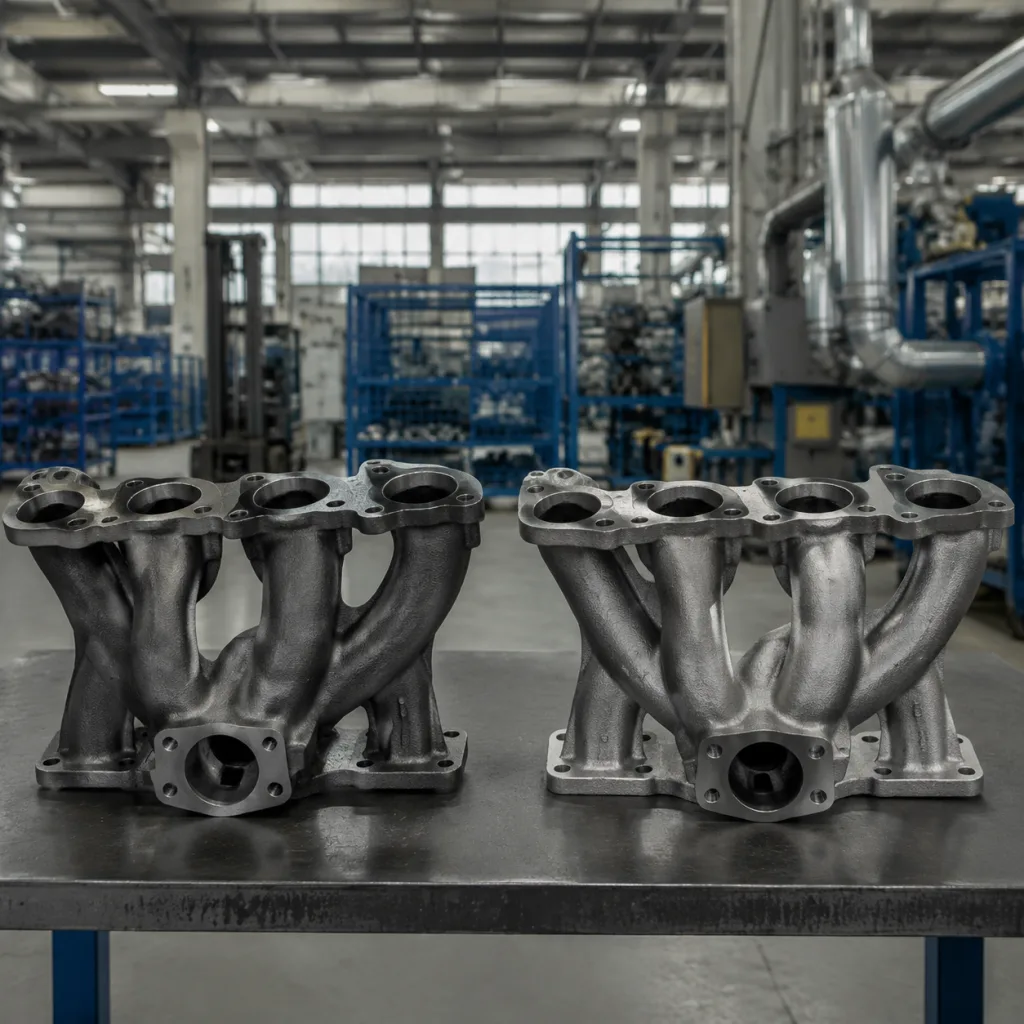
Choosing an exhaust manifold supplier is a sourcing decision, not a catalog exercise. The part sits in a hot, vibration-heavy zone of the engine, so the real risk is rarely the quoted unit price; it is inconsistent casting, poor machining control, weak documentation, or a factory that cannot hold repeatable lead times. Buyers should judge metallurgy, dimensional stability, test coverage, traceability, and the supplier’s ability to support OE-level fitment without implying OEM approval. Driventus is an independent aftermarket manufacturer; brand names are referenced for fitment only. For global sourcing teams, the key question is whether the factory can deliver the same result across batches, materials, and vehicle applications while meeting commercial terms. That means checking certifications, audit evidence, sample control, and the ability to support OE part-number cross-references such as OE 06A107065 when the application requires it.

What the application actually demands

Before you compare prices, define the job the manifold has to do. Exhaust manifolds may be cast iron, high-silicon molybdenum iron, stainless steel, or fabricated tubular assemblies, and the right choice depends on exhaust gas temperature, packaging space, emissions targets, corrosion exposure, and duty cycle. Turbocharged applications need extra attention because heat load and distortion risk rise fast; the supplier should confirm the exact EGT profile instead of letting the buyer guess.

A sourcing brief should include:

  • Engine code, OE cross-reference, and market application
  • Material expectation with grade target, such as grey cast iron, SiMo iron, 304/409 stainless, or low-carbon fabricated steel
  • Port count, runner geometry, flange thickness, bolt pattern, and sensor boss locations
  • Mating gasket style, heat-shield interface, and converter or turbo flange requirement
  • Target annual volume, forecast window, and acceptable volume swing, such as ±20% quarter to quarter
  • Packaging standard, corrosion-prevention method, and label format

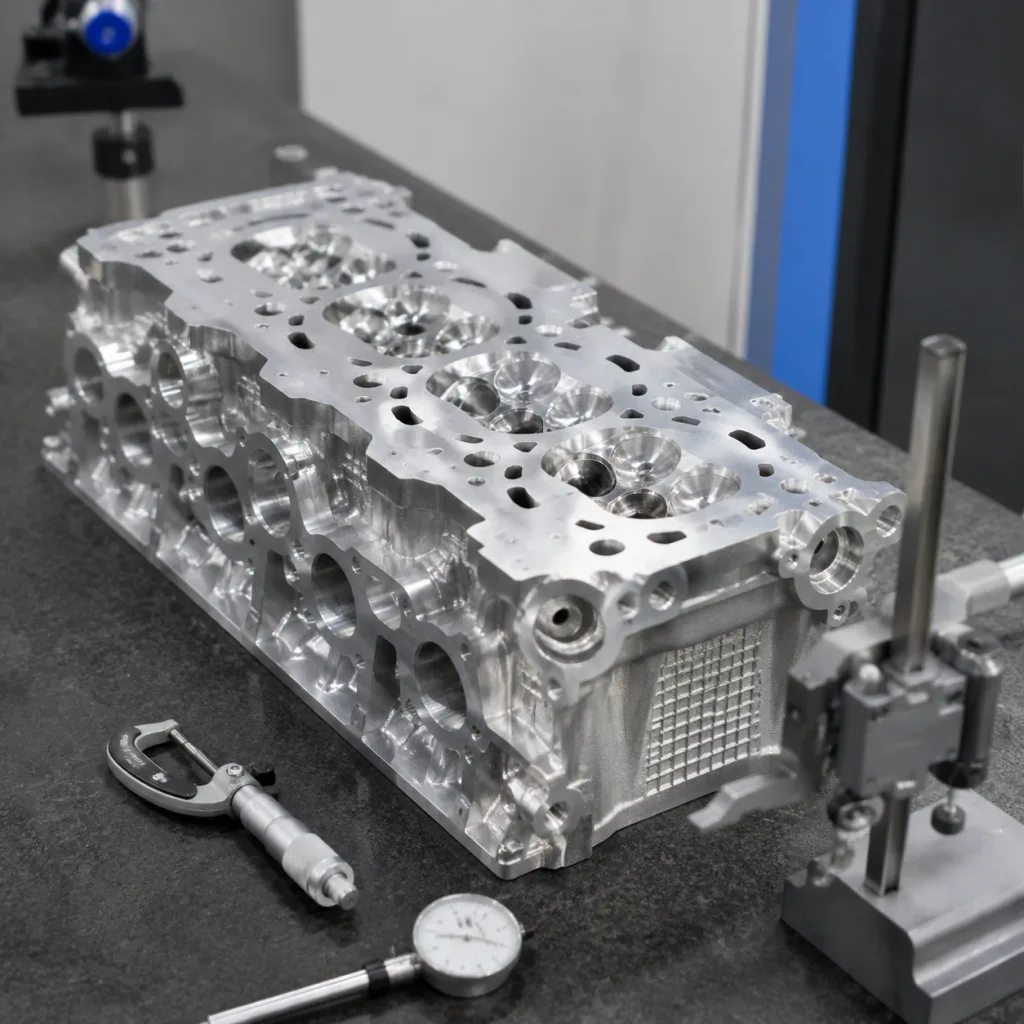
Put tolerance expectations in writing before RFQ release. For example, flange flatness is often controlled to 0.15 mm to 0.30 mm over the sealing face on machined castings, bolt-hole positional tolerance may need to stay within ±0.20 mm to ±0.35 mm, and port-to-port alignment should be referenced to the drawing datum rather than left to sample approval. If the supplier cannot confirm dimensional control against the sample or drawing, the quotation is incomplete. For multi-market programmes, ask whether the factory can support catalog breadth through our catalog and whether it can scale into custom manufacturing when the fitment is not standard.

Where suppliers usually fail

A low quote can hide process problems that only show up after launch. In exhaust manifold sourcing, the common failure modes are predictable: heat cracks from poor alloy control, warped flanges from weak machining or welding discipline, sensor-boss errors, mixed revisions, and packaging damage that turns a good part into a return. The supplier’s job is not only to make the part once; it is to repeat the same part under production pressure.

Watch for these warning signs:

  • Samples fit one vehicle but production parts vary by batch
  • The supplier cannot explain alloy family, heat number, or machining sequence
  • Test reports are generic and do not name the exact part number or revision
  • Flatness, hole position, and port alignment are not measured on every critical lot
  • Revision control is informal, so old and new versions can ship together
  • Packaging protects appearance but not flange or sensor-boss integrity

A reliable factory should be able to show how it prevents those problems before shipment. That includes process controls, inspection frequency, reaction plans for out-of-spec parts, and traceability from raw material to finished carton. If the supplier cannot describe its failure-prevention method in plain terms, it is not ready for a production award.

Spec details to compare side by side

Use a comparison table to separate engineering facts from sales claims, and request the same data from every bidder so the RFQ is actually comparable.

</tr></thead><tbody> </tbody></table>For aftermarket buyers, insist on measurable acceptance criteria. Define flange flatness in the drawing or sample approval document, and specify how it is measured, such as with a surface plate and feeler gauge or a coordinate measurement report. If the design includes sensor ports, require thread class, boss height, and sealing land dimensions on the print. If your programme needs a tailored geometry, sensor boss, or port pattern, confirm the supplier can build to print through custom manufacturing.

Spec details to compare side by side

Which tests and standards matter

Ask for the actual test method, not a generic promise. A manifold can look fine on the bench and still fail once torqued, heated, and cycled. For emissions-adjacent applications, sealing, cracking, and heat management affect the downstream system, so validation has to cover both the component and the interface.

Relevant references may include:

  • IATF 16949:2016 for automotive quality management
  • ISO 9001:2015 for documented process control
  • REACH (EC) No 1907/2006 for material compliance in the EU
  • ECE R-83 where product configuration affects regulated vehicle systems
  • SAE J2527 for corrosion-related validation, when applicable to the programme
  • Internal heat-cycle, leak, and torque-retention procedures defined by the buyer or OE-equivalent program

Do not accept phrases such as “tested to OEM standards” without a report, method, sample size, and pass/fail criteria. Ask for the acceptance criteria, test duration, gauge or fixture used, and number of samples evaluated. A practical minimum for launch approval is to review at least 3 production-like samples per cavity, tooling lane, or weld fixture set, then compare them against the approved drawing and master sample. If the product is sold for multiple regions, confirm whether the documentation supports EU, UK, US, Canada, Australia, and Brazil requirements. Where chemical compliance matters, request current material declarations and archive them by part number and revision so reorders do not restart the approval cycle.

How to weigh cost, MOQ, and lead time

Price, MOQ, and lead time matter, but only after technical qualification. A low unit price can disappear quickly if the supplier has unstable yield, slow changeovers, poor packing, or a weak claim process. Build the commercial comparison around operating risk, not list price alone.

Use this commercial checklist:

  • MOQ and whether it changes by alloy, tooling, or packaging method
  • Tiered pricing by volume, including breakpoints at pilot, annual, and forecasted volume
  • Standard lead time, peak-season lead time, and whether lead time starts at PO receipt or material allocation
  • Sample lead time for first article, pre-production, and replacement samples
  • Incoterms, payment terms, currency exposure, and price-validity window
  • Warranty handling, claim response time, replacement policy, and credit method
  • Tooling ownership, storage, maintenance responsibility, and rework approval process

Ask the supplier to quote at least three volume points, for example 500, 2,000, and 10,000 pieces, with separate pricing for sample sets and spare inventory. If the product uses dedicated tooling, request a one-time tooling charge, annual maintenance fee if any, and the expected amortization method. For lead time, ask for both standard and expedited options; many buyers use 45 to 60 days as a baseline for production after approval, but the supplier should state its actual capacity and material purchasing cycle. If the supplier can commit to stable delivery, documented change control, and repeat orders without re-approval every time, it is usually the lower-risk source even if unit price is not the absolute lowest.

How to weigh cost, MOQ, and lead time

How to read an audit before you award volume

A factory audit should confirm that what the supplier says matches what it does. Walk the line, review stored samples, inspect gauges, and verify that incoming material, machining, and final inspection are connected through documented controls. The strongest audits are evidence-led: check work instructions against the current part revision, compare inspection records with the latest lot, and verify that rejected material is physically segregated from released stock.

A practical audit scorecard should cover:

  • Engineering support response time and ownership of open questions
  • Process stability, machine maintenance, and calibration status
  • Incoming material control, certificate retention, and heat traceability
  • First-piece, in-process, and final inspection frequency
  • Gauge repeatability and whether critical dimensions use dedicated fixtures
  • Packing, labeling, export readiness, and carton drop protection
  • Corrective action closure rate and evidence of recurrence prevention

During the audit, ask for the last three nonconformance cases and trace each one from detection through containment, root cause, corrective action, and verification. Also verify that the supplier can segregate mixed revisions and that it has a clear procedure for engineering changes, because a released manifold with the wrong boss height or flange orientation can create field returns even when the part looks correct on the bench. If the supplier passes technical review but fails audit on traceability or change control, the risk remains high. If it passes both, you can move to pricing negotiation with better leverage and lower programme risk. To review available exhaust manifold lines, start with our catalog or request a quote.

Frequently asked questions

Start with application fit: OE cross-reference, engine code, material, and flange geometry. If those do not match, pricing is irrelevant because the part will not install or seal correctly.

IATF 16949:2016 and ISO 9001:2015 are the main baseline certifications. Also review material compliance for your market, such as REACH (EC) No 1907/2006 for the EU.

Yes. Ask for dimensional reports, leak or pressure test results, and batch traceability documents. The supplier should show the test method, sample size, and acceptance criteria.

If you need a qualified exhaust manifold source with controlled manufacturing and export support, review the options in our catalog or [request a quote](/contact.html).

Request a Quote
Check item What to verify Typical buyer target
Material gradeCast iron, stainless grade, or fabricated steel specificationMatch OE or validated aftermarket equivalent
Chemical controlHeat analysis or mill cert rangeTight control on critical elements, with heat traceability
Dimensional toleranceFlange flatness, bolt-hole position, port spacingFlatness often 0.15 mm to 0.30 mm; hole position ±0.20 mm to ±0.35 mm
Surface conditionMachined faces, coating, shot blasting, burr controlNo burrs at sealing surfaces; coating coverage uniform
Leak integrityPressure or air-under-water testZero visible leak at agreed test pressure and duration
Thermal durabilityThermal cycle or crack checkNo crack, warp, or fastener pull-out after validation cycle
DocumentationMaterial certs, inspection reports, batch traceabilityComplete lot-level record package
PackagingRust prevention, palletising, label controlDamage-free transit with clear part and lot identification