Buying cylinder heads for Volvo applications is a sourcing decision, not a retail purchase. Procurement teams need dimensional stability, clean castings, correct seat and guide geometry, and repeatable delivery across batches. For distributors, repair networks, and engine rebuilders, the real question is not whether a part fits a catalog line. It is whether the supplier can hold spec, absorb volume swings, and document every lot.
Driventus supplies cylinder head programmes from Taizhou, Zhejiang, with vertical manufacturing control and export experience in 60+ countries. We operate to `IATF 16949:2016` and `ISO 9001:2015` procedures, and we can align packaging, traceability, and inspection records to your import requirements. Driventus is an independent aftermarket manufacturer; brand names are referenced for fitment only.
How to qualify a Volvo cylinder head supplier
A procurement decision starts with failure risk, not price. A cylinder head can look acceptable on arrival and still fail on deck flatness, valve seat geometry, or pressure integrity.
Use this qualification checklist before you issue a PO:
Map the part by engine family, application year, and OE-style cross-reference
Confirm alloy grade, heat number, and melt lot traceability
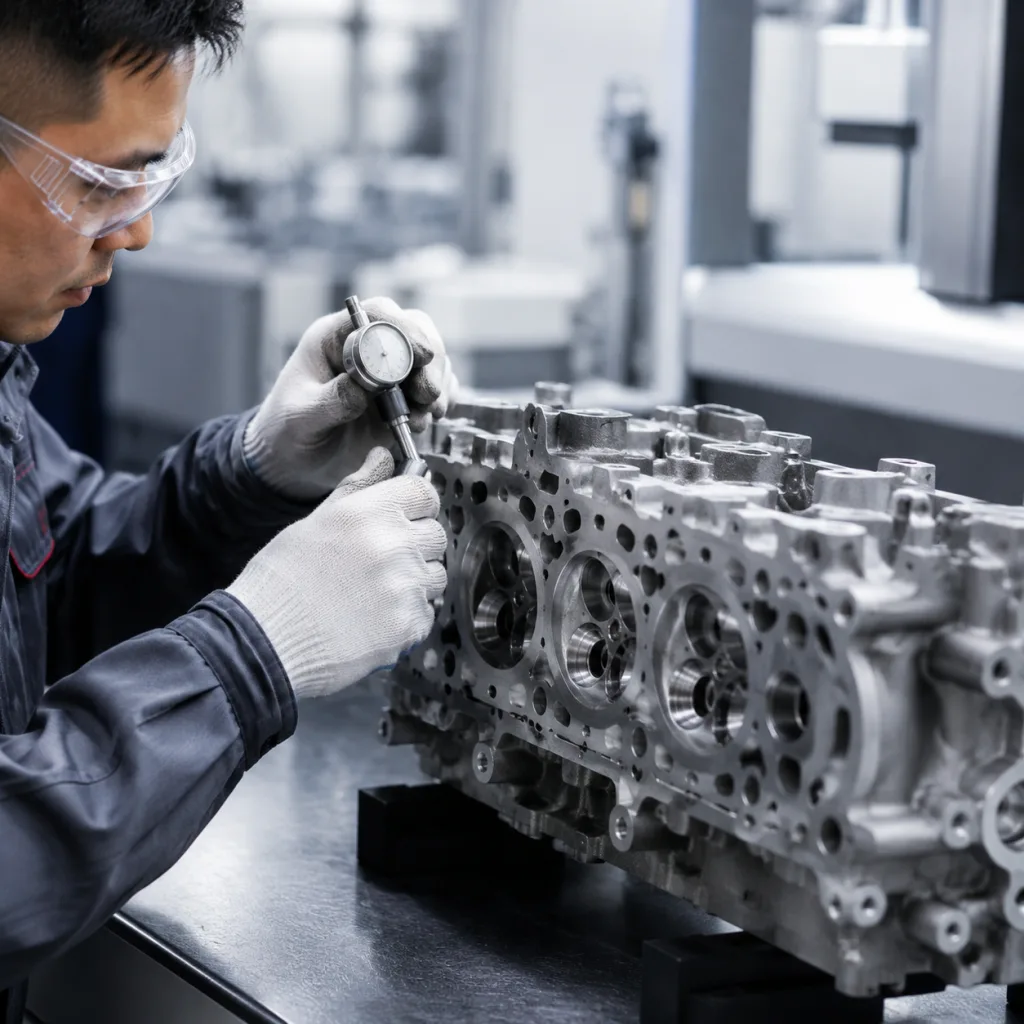
Require deck flatness, seat concentricity, and guide clearance on the inspection sheet
Ask for pressure-test results, hardness data, and cleanliness verification
Verify batch traceability, carton labels, and inspection records
Lock sample approval, golden sample retention, and pre-shipment checks
Do not accept a vague yes/no answer on tolerances. Ask for the factory’s control limits and where they are measured: in-process, at final inspection, or only on request. Typical aftermarket targets are deck flatness within 0.05-0.10 mm across the face, valve seat runout within 0.03-0.05 mm, and guide clearance matched to the intended valve stem specification. If you buy multiple engine programs, ask whether the supplier can consolidate cylinder head, gasket, and water pump supply in one export schedule from our catalog.
Spec deep-dive: the controls that actually matter
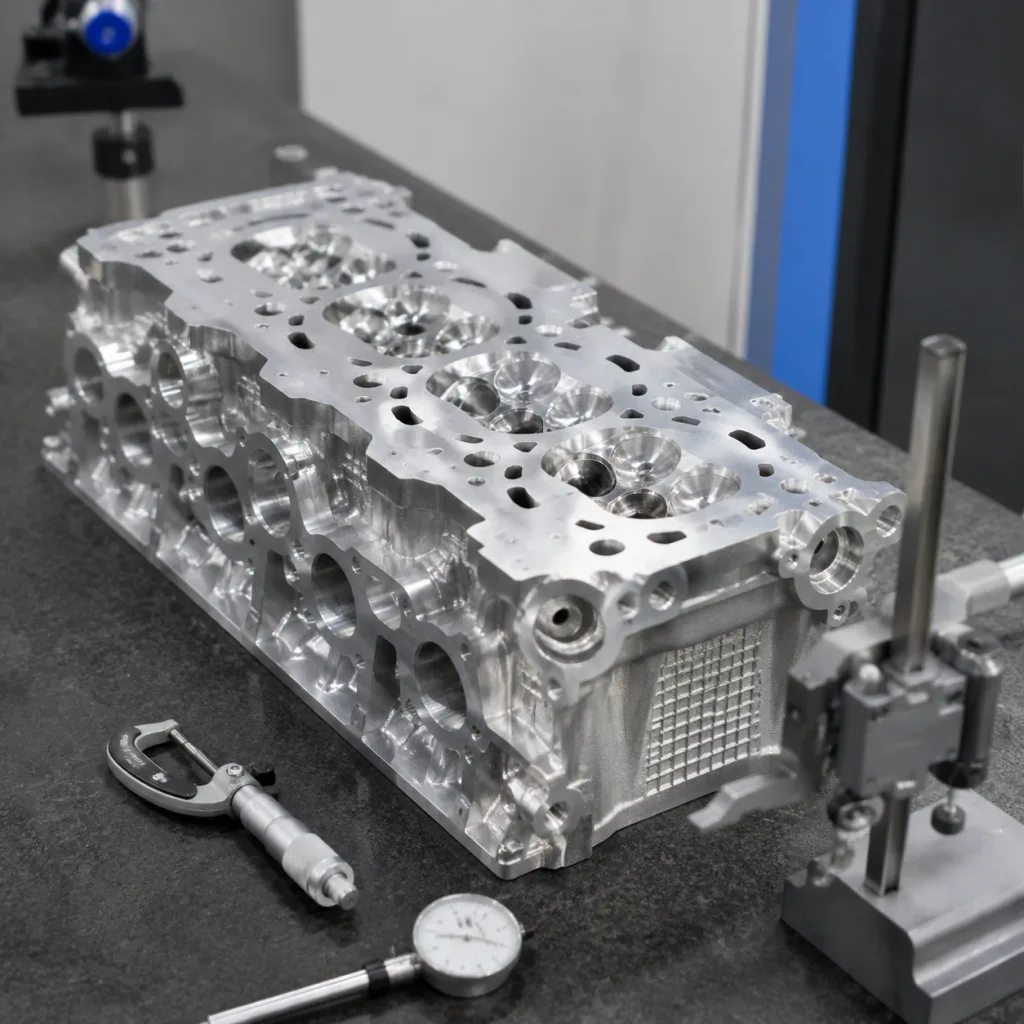
Cylinder heads are machining-sensitive parts. The casting is only the starting point. What separates a usable part from a return is control of the critical surfaces and dimensions.
Driventus operates with documented process control under `IATF 16949:2016` and `ISO 9001:2015`. For procurement teams, the practical question is whether the supplier can show evidence at each control point:
Control point
What to verify
Incoming material
Alloy verification, heat number traceability, and cast-iron or aluminum grade declaration
Machining
CNC datum consistency and critical dimensions verified on every lot
Inspection
Coordinate checks, pressure test at a defined pressure, hardness check, and seat/guide measurement
Packing
Rust prevention, corner protection, label traceability, and export-ready carton durability
Change control
Written notice before tooling, machining program, coating, or process changes
</tr></thead><tbody> </tbody></table>For quotation review, ask the supplier to state the exact test pressure, hold time, acceptable pressure drop, and rejection criteria. A practical benchmark is a wet or dry pressure test held for 30-60 seconds with zero visible leakage and no measurable pressure loss beyond the stated limit. If you need private-label packaging, application-specific machining, or documentation aligned to your import workflow, use custom manufacturing.
Lead time, MOQ, and order structure: where programs succeed or fail
Most cylinder head programs break down on availability, not engineering. The factory can make a good part and still fail the account if it cannot hold a stable plan for lower-volume applications.
When comparing quotes, ask for:
MOQ by engine family, material, and finish level
Sample lead time and mass-production lead time
Monthly output capacity by SKU and machining line
Container-loading plan for mixed SKUs
Buffer stock options for fast-moving lines
Price breaks by sample, MOQ, 500+ units, and container load
A workable B2B structure usually separates sample supply from regular production. In practice, buyers often start with 1-2 sample sets for approval, then place MOQ runs that may begin around 50-200 pieces depending on the application, then move into repeat production on a 30-60 day lead time after approval. For steady high-volume programs, ask for a rolling monthly plan with safety stock tied to forecast. Price should reflect order band, packaging complexity, and test requirements. Plain export cartons are usually the base rate; private-label boxes, individual bags, and extra inspection reports add cost. If you are sourcing multiple powertrain lines, ask whether cylinder heads can be combined with other engine components in one replenishment plan through our catalog.
Replacement scenario: what to validate before release
Before you release a Volvo replacement head into your channel, validate the part as if it were going into a warranty-sensitive engine build. That means checking fit, surface condition, and rebuild readiness together.
A buyer should normally review:
Sample fitment against the target engine code and gasket pattern
Deck height, chamber volume, and valve pocket dimensions where relevant
Surface roughness and flatness on the head gasket face
Pressure-test confirmation at the quoted test pressure
Valve seat width, seat depth, and guide clearance against rebuild requirements
Packaging survivability after transit and pallet handling
Useful reference frameworks include `REACH (EC) No 1907/2006`, `ECE R-83` where applicable to the vehicle context, and internal OEM-style test plans for pressure and thermal cycling. Driventus does not claim vehicle-manufacturer approval. We support OE-style fitment control, sample verification, and traceable production records.
If your channel needs a no-machine-work installation target, put that requirement in the RFQ and require written confirmation of deck height, chamber geometry, and valve-train compatibility.
Comparison: independent supplier vs. layered sourcing
Large buyers often compare a direct factory against a layered sourcing chain. The difference shows up in speed, engineering access, and how quickly problems get closed.
An independent supplier can fit B2B sourcing better when you need:
Direct engineering contact for drawings and tolerance questions
Faster sample feedback on casting and machining defects
Export-ready cartons and labels
Audit support for procurement teams
A clear escalation path for nonconforming batches
Corrective action within 24-48 hours, with 8D follow-up on larger claims
That does not make independent sourcing automatically better. It does mean you should compare landed cost, return exposure, air-versus-sea freight options, and the cost of early-life failures instead of looking at unit price alone. Driventus is an independent aftermarket manufacturer; brand names are referenced for fitment only. If your programme needs broader engine coverage, review our quality system for inspection flow and traceability, then use request a quote to start a sourcing review.
Frequently asked questions
Yes. We map fitment by engine family, application, and OE-style cross-reference where provided by the buyer. We do not claim OEM approval, but we support aftermarket and B2B replacement programmes with traceable supply. For RFQs, include the engine code, OE reference if available, expected annual volume, and target packaging format so we can confirm fitment and commercial terms faster.
Typical documents include product specification, inspection records, packing details, and export documents. For larger programmes, we can also align sample approval and quality records to your internal audit process. On request, buyers can specify material declaration, pressure-test record, dimensional report, carton label artwork, and batch traceability format before production starts.
Yes. Through our OEM service route, we can support custom packaging, labelling, and programme-specific supply terms. Use the contact form to share your target application and annual volume. Typical options include single-piece box packing, barcode labels, language-specific cartons, and master-carton or pallet markings matched to your warehouse process.
If you are building a cylinder head sourcing programme, send the application details, target volume, tolerance requirements, packaging format, and required documentation through /contact.html for a prompt review.