Radiator Cap Salt Spray Test Standard: What Buyers Verify
A radiator cap salt spray test standard is usually part of a broader corrosion validation plan, not a single universal pass-or-fail rule. For procurement teams, the question is not only whether a cap survived a chamber exposure, but whether the test method, duration, acceptance criteria, and sample preparation match the material stack and end-market requirements. That matters for plated steel shells, springs, valves, crimps, and any exposed ferrous interface on the cap assembly. Driventus is an independent aftermarket manufacturer; brand names are referenced for fitment only. In practice, buyers should align the test to published methods such as ASTM B117 or ISO 9227, then document what visual corrosion, functional drift, and seal-performance limits are acceptable for the part. This article explains what to verify, how to read a report, and how radiator cap suppliers should document corrosion resistance before shipment.
What a salt spray test does for radiator caps
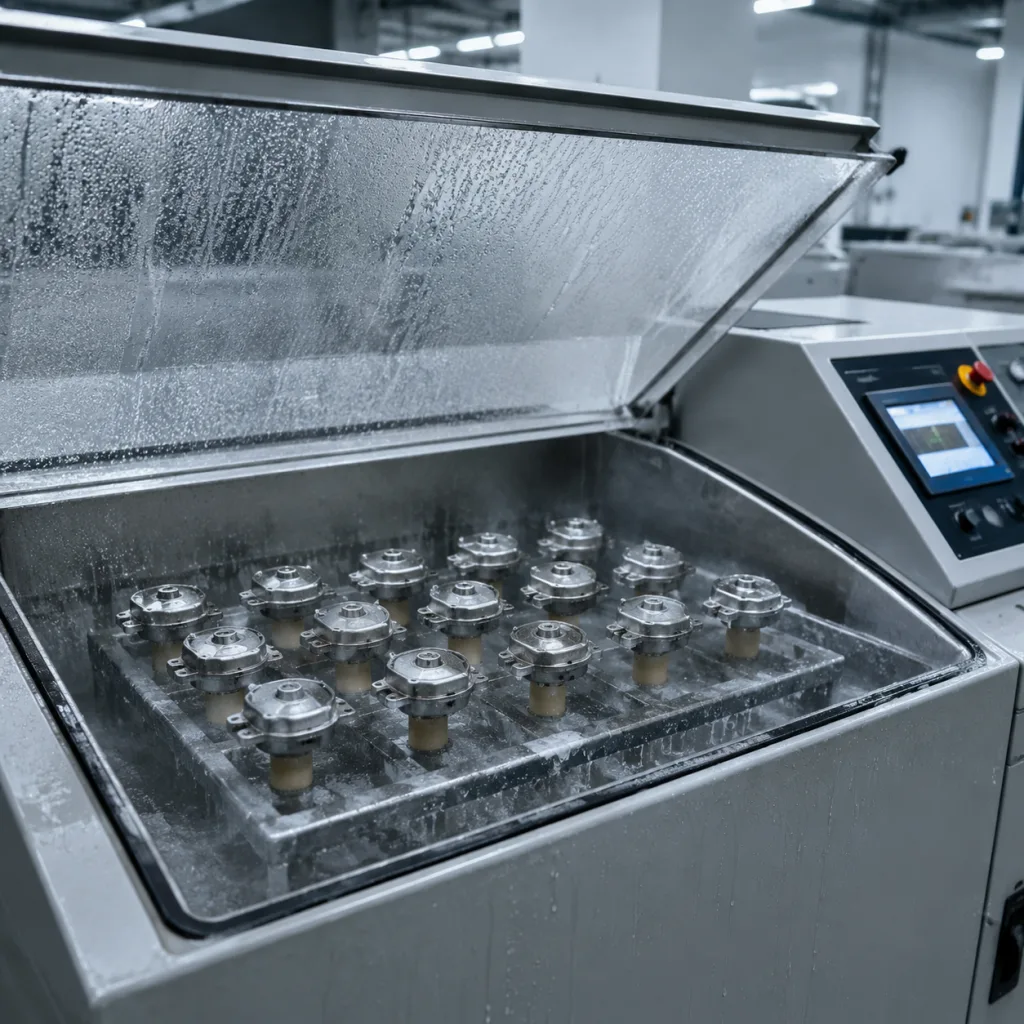
Salt spray testing accelerates corrosion by exposing parts to a controlled fog of saline solution. For a radiator cap, the goal is not to simulate every road condition. It is to compare corrosion resistance across materials, plating systems, and assembly quality under repeatable conditions.
For procurement and quality teams, the test helps answer three practical questions:
Does the cap body or spring show red rust, white corrosion, blistering, or pitting after a defined exposure, such as 48, 96, or 240 hours?
Do plated surfaces degrade at seams, crimps, or contact points where coating thickness is often thinnest, typically around sharp edges and formed radii?
Does corrosion affect the pressure valve, seal face, or locking features enough to change opening pressure by more than the approved tolerance, usually ±2 to ±5 kPa depending on the specification?
A valid report should identify the chamber method, solution concentration, pH range, temperature, duration, sample count, and acceptance criteria. Without those details, a statement such as "passed salt spray" is not very useful for sourcing decisions. Buyers should also ask for the part number, revision level, and lot code so the result can be tied back to the exact production configuration.
Standards commonly used in test plans
There is no single dedicated global standard for every radiator cap application. Most buyers reference a published corrosion method and then define product-specific acceptance criteria.
Standard
What it covers
Why it matters
ASTM B117
Neutral salt spray exposure in a controlled chamber
Common reference for comparative corrosion testing; often used at 5% NaCl, 35 °C, and continuous fog
ISO 9227
Salt spray, acetic acid salt spray, and copper-accelerated acetic acid testing
Widely used for international supplier qualification; the neutral test is often selected for metal parts with conventional plating
IATF 16949:2016
Automotive quality management system
Supports traceable APQP, PPAP, and controlled validation; buyers often require evidence of lot discipline
ISO 9001:2015
Quality management system
Baseline for process control and document discipline
REACH (EC) No 1907/2006
Chemical compliance in the EU
Relevant for coatings, platings, and material declarations
</tr></thead><tbody> </tbody></table>If your specification mentions ECE R-83 or SAE J2527 in adjacent cooling-system programs, confirm the scope before reusing those references. They may be relevant to the vehicle programme, but they are not substitute corrosion methods for a cap. The right approach is to name the corrosion standard, then state the acceptance rules for the cap itself. For example, a buyer may require no red rust through the coating, no blistering greater than 1 mm, and no loss of opening pressure beyond 10% after testing.
What to specify in a radiator cap test request
When you send a supplier a test request, include the exact build and the failure threshold. That reduces disputes later.
Minimum data to state
Part family and OE cross-reference, if available, such as OE 06A107065 when the keyword or drawing already uses it
Base material for shell, spring, valve, and gasket carrier, including steel grade or stainless grade when controlled
Coating or plating type, including thickness range if controlled, for example zinc 8–12 μm, nickel 5–8 μm, or equivalent customer-defined stack
Test standard and method variant, for example ASTM B117 or ISO 9227 neutral salt spray
Exposure duration in hours, such as 48 h, 96 h, 240 h, or a buyer-defined interval tied to end-use severity
Sample size and lot traceability, ideally at least 3 to 5 parts per lot for qualification and 1 to 3 parts per lot for routine surveillance
Required photos before and after exposure
Acceptance criteria for rust, blistering, seal damage, spring force loss, and pressure retention
Measured pressure specification and allowed deviation, such as 88 kPa rated with a post-test minimum of 80 kPa and no uncontrolled venting
If the part includes elastomer elements, ask whether the gasket is removed, masked, or tested as assembled. A cap can survive chamber exposure visually yet still fail in service if corrosion changes spring force, pressure release timing, or seal compression. Buyers should also define packaging and handling after the test so flash rust or contamination does not obscure the result.
How to read the test report
A useful report does more than state a pass result. It should show whether the test was run on production tooling, pilot tooling, or hand-built samples.
Check these points:
1. Chamber conditions match the stated method, including temperature, fog rate, salt concentration, and pH range. 2. The specimen count is enough to represent the lot or design family; for qualification, 5 specimens per design revision is more persuasive than a single sample. 3. Pre-test cleaning was controlled and documented, because residues can either mask corrosion or accelerate it. 4. Corrosion images are tied to the correct sample IDs and show both overall and close-up views of the shell, spring, valve, and locking interface. 5. Functional checks were performed after exposure, not only visual inspection; opening pressure, seal leakage, and valve travel should be recorded in the same report. 6. Any failures are described by location and severity, not just by a single score, with measured dimensions where pitting, blistering, or rust creep is observed.
For radiator caps, the most important post-test checks are seal integrity, valve movement, spring recovery, and evidence of corrosion at the locking interface. If a supplier cannot explain how the report links to the production part number, the result is weak for sourcing approval. Ask whether the tested sample matches the drawing revision, whether the chamber log is attached, and whether the data was reviewed under the supplier’s quality system before release.
Supplier controls that support corrosion consistency
Salt spray results are only as repeatable as the process behind them. Buyers should ask how the supplier controls incoming material, surface preparation, and plating thickness.
Driventus manufactures engine and powertrain components under a controlled quality system and supports B2B supply into aftermarket and OEM-adjacent channels. For procurement teams, the practical questions are the same whether the program is for replacement parts or private label:
Is the coating specification fixed by drawing or customer standard, and is the allowed variation clearly stated?
Are plating thickness and adhesion verified on each lot or at defined intervals, such as every lot or every 4 hours of production, depending on volume?
Are tensile, spring-rate, and pressure checks linked to the same lot ID as corrosion samples?
Can the factory supply inspection records under IATF 16949:2016 and ISO 9001:2015 controls?
What is the typical MOQ for the qualified revision, and does a smaller pilot lot increase unit price or extend lead time?
For commercial planning, ask for an MOQ band before you release the RFQ. A common pattern is a higher setup cost for the first qualified lot, then a lower unit price once production stabilizes. Buyers often compare three numbers together: MOQ, target price at 500/1,000/5,000 units, and lead time for first article versus repeat orders. If you need a drawing-based variant, ask about custom manufacturing early. If you are comparing multiple cooling-system parts, start with our catalog and review the related quality system documentation before releasing an RFQ.
Buying checklist before you approve a radiator cap
Use a simple approval checklist so the test result is tied to the commercial order.
Confirm the corrosion method: ASTM B117 or ISO 9227
Confirm exposure hours and inspection intervals, such as 24 h interim checks and final readout at 96 h or 240 h
Confirm acceptance criteria for rust, discoloration, blistering, and function, including allowable rust size or percentage of exposed area if your drawing defines it
Confirm whether the cap is tested assembled or with masked components
Confirm packaging does not introduce post-test contamination before inspection
Confirm photo evidence and traceability to lot number
Confirm the supplier can repeat the build across production lots
Confirm the MOQ, target unit price, and standard lead time for both trial and repeat orders before you approve the sample
For programmes with mixed markets, align the document set with export requirements as well as customer drawings. If the cap is part of a broader cooling or engine programme, you can also cross-check adjacent parts through our catalog and send a technical enquiry via request a quote. A practical RFQ should state the desired quantity, target annual volume, tolerance stack, and whether the first shipment needs PPAP-style support or just a dimensional and corrosion report.
What buyers should expect from a qualified supplier
A qualified supplier should be able to show a test plan, a traceable report, and a clear explanation of what was measured. The strongest submissions usually include before-and-after photos, chamber logs, coating data, and a statement that the part meets the agreed acceptance criteria for the specified exposure.
For radiator cap sourcing, that means the supplier can answer four questions without delay:
Which standard was used?
How long was the exposure?
What failed, if anything?
Does the tested sample match the ordered part revision?
Buyers should also expect commercial clarity. A capable supplier can quote MOQ, price breaks, and lead time in the same response, for example prototype samples in 2 to 4 weeks, a first production run in 4 to 6 weeks, and repeat orders on a shorter replenishment cycle if tooling and inventory are already in place. If corrosion testing is part of a private-label or aftermarket program, ask whether the quoted price includes traceable test reports, batch labeling, and rework or replacement terms for any lot that fails the agreed acceptance criteria.
If the answer to any of these is unclear, the report is not ready for procurement sign-off. When you need a supplier that can support drawings, validation samples, and repeat production, use custom manufacturing or send a technical request through request a quote.
Frequently asked questions
No. Buyers usually reference ASTM B117 or ISO 9227, then define product-specific acceptance criteria for corrosion, function, and seal performance.
Not by itself. You also need lot traceability, coating data, functional checks after exposure, and a report that matches the production design and revision.
Ask for the test method, chamber log, sample IDs, photos, coating or plating data, pressure-check results, MOQ, lead time, and a statement of acceptance against the agreed criteria.
If you need a traceable corrosion test package for radiator caps or related engine parts, review the documents and contact Driventus for support at /contact.html.