Crankshaft Seat Supplier: sourcing guide for buyers
Procurement teams sourcing crankshaft seats need more than a part number match. The supplier has to control material, machining, heat treatment, surface finish, and dimensional inspection across repeat lots. For engine rebuilders, distributors, and OEM or Tier-1 buyers, the main risks are poor fit, inconsistent hardness, and slow response to quality claims. Driventus is an independent aftermarket manufacturer; brand names are referenced for fitment only. We manufacture engine and powertrain components in Taizhou, Zhejiang, and export to 60+ countries under IATF 16949:2016 and ISO 9001:2015 systems. This article explains what to verify before placing a purchase order, how to compare suppliers, and what documents to request for audit-ready sourcing. If you need a matching part, start with [our catalog](/products.html) and review our [quality system](/quality.html) before you send a drawing or OE reference.
What buyers should verify first
A crankshaft seat supplier should be able to document four basics: material grade, dimensional control, process traceability, and inspection data. For procurement, the first filter is not price; it is whether the supplier can hold the fit required by the engine family.
Minimum sourcing checks
Material specification and mill traceability
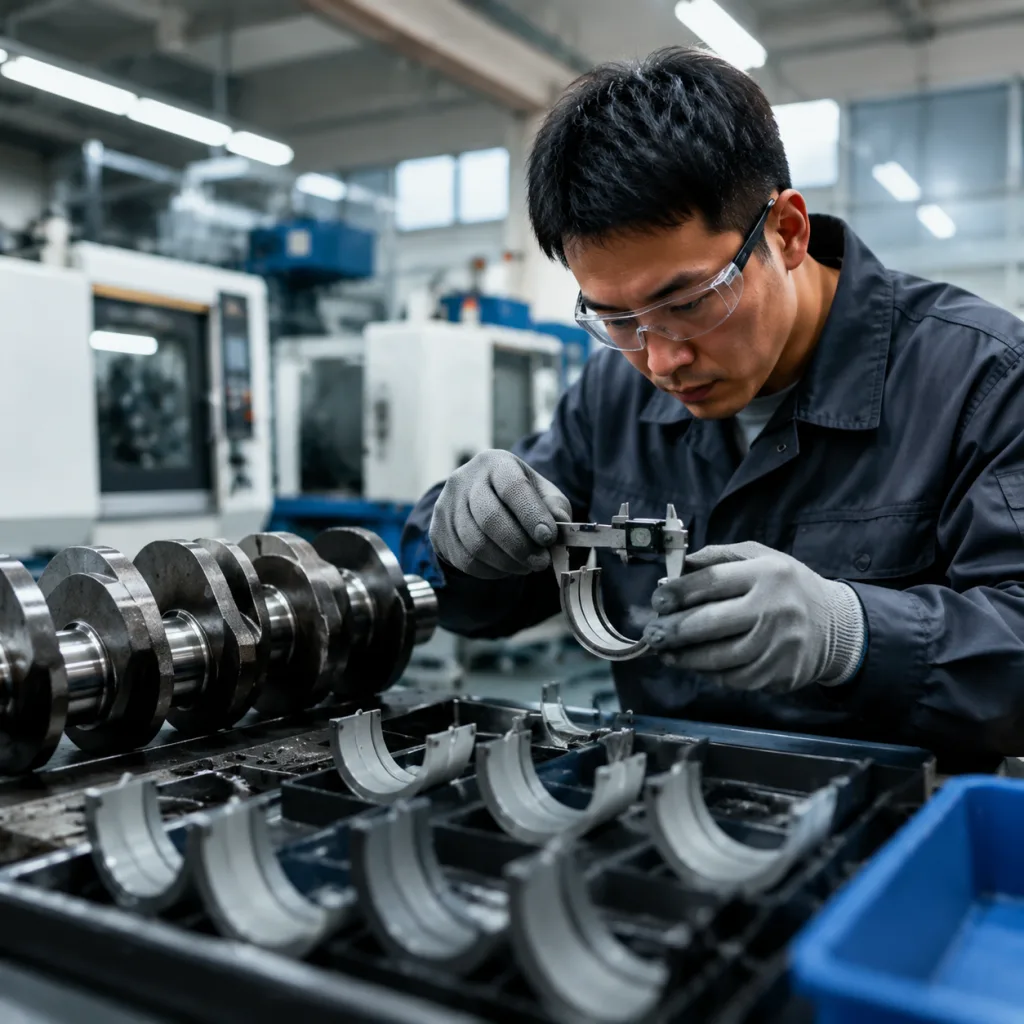
CNC machining capability and gauge control
Heat treatment records where applicable
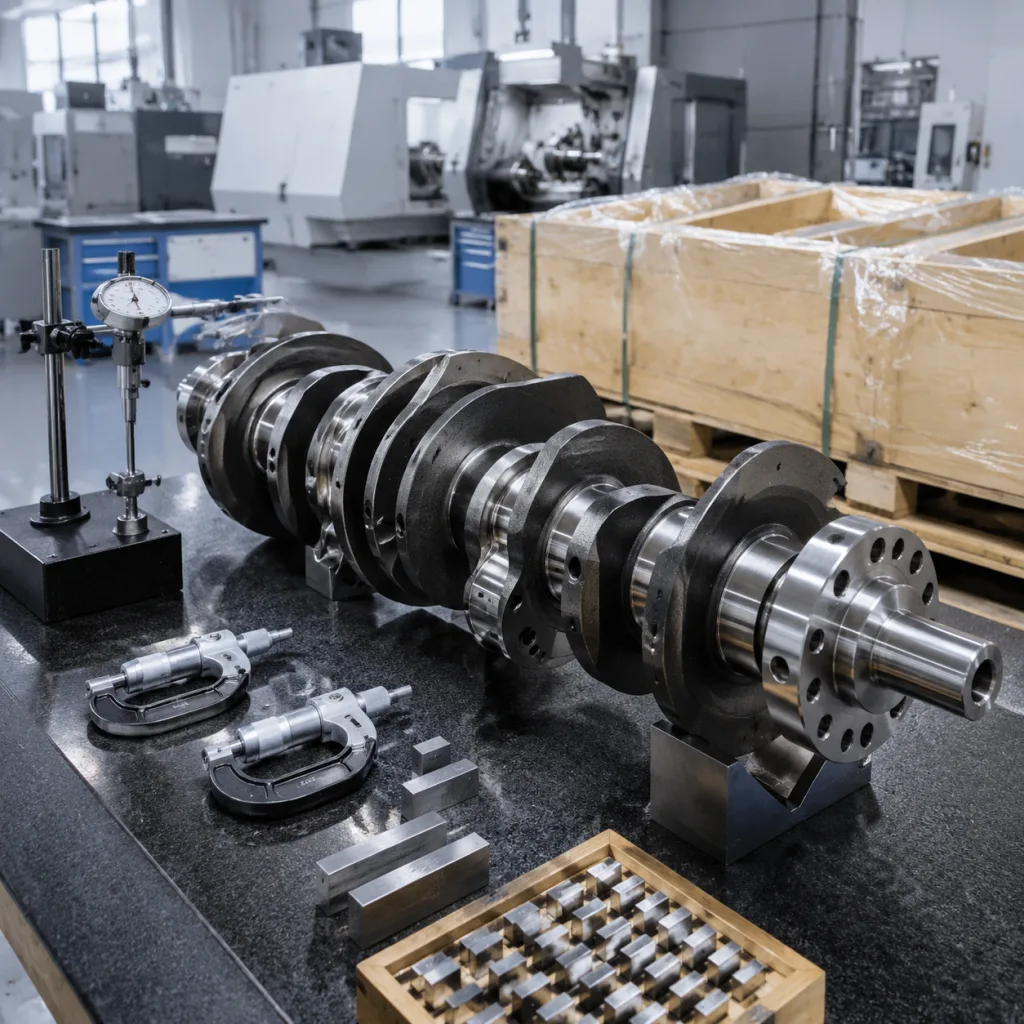
Final inspection report with measured values
Packaging and corrosion protection for export
Lot traceability from raw material to shipment
Ask for the applicable OE cross-reference, such as `OE 06A107065`, only when the keyword already exists in your source list. A reliable supplier should confirm whether the part is standard replacement, oversize, or application-specific. If you need a broader engine family match, use our catalog or the related engine components page.
Technical factors that affect fit and life
The seat must control alignment and support under repeated load. Small errors here create bearing wear, noise, or oil-film instability. Buyers should request the nominal dimensions, tolerance band, hardness range, and surface condition before approval.
Factor
What to confirm
Why it matters
Bore and journal size
Nominal diameter and tolerance
Prevents interference or clearance issues
Roundness and concentricity
Measured values on inspection report
Reduces vibration and uneven loading
Surface finish
Ra target on functional faces
Supports oil retention and wear resistance
Material condition
Forged or machined base, heat treatment
Affects fatigue life and stability
Coating or corrosion protection
Oil, VCI, or protective wrap
Preserves parts in transit and storage
</tr></thead><tbody> </tbody></table>For export programs, ask how the supplier controls repeatability across batches. If the answer is only visual inspection, continue looking. For engineered builds, custom manufacturing is useful when the drawing requires a non-standard geometry or a controlled change to suit local application packs.
Certification, traceability, and audit readiness
A serious supplier should operate under IATF 16949:2016 and ISO 9001:2015, with documented incoming inspection, in-process checks, and final release. For international trade, this should sit alongside REACH (EC) No 1907/2006 awareness for material compliance where applicable.
Documents to request
Certificate copies with validity dates
Control plan or inspection flow for the part family
Material certificate and heat-number traceability
Dimensional inspection report for the actual lot
Packaging specification for sea and air freight
Corrective-action process for nonconforming parts
If you audit the factory, confirm calibration records, gauge storage, and reaction plans for out-of-tolerance measurements. Buyers in the EU, UK, US, Canada, Australia, and Brazil should also ask for export experience with customs documents and carton labelling. A supplier that already ships globally will usually shorten approval time.
MOQ, lead time, and sourcing model
MOQ and lead time depend on whether the seat is an existing production item or a new OEM-style project. For aftermarket supply, lower MOQ is often possible when tooling already exists. For new drawings, the supplier may need sample approval, tooling review, and process validation before mass production.
Sourcing model
Typical buyer use
Procurement focus
Stock replacement
Fast-moving aftermarket demand
Availability, carton pack, repeatability
OE cross-reference
Distributor and repair chain supply
Fitment confirmation and lot stability
Custom drawing
OEM / Tier-1 program
DFM support, validation, and change control
</tr></thead><tbody> </tbody></table>Lead time should be stated from order confirmation, not from informal quotation. Ask whether samples are from the same process route as production parts. If they are not, treat the sample as informational only. For better planning, request a production forecast window and a documented response time for engineering queries. That is often more useful than a low unit price with an uncertain ship date.
How Driventus supports procurement teams
Driventus manufactures crankshaft and engine components in a vertically integrated setup, which helps us control machining flow, inspection points, and packaging. We support B2B buyers that need repeat supply, not one-off retail stock.
What procurement teams usually value
Engineering response on drawings and OE references
Stable repeat production for distributor reorders
Inspection records for incoming QA review
Export packing suitable for container and pallet shipment
Custom manufacturing for non-standard application needs
If your team needs a quote, the fastest path is to send the drawing, target annual volume, required tolerance, and packaging specification through request a quote. We can then confirm feasibility, MOQ, and lead time before sampling. Driventus is an independent aftermarket manufacturer; brand names are referenced for fitment only.
Frequently asked questions
Send the drawing or OE cross-reference, required quantity, tolerance notes, surface finish target, material preference, and packaging needs. If you have an approved sample, include photos and measurement data.
Compare dimensional reports, certification status, traceability, response time, MOQ, lead time, and corrective-action process. Unit price matters, but repeatability and claim handling usually matter more.
Yes. We support drawing-based and OE-referenced projects when the part family is suitable for our process route. Share the technical data and we will confirm feasibility, sample steps, and production timing.
Send your drawing, OE reference, and target quantity for a quick sourcing review. We will confirm feasibility, MOQ, and lead time, then prepare a quotation via /contact.html