Camshaft for Skoda Superb OE Equivalent: Buyer Guide
A camshaft for Skoda Superb OE equivalent has to match valve timing geometry, journal dimensions, lobe profile, and surface finish, not just the vehicle model. For procurement teams, the practical question is whether the replacement part will fit the cylinder head, preserve correct valve lift, and remain durable under both production and aftermarket conditions. Driventus supplies engine components for B2B buyers who need repeatable fitment, stable supply, and documented inspection. Driventus is an independent aftermarket manufacturer; brand names are referenced for fitment only. For Skoda Superb applications, the correct sourcing process starts with the engine code, OE reference, and measured critical dimensions. It should also include material traceability, hardness confirmation, and runout verification. This article explains what to verify before placing a replacement order and how to compare OE-equivalent camshafts against catalog data and inspection records.
What OE-equivalent means for a Skoda Superb camshaft
A Superb badge covers multiple engines and generations, so OE-equivalent does not mean one universal fit. The same model can use different camshaft layouts depending on fuel type, displacement, valve count, and whether the engine uses a single overhead cam, dual overhead cam, or variable valve timing architecture. Buyers should validate against the engine code, model year, emissions family, valve count, and whether the part is an intake camshaft, exhaust camshaft, or a paired set. A correct listing should state the engine family and the measuring points used to confirm equivalence.
For practical purchasing, insist on the exact OE reference cross-check, such as the OEM part number, engine code, and head casting family. If a supplier cannot state whether the part is for intake or exhaust, or cannot separate 2-valve, 4-valve, and timing-gear variants, the listing is not ready for production or wholesale use. For the Skoda Superb, a proper OE-equivalent camshaft should match the original lobe timing, journal layout, thrust feature, and sensor-trigger geometry where applicable.
Fitment is engine-specific
- Confirm engine code and cylinder head variant before quoting.
- Separate intake and exhaust camshafts in the RFQ.
- Verify whether the engine uses VVT, and if so, confirm phaser interface dimensions.
- Check OE cross-reference, not just model name and year.
- Request a dimensional drawing with labeled datum points for the exact application.
Key dimensions and material checks
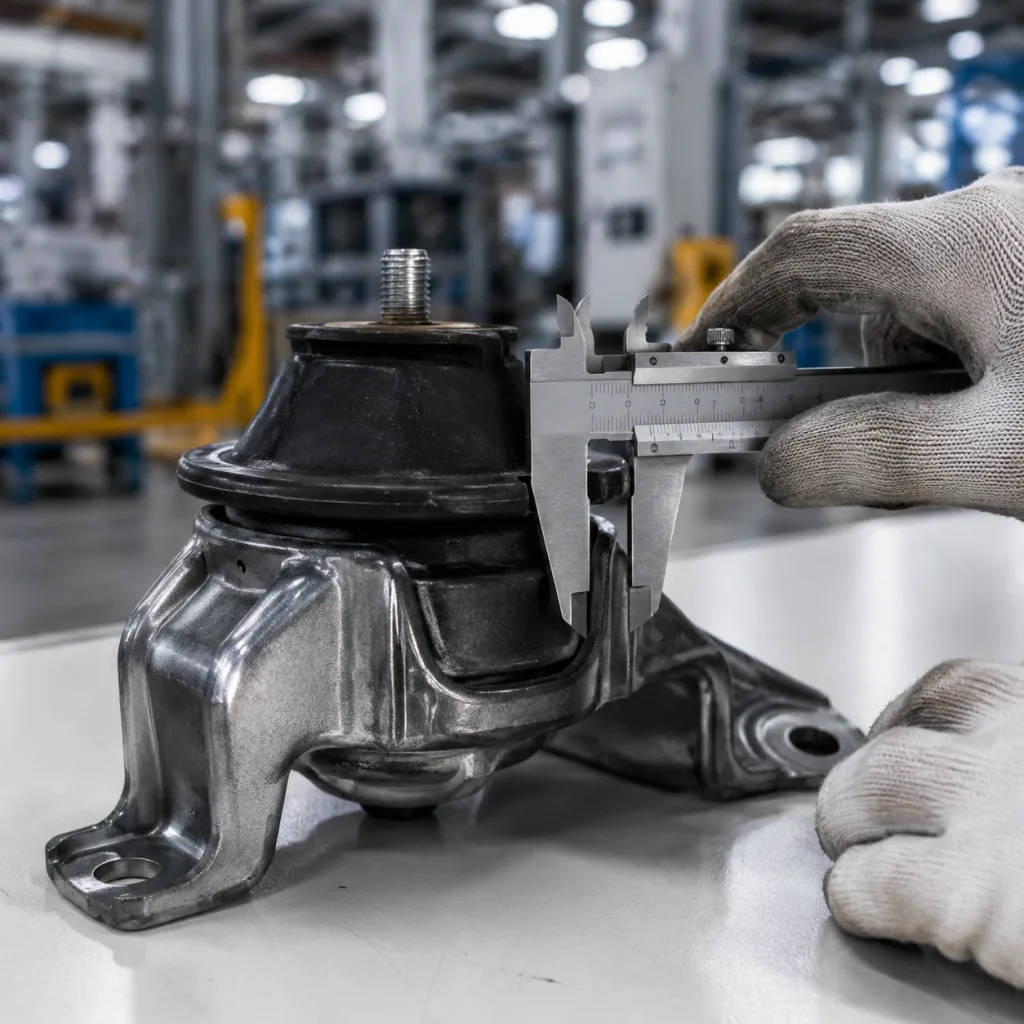
A replacement camshaft should be judged on measurable parameters, not only on catalogue description. The most useful purchasing file includes nominal dimensions, tolerance band, and inspection method.
Request these data points from the supplier
- Journal diameters and their tolerance range, typically within ±0.01 mm to ±0.03 mm depending on the bearing scheme
- Total length and locating features, including thrust face position and gear/keyway offset
- Lobe height, base circle, and lobe separation data, with tolerance on lift commonly held within ±0.02 mm to ±0.05 mm for stable valve timing
- Surface hardness depth where applicable, with nitrided cases often specified in the 0.30 mm to 0.60 mm effective depth range
- Material specification or alloy family, such as chilled cast iron, forged steel, or induction-hardened steel, depending on the OE design
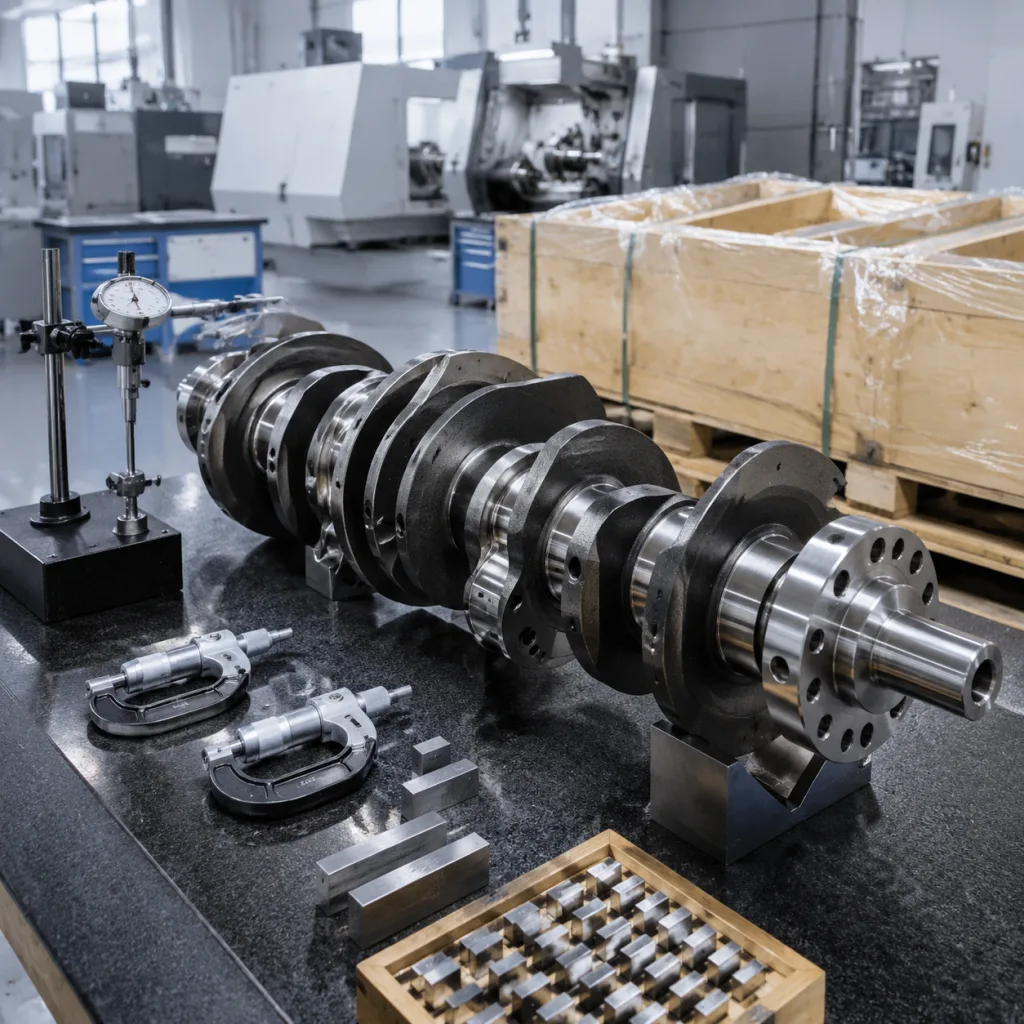
- Straightness and concentricity limits, with runout commonly targeted below 0.03 mm to 0.05 mm for precision assemblies
- Heat-treatment record or process declaration
- Surface roughness target on bearing journals and lobes, often controlled around Ra 0.2 to 0.8 μm depending on finish and lubrication strategy
For OE-equivalent parts, dimensional repeatability matters more than broad claims. Even a small deviation in lobe height or journal finish can affect valve timing stability, oil film behaviour, and noise. If the camshaft has a surface treatment, confirm whether it is nitrided, induction-hardened, carburized, or finished through another controlled process. Ask for inspection samples or batch certificates tied to the shipment lot.
A buyer-ready specification should also identify acceptance criteria for each critical feature. For example, journal ovality, lobe lift variation, and total indicated runout should be listed with the inspection tool used, such as a micrometer, profile projector, or dial indicator on V-blocks. If the supplier cannot provide a drawing with nominal values and tolerance bands, the part should be treated as a generic replacement rather than a controlled OE-equivalent item.
Driventus works with IATF 16949:2016 and ISO 9001:2015 quality controls, which helps buyers standardise incoming inspection and supplier comparisons. The same discipline applies whether you are buying one part number or sourcing across multiple engine families.
Validation tests that reduce replacement risk
Replacement parts should be checked for function, not only appearance. A procurement file should define which tests were performed before release.
Useful validation steps
1. Measure all critical dimensions against the reference sample or drawing, including journal OD, overall length, thrust face position, and lobe lift. 2. Verify runout and straightness before assembly; for controlled production sourcing, ask for a measured limit and actual result for the batch. 3. Confirm lobe surface finish and hardness, including case depth or hardness range if heat treated. 4. Check oil feed holes, if present, for correct location, diameter, chamfer, and cleanliness. 5. Trial-fit in the cylinder head to confirm bearing alignment, thrust clearance, and free rotation with assembly lube. 6. Review dyno, endurance, or bench test evidence where available, including test hours, rpm band, and failure criteria.
For European fleet applications, REACH (EC) No 1907/2006 compliance may also be relevant for material declarations, coatings, and process chemicals. If the camshaft is part of a broader emissions-related assembly, buyers may also ask for documentation aligned with applicable vehicle-type requirements such as ECE R-83, where relevant to the engine programme rather than the bare part itself.
A supplier that only provides a part number and a photo is not enough for controlled replacement sourcing. Ask for inspection reports, batch traceability, and test summaries tied to the exact lot. A practical RFQ should also state your accept/reject thresholds, such as maximum runout, minimum hardness, permitted coating thickness, and packaging cleanliness requirements, so the supplier can quote to the same standard.
How to compare suppliers for this part family
For a camshaft used as an OE-equivalent replacement, the comparison should focus on technical controls and supply reliability. Price matters, but it should sit behind fitment confidence and repeatable quality.
| Supplier factor | What procurement should check |
|---|---|
| Engineering support | Can they confirm engine code and OE cross-reference, and answer fitment questions within 24 hours? |
| Inspection data | Do they share dimensional and hardness records, including actual values and tolerance limits? |
| Batch traceability | Is each shipment linked to a lot number and manufacturing date? |
| Lead time | Can they hold stable replenishment terms, such as 15–30 days for stocked lines or 45–60 days for made-to-order parts? |
| MOQ | Is the minimum order workable for your channel, such as 20–50 pieces for stock lines or project-based starts for custom profiles? |
| Documentation | Are certificates, material declarations, and packing lists available with the shipment? |
| Commercial clarity | Is the price tiered by volume, and does the supplier state whether tooling, inspection, and packaging are included? |