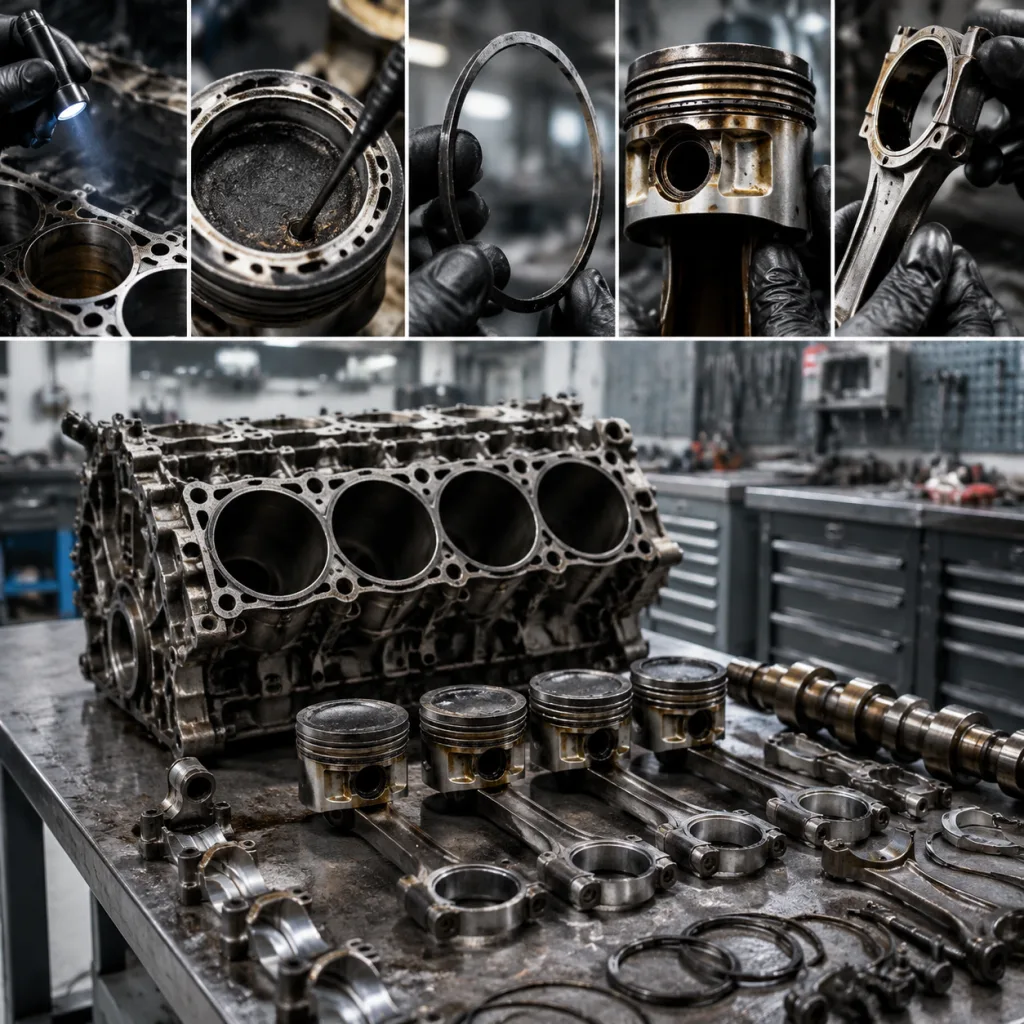
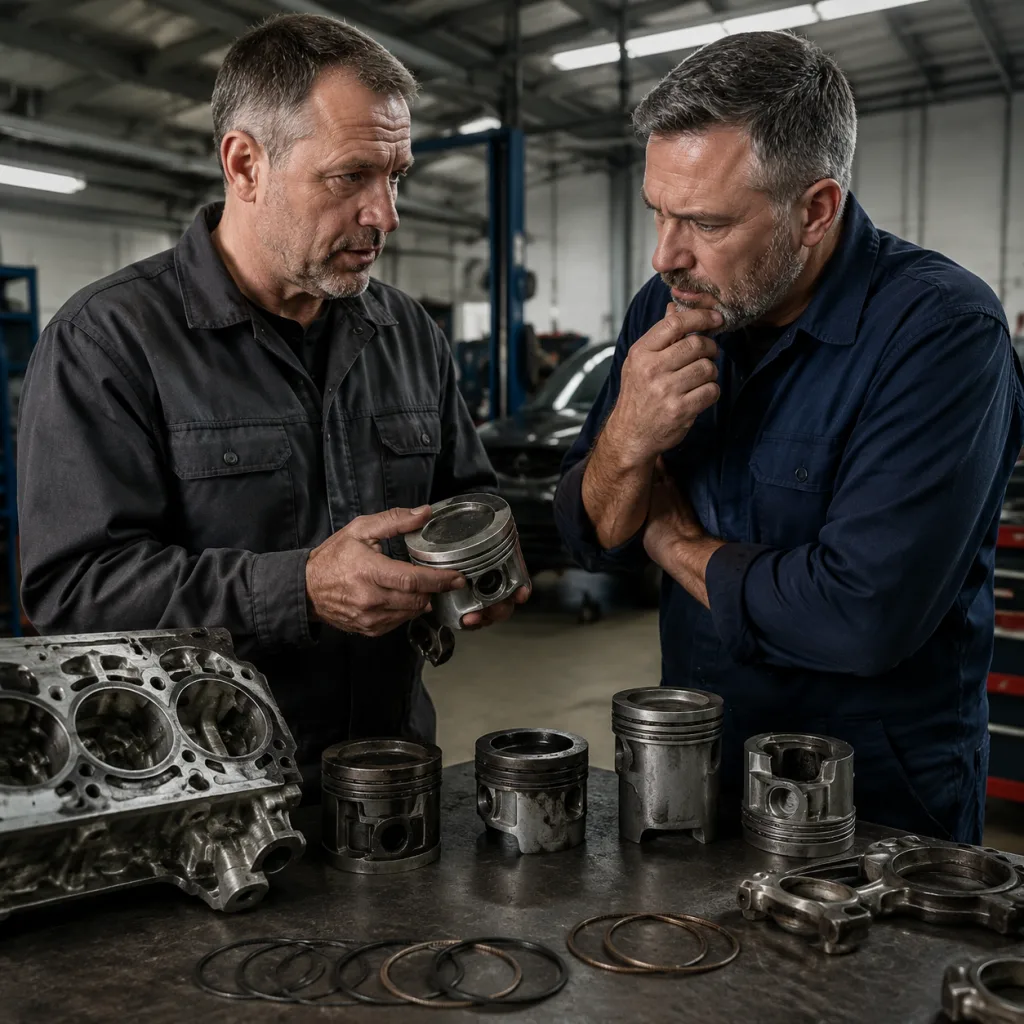
Piston ring symptoms of failure usually show up as oil consumption, blue exhaust smoke, low compression, and blow-by. Those signs do not prove the rings are the problem. A worn valve stem seal, cylinder bore wear, stuck PCV system, or turbo oil leak can create the same complaint.
This guide is organized around decisions, not theory. First, it shows how to separate ring-related faults from lookalikes. Then it covers the inspections that matter, the measurements worth trusting, and the point where replacement becomes the smart call. Driventus is an independent aftermarket manufacturer; brand names are referenced for fitment only. Our piston ring production is controlled under IATF 16949:2016 and ISO 9001:2015, with materials and traceability aligned to B2B aftermarket supply requirements. For related parts, see our catalog, quality system, and custom manufacturing.
Decision point: is it really the rings?
The most common piston ring symptoms of failure show up under load, after long idling, or during cold starts. The engine may still run normally, but sealing quality has slipped.
Blue smoke at start-up or during acceleration often indicates oil passing the ring pack or cylinder wall.
High crankcase pressure and oil mist from the breather point to blow-by past the compression rings.
Low compression on one or more cylinders suggests poor ring sealing, but valves and head gasket leaks must be ruled out.
Raised oil consumption without external leaks often points to ring wear, ring sticking, or bore wear.
Loss of power and rough idle can follow reduced cylinder pressure and unstable combustion.
The trap is assuming one symptom equals one cause. Oil burning can come from the top end, the turbo, the PCV system, or the cylinder itself. Compression loss can be ring leakage, but it can also be a burnt valve or a gasket issue. Treat the symptom as a lead, not a verdict.
A useful field rule is this: if dry compression varies more than about 10% to 15% from the best cylinder, or leak-down is above roughly 15% to 20% on a warm engine, the cylinder deserves deeper investigation. Exact limits depend on engine family, boost level, and OEM service data, so the manufacturer spec comes first.
For oil consumption, many rebuild teams start a ring and bore review when use exceeds about 1 quart per 1,000 to 1,500 miles, or roughly 0.9 to 1.4 L per 1,600 to 2,400 km, once external leaks are excluded. Fleet engines with long idle hours can fail sooner because carbon in the ring groove and cylinder glazing build up faster.
Failure patterns: what points to rings, and what does not
Use the pattern of symptoms to narrow the fault before teardown.
Symptom
Likely ring-related cause
Other causes to exclude
Blue smoke on acceleration
Worn oil control ring, stuck ring, glazed bore
Turbo seal leak, valve stem seals
Low compression
Broken compression ring, ring land damage, bore wear
Burnt valve, head gasket leak
Excess blow-by
Worn rings, stuck rings, excessive end gap
PCV restriction, cracked piston
Oil consumption with normal compression
Oil ring sticking, coked ring grooves
External leaks, turbo oil drain fault
Misfire under load
Loss of sealing, hot spots from detonation
Ignition, injector, fuel pressure
</tr></thead><tbody> </tbody></table>A simple distinction helps. Oil control problems usually show up first as smoke and consumption. Compression ring problems usually show up first as low cylinder pressure and blow-by. Both can appear together in high-mileage engines or in engines that have been overheated, poorly maintained, or dusted.
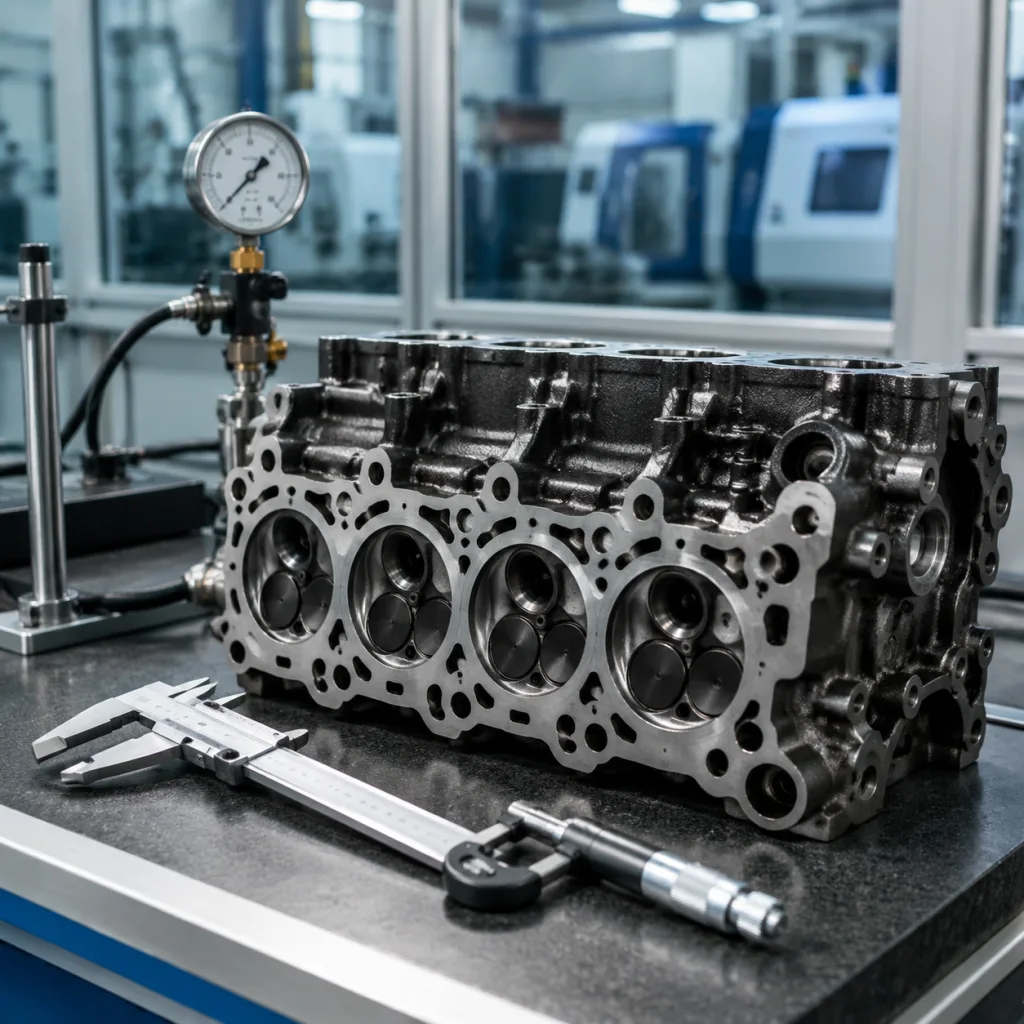
Numbers make the diagnosis sharper. If leak-down air escapes mainly through the crankcase, ring leakage is more likely than a valve fault. If the leak-down path is the intake or exhaust, the problem usually sits in the valves instead. On a healthy gasoline engine, ring end gap is tightly tied to bore size and duty cycle; once measured gap exceeds the service limit, both oil control and compression sealing decline. Bore taper and out-of-round matter too. Even small wear can defeat new rings if the cylinder is not corrected first.
Inspection flow: from checks to teardown
Start with non-invasive checks, then move to teardown only if the measurements support it.
1. Confirm operating conditions. Note smoke timing, oil grade, service interval, and any overheating or dust-entry history. 2. Perform compression and leak-down tests. Compare cylinders, not just absolute values. 3. Inspect intake and exhaust paths. Rule out turbocharger oil leakage and PCV faults before condemning rings. 4. Use a borescope. Look for vertical scoring, glazing, carbon buildup, and washed cylinders. 5. Measure bore wear. Taper and out-of-round must be checked before fitting new rings. 6. Check ring grooves and end gaps during teardown. Sticking, broken rings, and groove wear are common root causes.
Measurements worth keeping
Compression consistency across cylinders
Leak-down percentage at top dead centre
Cylinder bore taper and out-of-round
Ring end gap against the service limit
Side clearance in the piston groove
Warm compression within about 10% spread can still be acceptable on some engines, but a single low cylinder paired with high leak-down and oily plug deposits points much more strongly to ring sealing loss. For teardown planning, measure ring end gap at the top of the unworn bore, then again lower in the cylinder; a larger gap lower down can indicate taper that will beat a fresh ring set unless the bore is corrected first.
Typical ring service checks also include radial tension, groove side clearance, and bore finish. If the cylinder finish is too smooth after machining, fresh rings may not seat. If it is too rough, wear accelerates. Many rebuilders target a plateau-honed crosshatch that supports break-in while retaining oil film, with the final finish matched to ring material and coating.
Failure modes by component
Not every ring problem starts in the ring itself. The component that failed first usually leaves a different trace.
Oil control ring: oil smoke, high consumption, carbon in grooves, plugs that foul without major compression loss.
Compression rings: low compression, blow-by, hard starting, unstable idle, and weak power under load.
Ring lands: poor sealing even with new rings, visible cracking, heat marks, or collapsed support area.
Cylinder wall: glazing, scoring, taper, or ovality that prevents new rings from bedding in.
Piston and groove stack: excessive side clearance, sticking rings, or broken ring pieces after overheating or detonation.
This is why replacement decisions should be made in layers. Cleaning may recover a stuck ring. Honing may restore a glazed bore. Re-boring may be needed when wear is beyond spec. A full ring set alone is only the answer when the rest of the sealing system is still within limits.
For engines exposed to severe detonation, overheating, or dust ingestion, assume the piston and bore may be part of the failure chain until inspection proves otherwise. In those cases, cracked ring lands or heat distortion can make ring replacement alone ineffective, even if compression briefly improves after cleaning.
Replacement call: when to stop testing and order parts
Replacement is justified when the rings are cracked, stuck beyond cleaning, worn beyond limit, or when the cylinder surface can no longer support sealing. For procurement and rebuild planning, the main question is whether the part set matches the measured engine condition.
Replace rings when compression leakage, oil burning, and blow-by remain after external causes are ruled out.
Hone or re-bore first when glazing, scoring, taper, or ovality exceed the allowable limit.
Replace pistons as well if ring lands are damaged, collapsed, or heat-marked.
Verify fitment by OE cross-reference such as OE 06A107065 when the application data calls for it.
Driventus supplies piston rings for aftermarket rebuilds and fleet repair channels, with dimensional control aligned to IATF 16949:2016 and ISO 9001:2015. For buyers, the practical check is not just material and package count, but bore compatibility, groove match, and finish specification. That is where validation testing matters more than catalogue claims.
Timing matters for cost. A set of rings is inexpensive compared with a failed comeback job, but rings should not be ordered until bore size, piston diameter, and groove clearance are confirmed. If the cylinder needs machining, ordering standard-size rings too early can create scrap or delay. The usual flow is inspection first, machining second, then ring selection by final bore size and required side clearance.
B2B sourcing checks
For distributors, workshops, and importers, a ring set should be judged on technical fit and supply reliability.
Material: alloy steel, cast iron, or ductile iron depending on ring position and engine duty cycle
Surface finish: face coating, phosphate layer, or chrome-type treatment where specified
Dimensional control: end gap, radial thickness, axial height, and free gap consistency
Packaging: set completeness, cavity marking, and traceability label
Compliance: REACH (EC) No 1907/2006 when materials are shipped into the EU market
Documentation: inspection records, batch traceability, and test data on request
Driventus is an independent aftermarket manufacturer; brand names are referenced for fitment only. Buyers comparing supply options can review our catalog, check the quality system, and use custom manufacturing when a catalogue ring does not match the required bore or groove specification. If you need pricing or a part-match review, request a quote.
A buyer-ready RFQ should include engine code, OE number, bore size, oversize or standard requirement, quantity, target coating, and any packaging label needs. MOQ is usually lowest for standard catalog sets and higher for custom or branded packaging runs; the final minimum depends on ring diameter, material, and coating family. Standard items can often be stocked in small cartons for service work, while custom profiles usually need a larger lot to absorb tooling, setup, and inspection cost.
Price depends on five variables that matter in the quote: ring type, diameter, coating, quantity, and documentation. A set for a common passenger engine will usually price lower than a heavy-duty or coated application because material mass, process time, and inspection requirements are lower. Lead time also follows complexity: stock sets can ship quickly, while custom cross-sections, nonstandard groove profiles, or special packaging add production and QC time. If a program is urgent, ask whether the supplier can split supply into immediate stock and backorder balance rather than waiting for one full lot.
For B2B ordering, specify whether you need sample pieces, a trial run, or production quantity. That helps align quote, MOQ, and release timing before the order is booked.
Q&A for fast triage
Can bad piston rings cause misfire? Yes. Low compression from worn or stuck rings can reduce combustion stability, especially under load or during cold start.
Do all oil-burning engines need new rings? No. Valve seals, turbo seals, PCV faults, and bore wear can produce similar symptoms. Measure before replacing.
Can new rings fix a worn bore? Not reliably. If taper, ovality, or scoring exceed the service limit, the cylinder must be honed or re-machined before reassembly.
What compression loss is severe enough to act on? As a field trigger, many shops investigate further when one cylinder is more than 10% to 15% below the best cylinder, or when leak-down is above about 15% to 20%. Always compare against OEM limits.
What should a buyer send for a quote? Send engine code, OE number, bore size, quantity, coating requirement, and packaging needs. That shortens confirmation time and reduces mismatch risk.
Frequently asked questions
Yes. Low compression from worn or stuck rings can reduce combustion stability, especially under load or during cold start.
No. Valve seals, turbo seals, PCV faults, and bore wear can produce similar symptoms. Measure before replacing.
Not reliably. If taper, ovality, or scoring exceed the service limit, the cylinder must be honed or re-machined before reassembly.
If you are matching a ring set to a measured bore condition or OE reference, send the application details and we will review options. Use the form at /contact.html.