EGR cooler · 2026-06-20

EGR Cooler Genesis Supplier: Sourcing Guide for Buyers

If you are sourcing an EGR cooler for Genesis applications, the main risk is not price alone. Fitment accuracy, thermal durability, weld integrity, and supply consistency across batches all affect total cost and warranty exposure. Buyers need a supplier that can support OE cross-references, dimensional checks, corrosion control, and stable lead times. Driventus is an independent aftermarket manufacturer; brand names are referenced for fitment only. For procurement teams, that means requesting documented specifications, traceability, and test data before placing volume orders. A qualified Genesis supplier should also be able to support packaging, export documentation, and repeat orders with the same revision control. Driventus operates under IATF 16949:2016 and ISO 9001:2015, with export experience across 60+ countries. Below is a practical sourcing guide focused on commercial and technical checks, not consumer fitment language.

Start With The Fitment Decision

Before you compare quotes, decide whether the part is a direct replacement, a near-match, or a custom build. That single choice determines your risk profile.

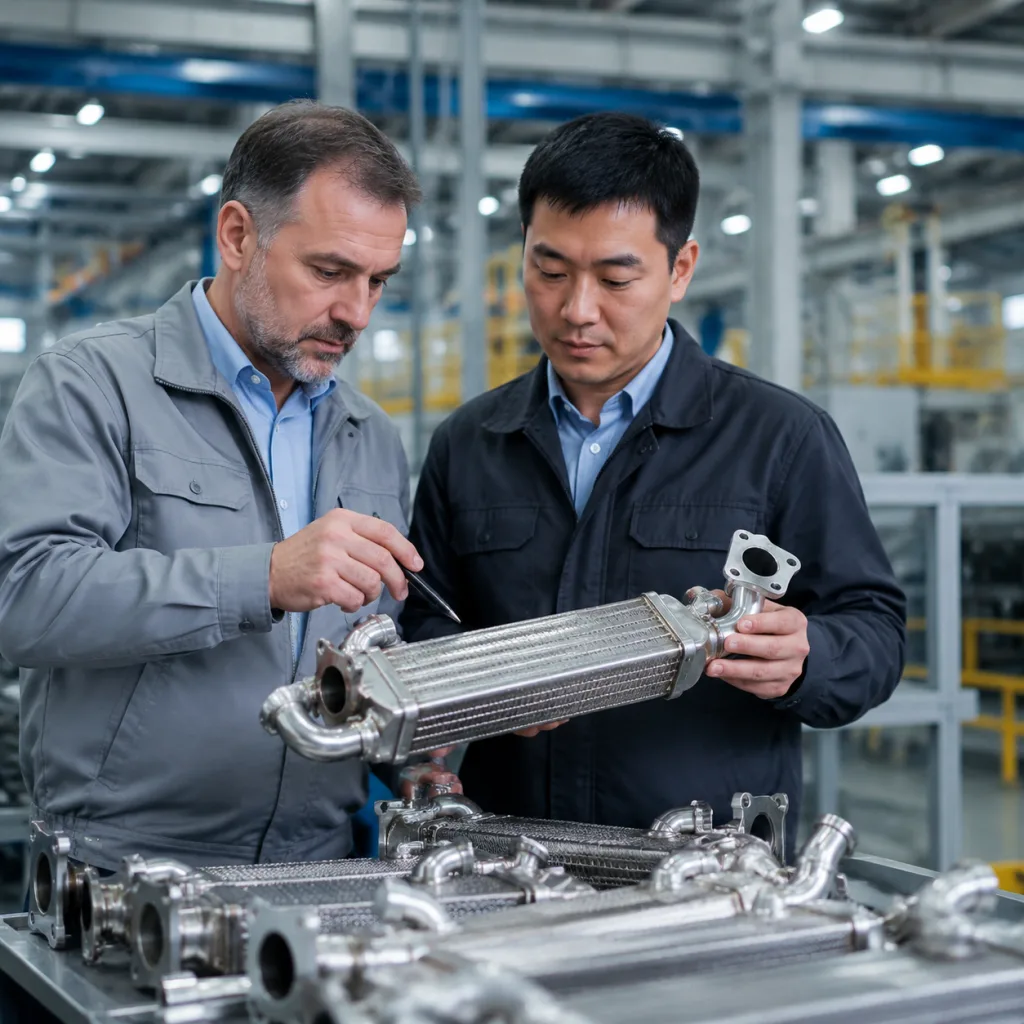
For an EGR cooler purchase, start with fitment data and manufacturing controls. A supplier should confirm the application by OE cross-reference, engine code, and physical interface dimensions.

Minimum sourcing checks

  • OE reference or verified application list
  • Core size, flange pattern, inlet/outlet orientation
  • Material specification for tubes, headers, and end tanks
  • Weld process and leak test method
  • Surface treatment or corrosion protection
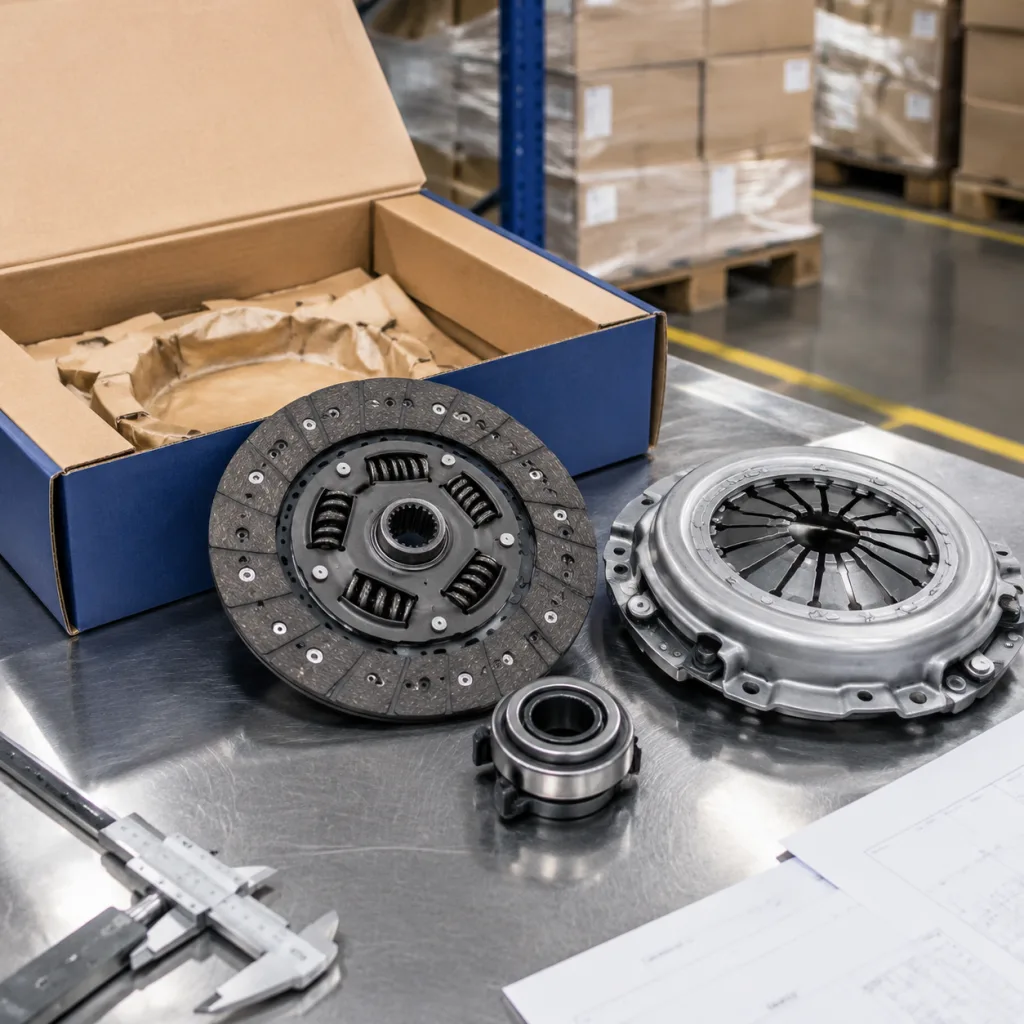
  • Packing standard and carton count

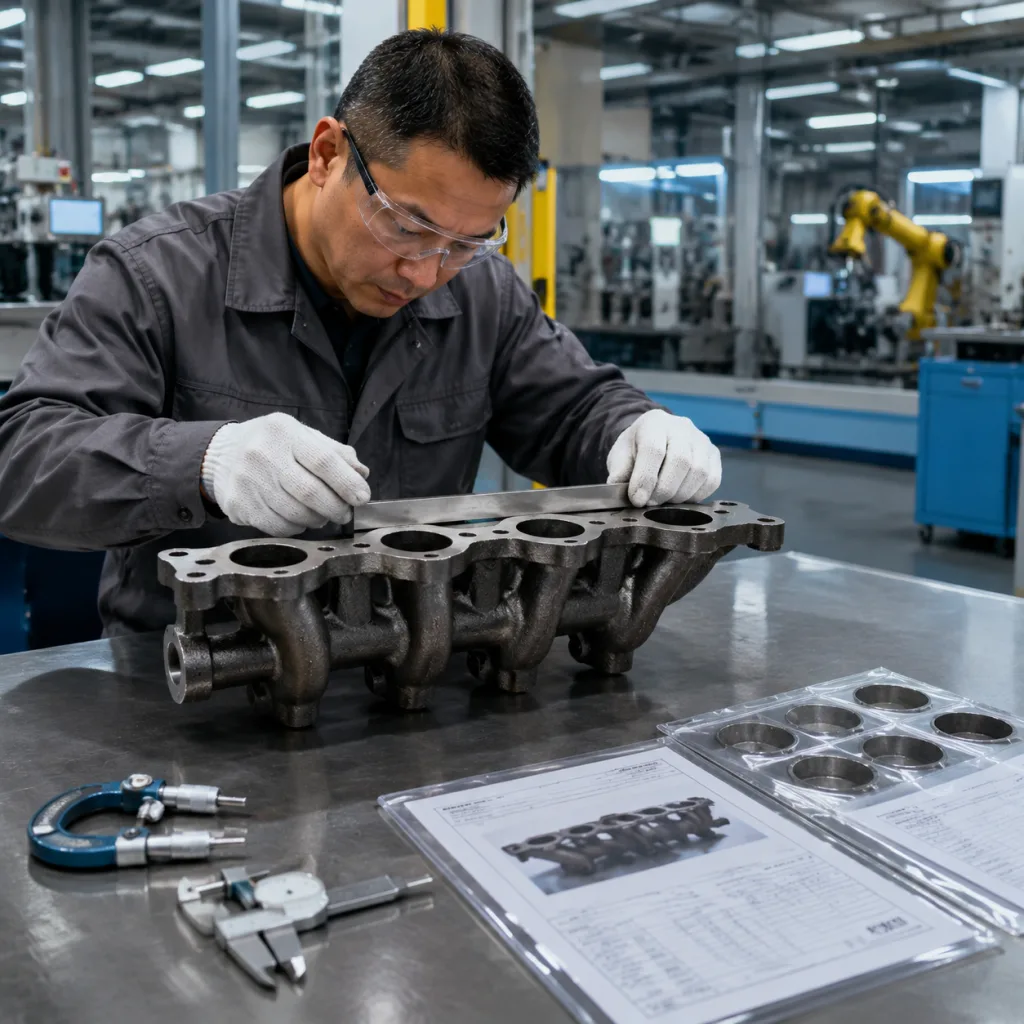
Buyers should also ask for numeric acceptance criteria before approving samples. A practical review set includes overall length, port center distance, mounting-hole pitch, and flange flatness against the buyer drawing or sample. Typical procurement tolerances to request are ±0.5 mm on critical mating dimensions, ±1.0 mm on non-critical envelope dimensions, and zero visible interference on trial fit. For pressure integrity, ask for the exact test medium, pressure, and hold time; many B2B programs specify a 100% leak test at 1.5x working pressure with a minimum 30-second hold, plus a defined pass/fail criterion for pressure decay or bubble leakage.

For Genesis-related programs, request samples with measurement reports before you commit to volume. If the target platform is not fully confirmed, use our catalog to compare related engine cooling and exhaust-gas recirculation parts. For broader engine component sourcing, the engine components page is a useful starting point.

Where Suppliers Usually Fail

Most sourcing problems do not come from the headline spec. They come from the weak links around it.

A reliable EGR cooler supplier should operate with controlled process flow, not batch-only assembly. That matters because EGR coolers fail early when weld quality, brazing consistency, or cleaning control varies.

Driventus is a vertically integrated manufacturer in Taizhou, Zhejiang, which helps with traceability from incoming material to final inspection. Buyers should expect support for:

  • Incoming material verification
  • Dimensional inspection against drawing or sample
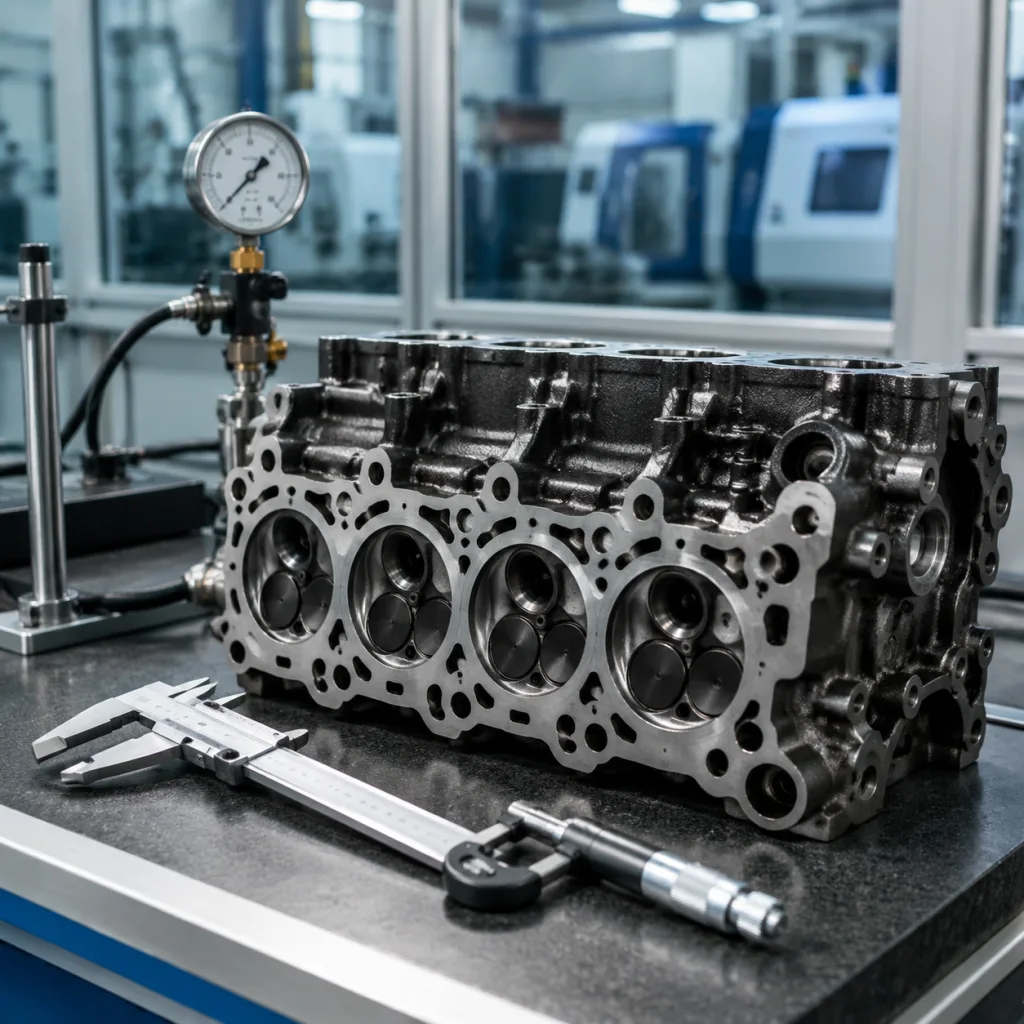
  • Pressure decay or submerged leak testing
  • Thermal cycling or endurance validation on request
  • Batch traceability and production records

When you evaluate capability, ask how the factory controls root causes that affect warranty cost: tube wall thickness consistency, weld penetration, soot-path cleanliness, and packaging that prevents flange distortion in transit. A buyer should also confirm whether inspection is 100% or sampling-based at each process stage, what AQL or internal acceptance limit is used, and which tools are calibrated. For stable programs, request a process flow that covers incoming raw stock, forming, welding, cleaning, final test, marking, packing, and shipment release.

If you are qualifying a new source, review the quality system documentation before asking for commercial terms. That is the fastest way to check whether the factory can support repeatable supply rather than one-off shipments.

Spec Sheet Checklist

EGR coolers vary by platform, but procurement teams usually compare the same technical fields across bids. The table below shows the items that should appear on a supplier datasheet or quotation.

</tr></thead><tbody> </tbody></table>When comparing quotes, ask for the same drawing revision and the same test basis. A clean buyer spec should also list port diameter tolerance, header thickness, welding filler or brazing material, and allowable distortion after test. For example, many buyers require port ID within ±0.2 to ±0.3 mm, bolt-hole position within ±0.5 mm, and flatness under 0.3 mm across sealing faces, but the correct numbers should always match the vehicle interface and your internal fitment standard.

If a supplier offers custom mounting or port changes, confirm whether that is standard production or custom manufacturing.

Lead Time And Commercial Tradeoffs

For B2B buyers, lead time is part of technical risk. A low unit price does not help if the supplier cannot repeat delivery windows.

A typical sourcing conversation should cover:

  • MOQ by part number and by order mix
  • Sample lead time versus mass-production lead time
  • Tooling or fixture cost, if applicable
  • Incoterms and export packing terms
  • Spare capacity for urgent replenishment
  • Revision control for repeat orders

For Genesis programmes, ask whether the part is held as a controlled production item or built to order. Controlled stock is useful for distributors and repair chains that need faster replenishment. As a practical benchmark, ask for sample lead time in 7-14 days if tooling is already in place, pilot order lead time in 15-25 days, and regular production lead time in 25-45 days depending on order size and finish requirements. MOQ should also be explicit: for catalog items it may be as low as 20-50 units per SKU, while customized programs often need 100-300 units to offset setup and testing.

Price should be quoted with volume breaks, not a single figure. Buyers should request at least three tiers, such as 100 pcs, 500 pcs, and 1,000+ pcs, plus the cost impact of special packing, private label marking, or extra test documentation. If a supplier cannot state whether the price is valid for 30, 60, or 90 days, that is a commercial risk. If you need a quote for a specific OE cross-reference, use request a quote and include engine code, vehicle year range, target annual volume, and any sample photos or dimensions.

Compliance Questions That Matter

A serious supplier should state which standards govern the factory and which materials or processes are controlled for export markets. The core quality framework should reference IATF 16949:2016 and ISO 9001:2015.

Depending on destination market and customer requirement, also ask about:

  • REACH (EC) No 1907/2006 for EU chemical compliance
  • Material declaration support for restricted substances
  • Packaging and labelling requirements for import clearance
  • Test reports aligned to customer drawing or internal validation plan

For buyers, the useful question is not only whether standards are named, but how they are applied in the release process. Ask for the actual control points: incoming material certificates, weld parameter records, leak-test logs, calibration intervals, and retention of sample parts by lot. If the supplier supports export, confirm carton dimensions, palletization, HS-code support, and whether documents can be issued under the buyer’s company name when required.

Driventus does not claim vehicle manufacturer approval. Driventus is an independent aftermarket manufacturer; brand names are referenced for fitment only. For buyers in the EU, UK, US, Canada, Australia, and Brazil, this distinction matters when mapping aftermarket supply to internal compliance files.

Compliance Questions That Matter

Qualification Flow For Buyers

Use a simple qualification sequence before placing a production order.

1. Confirm OE cross-reference and engine application. 2. Review drawing, photos, and key dimensions. 3. Request samples and test records. 4. Check leak performance, weld quality, and fit-up. 5. Verify packaging, traceability, and production lead time. 6. Approve a pilot order before full rollout.

To make qualification actionable, use a short scorecard. A practical buyer scorecard can weight fitment and dimensional accuracy at 30%, leak and durability performance at 25%, delivery reliability at 20%, process control and traceability at 15%, and commercial terms at 10%. During pilot evaluation, ask the supplier to ship a small lot from the same production route intended for mass orders, not a hand-built sample only. Inspect at least 5-10 units for dimensional consistency, confirm sealing face condition after pressure test, and record any variability in weld bead appearance or bracket alignment.

If your buying team needs a stable aftermarket source with audit-ready documentation, compare specifications across the full range in our catalog and align the program with your internal supplier scorecard. Driventus can support OEM and aftermarket projects where revision control and repeatability matter more than a one-time price point.

Frequently asked questions

Yes. Provide the OE number, engine code, and vehicle application. We will confirm fitment, dimensions, and availability before quoting.

We can provide product specifications, inspection records, and factory quality information aligned to IATF 16949:2016 and ISO 9001:2015 processes.

Yes, where the order volume and application justify it. Send drawings or samples through /contact.html and we will review the request.

If you are comparing sources for an EGR cooler Genesis program, send your OE reference, target volume, and required delivery schedule through /contact.html. We will review the application and respond with a practical quotation.

Request a Quote
Spec item What to confirm Why it matters
Core constructionTube-and-fin, plate-type, or welded assemblyAffects heat transfer and service life
Material gradeStainless steel, aluminium alloy, or mixed constructionControls corrosion resistance and cost
Pressure testTest pressure and hold timeIndicates leak margin
Dimensional toleranceMounting holes, overall length, port diameterPrevents installation rework
FinishCoating, passivation, or bare metalInfluences corrosion behaviour
TraceabilityBatch code or lot markingSupports warranty handling