diagnostics · 2026-06-19

Check Engine Light P0420 Repair Cost Guide for B2B Buyers

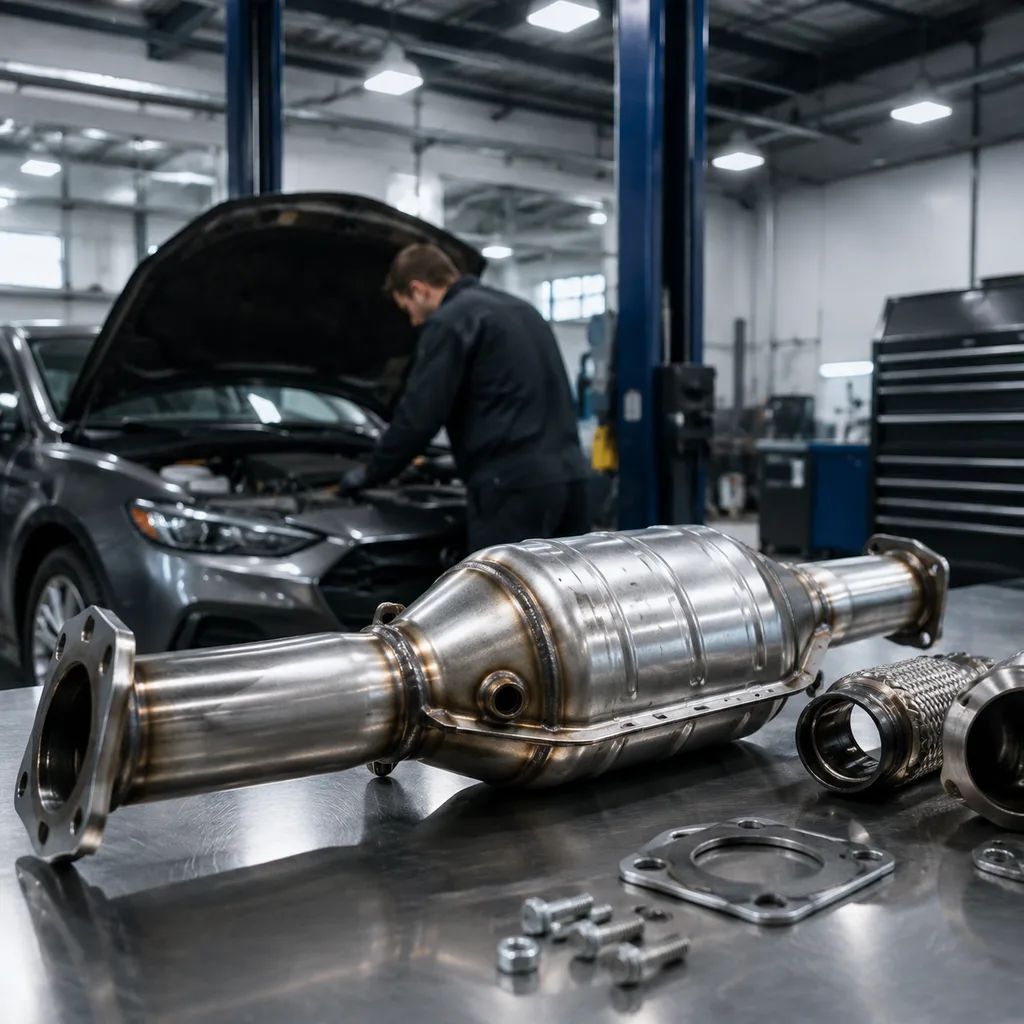
A check engine light with code P0420 points to catalyst system efficiency below the calibrated threshold, usually on Bank 1. It does not, by itself, prove the catalytic converter is dead. For repair chains, fleet workshops, and aftermarket distributors, that distinction controls cost. A rushed converter order can add diagnostic labour, repeat bay time, warranty disputes, emissions-compliance risk, and dead stock.

This check engine light P0420 repair cost guide uses a buyer’s lens: prove the failure first, define the legal emissions requirement, match the part by VIN-level or engine-code fitment where available, then compare landed cost against MOQ, tooling, inspection, packaging, and lead time. The goal is not the cheapest converter on paper. It is the lowest controlled repair cost across branches, batches, and warranty claims.

Driventus supplies engine and powertrain components to B2B customers in more than 60 countries from Taizhou, Zhejiang. Driventus is an independent aftermarket manufacturer; brand names are referenced for fitment only.

Decision Point: Is P0420 Really a Converter Failure?

P0420 is a generic OBD-II emissions code. It means the ECU sees catalyst efficiency below its expected threshold, based on the relationship between upstream and downstream oxygen or air-fuel ratio sensor signals. It is a symptom flag, not a purchase order.

A healthy catalyst stores and releases oxygen. That storage action smooths the downstream sensor pattern. When the downstream signal starts to mirror the upstream signal after the ECU’s enable conditions are met, P0420 may set. Common enable conditions include closed-loop operation, normal coolant temperature, steady cruise or light load, no active misfire codes, and no fuel-trim or oxygen-sensor heater faults.

Use fuel trims as an early decision gate. Many workshops treat combined short-term and long-term trims within about ±10% as a practical first screen. Readings outside ±15% usually mean mixture-control diagnosis comes before converter replacement.

The buyer’s risk is simple: if the root cause is not confirmed, the ordered converter may become the visible failure point for a bad process. A useful diagnostic record should include freeze-frame data, fuel trims, sensor activity, exhaust-leak status, and related codes such as P0300-P030x misfire, P0171/P0174 lean mixture, P0172/P0175 rich mixture, P013x/P014x sensor faults, or heater circuit faults.

For warranty disputes, require a minimum evidence pack: mileage, engine code, emissions level, installed part number, batch number, pre-repair codes, post-repair readiness status, and at least one scan-tool graph or log. Without this, a supplier cannot reliably separate part defects from misdiagnosis, installation leaks, or unresolved engine damage.

Regulation is another decision point. Emissions-related repairs may fall under market-specific frameworks such as ECE R-83 in Europe and US EPA or CARB requirements in the United States. Replacement parts must match the importing market’s legal requirements, not only the bolt pattern. A converter that fits physically but lacks the required approval marking, label, executive order, declaration, or importer file can still create a compliance failure.

Cost Stack: What Buyers Actually Pay For

The P0420 bill is not one line item. It is a stack of labour, verification, compliance, parts, freight, and risk. The converter may be the largest part cost, but it is not always the true cost driver.

</tr></thead><tbody> </tbody></table>The biggest price swings come from six areas:

  • Vehicle emissions level: Euro 5, Euro 6, EPA, or CARB-related requirements can change specification, approval evidence, labelling, and landed cost.
  • Substrate and coating: Ceramic or metallic substrates, 400–600 CPSI cell density, washcoat design, shell gauge, mat retention, and precious metal loading influence price and durability.
  • Engine and exhaust layout: Larger engines, close-coupled manifold converters, dual-bank systems, and integrated heat shields increase material cost and welding-control requirements.
  • Engine fault history: Misfire, oil burning, coolant ingress, rich operation, or silicone contamination can destroy the original catalyst and shorten the life of the replacement.
  • Assembly complexity: Manifold-integrated converters cost more than many underfloor units because flange flatness, heat shielding, sensor-boss position, and installation access are tighter.
  • Import compliance: Certification records, declarations, markings, and labels can add 2–6 weeks to a sourcing programme if they are not prepared before ordering.

MOQ changes the real price. Stocked catalogue references may allow lower minimums. Private-label packaging, special brackets, or custom assemblies usually raise the minimum. A practical model is to start with samples or a pilot order, then move fast movers into carton-level or pallet-level call-offs. Price breaks at 100, 300, 500, or 1,000 pieces look attractive only if storage, obsolete fitment, and warranty handling do not erase the savings.

Lead time also belongs in the cost stack. Existing tooling and approved drawings move faster than new references that need sample development, fixture work, durability checks, packaging validation, or compliance review. Separate tooling time, first-article approval, mass production, freight, and customs clearance instead of comparing only ex-works unit price.

A cheaper converter is not cheaper if it fails an emissions inspection, arrives without gaskets, creates fitment issues, or forces a second customer visit.

Step-by-Step: The Pre-Order Diagnostic Gate

Before a branch orders converter-related parts, the job card should force the same checks every time. This protects margin, reduces wrong-part returns, and gives procurement usable warranty evidence.

1. Record codes and freeze-frame data. Confirm whether P0420 appears alone or with misfire, oxygen sensor, fuel-trim, evaporative, or coolant temperature codes. Save RPM, load, coolant temperature, vehicle speed, fuel status, and mileage before clearing anything. 2. Check technical service information. Some applications need ECU updates, specific drive-cycle conditions, or known inspection procedures before parts replacement. Confirm readiness monitor status and ask whether the vehicle recently had a battery reset. 3. Inspect for exhaust leaks. A small leak upstream of the downstream sensor can distort oxygen readings and make the catalyst look weak. Check manifold gaskets, flex joints, flanges, welds, and sensor bosses. Smoke testing or low-pressure leak checks beat visual inspection alone. 4. Review fuel trims. Long-term trims outside the normal range point to mixture-control problems that can damage the catalyst or invalidate the diagnosis. Treat ±10% as a caution zone and investigate beyond ±15% before ordering expensive parts. 5. Check sensor response. A lazy downstream sensor, wrong sensor type, poor connector fit, incorrect cable length, or wiring fault can imitate low catalyst efficiency. Verify heater operation, connector keying, cable routing, and signal behaviour during steady cruise and snap-throttle tests. 6. Verify engine condition. Oil consumption, coolant loss, misfire history, and high exhaust back pressure must be investigated before replacement. Screen for recent misfire counters, fouled plugs, coolant-loss records, blue smoke, or back pressure above the workshop’s approved limit. 7. Confirm catalyst efficiency. Use scan-tool graphing, temperature comparison, five-gas analysis where available, or an approved workshop procedure. A downstream waveform that closely follows the upstream waveform after warm-up is stronger evidence than a stored code alone.

Release rule for replacement

Approve replacement only when the converter fails an accepted efficiency check, the exhaust is sealed, upstream engine faults are ruled out, and sensor operation is verified. If the vehicle still has active misfires, high oil consumption, coolant contamination, persistent rich running, or unresolved air leaks, repair those first. Otherwise, the new converter can fail early and turn into a warranty dispute.

For repair-chain control, make the rule measurable: no converter order above the agreed price threshold without freeze-frame data, fuel-trim values, leak-check result, sensor check, and installer confirmation that related engine faults are corrected. For fleets, add post-repair readiness status and odometer reading at release.

This gate separates real parts demand from process failure. It also tells procurement which parts to bundle: converters where justified, gaskets as standard, sensors where test results support replacement, and engine components when the root cause sits upstream.

Step-by-Step: The Pre-Order Diagnostic Gate

Sourcing Comparison: Converter, Sensor, or Root-Cause Part?

P0420 sourcing is rarely a converter-only exercise. The repair may involve catalytic converters, oxygen sensors, exhaust gaskets, mounting hardware, and engine components that caused the catalyst damage. The buying decision should compare repair scenarios, not just part numbers.

Cost item Typical range or planning value B2B planning impact
Diagnostic labour0.5–2.0 hoursHigher when road tests and readiness monitors are required
Scan-tool verification10–30 minutesNeeded for warranty evidence and branch KPI control
Oxygen sensor replacementUSD 12–45 aftermarket B2B, higher for wideband typesConnector, cable length, and heater resistance errors cause returns
Exhaust leak repairUSD 2–20 gasket/fastener parts plus variable labourLow part cost but high repeat-code impact if skipped
Catalytic converter assemblyUSD 65–450+ depending on loading, size, and approval routeMain cost variable in confirmed failures
Associated gaskets and fastenersUSD 1–12 per repair kitShould be bundled to reduce bay delays and leakage claims
Post-repair verification1 drive cycle or 15–30 minutes scan-tool reviewNeeded before fleet release or warranty closure

</tr></thead><tbody> </tbody></table>Driventus focuses on engine and powertrain components such as gaskets, pistons, crankshafts, water pumps, turbochargers, and related assemblies. For sourcing teams building a complete repair programme, our catalog can support adjacent engine repair needs that often appear during P0420 root-cause checks.

Use these checks before approving a supplier or reference:

  • Confirm engine code, emissions level, body configuration, production date range, transmission, drive position where relevant, and upstream/downstream sensor position.
  • Avoid substitutions based only on visual similarity, especially where connector, flange, hanger, heat-shield, pipe angle, or sensor-boss locations differ.
  • Request dimensional drawings with critical tolerances for flange hole spacing, pipe outside diameter, sensor-boss thread, hanger location, and overall length.
  • Define acceptance points before approval, including flange flatness, weld coverage, bracket position, thread quality, and packaging drop resistance.
  • Confirm whether market-specific emissions documentation, labelling, importer declarations, or product markings are required before confirming price.
  • Bundle gaskets, copper nuts, studs, spring bolts, clamps, and heat-resistant fasteners with converter-related orders to reduce installation delays.
  • Track warranty returns by fault code, mileage, installer, part batch, scan-tool evidence, and whether the root-cause repair was completed.

Do not send an RFQ with only a part number. Send annual volume forecast, first order quantity, target market, packaging requirement, label language, barcode or SKU format, inspection standard, acceptable substitution rules, and any PPAP-style document, control plan, or inspection-report needs. Ask for price breaks at fixed quantities such as 100, 300, 500, and 1,000 pieces so landed cost can be compared consistently.

MOQ should follow confidence. Fast-moving, proven applications can justify larger orders. Low-volume or uncertain references should start with samples or a pilot batch. For private label, packaging MOQ may be more restrictive than part MOQ, so confirm carton, inner box, label, and pallet requirements separately.

If a standard catalogue part does not fit the application or packaging requirement, custom manufacturing may be appropriate for gaskets, brackets, housings, or related engine components. This helps distributors consolidate low-volume references into a controlled sourcing programme with consistent drawings, packaging, and quality records.

Spec Deep-Dive: Quality Evidence That Prevents Hidden Cost

Low upfront price becomes expensive when parts create fitment failures, emissions-test failures, transit damage, or high warranty rates. The fix is not a longer supplier promise. It is a purchase order and quality agreement with measurable acceptance criteria.

For engine and powertrain components, Driventus operates under IATF 16949:2016 and ISO 9001:2015. These standards support process control, traceability, corrective action, and quality management. Our quality system supports B2B customers that require inspection records, production control plans, and batch traceability.

For P0420-related repair programmes, request evidence at the points that affect fit, legality, and warranty sorting:

Scenario Likely order Main buyer risk
Converter efficiency confirmed, no upstream faultConverter kit with gaskets and hardwareCompliance, fitment, substrate quality, warranty evidence
Sensor signal or heater fault presentCorrect upstream or downstream sensorConnector, cable length, heater resistance, wrong application
Exhaust leak near sensor pathGaskets, studs, clamps, flange repair partsRepeat P0420 if sealing parts are skipped
Misfire, oil burning, coolant loss, or rich runningRoot-cause engine repair components firstNew converter damage and rejected warranty claim
Unclear application dataSample, drawing, fitment confirmationWrong-part returns and branch downtime

</tr></thead><tbody> </tbody></table>Write acceptance criteria into the purchase order or quality agreement. Examples include AQL level for visual inspection, 100% thread protection on sensor bosses, no flange deformation after packaging, readable batch labels on each carton, and quarantine rules for mixed references. For dimensional checks, separate critical-to-fit characteristics from general reference dimensions. That prevents disputes over cosmetic differences that do not affect installation or function.

Lead-time control is part of quality control. Require the supplier to confirm sample date, first-article inspection date, mass-production date, packing date, and shipment date. For urgent P0420 programmes, split orders into air-freight samples and sea-freight bulk only after the sample report and installation check are approved.

Define how nonconforming parts will be reported, quarantined, and analysed. Clear photo requirements, batch numbers, installer notes, mileage, fault codes, and scan-tool records reduce the time needed to separate a part issue from an installation or diagnosis issue.

Avoid any supplier claim that implies vehicle manufacturer approval unless a valid, auditable approval exists. Driventus is an independent aftermarket manufacturer; brand names are referenced for fitment only.

Spec Deep-Dive: Quality Evidence That Prevents Hidden Cost

Failure Modes: Why P0420 Comes Back After Repair

Repeat P0420 claims usually come from one of six failure modes: incomplete diagnosis, incorrect application matching, unresolved engine faults, installation leaks, weak post-repair verification, or poor warranty evidence. A standard job card is the best control for multi-location repair chains because it turns judgement into repeatable data.

Recommended controls:

  • Require scan-tool screenshots before and after repair, including stored codes, freeze-frame data, and readiness monitor status.
  • Record upstream and downstream sensor waveforms where available, especially during steady cruise after warm-up.
  • Note short-term and long-term fuel trims, coolant temperature, misfire counters, and oxygen-sensor heater status.
  • Inspect for exhaust leaks before ordering converter-related parts, and record the leak-check method used.
  • Replace damaged gaskets and corroded fasteners during installation; do not reuse crushed gaskets on high-heat joints.
  • Hold failed parts for supplier review when warranty is claimed, with batch label, mileage, installer ID, and photos.
  • Train branches not to clear codes before recording freeze-frame data.

For distributors, stock planning should follow the real repair pattern. The converter may be the headline item, but gaskets, oxygen sensors, fasteners, and engine repair components often decide whether the vehicle leaves the bay on the first visit. Use the check engine light P0420 repair cost guide approach to separate confirmed catalyst failures from avoidable diagnostic returns.

Track a compact KPI set: first-visit completion rate, P0420 repeat rate within 30 or 90 days, wrong-part return rate, warranty approval rate, and average days to close a claim. If repeat claims exceed the agreed threshold, classify them by root cause: diagnosis incomplete, application mismatch, installation leak, engine fault unresolved, packaging damage, or suspected part defect.

When demand is uncertain, start narrow. Launch with a limited application set, monitor return reasons for 90 days, and expand only after fitment data, documentation, packaging, and branch feedback are stable. For new supplier programmes, use stages: sample approval, pilot order, 90-day field monitoring, then volume order with agreed MOQ, price break, lead time, and warranty evidence rules.

Frequently asked questions

No. P0420 means catalyst efficiency is below the ECU threshold. Exhaust leaks, oxygen sensor faults, fuel-trim problems, misfires, oil consumption, and coolant contamination should be checked before replacing the converter.

The catalytic converter assembly is usually the largest part-cost driver, but total cost also depends on diagnostic time, emissions compliance requirements, gaskets, sensors, MOQ, freight, lead time, and whether upstream engine faults caused the failure.

Request application data, drawings with critical dimensions and tolerances, material and inspection records, packaging details, batch traceability, lead-time breakdown, price breaks by quantity, and compliance declarations such as REACH (EC) No 1907/2006 where applicable.

If you are building a P0420-related repair programme or need engine components for root-cause repairs, Driventus can review fitment lists, documentation needs, MOQ targets, lead-time constraints, and volume requirements. To discuss sourcing options, [request a quote](/contact.html)

Request a Quote
Requirement Practical specification Buyer evidence to request
Fitment controlApplication, engine code, emissions level, key dimensions, and sensor positionApplication list, drawing, sample approval
Dimensional controlFlange spacing, pipe OD, hanger position, bracket angle, and overall length against tolerancesIncoming inspection report, go/no-go fixture record where used
Weld and assembly controlConsistent weld bead, no cracks, no blocked sensor boss, no loose heat shieldVisual inspection criteria, process control plan
Material controlHeat-resistant materials suitable for exhaust temperature, vibration, and corrosion exposureMaterial specification, supplier traceability
Chemical complianceRequired for many importers and distributorsREACH (EC) No 1907/2006 declaration where applicable
Packaging validationProtection for sensors, gaskets, flanges, and heat shields in transitCarton drop-test method, packing photos, pallet plan
TraceabilityWarranty sorting and containmentBatch number, production date, inspection lot, carton label
Corrective actionFaster warranty resolution8D report process and return analysis