Clutch Kit Opel Manufacturer China: B2B Sourcing Guide
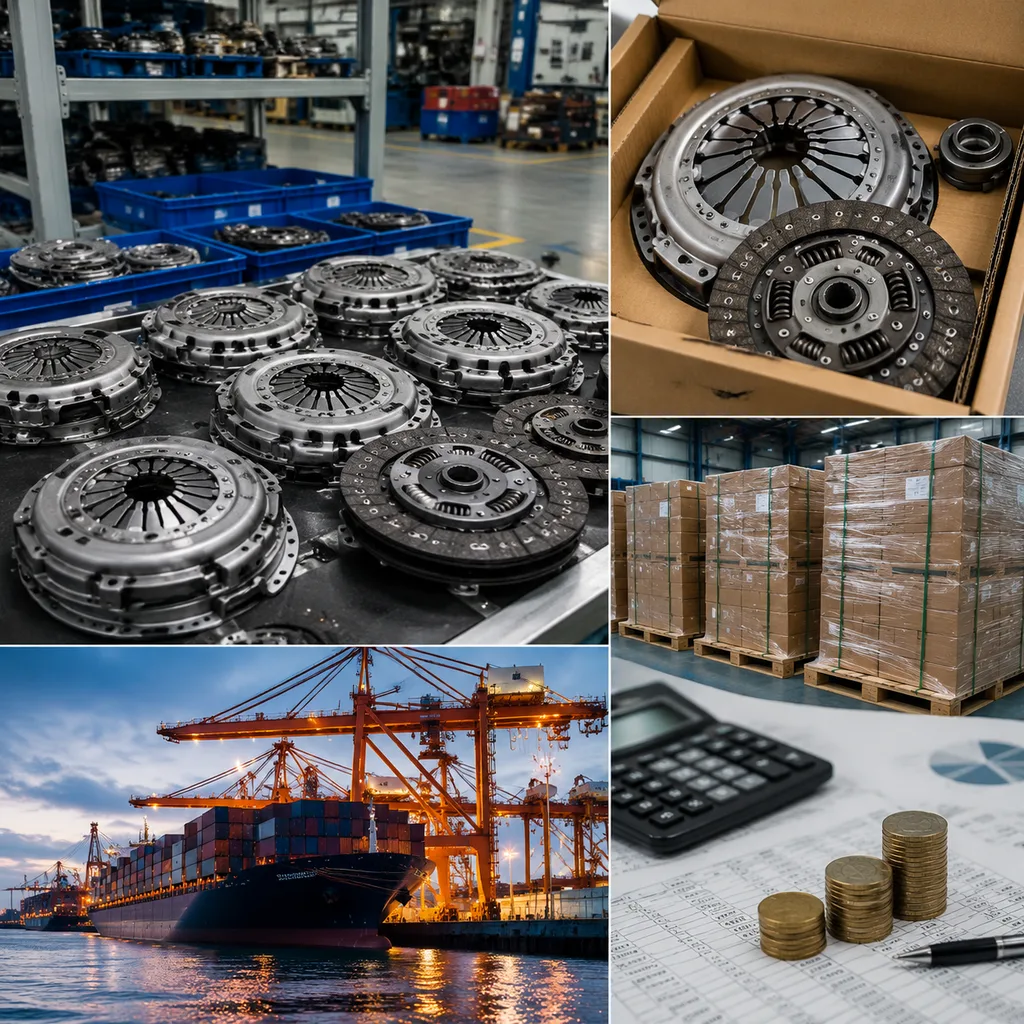
Buying clutch kits looks simple until a container lands with the wrong release bearing, a weak pressure plate, or packaging that cannot be sold in your market. For distributors, importers, and repair-chain buyers, the real cost is rarely the unit price alone. Fitment accuracy, release load, friction material consistency, batch traceability, and claim response decide whether a programme becomes repeat business or a warranty headache.
If your team is searching for a clutch kit Opel manufacturer China supplier, use price as only one filter. The better question is: can the factory hold the same bill of materials, inspection standard, packaging revision, and delivery rhythm across repeat orders?
Driventus Auto Parts manufactures clutch kits for independent aftermarket applications covering common Opel passenger-car platforms and selected light commercial vehicles. Supply options include standard replacement kits, neutral or private label packaging, and build-to-sample development where technical feasibility is confirmed. Our model is built for B2B buyers that need stable repeat orders, clear documentation, and controlled quality rather than one-off spot trading.
Driventus is an independent aftermarket manufacturer. Opel and other vehicle brand names are referenced only to identify compatible fitment applications. This guide gives procurement teams a practical way to check kit configuration, supplier capability, MOQ, lead time, engineering controls, documentation, and RFQ quality for EU, UK, North American, Australian, and Brazilian import programmes.
Start with the kit definition: what exactly are you buying?
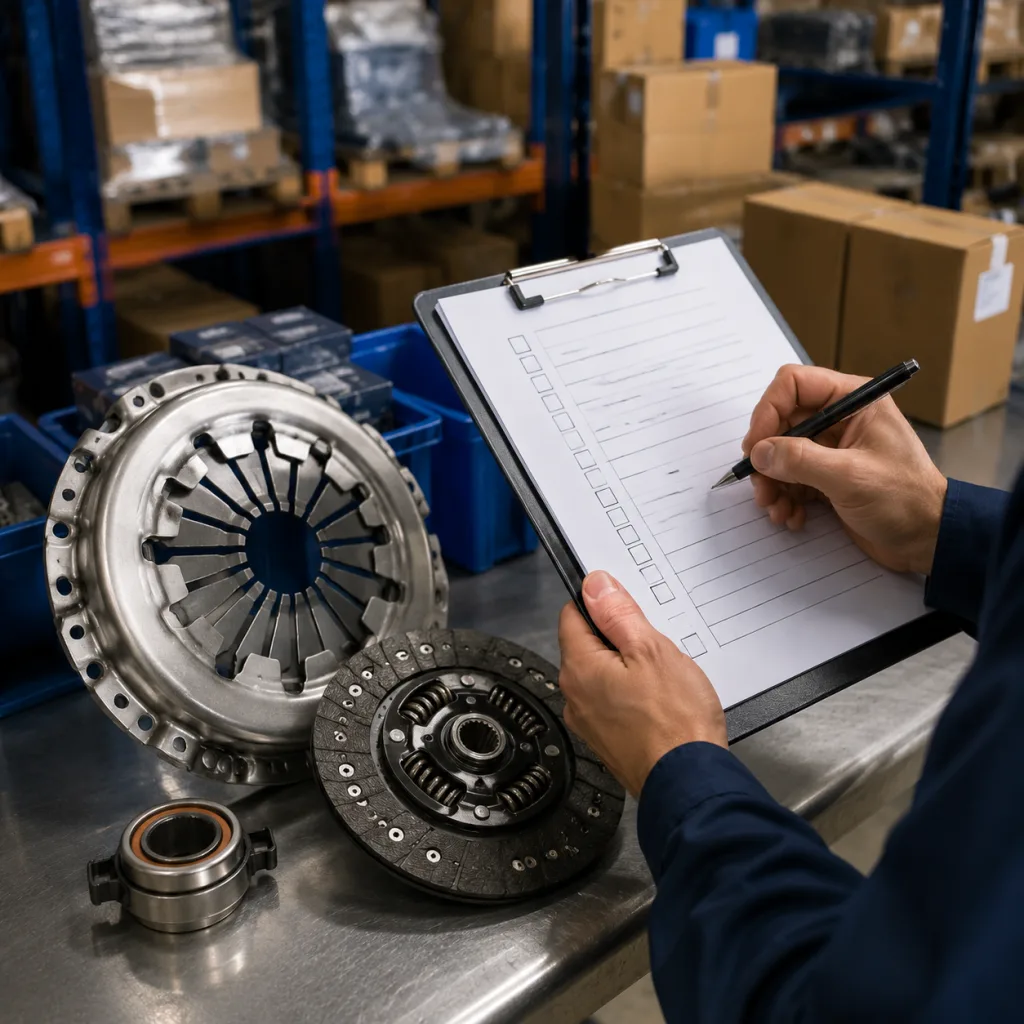
Before comparing quotations, lock the kit definition. A complete aftermarket clutch kit for Opel applications normally includes a clutch cover assembly, driven disc, and release bearing. Some applications use a concentric slave cylinder instead of a conventional release bearing. Depending on the buyer’s packaging standard and the application design, the box may also include an alignment tool, flywheel bolts, pilot bearing, grease sachet, fitting note, or QR-linked installation guidance.
The trap is assuming that all “3-piece kits” are equivalent. They are not. The parts must be matched and validated as a working set. Cover clamp load, disc thickness, hub spline specification, damper configuration, and release travel all affect what the installer feels after the job is finished. Unmatched parts can create pedal stiffness, clutch drag, slip, judder, difficult gear engagement, or early bearing noise.
Use these checkpoints when defining each SKU:
Cover assembly diameter: commonly 180 mm, 190 mm, 200 mm, 215 mm, 220 mm, 225 mm, 228 mm, or 240 mm depending on engine torque, vehicle platform, and clutch design.
Driven disc hub: spline count and input-shaft diameter such as 14T, 18T, 20T, 21T, 23T, or other application-specific profiles checked with a go/no-go spline gauge or mating shaft.
Hub offset and overall height: verified against OE drawings, approved samples, or confirmed fitment data so the disc does not foul the flywheel bolts or pressure plate.
Friction material: organic non-asbestos facings for normal replacement demand; copper-content, glass-fibre, or higher-temperature compounds reviewed case by case for fleet or heavy-use applications.
Cushion and damper springs: selected to reduce engagement shock, torsional vibration, and driveline noise; spring wire diameter, free length, and window clearance should be controlled by part number.
Release bearing or CSC: plastic, steel, or integrated hydraulic design confirmed by bore diameter, fixing pattern, pipe connection, travel, and bearing face height.
Accessories: bolts, alignment tools, pilot bearings, grease, or installation notes added when required by the buyer’s range policy.
Packaging: neutral, Driventus, or customer private label cartons with part number, barcode, batch code, quantity, gross weight, and country-of-origin marking.
A useful buyer control is to request the bill of materials for one target SKU in a fixed format: cover part number, disc part number, bearing or CSC part number, accessory list, carton code, and revision date. This prevents a low quotation from being achieved by substituting a lower-grade bearing, thinner friction facing, or non-approved spring set after sample approval.
For any clutch kit Opel manufacturer China programme, ask whether each kit is assembled from a controlled BOM. Friction facings, bearings, diaphragm springs, rivets, and hydraulic components should not change silently. If a change is necessary, it should be handled through a documented engineering change notice and buyer approval where the supply agreement requires it.
Buyers can review current programme coverage in our catalog.
Supplier approval: the audit questions that expose weak factories
A factory can have export experience and still lack control over the clutch functions that matter. Supplier approval should therefore test process capability, not just catalogue breadth. Clutch kit manufacturing involves steel stamping, diaphragm spring heat treatment, machining, friction facing bonding or riveting, balancing, assembly, and final inspection. A small failure in one step may pass a visual check but later appear as an installer complaint.
The table below shows a practical approval framework for B2B sourcing.
Evaluation item
What to verify
Procurement relevance
Quality certification
IATF 16949:2016 and ISO 9001:2015 scope, certificate validity, site address, issuing body, and process coverage for clutch assembly
Confirms structured automotive quality management and audit discipline
Traceability
Batch number on kit, cover, disc, bearing/CSC, packing record, operator record, and inspection report
Supports claim investigation, recall containment, and repeat-order comparison
Sample approval
Dimensional report, clamp-load curve, release-load test, disc runout check, spline gauge check, and installation fit check
Reduces launch risk before mass shipment
Production control
Incoming steel inspection, heat-treatment records, rivet height checks, friction facing verification, spring inspection, and balance testing
Stabilises repeat order quality and reduces batch variation
Testing equipment
Clamp-load tester, release travel gauge, disc runout fixture, balance machine, hardness tester, vernier/caliper system, and bearing noise check station
Shows the factory can measure critical functions instead of relying on visual inspection
Compliance documentation
Material declarations for REACH (EC) No 1907/2006 where applicable, plus carton and labelling records
Supports EU importer compliance files and market-entry documentation
Commercial terms
MOQ, lead time, payment terms, incoterm, packaging flexibility, and claim handling
Determines landed cost, stock planning, and supplier accountability
</tr></thead><tbody> </tbody></table>Then go one level deeper. Ask how the factory handles engineering changes. If a bearing supplier changes, does the manufacturer repeat dimensional checks, noise screening, seal inspection, rotation torque review, and sample confirmation before production release? The same question applies to friction facings, diaphragm springs, damper springs, cover stampings, rivets, and hydraulic components.
One audit question is especially revealing: “Can you trace this finished kit back to the facing batch, diaphragm spring heat-treatment lot, bearing batch, and final inspection record?” A qualified supplier should answer within hours, not days. Buyers should also request one anonymised 8D or claim report to see whether containment, root-cause analysis, corrective action, and verification are handled with discipline.
Driventus maintains an audit-ready quality system based on IATF 16949:2016 and ISO 9001:2015. For approved B2B customers, we can provide production flow information, control-plan summaries, sample inspection reports, and shipment inspection records where commercially appropriate.
Order planning scenarios: MOQ, lead time, and landed cost
Clutch kit purchasing is not one MOQ number. It depends on SKU movement, component availability, release system type, packaging, and whether the reference is already active. Fast-moving applications can usually be replenished more smoothly. Long-tail references often need consolidated production so component purchasing, setup, and unit cost remain workable.
Typical planning ranges are:
Existing active references: commonly 50–100 kits per SKU for repeat B2B orders when components and standard cartons are available, subject to current stock and production schedule.
Slow-moving or reintroduced references: commonly 100–300 kits per SKU because facing, spring, bearing, or cover components may need batch purchasing.
Private label orders: commonly 300–500 kits per SKU, or a lower kit quantity with a separate carton/label MOQ, when dedicated cartons, barcodes, instruction sheets, or market-specific packaging are required.
CSC-based kits: MOQ may be higher than bearing-based kits because hydraulic components have their own supplier MOQ, pressure-test requirements, and storage controls.
New development by sample: tooling, fixtures, gauges, sample destructive testing, or trial production costs may apply after technical review.
Mixed-SKU orders: consolidated purchasing can improve production planning and freight efficiency, but minimum quantities still depend on each kit’s component structure.
Lead time is driven by material stock, heat-treatment schedule, machining capacity, bearing supply, sample confirmation, and carton approval. As a planning rule, active repeat references normally require about 30–45 days after deposit and artwork confirmation. Private label or mixed-SKU orders normally require about 45–60 days. New or reintroduced development references may require 60–90 days after sample approval, depending on tooling and component availability. Urgent partial shipment can sometimes be arranged for stocked components, but buyers should not assume spot availability for every Opel-related reference.
Think in scenarios:
A distributor ordering fast-moving bearing-based kits in neutral cartons may prioritise repeat availability and 30–45 day replenishment.
A private label importer may accept a longer first lead time to secure carton artwork, barcode control, and market-specific instruction sheets.
A buyer adding CSC-based kits should plan for higher component-control requirements and possible hydraulic supplier MOQ.
A range-building programme with slow movers should consolidate SKUs quarterly rather than issuing small urgent purchase orders.
Price logic is broader than pressure plate diameter. Compare quotations by specification: kit contents, cover mass, facing grade, bearing or CSC brand level, spring material, balance requirement, carton strength, palletisation, inspection documents, and Incoterm. A kit with a CSC, bolts, instruction sheet, private label carton, and 100% functional check will not price the same as a basic cover-disc-bearing kit in neutral packaging.
For repeat orders, provide a 3-month or 6-month rolling forecast. A buyer with annual demand of 2,400 kits across 12 SKUs, for example, may get more stable production by placing quarterly mixed orders of 600 kits than by sending irregular urgent POs for 30 kits per SKU. Freight cost per kit also changes with carton volume, pallet height, shipment consolidation, and container utilisation.
For programmes requiring drawings, sample reverse engineering, OE cross-reference review, or buyer-controlled packaging, our custom manufacturing team can evaluate the technical data before quotation. This is useful when a distributor wants one consistent private label range across Opel-related applications rather than sourcing separate kits from multiple suppliers.
Failure modes to control before they become warranty claims
Most clutch warranty files start with short words: slip, judder, noise, drag, vibration. The cause may be installation error, flywheel wear, oil contamination, hydraulic system failure, incorrect application selection, or product quality. A supplier cannot control every field condition. It must control the measurable product variables that reduce avoidable risk.
Key engineering controls include:
Clamp-load testing: pressure plate assemblies should be checked against defined load and release characteristics, not only surface appearance. For many passenger-car covers, the inspection plan should record clamp load at specified installed height and release load across the working travel.
Diaphragm finger height control: uneven finger height can affect release smoothness, pedal feel, and bearing contact. Buyers should request the measured spread, not only a pass/fail statement.
Disc runout control: excessive lateral runout can cause drag, vibration, and difficult engagement. A typical aftermarket control target is often within 0.5–0.8 mm TIR, but the final requirement must follow the application drawing or agreed sample standard.
Driven plate thickness and parallelism: inconsistent thickness may affect release clearance and bedding-in performance. Thickness, facing flatness, cushion wave, and parallelism should be measured at defined points.
Friction facing bonding and riveting: bond integrity, rivet depth, and facing flatness influence durability under heat and repeated engagement. Rivet head height and pull/security checks should be recorded during production.
Dynamic balance: cover and disc balance reduce vibration at engine speed and help protect related driveline components. Buyers should specify whether balance is 100% or sampled, and whether correction is by drilling, weight removal, or another approved method.
Spline fit verification: the hub must slide correctly on the input shaft without binding or excessive clearance. Go/no-go gauges should match the spline count, pressure angle, and shaft diameter for the part number.
Damper spring inspection: correct spring specification and retention help control torsional vibration and engagement noise. Spring free length, wire diameter, colour code, and window fit should match the BOM.
Bearing noise screening: release bearings should be checked for smooth rotation, seal condition, grease presence, axial play, and correct carrier dimensions.
CSC functional check: where a concentric slave cylinder is included, leakage, stroke, connector geometry, mounting-hole spacing, and dust seal condition should be verified before packing.
Tolerances are not universal
Exact tolerances vary by application, design type, and customer specification. During sourcing, buyers should request the supplier’s inspection plan for cover height, diaphragm finger height, driven plate thickness, disc runout, spline gauge fit, release bearing dimensions, CSC travel/leakage where applicable, and clamp-load performance. These values should be tied to the part number and batch rather than presented as generic catalogue claims.
As a starting point, procurement teams often ask suppliers to disclose controls such as cover finger-height variation, disc runout TIR, driven plate thickness tolerance, spline go/no-go result, bearing OD/ID/height tolerance, and clamp-load curve limits. The correct numbers are application-specific. A 180 mm petrol-engine kit and a 240 mm diesel or light-commercial kit may need different load, travel, and damping characteristics. The important point is that limits are defined before production and actual batch results are reported after production.
Also ask how nonconforming products are isolated. A mature factory should show how it records failed measurements, separates affected parts, identifies the production batch, blocks inventory in the ERP or warehouse system, and prevents unapproved rework from entering finished goods. Rework, if permitted, should have an approved method, re-inspection record, and batch-level traceability.
Driventus uses controlled inspection points from incoming material through final packing. For new projects, we can agree critical characteristics with the buyer during sample approval so that the first shipment and later repeat orders are judged against the same documented standard.
Importer file checklist for EU, UK, North America, Australia, and Brazil
Clutch kits are not regulated in the same way as brake friction products, but professional importers still need a clean documentation file. EU and UK distributors may need chemical and labelling records. North American, Australian, and Brazilian buyers often focus on customs consistency, carton marking, traceability, and claim support.
Documents commonly requested by procurement teams include:
Commercial invoice and packing list with clear part descriptions, part numbers, quantities, carton count, net weight, gross weight, and HS code guidance where requested by the importer.
Country of origin statement or certificate of origin where required by the importer or destination market.
Product photos, component photos, and carton artwork approval before shipment.
Batch inspection report covering agreed critical dimensions and functional checks, normally referencing the PO, SKU, batch number, inspection date, and inspector.
Material declaration related to REACH (EC) No 1907/2006 for EU supply chains where applicable, including friction material and packaging materials when requested.
Certificate copies for IATF 16949:2016 and ISO 9001:2015, with certificate number, expiry date, and certified site address.
Private label barcode, carton marking, QR code, instruction sheet, and pallet label records if applicable.
Shipping marks, gross weight, net weight, carton dimensions, pallet dimensions, and pallet quantity for logistics planning.
Claim handling procedure, traceability method, photo evidence requirements, and sample-return process for post-shipment support.
Pre-shipment inspection report or loading photos when requested for large orders, new projects, or buyer-controlled private label programmes.
Treat OE numbers carefully. If a buyer cross-references an OE number, it should be used only as a fitment identifier, for example an OE-style reference supplied by the customer. Cross-references should not be presented as evidence of vehicle manufacturer approval unless such approval is formally documented. Driventus does not claim approval or endorsement by any vehicle manufacturer.
For private label shipments, packaging compliance should be checked before mass printing. This includes trademark ownership, barcode ownership, local-language warnings, recycling marks, importer address, country-of-origin wording, and any market-specific claims. A carton error can delay customs clearance or force costly relabelling even when the parts are correct.
Driventus is an independent aftermarket manufacturer; brand names are referenced for fitment only. Buyers should use the same discipline when preparing catalogues, carton labels, marketplace listings, or distributor sales materials.
RFQ sequence: from SKU list to approved pilot order
A good RFQ does more than ask for a price. It lets the supplier identify the part correctly, confirm whether the reference is active, and flag technical risk before sampling or mass production. Sending only a vehicle model name is rarely enough because clutch specifications can vary by engine, gearbox, year range, market, flywheel type, and release system.
Recommended RFQ checklist:
Target vehicle applications, engine codes, gearbox information, model years, market region, and left-hand/right-hand drive relevance if known.
Existing aftermarket part numbers, approved sample photos, or competitor reference numbers for comparison.
OE cross-reference if available, using buyer-supplied references only and only as a fitment identifier.
Required kit contents: cover, disc, release bearing, CSC, bolts, alignment tool, pilot bearing, grease, instruction sheet, or other accessories.
Key dimensions if available: cover diameter, disc diameter, spline count, shaft diameter, hub offset, bearing height, and CSC connector type.
Annual volume estimate and first-order quantity by SKU, split into A/B/C movement grades where possible.
Destination market and packaging language requirements.
Private label, neutral packing, or Driventus packing preference.
Barcode format, carton dimensions, carton strength, pallet requirements, artwork files, and label position if applicable.
Required inspection documents, PPAP-style documents if requested, and sample submission format.
Delivery term, destination port, preferred shipment method, and whether the quotation should be EXW, FOB, CIF, DAP, or another Incoterm.
Any target price, benchmark sample, current warranty concern, or installation complaint that should be reviewed before quotation.
A practical sourcing flow is:
1. Buyer sends SKU file and demand forecast. 2. Driventus confirms active, inactive, and development items. 3. Both sides agree kit contents and packaging. 4. Samples or inspection data are approved. 5. Commercial terms, MOQ, lead time, and Incoterm are locked. 6. Pilot order is produced with batch inspection records. 7. Repeat orders follow the approved BOM and packaging revision.
For new or uncertain references, Driventus may request one used OE sample, one new benchmark sample, or detailed photos with measured dimensions before confirming tooling feasibility. This step can feel slower at the beginning, but it prevents wrong-part quotations and avoids launching a SKU on assumptions.
Procurement teams can request a quote with a spreadsheet of target SKUs, expected annual demand, destination market, and packaging requirements. Clear information at the start allows Driventus to respond with a practical feasibility review, realistic MOQ, price logic, and accurate lead-time estimate.
Frequently asked questions
Yes. Driventus can support neutral packing, Driventus packing, or buyer private label packing, subject to MOQ, artwork approval, barcode requirements, and trademark compliance. Private label projects usually require confirmation of carton artwork, label position, batch coding, pallet marks, and any local-language requirements before mass production.
Buyers should verify IATF 16949:2016 and ISO 9001:2015 certification, including scope, site address, validity, and issuing body. Batch traceability, inspection records, sample approval reports, and change-control records are also important. For EU supply chains, material declarations related to REACH (EC) No 1907/2006 may be required.
No. Driventus does not claim approval or endorsement by Opel or any other vehicle manufacturer. Our clutch kits are supplied for independent aftermarket fitment, with brand names and OE-style references used only to identify compatible applications.
Send your target SKU list, annual volume, destination market, and packaging requirements for a practical feasibility review. Contact Driventus through /contact.html