thrust washer · 2026-06-16

Minimum Order Quantity for Thrust Washer Buyers

For procurement teams, the minimum order quantity for thrust washer purchases usually comes down to setup cost, process control, and risk. A stamped carbon-steel washer can often be sourced in smaller lots than a precision-ground thrust washer with a 0.02 mm thickness tolerance, Ra 0.8–1.6 μm surface finish, and retained lot records. So MOQ is not just a price lever; it changes inventory exposure, replenishment rhythm, and validation effort. Driventus is an independent aftermarket manufacturer, and brand names are referenced only for fitment. We manufacture engine and powertrain components in Taizhou, Zhejiang, under IATF 16949:2016 and ISO 9001:2015 systems, and we support buyers who need stable supply, documented quality, and clear part-number cross-references. If you are comparing offers, start with dimensions, material grade, tolerance bands, and acceptance criteria before negotiating quantity.

MOQ Decision Framework for Thrust Washers

The fastest way to judge the minimum order quantity for thrust washer sourcing is to separate the part into four cost buckets: material, process, inspection, and packaging.

  • Material drives scrap cost and minimum melt or sheet usage.
  • Process route determines setup time, tooling wear, and yield.
  • Inspection scope adds labor and report overhead.
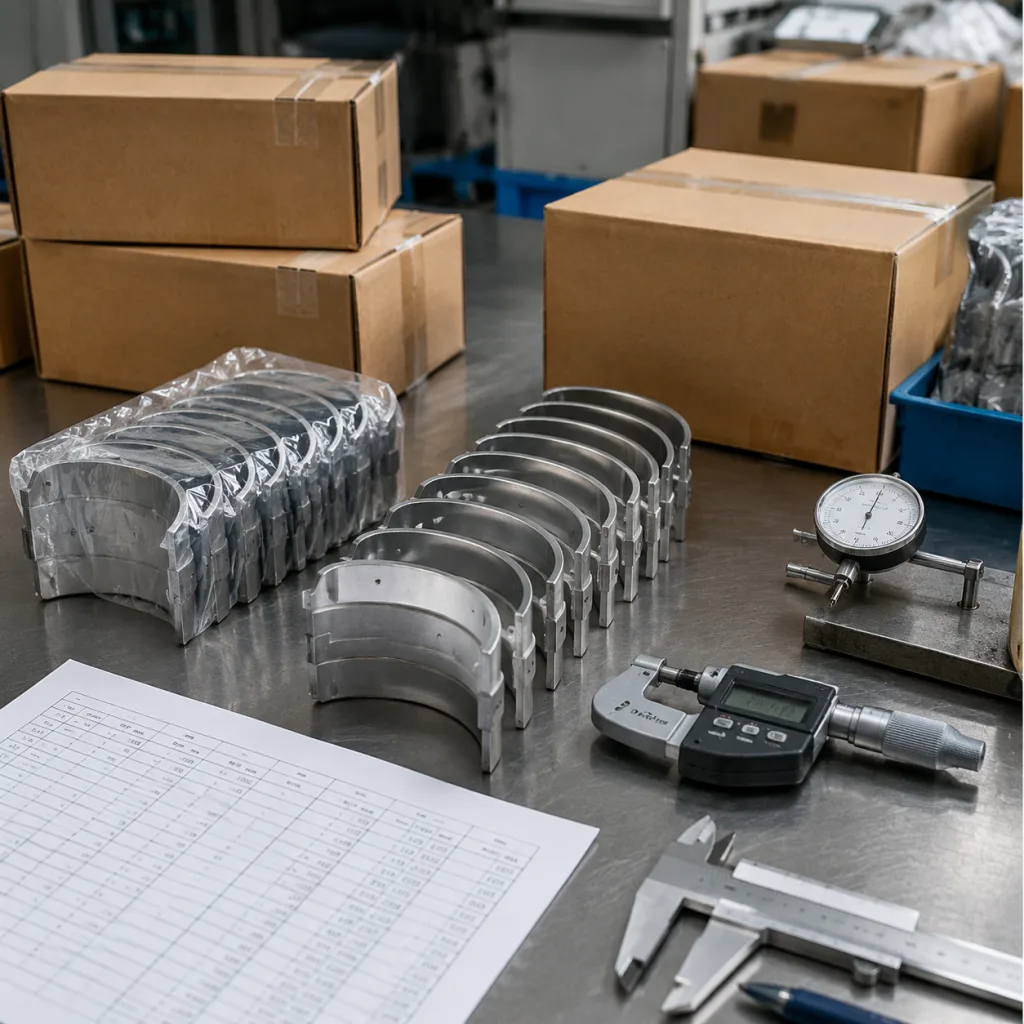
  • Packaging can quietly push a small lot into uneconomic territory.

That is why two washers that look similar on paper can have very different MOQ floors. A standard flat washer in a common alloy may run at a few hundred pieces per size. A special bronze-backed or coated part can jump much higher once tooling, first-article checks, and lot documentation are included. The right question is not “What is your MOQ?” but “What process did you quote against, and what volume makes that process stable?”

Failure Modes in Low-MOQ Sourcing

Low MOQ looks attractive until the hidden costs show up.

  • The supplier quotes a small lot, then adds setup, labeling, or inspection charges later.
  • Thickness control is acceptable on the first sample but drifts on the second batch.
  • Parts arrive in bulk packaging and get edge damage in transit.
  • A nominal size matches the catalogue, but the actual clearance fails in assembly.
  • The quote omits traceability, so you cannot close the loop when a batch is rejected.

For thrust washers used in engine assemblies, thickness error is the classic failure mode. A 0.05 mm deviation can matter enough to affect endplay, wear, and noise. If the washer controls axial clearance, the buying decision should favor measured consistency over the cheapest first order. A low MOQ is only a win if the part still passes fit, finish, and traceability requirements in real production.

Quote Comparison Checklist

When comparing suppliers, keep the comparison technical. Price alone is not enough.

</tr></thead><tbody> </tbody></table>Ask whether the quote assumes one production lot or multiple drop shipments. A lower unit price can disappear if the supplier adds repeated setup charges, extra pack-out labor, or separate freight lines. Also ask whether MOQ changes when you provide a drawing, OE reference, or physical sample. Existing tooling can reduce the barrier quickly; custom geometry usually cannot.

Spec Deep-Dive: What Changes MOQ

Small spec changes can move MOQ more than buyers expect.

  • Thickness tolerance tighter than standard adds grinding or sorting.
  • Flatness and parallelism limits increase inspection time.
  • Anti-rust coating adds process steps and cure control.
  • Bronze, bimetal, or sintered constructions raise material complexity.
  • Special packaging for kitting or retail barcodes adds handling cost.

That is why a catalog thrust washer and a custom-engineered version rarely share the same MOQ. The catalog part may already have stable tooling, known yield, and repetitive packaging. The custom part needs validation, first-article approval, and sometimes an updated drawing revision. If the buyer needs a specific thickness window or unusual contact finish, expect the MOQ to rise unless the supplier already runs that exact spec in volume.

Step-by-Step Ordering Scenario

Use this sequence when you are ready to place the first order.

1. Confirm the application and fitment reference, including engine code or assembly position. 2. Lock the nominal dimensions, tolerance bands, and surface finish. 3. State material, coating, hardness, and packaging requirements. 4. Ask for price breaks at several volumes, not just one MOQ number. 5. Request sample quantity and approval terms if the part is new. 6. Verify documentation: inspection data, traceability, and lot identification. 7. Approve the pilot lot before committing to production volume.

This workflow keeps the discussion grounded. It also avoids the common mistake of ordering by part name alone. If a washer controls endplay, the nominal thickness and actual measured lot average matter more than a catalogue description. For custom manufacturing support, Driventus can review the drawing and confirm feasibility before you commit.

Documentation and Compliance Questions

For B2B buyers, paperwork is part of the product.

  • IATF 16949:2016 process control records
  • ISO 9001:2015 quality management system records
  • REACH (EC) No 1907/2006 material compliance where applicable
  • Dimensional inspection records for thickness, OD, ID, and flatness
  • Retained lot identification and sample retention
  • PPAP-style support when the buyer requires it

If the washer is part of a broader engine component program, your release process matters as much as the unit price. Buyers in the EU, UK, US, Canada, Australia, and Brazil usually need the same core evidence: repeatability, traceability, and spec control. For broader engine sourcing, see our catalog and engine components pages.

Frequently asked questions

It depends on material, process complexity, and whether the part is standard or custom. Catalogue items usually support smaller MOQs than new tooling or special coatings, and standard parts may start around 300–1,000 pieces while custom versions are often higher.

Often yes. Many suppliers offer a pilot quantity for validation, then set a larger production MOQ after the first approval lot is complete. A sample lot may be 50–200 pieces if the tooling already exists.

Send the OE reference if you have one, plus dimensions, material, target quantity, application details, tolerance requirements, and any testing or packaging requirements. If possible, include a drawing and a target annual usage forecast.

If you need a quotation, send your drawing, target volume, tolerance requirements, and fitment reference and we will confirm feasibility, MOQ, unit price breaks, and lead time at /contact.html.

Request a Quote
Item Confirm on the quote
DimensionsInner diameter, outer diameter, thickness, chamfer, and any groove or tab features
MaterialBase metal, backing layer, coating spec, and hardness range
ToleranceThickness, flatness, parallelism, and surface finish
TestingHardness, adhesion, dimensional sampling plan, and visual criteria
DocumentationCoC, inspection report, retained lot ID, and material traceability
Lead timeSample date, tooling date if needed, production time, and dispatch date
Price breakPrice at 500, 1,000, 3,000, and 5,000 pieces, plus packing and freight terms