Camshaft for Mini Cooper Aftermarket Replacement Guide
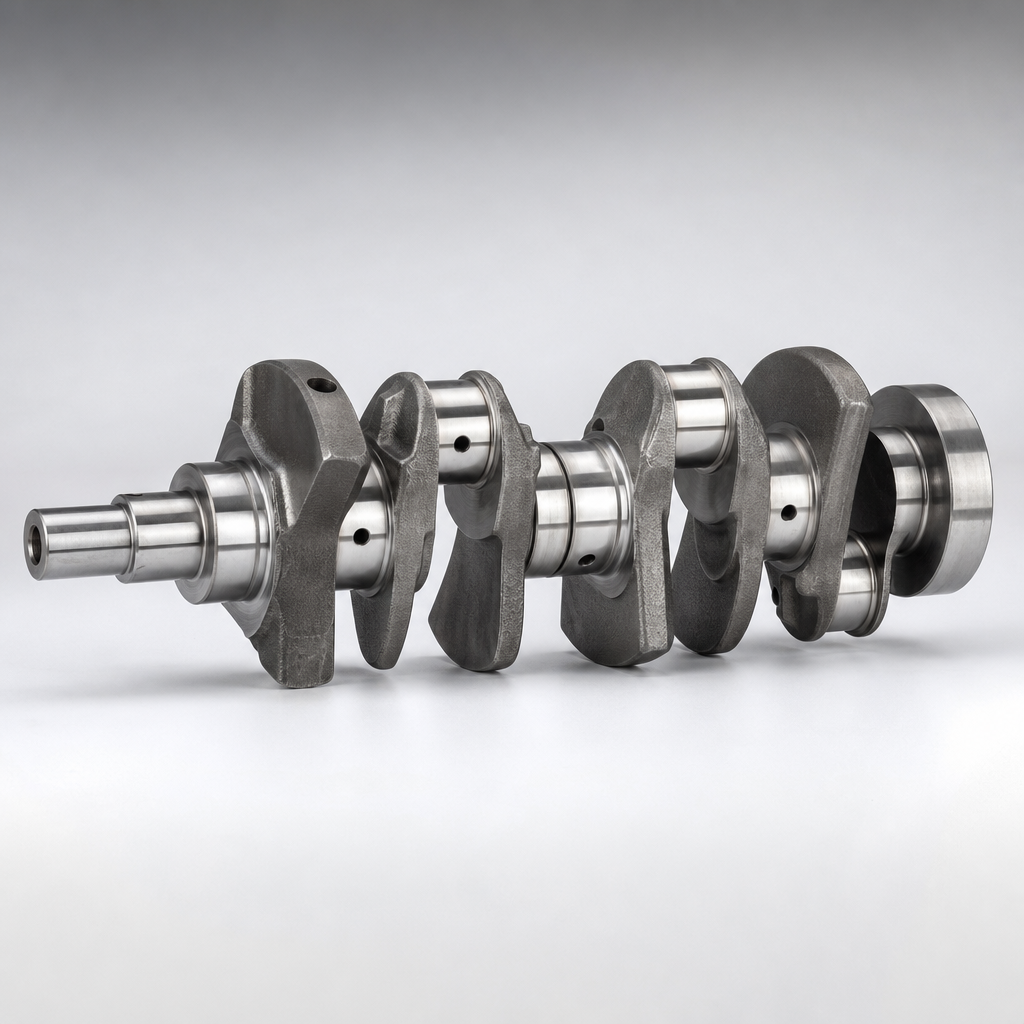
Choosing a **camshaft for mini cooper aftermarket replacement** work is not just a fitment decision. For procurement teams, the real question is simpler and tougher: will the part hold OE-level geometry, hardness, oiling integrity, and profile accuracy well enough to avoid timing drift, follower wear, noise, or repeat warranty claims? That matters most for distributors, engine rebuilders, and repair networks buying in volume.
Price and interchange claims do not answer that question. Dimensional control, metallurgical consistency, surface finish, and batch validation do. Buyers should expect quoted tolerances for journal size, lobe profile, runout, hardness, and finish instead of broad “OE quality” language. Cam profile accuracy affects lift, duration, and phasing. Journal tolerance and runout affect lubrication, wear, and NVH. A credible supplier should also support traceability under IATF 16949:2016 and ISO 9001:2015, with material and compliance documents available where needed, including REACH (EC) No 1907/2006 declarations for relevant substances. This guide focuses on what to verify before releasing a Mini replacement programme at scale.
Start with the decision: what makes a Mini replacement camshaft acceptable?
For a replacement programme, the target is OE-equivalent function, not a vague upgrade claim. Buyers need to confirm that the camshaft reproduces the features that control installation, valve timing, lubrication, and service life.
The fastest way to screen a supplier is to work through the part in decision order:
Will it physically match the engine variant? Check journal diameters, overall length, thrust surfaces, key indexing, and nose-to-base-circle geometry against the intended engine code and model-year split.
Will it run true? Excess runout changes load distribution and valve-event consistency. Many buyers set incoming acceptance around 0.03 to 0.05 mm TIR, subject to drawing requirements.
Will the lobe profile actually match OE behaviour? Lift and timing depend on profile fidelity, so buyers should ask for CMM or cam-analyzer data with actual deviation values, often within roughly ±0.02 to ±0.05 mm for OE-equivalent programmes.
Will the surface survive real lubrication conditions? Hardness, case depth, and surface finish on lobes and journals need to be specified, measured, and repeatable.
Will oil get where it needs to go? Feed holes, galleries, and chamfers must be clean and burr-free.
Will it arrive undamaged? Camshafts do not tolerate poor packaging; journals and lobes need corrosion protection and transit isolation.
A supplier should support these points with drawings or inspection sheets showing actual values and tolerance bands, not just nominal dimensions.
Cross-reference checking also needs discipline. If a sourcing brief already lists a number such as OE 06A107065, that is a starting point, not approval. For Mini programmes, buyers should still confirm engine family, model year, and whether the application is naturally aspirated or turbocharged. A broad interchange claim is not enough.
Where aftermarket camshaft programmes usually fail
Camshafts live in cyclic contact stress, mixed lubrication, and constant temperature change. Because of that, warranty risk usually starts in process control long before it shows up in the field.
Typical control points
Control item
Why it matters
Typical procurement check
Journal diameter
Affects bearing clearance and oil film stability
Drawing match, SPC trend, and batch inspection records
Lobe lift/profile
Controls valve motion and timing accuracy
CMM or dedicated profile measurement data with actual deviation values
Shaft runout
Influences wear, noise, and rotational stability
Runout report by batch, often with TIR limit around 0.03–0.05 mm
Surface roughness
Affects lubrication behaviour and contact durability
Journal/lobe Ra record, commonly around Ra 0.2–0.8 μm where specified
Hardness
Determines wear resistance under load
Heat-treatment certification and test data, for example chilled-cast hardness or induction-hardened lobe values
Case depth
Confirms hard layer durability after grinding
Microhardness traverse or metallographic section record
Metallurgy
Supports fatigue strength and process consistency
Material grade verification and incoming lot control
Cleanliness
Prevents start-up contamination and scoring
Deburring, washing, magnetic separation, and final cleanliness process control
</tr></thead><tbody> </tbody></table>The common failure modes are predictable:
Profile drift leads to timing change, unstable idle, emissions complaints, or poor drivability.
Loose journal control changes oil-film behaviour and accelerates wear.
Poor runout control increases bearing load and noise.
Weak hardening or shallow case depth shortens lobe life after repeated boundary-lubrication cycles.
Dirty oil passages or burrs create start-up contamination risk.
Minimal export packaging turns a good part into a damaged arrival.
Common production routes include chilled cast iron and forged or billet steel, depending on engine design, follower type, duty cycle, and cost target. Buyers should ask for the process details that sit behind the finished part:
Material specification and incoming inspection controls
Heat-treatment route and feature-specific hardening logic
Hardness test method and sampling frequency
Profile measurement method and record retention
Lot traceability from raw material through packing date
Grinding, straightening, washing, and final protection sequence
A documented quality system should tie these controls to corrective action and change management. Commercially, this matters too. A low quote may simply mean profile scanning, metallographic checks, or protective packaging are missing from the offer.
How to validate before you release volume orders
A supplier offering a camshaft for mini cooper aftermarket replacement programme should be able to explain validation in stages, not just show a finished sample. Bench inspection matters, but it is only the first filter.
A practical validation path looks like this:
1. First article approval: measure a small sample set in full against the drawing or master sample, including journals, thrust faces, overall length, index features, and lobe geometry. Confirm material and hardness at the same time. 2. Pilot batch review: use a limited run, often 50–200 pieces, to check machining stability, packaging performance, and early installation feedback. 3. Mass production release: move to defined lot inspection, retained traceability, and a clear claim-response process.
Within those stages, buyers should verify:
Dimensional inspection against approved references
Hardness and microstructure checks after heat treatment
Runout verification after final machining and any straightening step
Surface finish inspection on journals and lobes
Fitment checks with mating components such as caps, bearings, timing elements, and followers
Packaging validation for corrosion protection during storage and sea freight
Where the replacement can affect combustion stability and emissions-related behaviour, buyers should also think beyond the part itself. Vehicle-level requirements such as ECE R-83 apply to finished-vehicle emissions performance for relevant categories. The component supplier does not certify the vehicle under that rule, but camshaft timing drift can still influence real service results.
During supplier assessment, ask whether PPAP-style records, control plans, gauge evidence, and retained samples are available. In the aftermarket, those disciplines are still useful. First article reports, PFMEA references, MSA or gauge repeatability evidence for profile measurement, and golden samples help reduce launch variation.
Process detail matters here. Buyers should ask whether shafts are rough machined before heat treatment, whether lobes are finish ground after hardening, whether straightness is corrected before final inspection, and whether final cleaning is immediately followed by rust inhibitor application and sealed packaging. That is usually where a stable manufacturer separates itself from a simple trader.
Driventus is an independent aftermarket manufacturer; brand names are referenced for fitment only.
Supplier comparison: what belongs on the scorecard
Comparing suppliers only on unit price is where many programmes go sideways. The real comparison should combine technical capability, documentation depth, supply reliability, and claim-handling speed.
Practical comparison criteria
Fitment coverage: exact engine codes, production ranges, and exclusions. Ask for a line-by-line application list.
Inspection capability: profile measurement, hardness testing, and runout control. Confirm whether those checks are in-house or outsourced.
Documentation: material certificates, inspection reports, and REACH declarations. Check whether reports are batch-specific or generic templates.
Quality certification: alignment with IATF 16949:2016 and ISO 9001:2015.
Supply reliability: MOQ, lead time, safety-stock options, and export packaging readiness.
Claim handling: response time, containment speed, traceability depth, and root-cause discipline.
For private-label or market-specific programmes, buyers may also need custom packaging, laser marking, batch coding, or bundled kits. In those cases, custom manufacturing support can help, provided configuration control stays tight.
Useful sourcing questions include:
1. What equipment is used for profile and runout inspection? 2. Is each batch traceable to raw material and heat-treatment lot? 3. What anti-rust protection is used for sea freight and warehouse storage? 4. Can the supplier support mixed-model container planning? 5. What is the standard field-failure response process?
Commercial comparison also needs structure. Pricing in this category varies with material route, inspection level, and packaging spec, so buyers should request quotes at breaks such as 100 / 300 / 500 / 1,000 pcs. In many programmes, MOQ starts around 50–100 pcs per item for standard supply. Private-label packaging or special marking can push the practical MOQ to 200–500 pcs because of setup cost. Lead time is often 30–45 days for repeat orders and 45–60 days for first orders needing artwork approval, pilot validation, or tooling confirmation.
If one offer comes in 12–20% below the market, buyers should ask why. The missing value may be profile reporting, export packaging, dedicated batch control, or safety stock. Those gaps often decide the true landed cost.
Purchase-order check: five things to close before release
Before issuing a purchase order in this category, buyers should close five points without exception.
Confirm exact engine application, timing configuration, and any build-date revision split.
Approve the part against a drawing or master sample, with acceptance limits for journals, runout, and profile clearly defined.
Review recent inspection evidence for hardness, runout, and lobe profile.
Verify compliance documents, including REACH (EC) No 1907/2006 declarations where required.
Lock the packaging, labelling, and claims process before first shipment.
For larger accounts, a pilot batch is still the sensible move. It gives buyers a way to monitor installation feedback, return rate, and packaging condition through the first distribution cycle, especially when replacing an incumbent supplier or consolidating regional SKUs.
A practical release checklist usually includes:
Approved sample status: drawing, golden sample, or installed-vehicle basis
Batch size and MOQ: per SKU, mixed-order policy, and pilot pricing logic
Lead-time definition: from deposit, artwork approval, or final technical sign-off
Inspection pack: dimensional report, hardness report, material cert, and lot-coded packing list
Packaging specification: rust preventive, sleeve or tray, carton quantity, pallet standard, and drop-test expectation
Warranty and claims route: containment timing, sample return, 8D-style reporting, and debit-note handling
First orders and repeat orders should not be negotiated the same way. A first order may justify a slightly higher unit price if it includes sample reporting, custom labels, and pilot validation. Repeat-order pricing should then reflect stable volume, agreed MOQ, and forecast visibility. In many B2B import programmes, the strongest levers are annual volume commitment, mixed-container planning, and packaging standardisation rather than pressure on ex-works price alone.
Driventus supplies engine and powertrain components for B2B customers and supports technical review during sourcing. Buyers who need application checks, inspection documentation, or programme discussion can request a quote after reviewing our catalog.
Driventus is an independent aftermarket manufacturer; brand names are referenced for fitment only.
Frequently asked questions
Ask for application mapping, dimensional inspection records with actual measured values, hardness or heat-treatment data, material certification, batch traceability details, packaging specification, and relevant compliance documents such as REACH declarations where required. For first orders, it is also sensible to request a first article report and confirmation of runout and lobe-profile measurement method.
No. Visual similarity does not confirm lobe profile accuracy, journal tolerance, runout, hardness, case depth, surface finish, or oiling geometry. Those factors directly affect fitment, wear, and timing behaviour in service, so buyers should ask for measurable acceptance criteria rather than appearance-based approval.
Yes, if the supplier has controlled documentation, traceability, and packaging processes. Private-label supply should not weaken inspection discipline or change-control requirements, and buyers should confirm any MOQ increase, artwork lead time, laser-marking setup, and carton configuration before release.
If you are reviewing replacement camshaft supply for Mini applications, Driventus can support technical checks, documentation review and volume quotation. Contact our team here: /contact.html