engine bearing · 2026-06-16

Engine Bearing Opel Supplier: Sourcing Guide for B2B Buyers

For buyers searching for an engine bearing Opel supplier, price is only one variable. The harder question is whether the factory can hold dimensional control, document traceability, and ship consistently at the required volume. Engine bearings are load-bearing precision parts, so procurement teams need supplier data that covers material system, coating, tolerance bands, packaging, and validation test methods. Driventus is an independent aftermarket manufacturer; brand names are referenced for fitment only. We supply B2B customers across the EU, UK, US, Canada, Australia, and Brazil, with production controlled under IATF 16949:2016 and ISO 9001:2015. This article focuses on decision points, failure modes, and the documents that separate a workable supplier from a risky one. If you need OE cross-reference support or private label supply, the same process applies whether the order is for a distributor programme or a repair-chain replenishment list.

Decision points before you shortlist

When qualifying an engine bearing Opel supplier, start with the variables that change the outcome, not the quote line.

  • Fitment basis: confirm engine code, bore class, and bearing shell size before discussing price.
  • OE cross-reference: ask for the relevant OE number format, such as `OE 06A107065`, when your parts list includes a known reference.
  • Material system: verify tri-metal or bi-metal construction, overlay type, and back-shell substrate.
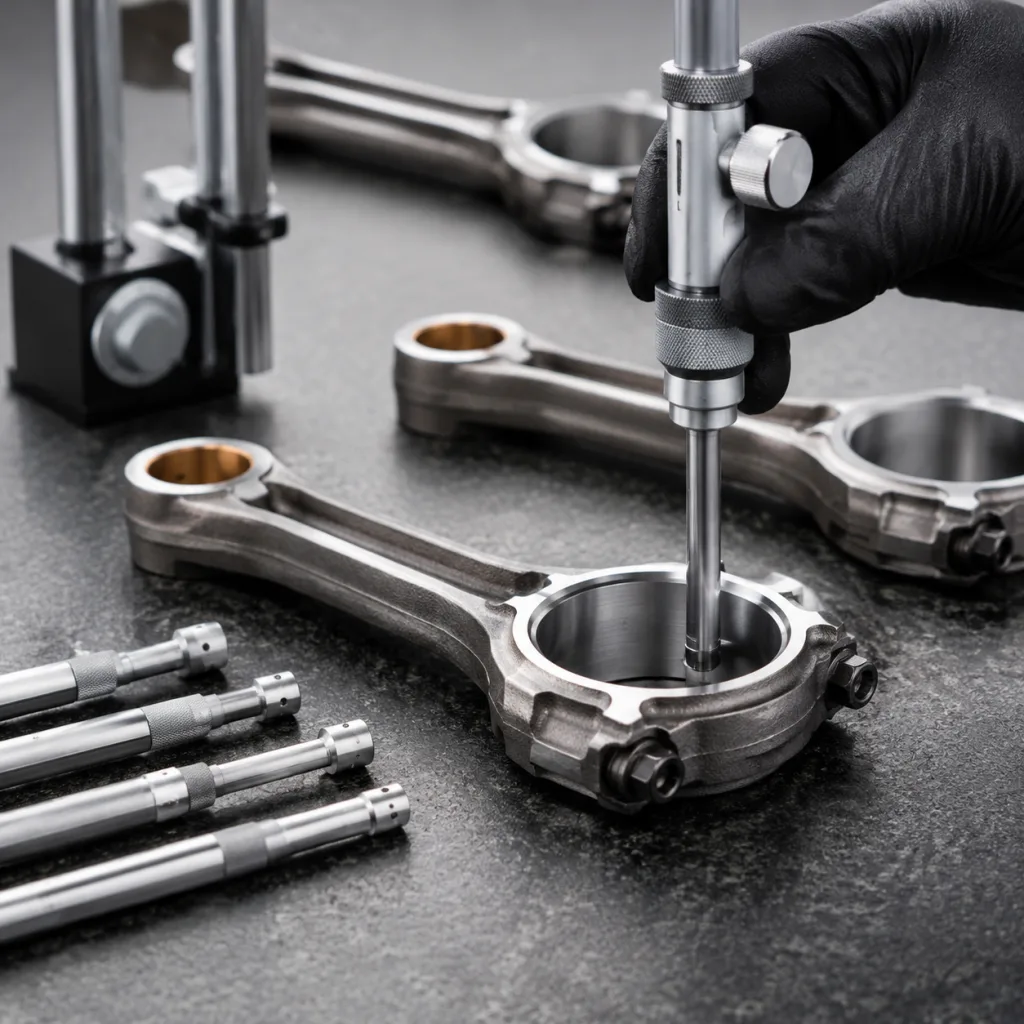
  • Dimensional control: request nominal wall thickness, crush, eccentricity, and oil-clearance targets.
  • Traceability: confirm lot coding, heat/batch records, and carton-level identification.
  • Certification: require current `IATF 16949:2016` and `ISO 9001:2015` certificates.

If the supplier cannot map the part to an engine code and a measurable spec, the project is not ready for pricing. That usually means more back-and-forth later, not less.

Where suppliers fail most often

Many sourcing problems with engine bearings are not production failures. They are specification failures.

The common misses are predictable:

1. The quote names a part family but not the exact bearing size. 2. The supplier gives a price without wall-thickness or crush data. 3. Fitment is described only by vehicle brand, which is too broad for procurement control. 4. Packaging is assumed instead of specified, so mixed references arrive with weak labels. 5. Traceability exists internally but does not reach the carton or batch level. 6. Validation claims are vague, with no named test method or report format.

A good supplier should make these gaps visible early. If they do not, the receiving team usually finds them first.

What the quotation should actually contain

A credible quotation should include the technical fields below, not just a part name and a unit price.

</tr></thead><tbody> </tbody></table>If your programme serves multiple regions, ask for packing labels that separate OE references from aftermarket references. That reduces mix-up risk in distributor channels and multi-location repair networks.

Spec deep-dive: the numbers that matter

For bearing programmes, procurement teams usually win or lose on a few measurable parameters.

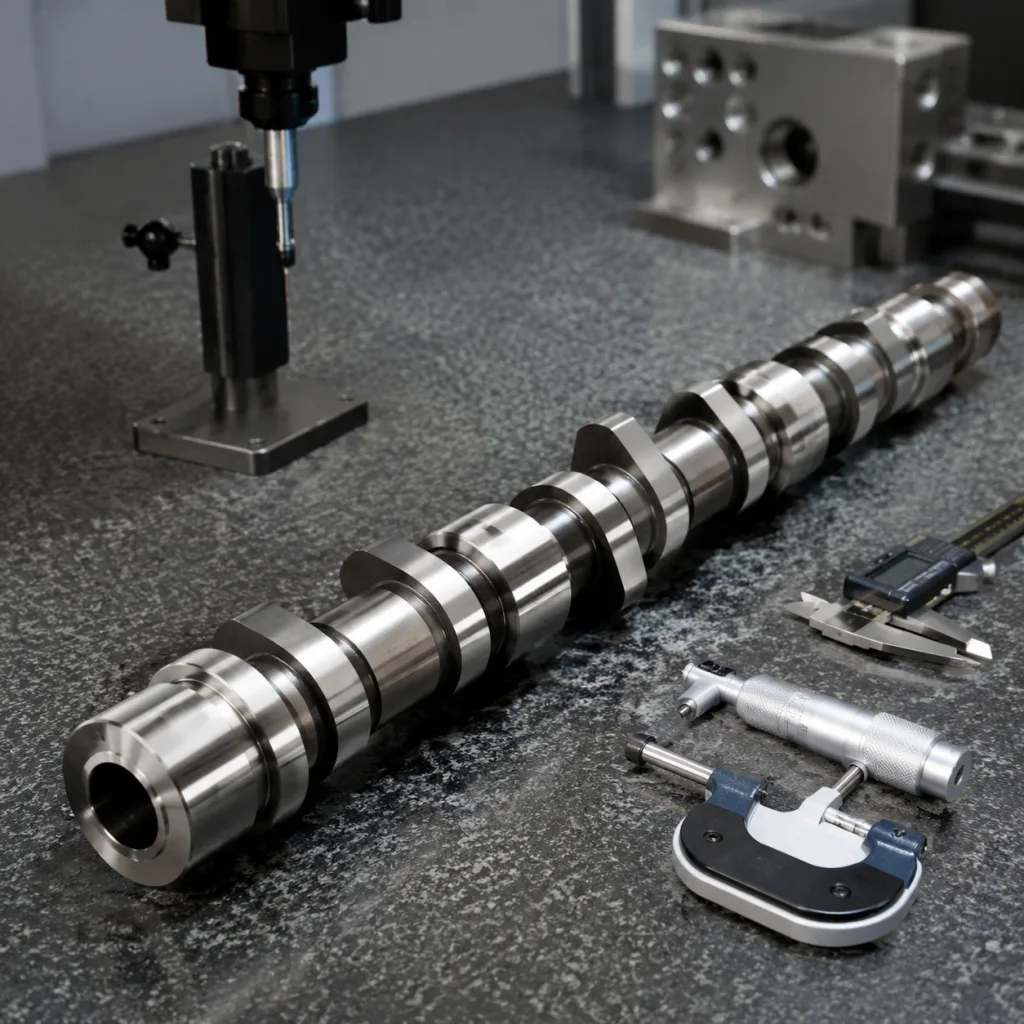
  • Wall thickness: keep the nominal value and tolerance band explicit.
  • Crush: verify the shell seats correctly under installed load.
  • Eccentricity: confirm the shell geometry supports uniform clearance.
  • Overlay condition: check for consistency in surface finish and coating coverage.
  • Back material: confirm the substrate matches the loading profile.
  • Oil clearance: align the bearing spec with the engine builder’s target range.

These fields matter because they affect fit, lubrication, and service life at the same time. A supplier that can explain them clearly usually understands the process, not just the part number.

Audit the factory, not the brochure

A factory audit should focus on controls that affect bearing performance in service. Driventus operates under a documented `quality system` described on our quality system, with incoming material checks, in-process measurement, and final release review.

Key audit points include:

1. Incoming inspection for backing material, lining material, and coating condition. 2. SPC or other process control for wall thickness and overlay consistency. 3. Measurement equipment calibration and gauge traceability. 4. Cleanliness controls to limit particulate contamination. 5. Packaging checks to prevent edge damage during export. 6. Complaint-response procedure with containment and traceability.

Where relevant, ask whether validation testing follows published methods such as `SAE J2527` for durability-style exposure, or OEM-specific requirements supplied by the buyer. Published standards should be named clearly in the report; avoid vague references to “tested to industry norms.”

Supply planning for real programmes

For B2B sourcing, lead time and MOQ are often more important than a small unit-price difference. A supplier should state the following before the first PO:

  • MOQ by part family: separate rules for standard bearings, private label packs, and mixed reference orders.
  • Prototype lead time: sample dispatch for fitment approval and documentation review.
  • Production lead time: normal ex-works schedule after order confirmation.
  • Packaging lead time: time needed for custom cartons, labels, or barcode sets.
  • Buffer policy: how the factory handles raw-material delay or schedule change.

If you supply repair chains or wholesalers, ask for replenishment support and carton quantities that fit your warehouse process. If your project includes branded packaging or catalogue structuring, custom manufacturing can support artwork, reference mapping, and pack format changes. For broader portfolio planning, review our catalog and the engine-component section when you need adjacent families in the same shipment.

How Driventus supports OEM and aftermarket buyers

Driventus manufactures engine and powertrain components from our Taizhou, Zhejiang base and exports to 60+ countries. For bearing programmes, we support buyers with technical cross-reference checks, sample submission, and production planning for aftermarket distribution or OEM/Tier-1 supply chains. Driventus is an independent aftermarket manufacturer; brand names are referenced for fitment only.

What buyers typically receive:

  • Dimensional confirmation against the supplied reference list
  • Batch-controlled production and export packing
  • Document pack aligned to `IATF 16949:2016` and `ISO 9001:2015`
  • Support for private label, mixed reference cartons, and regional catalogue builds
  • Written response for quotation, sample, and schedule requests

This approach helps import managers reduce exception handling at goods-in and gives category buyers a clearer basis for comparing factories before award.

Final award check

Use this checklist before placing the first order:

  • Confirm the engine family and OE reference.
  • Review the dimensional sheet and packaging spec.
  • Check certificate validity and scope.
  • Ask for sample lead time and production lead time.
  • Confirm MOQ, carton quantity, and label format.
  • Request a complaint-handling contact and escalation path.

If the supplier can answer each point with documents, not promises, the sourcing risk is materially lower. For programmes that need repeat supply, that is usually the difference between a one-off shipment and a stable vendor relationship.

Frequently asked questions

Ask for a dimensional sheet, material specification, certificate copies for `IATF 16949:2016` and `ISO 9001:2015`, packaging details, and traceability information. If you have an OE reference, include it in the request.

Use engine code, OE cross-reference, housing size, and bearing dimensions. Driventus is an independent aftermarket manufacturer; brand names are referenced for fitment only.

Yes. We support private label packs, carton labelling, and reference mapping through [custom manufacturing](/oem-services.html). For a project review, please [request a quote](/contact.html).

If you are qualifying a new engine bearing Opel supplier, send your reference list, target volume, and packaging requirements through [request a quote](/contact.html). We will review fitment, lead time, and documentation with you.

Request a Quote
Field What to confirm Why it matters
Bearing typeMain, conrod, or thrustPrevents wrong-family supply
ConstructionBi-metal or tri-metalAffects load capacity and wear life
CoatingPolymer, flash plating, or other surface finishSupports start-up protection
Thickness toleranceNominal and tolerance bandControls oil clearance
Crush and interferenceMeasured valuesEnsures shell retention in the housing
PackagingPairs, sets, or full engine kitSupports warehouse accuracy
TraceabilityLot, date, and batch codeRequired for complaint handling
Test standardIn-house or published methodSupports supplier comparison