Low oil pressure is a high-risk engine complaint because the root cause is not always the pump. A worn oil pump, restricted pickup strainer, incorrect oil viscosity, excessive bearing clearance, leaking gallery plug, faulty pressure switch, or control-valve issue can produce the same warning lamp or gauge reading. For distributors and repair-chain buyers, premature replacement without diagnosis increases warranty cost and masks upstream failures. This article sets out a practical diagnostic route for engines with pressure loss, then defines what procurement teams should check when specifying replacement oil pumps for aftermarket or service programmes. It covers symptom mapping, inspection points, dimensional controls, validation evidence, MOQ, pricing, lead-time logic, and supplier documentation. Driventus manufactures engine and powertrain components in Taizhou, Zhejiang under IATF 16949:2016 and ISO 9001:2015 systems, supplying B2B customers in more than 60 countries. Driventus is an independent aftermarket manufacturer; brand names are referenced for fitment only.
Typical symptoms and what they do not prove
A low oil pressure warning lamp usually indicates that pressure at the sensor port has fallen below the calibrated threshold. Many passenger-car switches close around 0.2–0.5 bar at idle, while some electronically monitored systems use mapped thresholds that change with oil temperature and rpm. The warning does not prove that the oil pump is defective. Before a repair chain raises a parts claim or a distributor authorises a return, the workshop should confirm the condition with a calibrated mechanical gauge at operating temperature.
Common field symptoms include:
Red oil pressure warning lamp at hot idle after 10–20 minutes of operation
Gauge pressure below the service limit at the specified engine speed, often checked at idle and 2,000–3,000 rpm
Hydraulic lifter, cam phaser, or chain-tensioner noise after start-up
Turbocharger bearing noise, delayed oil feed, or blue smoke after pressure loss
Diagnostic trouble codes linked to variable oil pressure control, where fitted
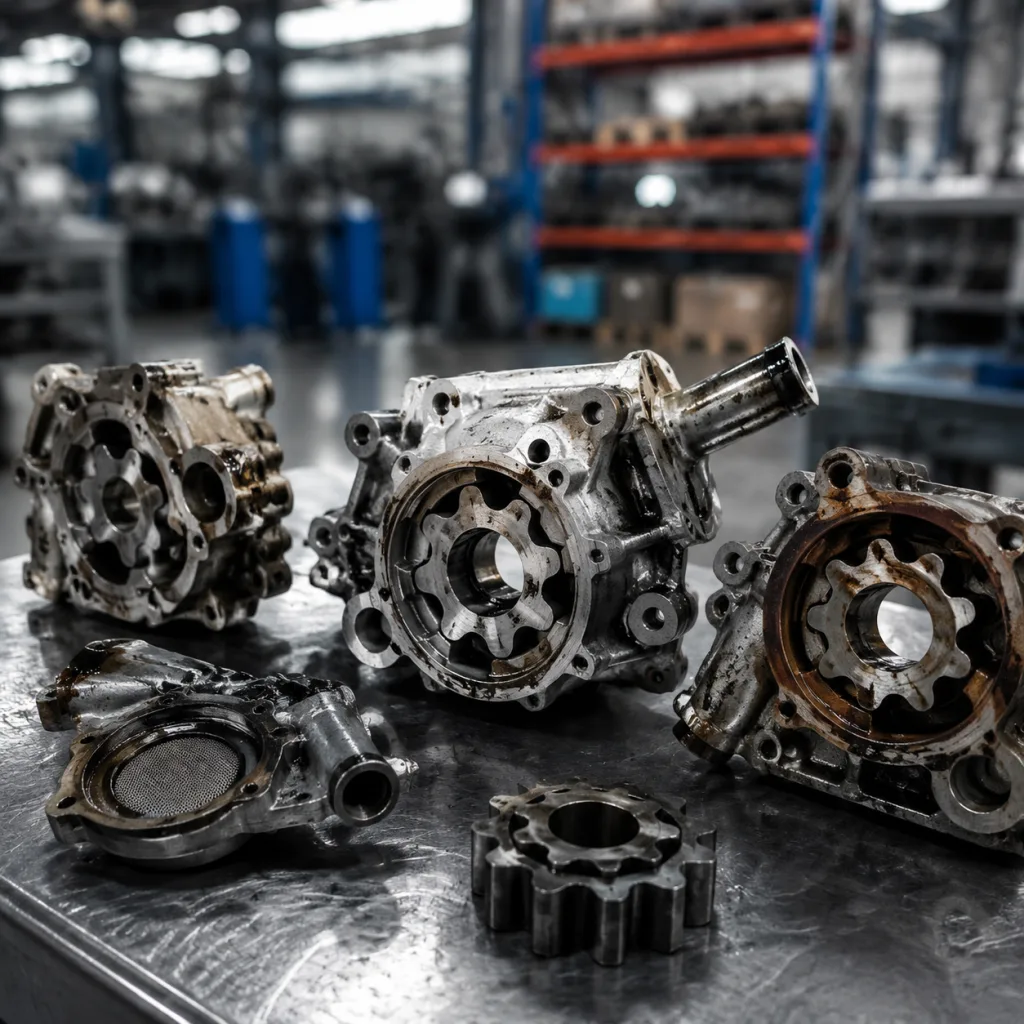
Metal debris in oil filter pleats, sump, pickup strainer, or magnetic drain plug
The same symptoms can come from several causes. A hot-idle complaint may be caused by worn main bearings rather than the pump. As a practical reference, many engines that specify roughly 0.7–1.0 bar minimum hot idle pressure and 2.5–4.5 bar at 3,000 rpm will still vary by oil grade, temperature, and bearing clearance, so the engine service data remains the controlling standard. A cold-start rattle may come from drain-back through a filter anti-drain valve. A repeated pump failure may indicate debris from a previous engine seizure, blocked galleries, or incorrect RTV sealant use on the oil pan.
For B2B warranty control, the first distinction is pressure generation versus pressure loss. The pump generates flow; the engine’s clearances and restrictions determine the pressure measured. If bearing clearance is excessive by even 0.02–0.04 mm beyond the service limit, a new pump may restore pressure only partially or temporarily. Buyers should therefore ask repair networks to submit pressure readings with oil temperature, not only dashboard photos.
Diagnostic route before replacing the pump
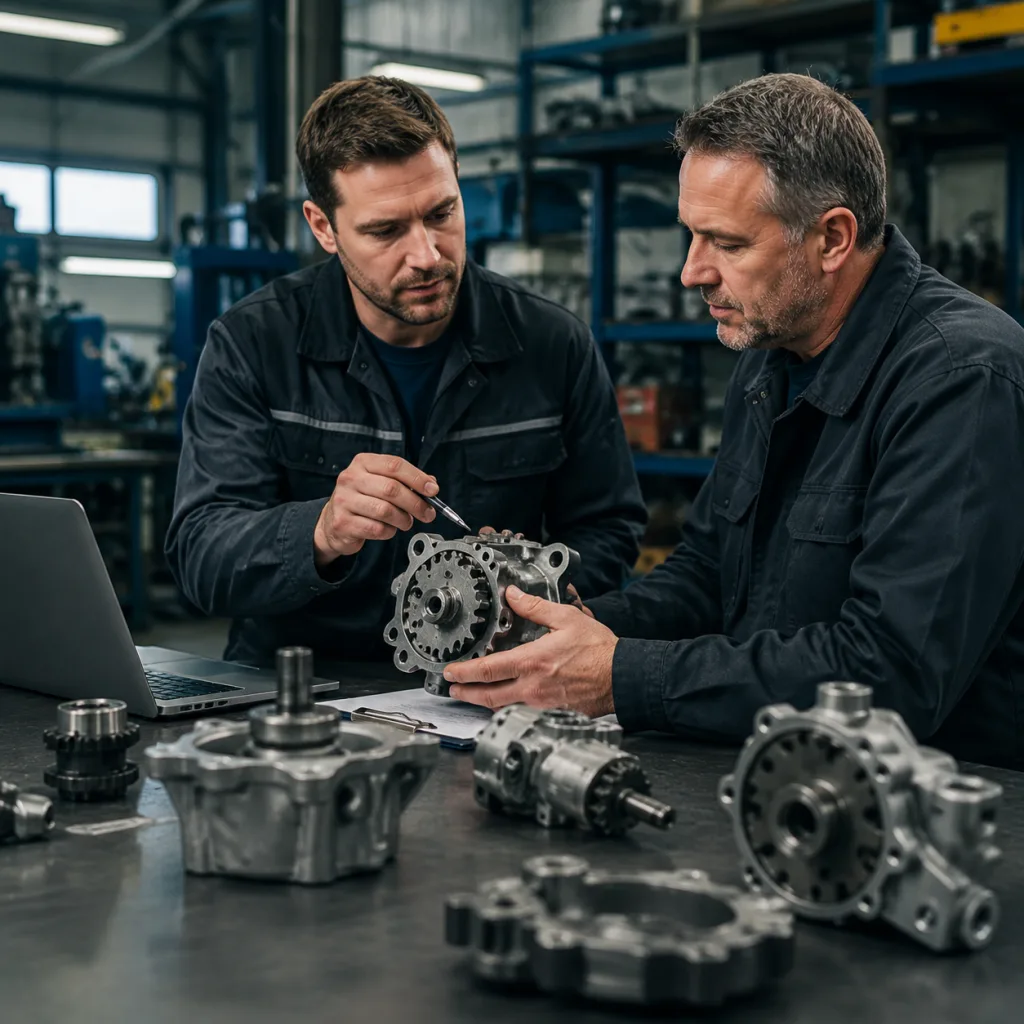
A structured test sequence reduces false condemnation and improves warranty evidence. The exact figures must come from the engine service data, but the method is broadly consistent across passenger car and light commercial engines. Use a mechanical gauge with a suitable range, normally 0–10 bar, and an accuracy of ±1.5% full scale or better. Record oil temperature after the thermostat has opened; 80–100°C is a common benchmark for hot testing.
Step
Inspection point
Buyer action / acceptance logic
1
Confirm oil grade, level, service interval, and contamination
Reject claims involving wrong viscosity, overfill, fuel dilution above about 3–5%, coolant contamination, or sludge without further engine cleaning evidence
2
Measure pressure with a calibrated gauge at idle and specified rpm
Require hot readings at idle and 2,000–3,000 rpm; compare with service limits before authorising pump replacement
3
Inspect oil filter, bypass valve, and filter media for debris
If metallic particles or collapsed media are present, treat the job as engine contamination, not a simple pump warranty case
4
Remove sump and inspect pickup tube, O-ring, and strainer
Replace hardened or flattened seals; clean or replace a strainer with sludge, RTV beads, or metal chips
5
Check relief valve, rotor condition, cover scoring, and drive interface
Confirm pump-specific defects such as sticking plunger, broken spring, rotor scoring, damaged flats, or excessive end clearance
6
Assess bearing clearance and gallery sealing if pressure remains low
Avoid repeat failure attributed to the replacement part when the base engine is bleeding pressure
</tr></thead><tbody> </tbody></table>For controlled service networks, require technicians to record gauge readings, oil temperature, oil grade, engine speed, vehicle mileage, and installed filter part number. A photograph of the pickup strainer and oil filter media is useful for claim screening. If metallic debris is present, replacing the pump alone is not a complete repair; the cooler, galleries, filter housing, sump, and turbo oil feed line may need cleaning or replacement.
Where variable-displacement or electronically controlled pumps are used, the diagnostic route must also cover solenoid actuation, wiring integrity, oil control valve contamination, ECU command state, and duty-cycle response. A practical bench or vehicle check should confirm that the control valve moves freely, the coil resistance is within the supplier or OE-style specification, and pressure changes when the ECU commands low and high pressure modes. These pumps should not be judged only by static visual inspection.
Oil pump failure modes seen in aftermarket programmes
Procurement teams should classify failure modes because each one requires different corrective action and supplier evidence. A low oil pressure oil pump complaint may be genuine, installation-related, or caused by the base engine condition. For claim coding, separate hydraulic performance, mechanical damage, contamination, application error, and packaging or corrosion issues.
Rotor or gear wear: Scoring reduces volumetric efficiency, especially at hot idle. Typical wear drivers are dirty oil, extended service intervals, poor flushing after engine repair, or abrasive particles above the cleanliness target. Buyers should request rotor side clearance, tip clearance, and pocket diameter records rather than accepting a visual-only report.
Relief valve sticking open: Pressure bleeds back to the inlet side or sump. Burrs, varnish, sealant particles, incorrect spring load, or machining debris can contribute. Batch inspection should include opening pressure and plunger movement, with no binding through the full stroke.
Pickup air leak: A hardened O-ring, cracked pickup tube, poor seating depth, or distorted flange introduces air. The pump may cavitate although its internal dimensions are correct. Symptoms often worsen after hot soak or during cornering, braking, and low oil level operation.
Cover plate scoring or excessive end clearance: Internal leakage increases as oil temperature rises and viscosity falls. End clearance control is critical; many gerotor-style programmes require a working range in the 0.03–0.10 mm band, but the drawing or approved sample should define the final tolerance.
Drive damage: Chain, gear, flats, spline, or hex-drive wear may reduce pump speed or cause intermittent drive loss. Check drive hardness, engagement depth, runout, and backlash where the pump is gear driven.
Incorrect application: Similar-looking pumps may differ in relief pressure, rotor depth, sensor porting, pickup position, balance-shaft integration, or variable-pressure control strategy. A 1–2 mm port offset or the wrong gasket window can be enough to create restriction or leakage.
For distributors, application control is as important as manufacturing quality. Cross-reference data should include engine code, model year range, sump type, drive type, relief-valve setting, pickup interface, gasket type, and pressure-control design. When an OE part-number style reference is used, keep it in a neutral format such as OE 06A… or OE 11251… unless a customer supplies a verified reference in its own database. Do not infer approval by any vehicle manufacturer.
Replacement specification points for sourcing teams
A replacement pump should be evaluated against fitment, hydraulic performance, cleanliness, and material controls. Price comparison without these data points creates avoidable warranty exposure. For a new low oil pressure oil pump programme, define critical-to-function dimensions before requesting quotes so suppliers price the same inspection burden.
Key specification checks:
Housing material and casting method, such as ADC12/A380 aluminium die casting or specified iron grade, with porosity and leak-path control
Rotor, gear, or gerotor material, powder-metal density or steel grade, heat treatment, and wear-face finish
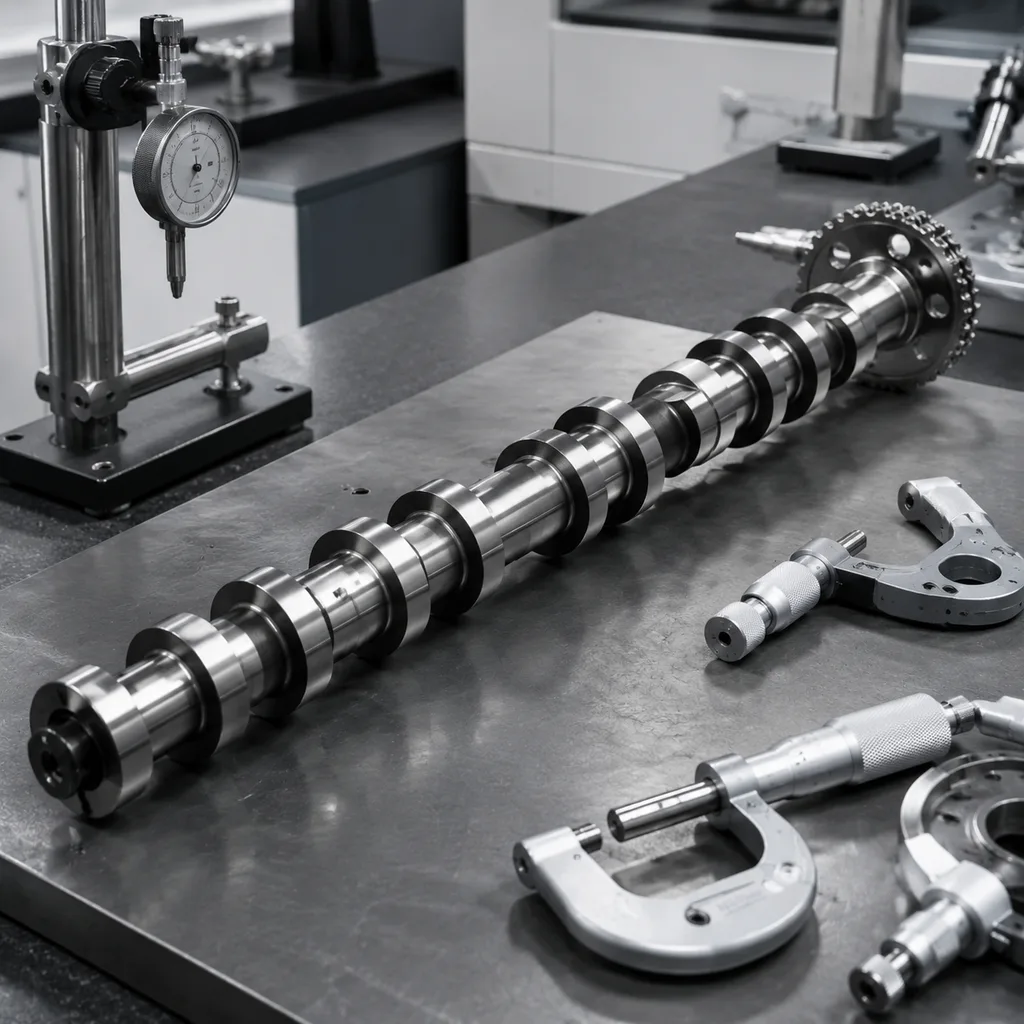
Rotor outside diameter, pocket diameter, tip clearance, side clearance, and end clearance limits, with Cpk target where volumes justify it
Relief valve opening pressure, spring free length, spring load tolerance, plunger diameter, bore finish, and stroke check
Mounting hole position, dowel location, gasket face flatness, and port alignment; typical aftermarket drawing tolerances are often ±0.05–0.10 mm on critical machined features
Drive interface dimensions, hardness, runout, backlash, and engagement depth where applicable
Surface roughness on sealing and cover faces, commonly Ra 0.8–1.6 μm for machined sealing faces unless the drawing states otherwise
Cleanliness limit for particles remaining after machining and washing, for example ISO 16232 or VDA 19 reporting with programme-specific particle mass and maximum particle size
Packaging method to prevent corrosion and port contamination, including capped ports, VCI bag or oil film, desiccant where required, and export carton compression strength
Traceability by batch, casting lot, machining date, assembly operator or line, and final inspection record
Commercial logic should be fixed before sampling. For catalogue parts using existing tooling, buyers commonly see trial orders from 100–300 pieces per reference, carton-level MOQ from 50–100 pieces, and production MOQ from 300–1,000 pieces depending on casting and rotor availability. New tooling or modified housings may need higher MOQs because casting, machining fixtures, gauges, and endurance validation must be amortised. Unit price should be compared against material grade, machining cycle time, inspection frequency, packaging level, and claim allowance; the lowest offer is rarely the lowest landed cost if it omits pressure testing or cleaning controls.
Typical lead-time planning is 7–15 days for stocked references, 30–45 days for repeat production after confirmed forecast, 45–75 days for first article approval using existing tooling, and 90–120 days or more for new tooling plus validation. Published management standards such as IATF 16949:2016 and ISO 9001:2015 do not set oil pump pressure values. They define quality management requirements for process control, traceability, corrective action, and continual improvement. Material and chemical compliance may also need review under REACH (EC) No 1907/2006 for EU supply chains, especially for coatings, elastomers, preservatives, and packaging materials.
Driventus controls oil pump production through incoming material checks, casting and machining inspection, controlled washing, assembly verification, leakage checks, relief-valve checks, and batch traceability within its quality system. Buyers can review related engine components in our catalog, including oil pumps and adjacent sealing parts under engine component programmes.
Validation evidence to request from a pump supplier
For a new supplier, request data that proves the part can maintain pressure across temperature, speed, and duty conditions. The test plan should match the pump type and target engine family. For private-label or programme-specific demand, validation can be aligned through custom manufacturing.
A practical supplier file should include:
Dimensional inspection report with critical-to-function characteristics, sample size, gauge method, and actual measured values
Material certificate or grade confirmation for housing, rotor, shaft, spring, plug, gasket-contact parts, and fasteners
Hardness report for wear-related parts, with location and scale stated, such as HRC, HRB, HV, or HB
Relief valve calibration data by batch, including opening pressure, spring load, and plunger movement check
Flow and pressure curve at defined oil temperature and pump speed, for example 40°C, 80°C, and 100°C across idle-equivalent, 2,000 rpm, and 4,000 rpm pump-speed points where applicable
Leakage, priming, or suction test result, especially for pumps with long pickup paths or dry-start sensitivity
Cleanliness test method and particle limit, including maximum particle size and total particle mass per part or per wetted surface area
Salt spray or corrosion protection evidence for packed parts when required by the market, commonly 48–96 hours for plated or coated external hardware unless the customer standard differs
Packaging drop, vibration, stacking, and transport suitability check for export shipments
Control plan, process flow, inspection frequency, reaction plan, and traceability format
For repair-chain supply, ask the supplier to define installation notes that prevent repeat claims: pre-lubricate or prime the pump where required, replace pickup seals, clean the sump, inspect or replace the cooler, avoid excess sealant, use the specified oil grade, replace contaminated filters, and crank without fuel or ignition where the engine procedure requires oil-pressure build before start. These notes are not marketing content; they reduce claim ambiguity and technician error.
When a pump is supplied for engines with turbochargers, variable valve timing, hydraulic chain tensioners, or stop-start duty, pressure stability during hot idle and restart should receive special attention. A useful validation request is a hot-soak restart test after 10–20 minutes, followed by time-to-pressure recording. Buyers can set acceptance around the approved sample or engine specification rather than a generic number, because gallery volume and filter location strongly affect the result.
When replacement is justified and how to reduce returns
Replacement is justified when measured pressure is below the service limit and inspection confirms pump wear, relief valve malfunction, internal scoring, damaged drive features, or a blocked or leaking pickup assembly that is serviced with the pump. Replacement may also be justified during engine overhaul if debris has circulated, but the oil galleries, cooler, filter housing, turbo oil feed, and sump must be cleaned or replaced as required. If hot pressure remains low after a known-good pump and correct oil are installed, bearing clearance, cam carrier leakage, piston cooling jets, and gallery plugs should be checked before another pump is fitted.
For distributors and importers, return reduction depends on documentation. Include a short diagnostic sheet in the carton or digital product record. It should ask for hot gauge pressure at idle and specified rpm, oil viscosity, oil temperature, mileage, filter condition, pickup inspection, contamination evidence, installation date, failure mileage, and fault photographs. Claims without gauge readings can be held for additional evidence because switch signals and dashboard warnings are not enough to prove pump failure.
Recommended programme controls:
Lock application data before first purchase order, including engine code, oil pan type, pickup interface, drive type, relief setting, and sensor or solenoid configuration
Review samples for port alignment, gasket interface, drive fit, rotor end clearance, relief-valve operation, and mating-face flatness before bulk approval
Approve packaging for export humidity and handling conditions, including capped ports, rust protection, carton strength, pallet pattern, and barcode traceability
Define acceptable batch documents before shipment: inspection report, material confirmation, relief-valve data, pressure or leakage result, and packing list by batch
Keep retained samples from first article and each production lot for claim comparison, preferably one to three pieces per batch depending on order volume
Track claims by engine family, installer, mileage to failure, oil grade, pressure reading, debris condition, and failure description so pricing and warranty reserves reflect real risk
Commercially, the return policy should match the risk profile. For established catalogue references, buyers can agree normal AQL inspection, batch documentation, and a defined claim review period. For new or high-risk applications, a staged launch is safer: sample approval, 50–100 piece pilot order, 300–500 piece market trial, then full MOQ once field feedback is clean. Driventus is an independent aftermarket manufacturer; brand names are referenced for fitment only. For validated oil pump supply, buyers can share drawings, samples, pressure requirements, annual volume, target price range, packaging standard, destination market, and application lists and request a quote.
Frequently asked questions
Yes, if the pump has internal wear, excessive end clearance, a sticking relief valve, or a damaged drive. It may not fix the issue if main bearing clearance, oil viscosity, pickup sealing, gallery leakage, or fuel dilution is the root cause. Pressure should be verified with a calibrated mechanical gauge at hot oil temperature before replacement.
Request dimensional reports, material confirmation, hardness data, relief valve calibration, flow and pressure curves, cleanliness records, leakage or priming results, packaging specifications, and batch traceability. Supplier quality certification to IATF 16949:2016 or ISO 9001:2015 supports process control but does not replace part-level validation.
Often yes, especially where the pickup seal is hardened, flattened, cracked, or disturbed during sump removal. Air leakage at the pickup can mimic pump failure and cause cavitation. The sump, strainer, cooler, and filter should also be inspected for sludge, sealant, and metal debris.
If your team is reviewing a low oil pressure oil pump programme or investigating recurring pressure complaints, Driventus can assess samples, drawings, pressure targets, packaging needs, annual volume, MOQ plan, and application data. Contact our engineering and export team at /contact.html