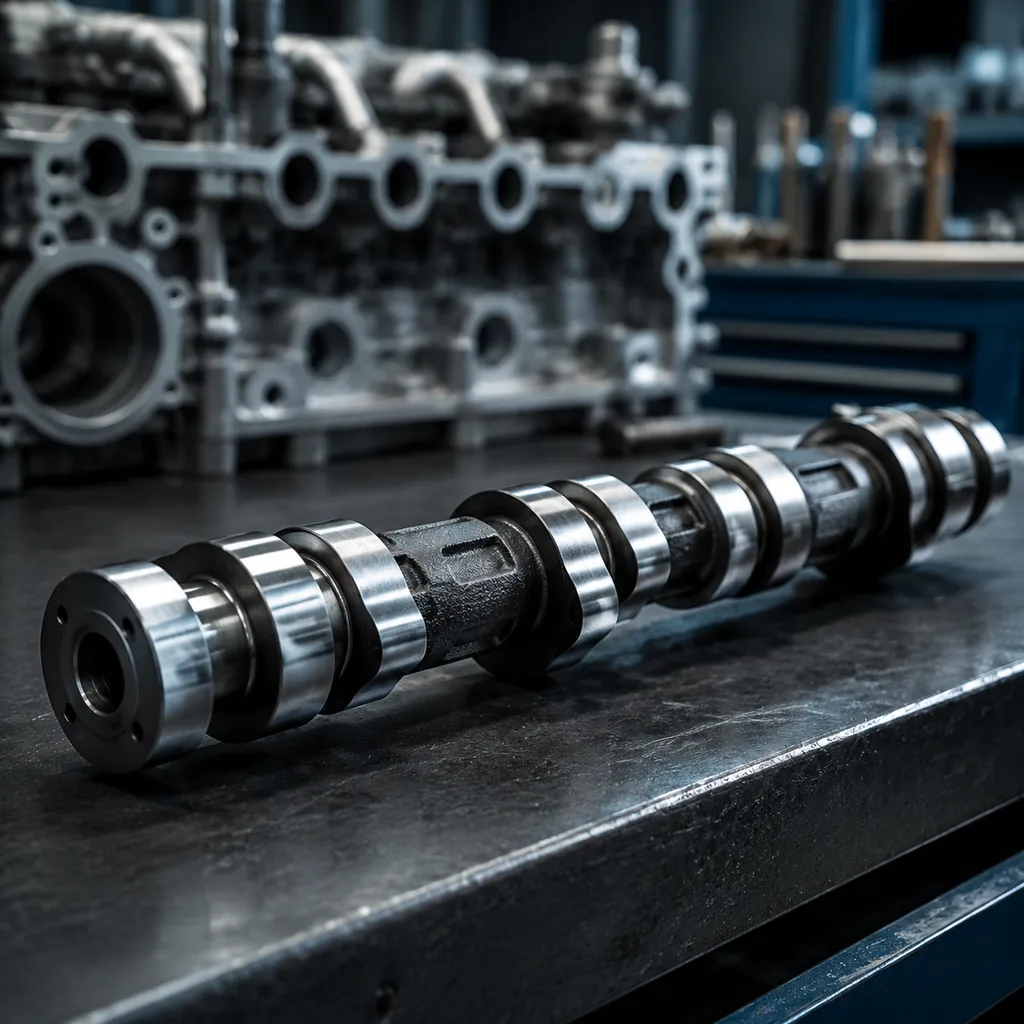
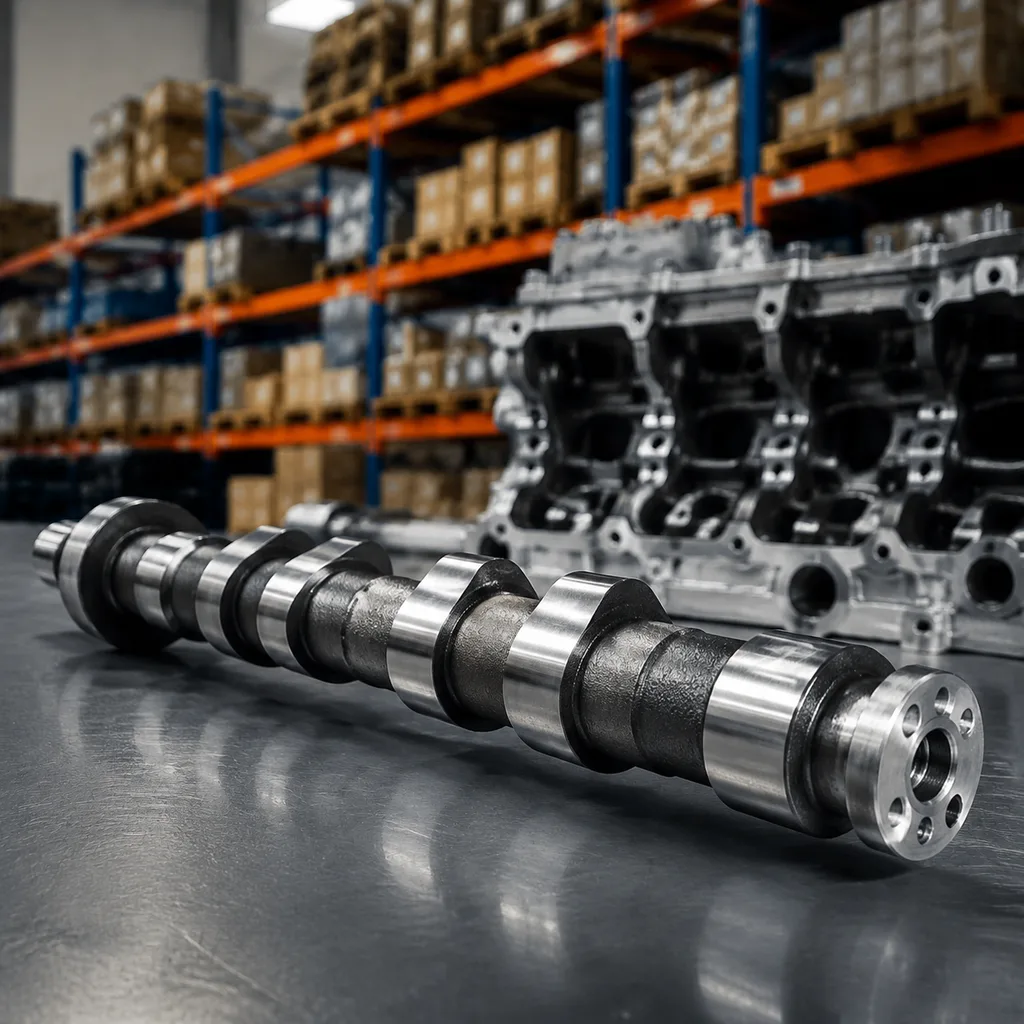
Camshaft for Alfa Romeo Giulietta Aftermarket Replacement
A camshaft for Alfa Romeo Giulietta aftermarket replacement is not a catalogue-line purchase. It is a timing-critical engine component where small errors travel quickly: a journal that is 0.03 mm off, a trigger feature cut at the wrong angle, a rough lobe, or an unmatched phaser seat can turn into workshop downtime, diagnostic faults, repeat labour claims, and damaged confidence in the distributor’s range.
For B2B buyers, the sourcing question is therefore simple: can the supplier reproduce the correct Giulietta camshaft specification batch after batch, and prove it before the parts enter your warehouse? Driventus supports aftermarket programmes where fitment confirmation, machining control, material traceability, validation records, packaging, MOQ planning, and export documentation all need to be settled before purchase order release.
This article sets out a practical decision framework for distributors, importers, repair chains, and sourcing engineers evaluating Alfa Romeo Giulietta camshaft replacement projects. Driventus is an independent aftermarket manufacturer. Alfa Romeo and Giulietta names are used only to identify vehicle fitment; no approval, licence, or endorsement by any vehicle manufacturer is implied.
Start with the Decision That Prevents Most Fitment Claims
The first decision is not price. It is identity: which exact camshaft is being sourced?
The Alfa Romeo Giulietta range includes multiple petrol and diesel engine configurations, including MultiAir, T-Jet, and JTDm-family applications depending on market and model year. Camshaft specifications can change with engine code, emissions stage, valve-train layout, intake or exhaust position, timing system, sensor design, and variable valve timing interface. Two shafts may look similar in a photograph and still fail in the workshop.
A dependable replacement programme starts by locking three groups of data.
1. Vehicle and engine application
Model and year range.
Fuel type.
Engine displacement and power variant, where available.
Engine code.
Intake or exhaust camshaft position.
Belt or chain timing system.
Market-specific application differences, if known.
2. Technical geometry
Overall length.
Bearing journal diameters.
Lobe count, lift, base circle, spacing, and phasing.
Keyway, dowel, slot, thread, phaser seat, or trigger-wheel detail.
Oil-hole layout and oil-feed orientation.
Thrust-face width.
Rear-end slot or sensor interface.
End thread and shoulder geometry.
3. Commercial and reference data
Buyer drawing or dimensional table.
Physical sample.
TecDoc-style application data.
OE cross-reference format, where used by the buyer.
Internal SKU or warehouse reference.
Workshop claim history, if a current supplier has created repeat failures.
Driventus normally recommends a pre-production comparison between the buyer’s approved sample and the proposed production drawing. The check should focus on critical-to-function dimensions, not cosmetic resemblance. Typical aftermarket release criteria are agreed by drawing, but common controls include journal diameter within about ±0.010-0.020 mm, total indicated runout below roughly 0.03-0.05 mm, and confirmed angular position for trigger or phaser features against the master sample.
If no drawing exists, Driventus can create an inspection table from the physical sample and mark which features require buyer approval before tooling, machining, or packaging release. This avoids a familiar sourcing failure: a part approved by catalogue description, then rejected because the workshop finds the wrong trigger, oil hole, phaser interface, or journal size.
Buyers can review related engine parts through our catalog and the engine component range at /products/engine-components.html. For Giulietta camshaft replacement orders, application confirmation and sample matching should be completed before production planning begins.
Failure Modes to Eliminate Before You Approve a Sample
An OE-equivalent camshaft is not defined by appearance. It is defined by whether it reproduces valve timing, lubrication behaviour, durability, and interface function in the engine. A shaft can install cleanly and still be wrong.
The most costly failures usually come from a small number of uncontrolled features:
Failure mode
Likely source
What it causes in the field
Incorrect valve events
Lobe profile, lift, base circle, or phasing error
Poor running, power loss, noise, emissions-related issues
Oil-film instability
Journal diameter, roundness, cylindricity, or roughness error
Bearing heat, scoring, early wear
Sensor correlation fault
Trigger feature or angular reference error
Diagnostic trouble codes, no-start or limp operation
VVT malfunction
Phaser seat, dowel, thread, shoulder, or oil passage error
Timing faults, rattling, unstable operation
Premature lobe wear
Incorrect hardness, case depth, material, or surface finish
Warranty claims after installation, follower damage
Installation interference
Overall length, thrust face, end feature, or cover-clearance error
Workshop rejection, rework, returned stock
Contamination-related failure
Poor oil-hole deburring or cleaning
Abrasive residue in oil system, accelerated wear
</tr></thead><tbody> </tbody></table>For this reason, Driventus separates camshaft characteristics into three levels.
Critical dimensions affect timing, lubrication, interface fit, or engine operation. These are checked during first-article approval and then by defined controls during production. Examples include journal diameter, lobe lift, lobe phasing, trigger angle, runout, oil-hole location, phaser interface, and hardness.
Major dimensions support assembly and repeatability. They are checked by batch or process stage. Examples include non-critical shoulders, groove widths, thread quality, and general length features.
Reference dimensions reduce packing, identification, and handling errors. They may not affect engine function directly, but they prevent the wrong part from entering the wrong carton or application listing.
A practical inspection plan usually includes the following controls:
Control point
Typical verification method
Practical target or check
Overall length and end features
CMM or calibrated gauge inspection
Confirms installation fit, axial location, and cover clearance
Bearing journal diameter
Micrometer and roundness testing
Usually controlled to drawing within about ±0.010-0.020 mm
Journal roundness/cylindricity
Roundness tester or V-block method
Supports oil film stability and avoids hot spots
Cam lobe lift and profile
Cam profile measurement
Lift deviation often reviewed within ±0.02-0.05 mm, depending on design
Base circle and lobe phasing
Profile tester or approved fixture
Preserves valve events and timing synchronisation
Phaser, dowel, slot, or trigger angle
Optical/CMM fixture or master-gauge comparison
Prevents timing faults and sensor-correlation DTCs
Surface hardness
Rockwell or Vickers hardness testing
Matches lobe and journal hardness to material route and follower type
Surface roughness
Profilometer inspection
Protects oil film at journals and lobes
Runout and straightness
Dial indicator or shaft inspection fixture
Often targeted below 0.03-0.05 mm TIR for stable rotation
Material chemistry
Spectrometer or mill certificate review
Confirms batch consistency and process discipline
</tr></thead><tbody> </tbody></table>The buyer should not accept a sample only because it fits into the cylinder head. Physical fit is the minimum. The programme needs an approved master sample or drawing, a controlled inspection plan, and evidence that the supplier can repeat the specification after the first batch.
Material and Process Choices: What Changes the Risk Profile
Camshaft sourcing becomes clearer when material and process are treated as risk decisions, not generic specifications. Modern passenger-car camshafts may be made from cast iron, chilled cast iron, forged steel, billet steel, or assembled tube-and-lobe structures. The correct choice depends on the original design, follower contact type, loading, lubrication conditions, hardness requirement, and expected production volume.
A lower-cost route is not automatically wrong. A higher-cost route is not automatically safer. The question is whether the chosen route can reproduce the required lobe profile, journal quality, hardness, oil-feed geometry, and interface features without drifting over repeat production.
Driventus typically reviews these items before approving a camshaft production route:
Base material grade and chemical composition, confirmed by spectrometer or material certificate.
Casting, forging, billet machining, or assembled-structure stability.
Blank straightness before grinding.
Heat-treatment method, hardness range, and case depth where applicable.
Rough turning, drilling, heat treatment, straightening, semi-finish grinding, finish grinding, and final deburring sequence.
Lobe and journal grinding accuracy, including wheel dressing interval and in-process gauge checks.
Surface roughness at bearing journals, lobes, thrust faces, and contact zones. Buyers often request Ra values in the 0.2-0.8 µm range, depending on the surface and design.
Oil-hole drilling, flushing, and deburring condition.
Thread, keyway, slot, dowel, trigger, or phaser-interface accuracy.
Final washing, rust-prevention oil or VCI protection, and anti-corrosion packing for sea freight and storage.
The high-risk areas are usually small and easy to underestimate. An oil hole with burrs can release abrasive residue. A lobe with the wrong hardness may survive installation and fail later. A journal with excessive roughness can disturb oil film and accelerate wear. A phaser interface that passes a visual check may still create timing noise or fault codes.
That is why first-article approval is only the beginning. Repeat shipments need incoming material checks, in-process grinding inspection, controlled gauges, final dimensional reports, traceable heat-treatment batches, and retained samples where required. A useful production record links raw material heat number, heat-treatment batch, grinding date, inspection records, packing date, and carton or pallet identification.
For aftermarket distributors, this is the difference between a supplier that can make one acceptable sample and a supplier that can support an actual programme. If a distributor requires a modified profile, private-label packaging, special inspection records, or non-standard MOQ planning, Driventus can evaluate the project through custom manufacturing.
A Release Sequence for New Giulietta Camshaft References
A replacement camshaft should not move from quotation to mass shipment in one jump. The safer route is staged release, with each stage removing a specific risk.
Step 1: Confirm application and part identity. Engine code, year range, fuel type, camshaft position, timing layout, and reference sample are checked before price and lead time are finalised. This prevents quoting the wrong reference.
Step 2: Approve the technical baseline. The buyer and supplier agree whether the master control source is a drawing, an approved sample, or a dimensional table created from the sample. Critical features are identified before machining.
Step 3: Produce and inspect first articles. First-article inspection should cover the features most likely to cause field failure:
Critical dimensions with measuring tools and pass/fail judgement.
Lobe profile, lift curve, base circle, and angular relationship.
Journal diameter, roundness, cylindricity, and surface finish.
Hardness at lobes, journals, and relevant contact zones.
Runout and straightness after grinding and final cleaning.
Oil holes, threads, keyways, slots, trigger features, and phaser interfaces.
Cleaning and debris control for oil passages, including borescope or air-flow checks where needed.
Step 4: Check packaging and corrosion risk. Sea freight and humid storage can damage a technically correct part. For long transit routes, buyers may request rust-prevention validation, VCI packing review, oil protection, carton strength checks, or salt-spray screening. A 48-96 hour screening range is commonly used for packaging corrosion-prevention systems, depending on buyer requirements.
Step 5: Run a pilot batch. A trial batch may use 100% inspection for critical dimensions. If a controlled workshop or engine builder can provide installation feedback, that feedback should be captured before repeat production.
Step 6: Move to repeat-production control. Once stable, mature production may shift to AQL-based final inspection plus in-process control of grinding, heat treatment, cleaning, and packing. The purchase order should state which reports travel with each shipment and which records are retained by the factory.
The quality framework matters because validation must be repeatable. Driventus operates under IATF 16949:2016 and ISO 9001:2015 principles for process control, corrective action, supplier management, and traceability. Buyers can review the quality system before arranging supplier assessment, sample orders, or pilot production.
For regulated destinations, material and packaging documentation may also need to consider REACH (EC) No 1907/2006, especially where substances, coatings, oils, or packaging materials are reviewed by the importer. Camshafts are not emissions-control devices, but accurate valve timing supports correct engine operation. Vehicle emissions frameworks such as ECE R-83 are therefore relevant to the broader engine-system context, even when the camshaft itself is not certified under that regulation.
Scenario Planning for Distributors, Importers, and Repair Chains
The best purchasing route depends on the buyer’s situation. A distributor filling a known SKU, an importer developing a new private-label range, and a repair chain trying to stop repeat workshop claims do not need the same level of control.
Scenario 1: Existing reference, stable demand
The buyer already knows the engine application and has sales history. The main risks are stock continuity, batch consistency, packaging quality, and landed cost. In this case, the RFQ should prioritise current tooling status, available blanks, inspection scope, regular MOQ, lead time, carton data, and repeat-order planning.
Scenario 2: New reference with limited market data
The buyer is adding a Giulietta camshaft reference but does not yet know actual demand. A pilot order is more sensible than a large opening purchase. If blanks or semi-finished stock are available, pilot quantities may sometimes be discussed from 50-100 pieces per part number. Regular production is often planned around 200-500 pieces per reference to reduce setup and grinding-changeover costs.
Scenario 3: New development or special specification
If the project requires new casting, forging, dedicated grinding fixtures, custom gauges, or a modified profile, MOQ and timeline change. The buyer may need a tooling contribution, higher opening quantity, or annual blanket order. Development and first-article approval can require 60-90 days before stable production, especially if heat-treatment validation or special gauges are involved.
Scenario 4: Repair-chain claim reduction
The buyer is less concerned with adding a new SKU and more concerned with reducing repeat labour claims. In this case, the purchase order should define installation notes, retained-sample policy, claim-analysis procedure, and the exact inspection records required with each shipment. A correct camshaft can still fail if installed with worn followers, blocked oil passages, contaminated oil, incorrect timing tools, poor lubrication, or reused torque-to-yield fasteners where replacement is required by the engine design. Fitment notes help workshops separate service-process failures from part-related issues.
Across all scenarios, the sourcing checklist remains compact:
Confirm exact Giulietta engine application and camshaft position.
Request drawings, dimensional tables, sample-comparison data, or inspection reports.
Verify material grade, production route, heat treatment, hardness, roughness, and runout controls.
Confirm MOQ, lead time, pilot-batch options, tooling or fixture costs, and price validity.
Review traceability, marking, retained samples, and claim-handling process.
Check anti-rust packing, carton strength, palletisation, barcode requirements, and warehouse handling.
Align commercial invoice, packing list, carton label, HS code, certificate of origin needs, and destination-market requirements.
Approve private-label artwork and label fields before mass production.
Lead time follows the same logic as MOQ. If approved blanks are available, samples can often be arranged in 2-4 weeks and mass production in 30-45 days after approval. If new blanks or validation work are needed, planning should allow a longer development window. Sea-freight buyers should add 4-6 weeks for transit, customs, and inland distribution depending on destination.
For EU, UK, US, Canada, Australia, Brazil, and other destination markets, documentation consistency reduces customs delays and warehouse disputes. Product descriptions, buyer part numbers, application data, carton labels, and purchase order references should match. The lowest first quote is rarely the best benchmark. Compare total landed cost, rejection risk, warranty exposure, packaging durability, document accuracy, and the supplier’s ability to reproduce the approved specification.
Working with Driventus: RFQ to Repeat Production
Driventus manufactures and exports engine and powertrain components from Taizhou, Zhejiang, serving aftermarket distributors, OEM and Tier-1 supply programmes, and repair networks in more than 60 countries. For a Giulietta camshaft project, the working process is deliberately structured so that technical risk is handled before repeat production.
The typical workflow is:
1. Application confirmation by engine code, year range, fuel type, and camshaft position. 2. Sample, drawing, or reference review. 3. Quotation based on production route, MOQ, inspection level, packing, and Incoterms. 4. First-article production and inspection. 5. Pilot batch with packaging confirmation. 6. Repeat production with batch traceability and agreed documentation.
Support can include:
Application matching for Alfa Romeo Giulietta aftermarket replacement references.
Development from a buyer sample, technical drawing, or approved reference.
Dimensional inspection reports for critical features using CMM, micrometer, profile, runout, and roughness checks where applicable.
Material, hardness, surface finish, and runout records where required.
Pilot-batch planning before regular orders.
Batch traceability with part number, lot number, production date, and carton quantity.
Neutral or private-label cartons, including barcode, EAN/UPC, internal SKU, and multi-language label fields when supplied by the buyer.
Export documentation support for distributor purchasing teams.
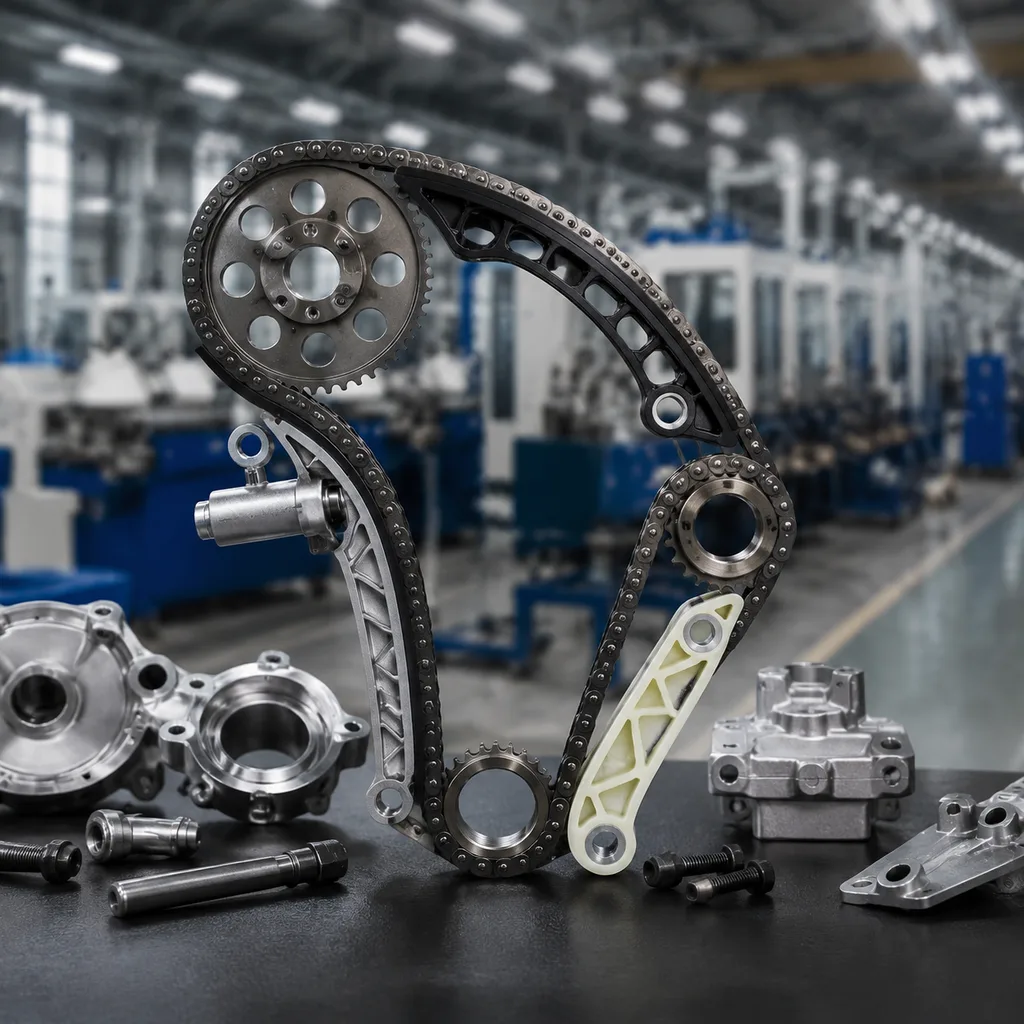
Consolidation with related engine parts such as pistons, gaskets, crankshafts, water pumps, timing components, and other powertrain references.
A strong RFQ should state annual forecast, target first-order quantity, destination port, required inspection documents, packing standard, private-label requirements, and Incoterms. EXW, FOB Ningbo/Shanghai, CIF, and DAP pricing create different cost responsibilities for inland freight, export handling, insurance, customs, and delivery, so terms should be clear at quotation stage.
For private-label programmes, carton artwork, barcode data, corrosion protection, palletisation, and carton drop-strength requirements should be approved before mass packing. This avoids the common problem of technically approved parts waiting in the warehouse because packaging data or label formats were not settled.
Driventus does not claim vehicle manufacturer approval or endorsement. The objective is to supply independent aftermarket replacement components that meet the required fit, function, durability, packaging, and documentation standards for professional distribution channels.
The most useful RFQ package is concise but complete: application data, sample or drawing, annual forecast, target market, packaging requirements, inspection scope, delivery terms, and any known failure history. With those inputs, Driventus can provide more realistic pricing, lead-time planning, validation scope, and production scheduling.
Frequently asked questions
Provide the engine code, production year range, fuel type, intake or exhaust position, sample photos, drawings if available, annual volume, target first-order quantity, packaging requirements, Incoterms, and destination market. If you have a reference sample, Driventus can compare critical dimensions before quotation.
Yes. Private-label packaging can be reviewed after fitment and technical approval. Carton artwork, label format, barcode data, palletisation, corrosion protection, and packing method should be confirmed before production release.
No vehicle manufacturer approval is claimed. Driventus supplies independent aftermarket replacement parts based on dimensional matching, material controls, and validation records. Brand names are used only to identify fitment.
For application confirmation, sample development, MOQ planning, or a camshaft RFQ package, contact the Driventus team to review drawings, volumes, pricing terms, packaging, and validation needs. You can [request a quote](/contact.html).