timing belt kit · 2026-06-18

How to Choose a Timing Belt Kit Supplier

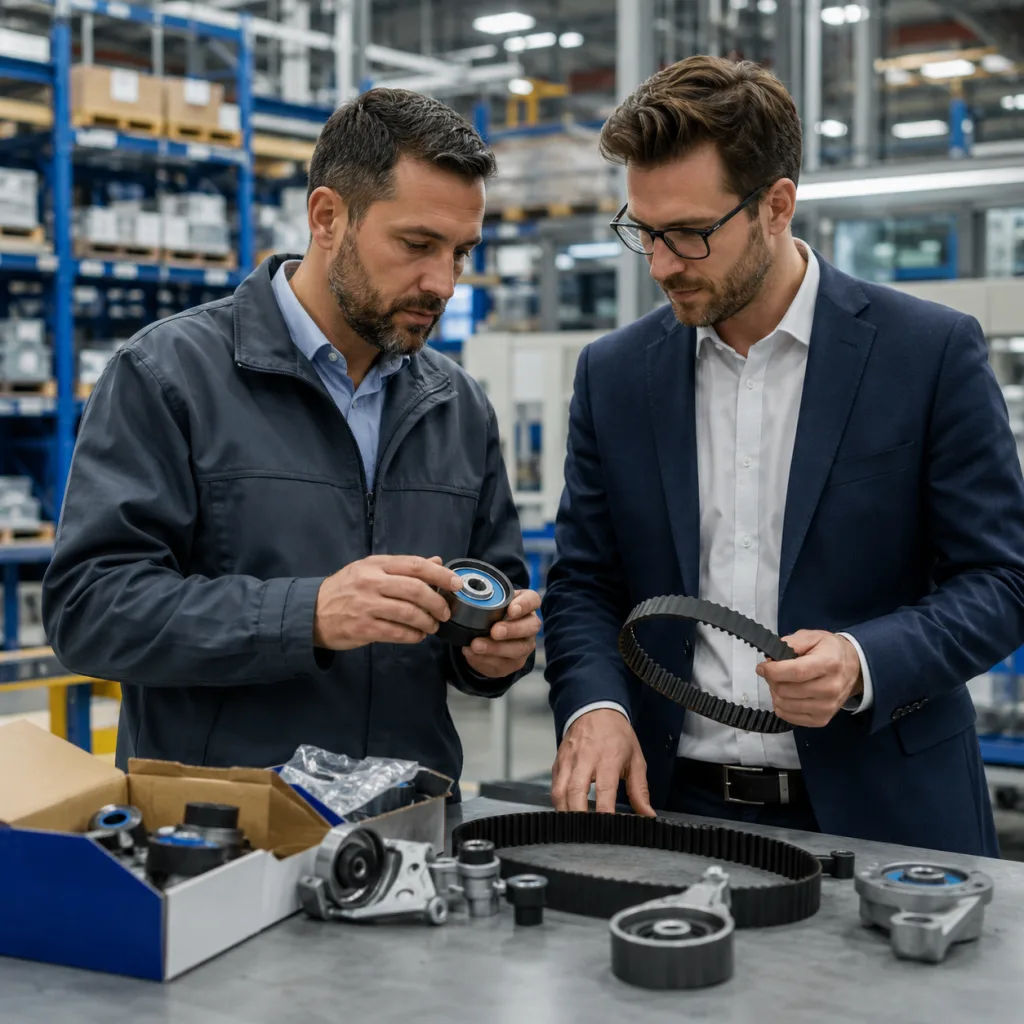
Choosing a timing belt kit supplier is not a catalogue exercise. It is a risk decision. One weak bearing, an out-of-tolerance tensioner, a leaking pump seal, or a missing torque-to-yield bolt can turn a routine repair into engine damage, downtime, warranty claims, and lost workshop trust. The buying team has to judge the whole kit: belt, tensioner, idlers, fasteners, seals, packaging, data, and, where the application requires it, the water pump. This guide explains how to choose a timing belt kit supplier using evidence you can verify rather than claims you have to accept. It is written for aftermarket distributors, repair-chain category teams, and OEM or Tier-1 sourcing engineers who need to compare suppliers on drawings, materials, dimensional checks, validation records, traceability, MOQ logic, lead-time discipline, price-break structure, and audit readiness. Driventus is an independent aftermarket manufacturer; brand names are referenced for fitment only.

Start With the Decision: What Exactly Are You Buying?

A timing belt kit quote is meaningless until the kit boundary is fixed. In one market, a “kit” may mean belt plus tensioner. In another, customers expect idlers, bolts, camshaft seals, crankshaft seals, and a water pump in the same box. That difference can make the cheapest offer look competitive when it is simply incomplete.

Build the buying decision around a locked bill of materials. Each supplier should confirm the same fields in writing:

  • Application range, engine code, model year, fuel type, VIN split, and regional fitment notes
  • OE part-number cross-references where available, such as OE 06A… or OE 11251… if your internal data already uses those formats
  • Belt tooth profile, tooth count, belt width, pitch, cord material, rubber compound family, and running direction marking where required
  • Belt dimensional targets, for example width tolerance of ±0.3 mm and tooth-count verification on 100% of samples during approval
  • Tensioner type: mechanical, hydraulic, or automatic spring-loaded design, with mounting-hole diameter, offset, torque setting, and index-mark position
  • Idler pulley bearing type, pulley material, surface finish, grease specification, bearing seal type, and target runout limit
  • Water pump inclusion, impeller material, gasket type, shaft seal design, pump housing material, and leak-test requirement when applicable
  • Fastener grade, coating, thread pitch, torque specification, and whether bolts are single-use torque-to-yield parts
  • Packaging requirement: neutral box, distributor brand, repair-chain label, EAN/UPC, QR code, country-of-origin mark, or market-specific barcode
  • Documentation pack: drawing revision, control plan, inspection report, packing list format, and traceability label sample

Then force the commercial comparison to follow the technical scope. Ask suppliers to separate the belt, pulley or tensioner, water pump, fasteners, packaging, tooling, sample cost, and freight assumptions. You will see whether a low quote is a genuine cost advantage, a missing component, a weaker packaging specification, or an optimistic freight estimate.

What Proof Separates a Real Quality System From a PDF?

Certificates matter, but they are only the opening question. A timing belt kit supplier should be able to show how its quality system works on the factory floor. For automotive sourcing, IATF 16949:2016 and ISO 9001:2015 are the main management-system references. They do not prove that every SKU is ready for approval, but they do indicate whether the supplier has formal controls for process changes, nonconforming product, corrective action, supplier development, calibration, and traceability.

For EU and UK importers, material declarations may also be required under REACH (EC) No 1907/2006. Depending on the destination market and customer requirements, ask whether IMDS or equivalent material reporting is available for rubber, metal, coatings, grease, seals, and packaging materials.

Use the review as an evidence test:

</tr></thead><tbody> </tbody></table>Set measurable approval rules before samples arrive. Common checks include belt width within drawing tolerance, pulley radial runout typically no more than 0.05–0.10 mm depending on design, bearing rotation without roughness or axial looseness, fastener coating without red rust, water pump leakage at the specified pressure, and 100% correct kit contents. Driventus publishes its quality system information for buyers who need certification and process-control evidence during supplier screening.

Failure Modes to Test Before the First Order

A timing belt rarely fails alone. The field complaint may be reported as a belt problem, but the root cause can sit in the bearing grease, pulley runout, tensioner torque, pump seal, fastener coating, or installation data. If the supplier validates only the belt, the kit has not been validated.

Focus the sample review on failure modes that create warranty exposure:

  • Belt construction: tooth shear strength, tensile cord stability, rubber heat ageing, oil resistance where relevant, ozone resistance, pitch accuracy, back-side abrasion, and dimensional stability after cycling.
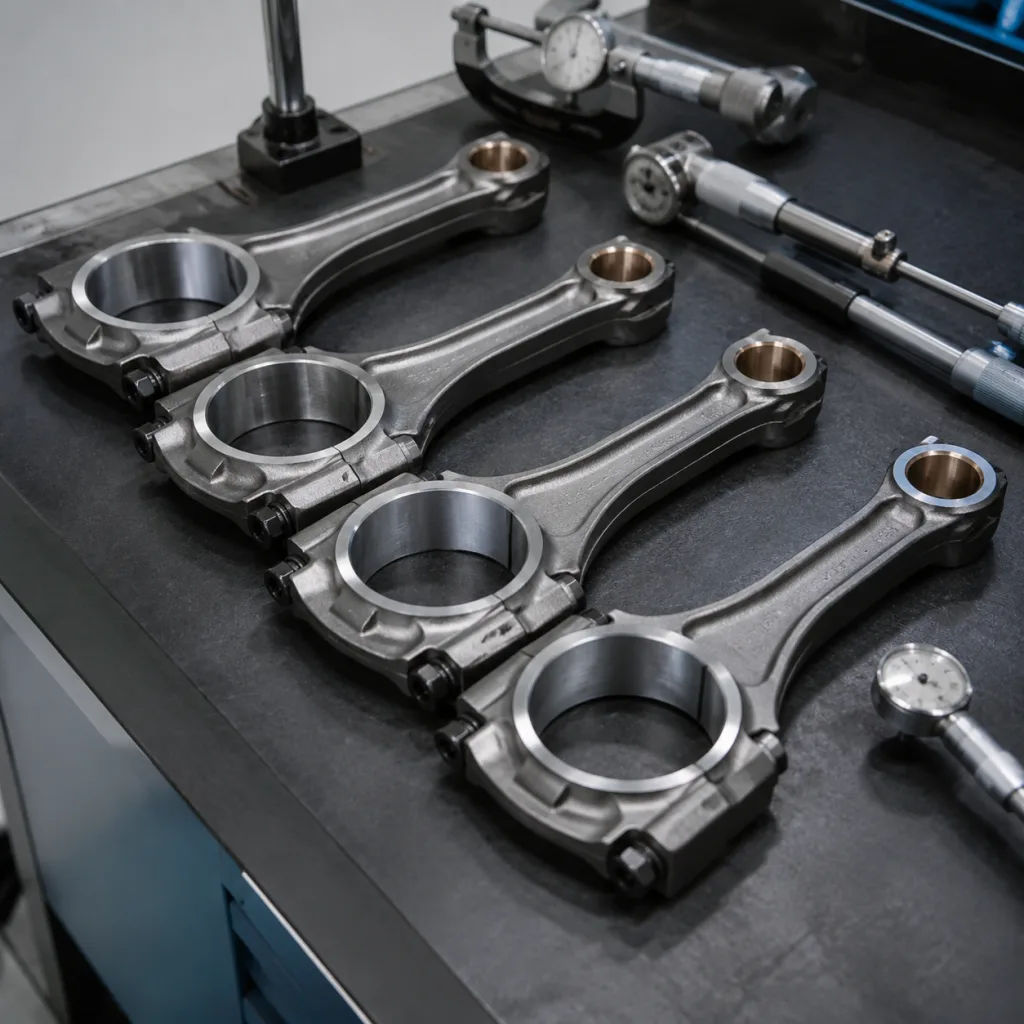
  • Pulley and tensioner checks: bore tolerance, bearing noise, radial play, axial play, pulley runout, surface roughness, hardness, spring force, damping force, corrosion resistance, and press-fit control.
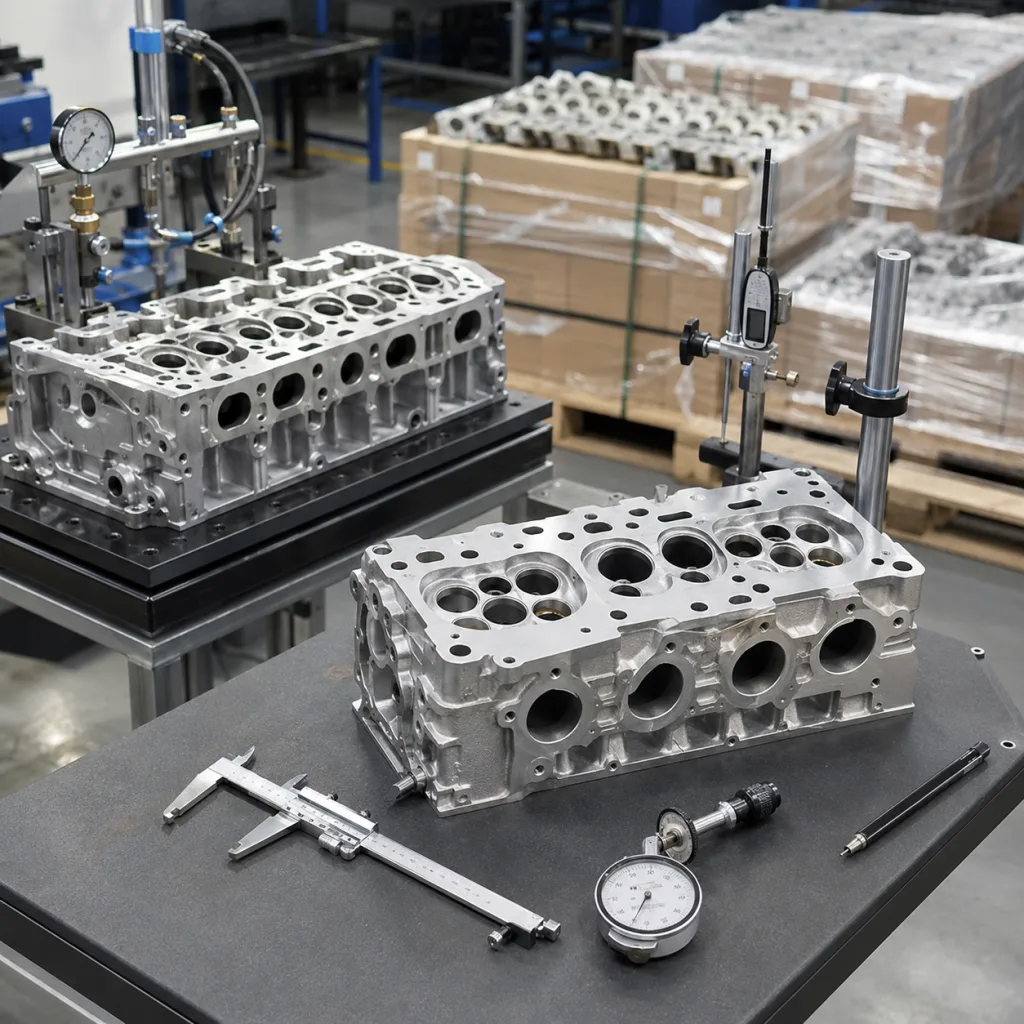
  • Water pump checks: impeller balance, shaft seal leakage, bearing durability, casting porosity, gasket compression, flange flatness, flow performance, and pressure retention.
  • Kit-level fitment: correct belt path, tension range, bolt fit, cover clearance, pulley alignment, water pump orientation, gasket seating, and installation sequence.

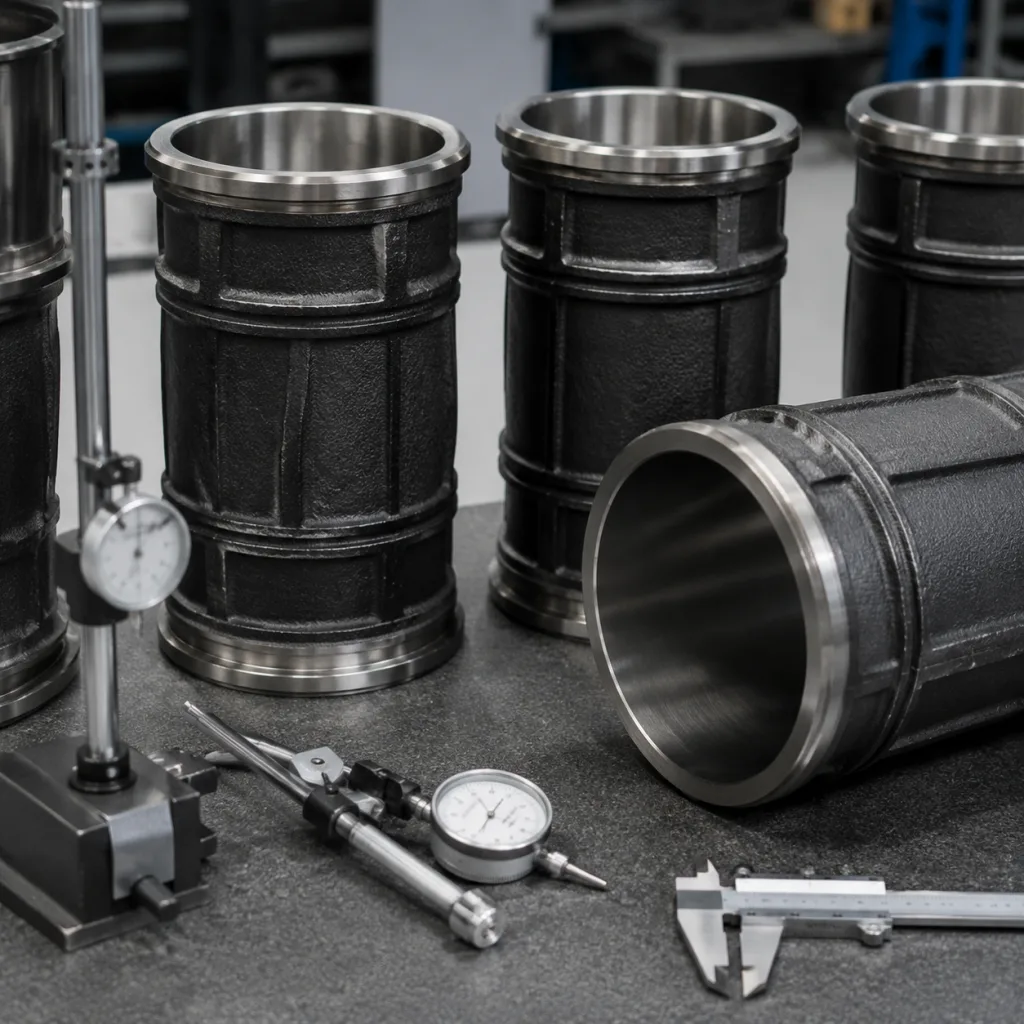
Ask for inspection reports with measured values. A useful report lists drawing nominal, upper and lower tolerance, measurement equipment, sample size, measured result, inspector, date, and batch number. Pass/fail summaries are too thin for a critical engine system.

For a new SKU, request at least 5–10 pre-production kits for dimensional and fitment review. For high-volume or chain-account programmes, use a larger pilot lot and pull samples from multiple cartons. That is where mixed components, label errors, carton damage, and assembly variation show up.

Validation should reflect real service conditions. Request heat-ageing data for rubber, bearing grease compatibility, salt-spray or coating evidence for exposed hardware, water pump pressure or vacuum leak-test records, and endurance or bench-test summaries for critical applications. If your business sells to repair chains, require installation instructions, torque notes, tensioner-setting diagrams, and single-use bolt warnings. If the supplier supports custom manufacturing, confirm whether validation plans can be aligned to your private-label, regional, or platform-specific requirements.

Failure Modes to Test Before the First Order

Compare Factory Types by Where the Risk Lives

A supplier that assembles purchased components is not automatically weak. A vertically integrated manufacturer is not automatically safe. The useful question is simpler: which party controls the process that can create the defect, and can that party respond when something goes wrong?

Use factory audits or remote audits to map the real manufacturing depth:

Evidence item What to verify Buyer action
Valid certificatesIATF 16949:2016 and ISO 9001:2015 scope, expiry date, issuing body, manufacturing addressMatch the certificate site to the actual factory and confirm it covers relevant processes
Control planCritical dimensions, inspection frequency, reaction plan, gauge ID, responsible stationCheck whether belt width, pulley runout, bearing play, torque, and leak tests are listed
Incoming inspectionRubber compound, cord material, bearings, castings, seals, grease, bolts, cartonsRequest AQL or sampling level, rejection rules, and the last three incoming inspection records
In-process inspectionMachining dimensions, bearing press force, tensioner assembly checks, pump leak testConfirm actual measured values, not only OK/NG stamps
TraceabilityBatch number, production date, operator or line record, component lot linkTest one finished kit label back to belt, bearing, pump, and packaging lots
Change controlApproval process for material, tooling, source, drawing, or process changesRequire written notification before any approved SKU is changed
CalibrationCaliper, micrometer, torque wrench, runout gauge, leak-test equipment recordsCheck calibration due dates and whether overdue gauges are locked out
Complaint handling8D reports, warranty analysis, corrective actions, containment timingAsk for a sample 8D with root cause, corrective action, and verification evidence

</tr></thead><tbody> </tbody></table>During the audit, do not stop at the showroom process. Check warehouse conditions, rust prevention, calibration records, gauge management, operator training, and segregation of nonconforming parts. Ask how the supplier handles a rejected bearing lot, a changed bolt coating, or a label error. The answer should include quarantine, root-cause review, disposition approval, and traceable rework or scrap records.

For multi-country distribution, packaging is also part of risk control. Review carton strength, pallet pattern, moisture protection, and label accuracy. Specify master-carton drop or compression expectations where the logistics route is rough, and require carton labels to show SKU, quantity, batch, production date, gross weight, net weight, country of origin, and barcode. These details affect claims, shelf condition, workshop confidence, and sell-through, not just factory appearance.

Run the Commercial Model, Not Just the Unit Price

A technically capable factory can still be the wrong supplier if its commercial model does not fit your programme. Timing belt kit ranges usually combine fast movers, medium-volume references, long-tail SKUs, and market-specific applications. If MOQ and lead time force you into slow inventory, the apparent price saving disappears.

Compare the terms that change the real cost of supply:

  • MOQ by SKU and by shipment, including mixed-container policy and whether long-tail SKUs can be combined into one production run
  • Sample lead time, usually 7–15 days for existing references and 20–45 days when new tooling, drawings, or packaging artwork are needed
  • Mass-production lead time, commonly 30–60 days after deposit and artwork approval, with a separate timeline for peak season or large mixed orders
  • Annual capacity for fast-moving kits, including monthly output and surge capacity for promotional or fleet demand
  • Price breaks by quantity, for example 100, 300, 500, and 1,000 kits per SKU, with separate pricing for water-pump and non-water-pump versions
  • Safety-stock options for agreed SKUs, including who owns the stock, reorder trigger, and maximum holding period
  • Private-label packaging MOQ, artwork approval process, print-plate cost, label revision control, and barcode file responsibility
  • Incoterms, payment terms, currency, validity period, export documentation, inspection cost, and freight booking responsibility
  • Warranty handling, claim evidence requirements, credit process, and whether replacement parts or credit notes are issued
  • Barcode, EAN/UPC, TecDoc-style data, carton labelling support, and product-image or fitment-data availability

Build a landed-cost model. Include tooling amortization, sample charges, packaging, inspection, inland freight, ocean or air freight, duty, warehouse handling, defect allowance, warranty reserve, and inventory carrying cost. A supplier with a 3–5% higher unit price may be cheaper if it offers lower MOQ, stable 45-day replenishment, accurate packaging, and fewer claims.

For aftermarket importers, review the supplier’s active range in our catalog and identify which references are already tooled. Existing tooling can shorten launch timing and reduce upfront cost, but it should not replace validation. For new references, confirm tooling cost, sample approval timing, refund or offset conditions after volume is reached, and whether PPAP-style documentation is available when required by your customer.

Run the Commercial Model, Not Just the Unit Price

A Practical Selection Sequence for Sourcing Teams

Use a controlled sequence so the cheapest quote does not become the default winner. The process below keeps technical risk, commercial fit, and operating discipline in the same decision file.

1. Create the SKU list. Include application notes, expected annual volume, monthly forecast, packaging type, target launch date, and cross-reference data. 2. Issue one RFQ template. Require every supplier to quote the same BOM, tolerance assumptions, MOQ, price breaks, sample cost, tooling cost, lead time, Incoterms, payment terms, and documentation scope. 3. Request technical files. Ask for drawings, component specifications, material data, control plans, process flow, sample inspection records, and packaging specifications. 4. Screen certifications. Confirm IATF 16949:2016, ISO 9001:2015, and any REACH (EC) No 1907/2006 material declarations relevant to your market. 5. Order samples. Inspect tooth count, belt width, pulley runout, bearing feel, fastener fit, water pump leakage where applicable, packaging accuracy, and kit completeness. 6. Run installation checks. Fit samples to representative engines or fixtures where possible and record tension range, clearance, alignment, bolt engagement, gasket seating, and installation sequence. 7. Audit production control. Review incoming inspection, machining control, bearing press records, assembly checks, leak testing, packaging, traceability, calibration, and change control. 8. Compare total landed cost. Include defect risk, warranty handling, packaging, freight, duty, MOQ, payment terms, tooling amortization, and inventory cost. 9. Approve gradually. Start with defined SKUs and a pilot order, monitor on-time delivery, carton accuracy, field claims, and response speed, then expand only after stable supply results. 10. Set operating rules. Agree reorder points, forecast frequency, artwork-change rules, batch-label format, claim evidence, and escalation contacts before regular shipments begin.

Keep the decision record complete. It should include the RFQ, quote comparison, sample inspection results, audit notes, approved drawings, packaging approval, lead-time commitment, MOQ agreement, and corrective-action history. That file helps justify supplier approval, supports internal category reviews, and gives both sides a clear reference if a batch issue appears later.

Frequently asked questions

Request certificates for IATF 16949:2016 and ISO 9001:2015, product drawings, control plans, sample inspection reports with measured values, material declarations, packaging specifications, RFQ price breaks, MOQ terms, lead-time commitments, and traceability examples. For private-label or OEM-style projects, ask whether PPAP-style documentation can be provided.

It depends on the engine application and market expectation. Many repair programmes prefer kits with water pumps when the pump is driven by the timing belt. Buyers should define the exact bill of materials before quoting so suppliers price the same kit configuration, including pump housing, impeller, gasket, bolts, and leak-test requirement.

Qualify the supplier through samples, dimensional reports, validation evidence, and factory audit records. Check belt construction, pulley runout, tensioner performance, water pump leak testing, packaging accuracy, batch traceability, and change-control discipline before approving regular shipments.

If you are building or reviewing a timing belt kit programme, Driventus can share range data, sample options, MOQ guidance, lead-time assumptions, and process documentation for evaluation. To discuss SKUs, price breaks, MOQ, and lead time, [request a quote](/contact.html).

Request a Quote
Process area Strong supplier evidence Risk if uncontrolled
Belt sourcing or productionCompound specification, tooth profile control, cord supplier record, curing parameters, ageing test recordsTooth wear, elongation, noise, early failure
Pulley machiningCNC records, bore checks, runout inspection, surface roughness results, bearing press controlBelt tracking issues and bearing damage
Tensioner assemblySpring force or hydraulic damping checks, torque verification, index-mark positionIncorrect belt tension, noise, and premature wear
Water pump production100% leak test, bearing press force, impeller inspection, gasket control, casting inspectionCoolant leakage or overheating
Final kittingBarcode scan, component count, weight check, label verification, packaging inspectionMissing parts and incorrect applications
Warehouse controlFIFO, rust prevention, humidity control, quarantine area, pallet IDMixed lots, corrosion, and poor containment