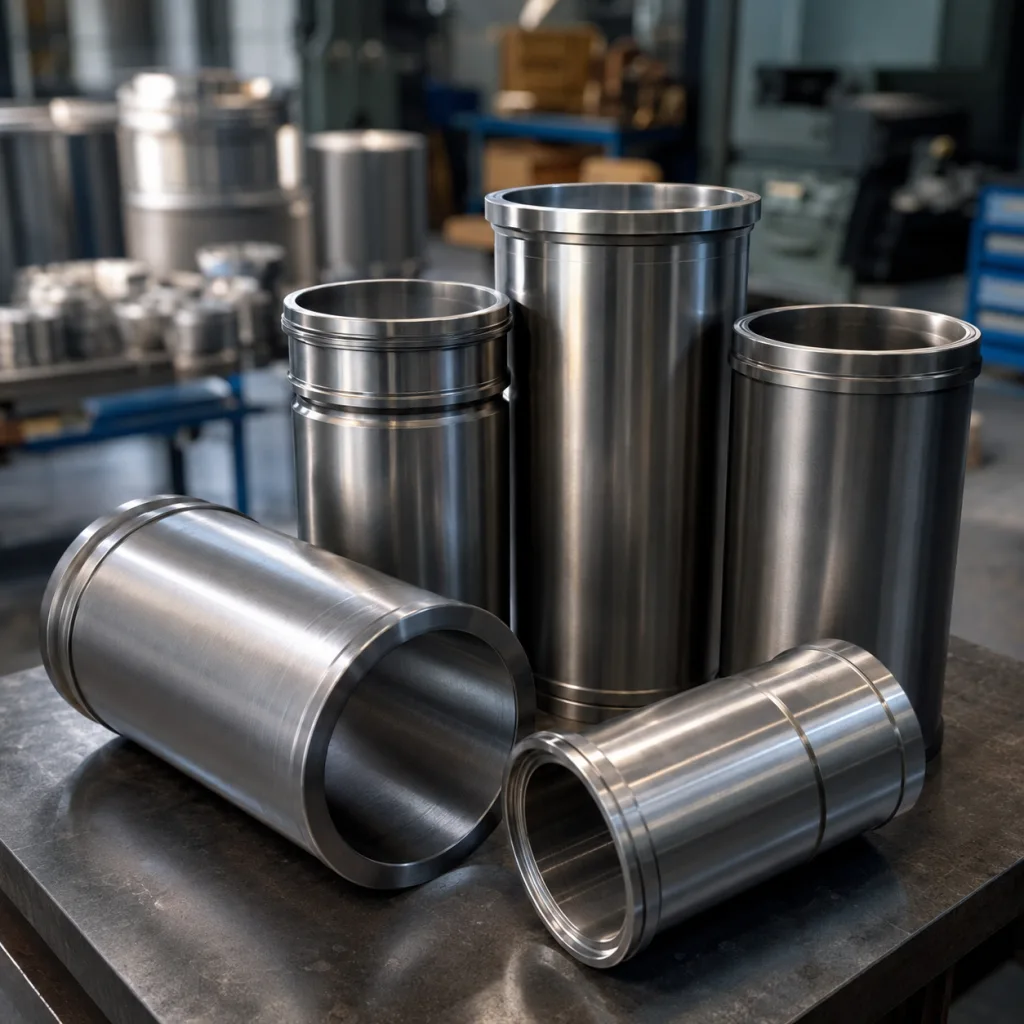
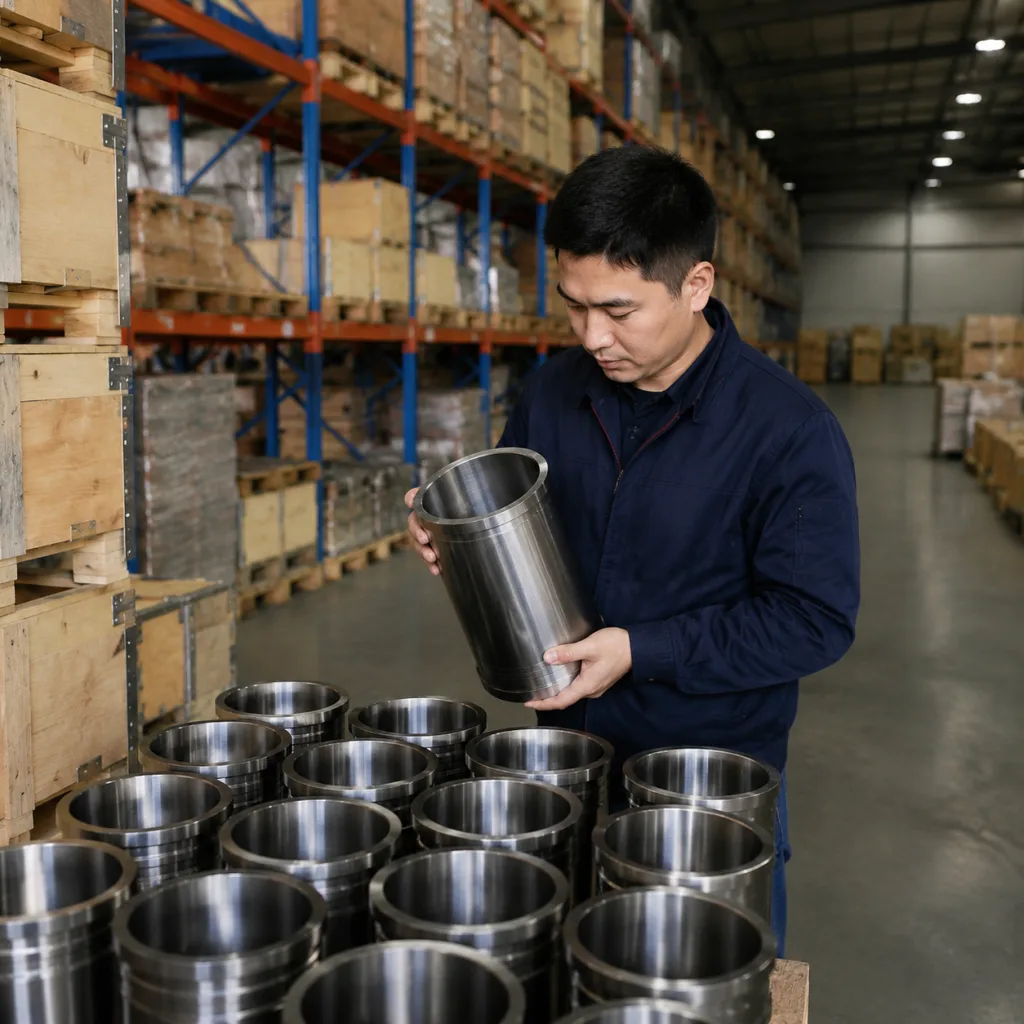
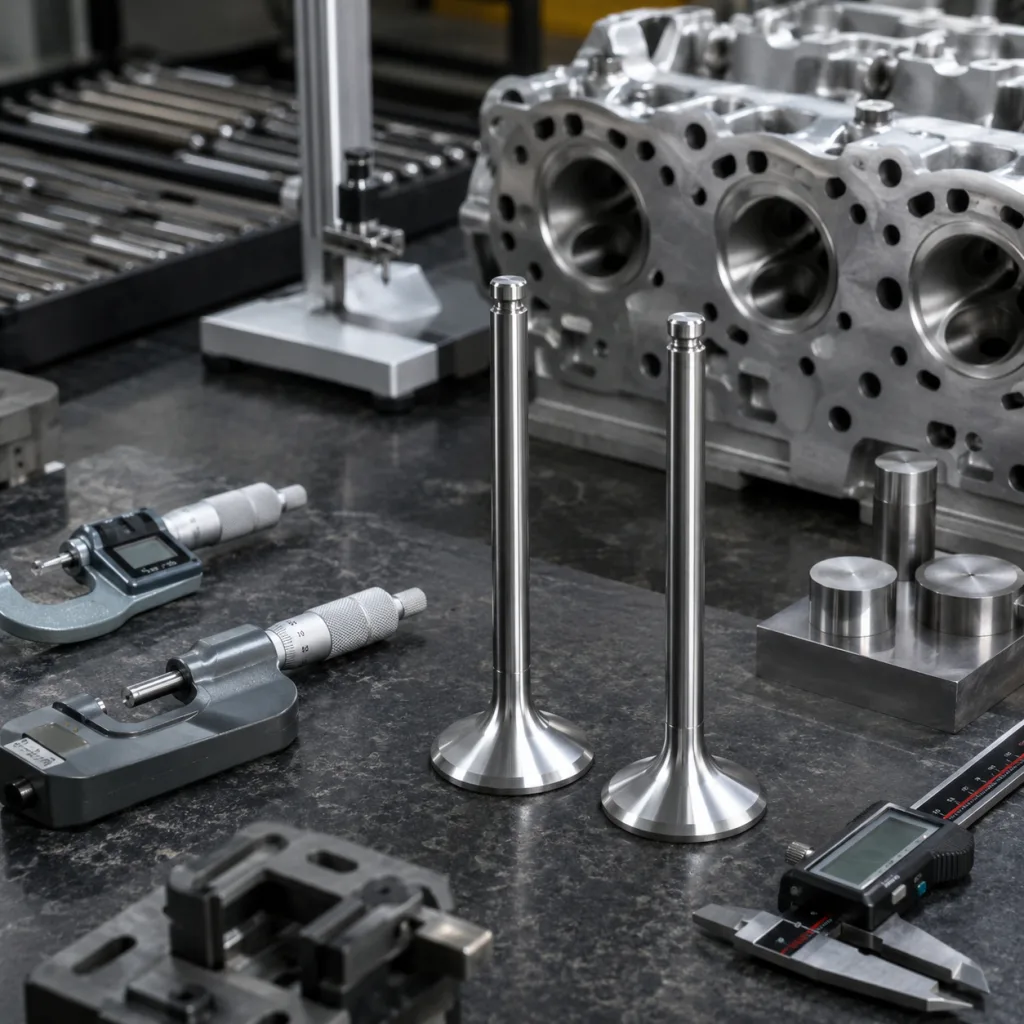
Cylinder liner Genesis wholesale buying fails when it is treated as a simple fitment-and-price exercise. A bore may match. A carton may look acceptable. The shipment can still create warranty exposure if metallurgy drifts, flange height is uncontrolled, honing is inconsistent, or the liner arrives with corrosion after sea freight. For Hyundai Genesis engine applications, the buyer’s job is to convert “can you supply this part?” into a controlled sourcing programme: defined dimensions, agreed material, measurable surface finish, traceable batches, realistic MOQ, and packaging that survives export handling. Driventus Auto Parts manufactures engine and powertrain components in Taizhou, Zhejiang, and exports to more than 60 countries. We supply B2B customers including wholesalers, OEM/Tier-1 buyers, and multi-location repair chains. Driventus is an independent aftermarket manufacturer; vehicle and brand names are referenced for fitment identification only.
Start With the Buying Decision, Not the Part Number
A Genesis cylinder liner programme may involve wet liners, dry liners, or semi-finished sleeves. The right choice depends on engine architecture, local repair practice, and how the buyer sells the item: single replacement part, engine set, rebuilder stock, or private-label range. Do not begin with the cheapest quote. Begin with the commercial and technical role of the liner.
The first decision is whether the buyer needs a finished-to-size liner, an oversize repair sleeve, or semi-finished stock for local machining. Finished liners should be priced as ready-to-install parts with final bore, OD, flange, and honing requirements already controlled. Semi-finished sleeves are different. They need machining allowance, such as +0.30–0.60 mm on the bore or OD where applicable, and should not be compared directly with finished honed liners.
A useful first RFQ includes:
Application range and engine code, where available, plus model year range and fuel type if it affects fitment
Required material, commonly centrifugally cast grey iron or alloy cast iron, with target hardness such as HB 180–240 or buyer-specified range
Surface finish requirement, including honing pattern, cross-hatch angle, and oil-retention target such as Ra 0.20–0.60 µm after plateau honing
Quantity by SKU, annual forecast, first shipment volume, and whether mixed SKUs can share one purchase order
Packaging format for single pieces, engine sets, distributor cartons, or bulk workshop packs
Target market requirements for the EU, UK, US, Canada, Australia, Brazil, or other destinations, including REACH, origin marking, or importer label rules
This structure prevents the classic quotation trap: one supplier prices a finished liner while another prices a sleeve that still needs local boring and honing. Our team can review fitment data against our catalog and engine component coverage at /products/engine-components.html. If the liner is not in regular production, custom manufacturing can be assessed from samples, drawings, or controlled reverse engineering.
MOQ and Lead Time: Where Quotations Usually Mislead
Cylinder liner Genesis wholesale planning should be built around casting families, not only individual part numbers. Two SKUs may share the same raw sleeve but need different final bore, flange finish, or packing. In that case, combined MOQ may be possible. Two visually similar liners may also require different castings, tooling, or machining routes. Then the MOQ and lead time change.
Sourcing item
Typical wholesale expectation
Procurement note
Initial sample quantity
5–20 pieces per SKU
Suitable for dimensional inspection, hardness check, and trial installation
Production MOQ
100–300 pieces per SKU for common finished liners
Lower MOQ may be possible when SKUs share raw casting families or are ordered with other engine parts
Mixed-SKU order logic
300–800 pieces total shipment
Useful for distributors testing 3–8 Genesis-related SKUs in one container or LCL shipment
Sample lead time
About 25–45 days
Add 10–20 days if new tooling, new casting, or metallurgy validation is required
Batch production lead time
About 45–75 days after deposit and sample approval
Depends on casting schedule, machining capacity, inspection, packaging, and carton artwork release
Price drivers
Casting weight, machining time, tolerance class, finish, MOQ, packaging
A tighter bore/OD tolerance or private-label set pack usually costs more than bulk semi-finished supply
Export markets
60+ countries
Documentation can be prepared for importer clearance needs
Packaging
Neutral, private label, or bulk
Must be confirmed before carton artwork, barcode, master carton, and pallet planning
</tr></thead><tbody> </tbody></table>A factory review should not stop at monthly capacity. Ask how the approved process is locked after sampling: raw casting code, machining drawing revision, inspection plan, hardness window, rust-prevention method, and final packing specification. The audit should also cover casting control, CNC and honing equipment, gauge calibration, nonconforming product handling, warehouse segregation, and export packing.
For repeat orders, the question is simple: will shipment three match the approved sample, or will it only match the supplier’s memory of the sample? Procurement teams can request information on the quality system, including IATF 16949:2016 and ISO 9001:2015 certification status.
Spec Deep-Dive: The Controls That Affect Engine Life
A cylinder liner is not a passive tube. It carries combustion pressure, piston-ring friction, thermal cycling, and block or coolant-interface stress. Small deviations can increase oil consumption, delay ring seating, reduce heat transfer, or create blow-by. A wholesale purchase order should therefore define functional dimensions and inspection criteria, not just vehicle fitment.
The buyer should lock these controls before the PO is released:
Material: Grey cast iron or alloy cast iron selected for wear resistance, machinability, thermal stability, and compatibility with the intended piston-ring set; typical targets may include pearlitic matrix control and hardness around HB 180–240, subject to application.
Casting method: Centrifugal casting is commonly used to support dense liner structure and consistent wall properties; buyers can request confirmation of casting batch and heat number where traceability is required.
Hardness: The accepted range should be agreed by application; a practical control window is often 30–50 HB wide, measured at agreed locations, rather than an undocumented “standard hardness.”
Bore finish: Plateau honing parameters should support initial ring seating, oil retention, and stable running-in; typical buyer-controlled values may include Ra 0.20–0.60 µm, Rz 1.5–4.0 µm, and cross-hatch angle 35°–55° if the liner is supplied finished.
Dimensional tolerance: Bore, outer diameter, flange height, chamfer, wall thickness, and overall length must be controlled against the drawing or approved sample; finished liner bore and OD tolerances are commonly held much tighter than semi-finished sleeves, so the PO must state the class required.
Roundness and cylindricity: Measurements should be recorded after machining and before packing, not assumed from equipment capability alone; buyers can define critical limits such as 0.01–0.03 mm where the engine design requires close control.
Flange and seating control: Flange thickness, flange OD, runout, counterbore seating face, and perpendicularity affect installed height and head-gasket sealing; these should be listed as critical-to-function dimensions.
Cleanliness and protection: Liners must be protected from abrasive honing residue, corrosion, and impact damage during storage and shipment; clean bore, oiled surface, VCI bag or anti-rust paper, and capped or sleeved edges can be specified.
If the buyer has no engineering drawing, the approved sample report should become the controlled reference for future lots. Management standards such as IATF 16949:2016 and ISO 9001:2015 help structure process control, corrective action, and traceability. Market compliance may also require material declarations under REACH (EC) No 1907/2006. None of these replaces part-level validation.
Failure Modes to Catch Before the Pallet Ships
Inspection is not paperwork for the file. It is the last chance to catch the problems that become warranty claims, warehouse holds, or distributor disputes. A credible cylinder liner Genesis wholesale programme should define inspection points from incoming casting through final packing.
A practical inspection flow is: incoming casting check, rough machining verification, heat or stress-relief confirmation where used, finish machining check, honing inspection, final dimensional audit, visual inspection, rust-prevention check, and packing release.
Recommended Inspection Records
For each approved production batch, a useful documentation pack may include:
Material certificate or casting batch record, including material grade, casting lot, and chemical composition where available
Hardness test report with test method, location, sample size, and accepted range
Dimensional inspection report with sampling quantity stated, typically first-piece approval plus AQL or agreed sampling for production lots
Surface roughness or honing inspection record, where applicable, including Ra/Rz target and measurement position
Roundness, cylindricity, flange height, and OD inspection for critical SKUs or drawing-controlled projects
Visual inspection standard for cracks, pores, corrosion, burrs, edge damage, dents, and contaminated bores
Packing list with batch or lot traceability, carton count, pallet count, gross weight, and SKU breakdown
Wet and dry liner risks differ. Wet liners may need tighter attention on sealing-area finish, O-ring groove dimensions, and leakage or pressure-hold criteria when relevant to the design. Dry liners usually put more pressure on interference fit, OD consistency, chamfer quality, and installed-height control. Where the buyer supplies drawings, inspection should follow the drawing revision named on the purchase order. Where development is based on samples, the approved sample, measured data, and inspection report should become the reference file for repeat lots.
Driventus does not claim approval or endorsement by any vehicle manufacturer. OE and brand references are used only to identify application fitment and customer demand.
Distributor Controls: Labels, Lots, and Reorder Discipline
Wholesale cylinder liner supply can fail for reasons that have nothing to do with casting quality. Mixed applications. Obsolete demand. Inconsistent carton labels. Missing batch numbers. Unclear cross-references. Weak reorder data. These issues are commercial, but they still damage the programme.
Set the controls before the first shipment:
Confirm SKU naming, engine application, model year range, engine code, and fitment notes before order release.
Agree whether liners are sold individually, in matched engine sets, or in rebuilder bulk packs, and define quantity per inner carton and master carton.
Define private-label carton artwork, barcode format such as EAN-13 or Code 128, country-of-origin marking, and any importer address required by the destination market.
Require batch number visibility on cartons, inner labels, or packing documents so warranty claims can be traced to production lot and shipment.
Set acceptable pallet weight, moisture protection, anti-rust method, carton burst strength, edge protection, and maximum stacking height.
Confirm Incoterms, export documentation, destination compliance declarations, HS code review, and whether the price is EXW, FOB Ningbo/Shanghai, CIF, or DAP.
Review the annual forecast quarterly to identify slow-moving and high-demand SKUs, then adjust MOQ, safety stock, and reorder point accordingly.
Price should be read as a control signal, not just a number. A low unit price may depend on high MOQ, shared casting batches, bulk packing, and wider non-critical tolerances. A higher unit price may reflect finished honing, tighter OD or flange tolerances, private-label packaging, lower MOQ, batch inspection reports, or reserved production capacity.
Cross-references need discipline. If an OE part-number cross-reference is supplied, it should appear in the form OE 06A… or OE 11251… only when confirmed by the buyer’s data. Driventus will not invent or imply brand-owned numbers in quotations, labels, catalogs, or commercial documents.
Custom Manufacturing: Use It When Standard Supply Is the Wrong Fit
Custom manufacturing is the right path when a Genesis liner is not available from standard stock, when a distributor needs a local rebuilder specification, or when an OEM/Tier-1 buyer requires a drawing-controlled component. It is also appropriate for non-standard bore sizes, oversize repair sleeves, special flange geometry, controlled interference fit, wet-liner sealing details, or private casting material.
A staged process keeps the project measurable:
1. Buyer submits a drawing, sample, or target specification, including material, critical dimensions, tolerance class, finish, and annual forecast. 2. Driventus reviews material, machining route, tooling needs, inspection method, MOQ, and whether the part can share an existing raw casting family. 3. Quotation defines unit price, tooling cost if any, sample cost, sample lead time, production lead time, payment term, Incoterm, and validity period. 4. Samples are manufactured, measured, and inspected against the agreed reference, with a dimensional report and material or hardness record. 5. Buyer validates installation, bore finish, piston-ring compatibility, sealing areas, and performance requirements under local rebuild or field conditions. 6. Approved sample, drawing revision, inspection report, packaging specification, and label file become the production reference.
For repeat programmes, PPAP-style documentation can be added where required, but the submission level must be agreed in advance. Typical timing is 3–7 working days for feasibility review after complete data is received, 25–45 days for samples when no new casting tool is required, and 45–75 days for batch production after approval and deposit. Standards such as IATF 16949:2016 and ISO 9001:2015 support disciplined production control; the customer drawing or approved technical file defines the part-specific acceptance criteria.
For pricing, drawings, sample review, or distributor range planning, buyers can request a quote.
Frequently asked questions
Send application details, engine code if available, bore and outer diameter, liner length, flange dimensions, wall thickness, required material, tolerance or finish requirements, quantity by SKU, packaging preference, target market, and annual forecast. Drawings or samples help confirm feasibility, MOQ, and quotation accuracy.
Yes. Private-label, neutral, and bulk packaging can be discussed for wholesale orders. Buyers should confirm artwork, barcode format, inner and master carton quantities, carton strength, anti-rust protection, pallet limits, batch-number location, and country-of-origin marking before production packing is released.
No. Driventus is an independent aftermarket manufacturer; brand names are referenced for fitment only. We do not claim approval, endorsement, or authorisation by any vehicle manufacturer.
If you are building a Genesis engine parts range or comparing cylinder liner suppliers, send your application list, bore/OD targets, quantities, annual forecast, target markets, and packaging requirements. Our team can review MOQ, lead time, specification feasibility, and practical sourcing options at /contact.html