Choosing a head bolt set supplier is not a routine price exercise. These fasteners control cylinder head sealing under high clamp load, heat cycling, vibration, lubricant exposure, and coolant risk. A weak supplier can turn a small saving into head gasket leaks, uneven bolt yield, installer rework, catalogue disputes, and warranty claims.
The safest approach is to compare suppliers by evidence: application accuracy, material traceability, heat treatment control, thread geometry, coating consistency, torque-to-yield validation, packing discipline, documentation, MOQ, lead time, and corrective-action speed. This guide shows how to choose a head bolt set supplier with RFQ criteria that importers, wholesalers, repair chains, and OEM service programmes can actually audit. Driventus is an independent aftermarket manufacturer; brand names are referenced for fitment only.
Decision Point 1: Can the Supplier Prove the Kit Fits the Engine?
Start with fitment, not price. A head bolt set is not a bag of similar-looking fasteners. Bolt length, shank diameter, thread pitch, washer face, under-head radius, coating, tightening method, and lubrication condition all have to match the cylinder head design.
Ask for an application file by engine code, displacement, fuel type, model-year range, OE reference, and kit content. Require Excel/CSV format with a version number, release date, and change notes. If your catalogue uses OE cross-references, check that the supplier controls those references in a revised data file. Use generic formats only where appropriate, such as OE 06A… or OE 11251…, and never present a cross-reference as vehicle manufacturer approval.
For first screening, give the supplier your top 20–50 SKUs and request a line-by-line fitment matrix. Each line should show bolt quantity, length tolerance, thread pitch, head type, washer requirement, tightening method, and packaging code. For mixed kits, require a packing photo and measured sample layout so your catalogue team can compare the set with local installer expectations.
Key checks:
Confirm complete set contents: long bolts, short bolts, washers where applicable, installation sequence sheet, and lubricant note if required.
Identify whether bolts are torque-to-yield, reusable, or single-use for the target application.
Review catalogue change control for supersessions, engine variants, and regional fitment differences.
Set a content accuracy target, such as 100% count accuracy by kit and zero mixed references per lot after final packing inspection.
Compare linked categories in our catalog, including engine sealing and fastening-related lines, when planning range expansion.
This step prevents two expensive mistakes: similar bolts being supplied for incompatible engines, and correct bolts being packed into kits that do not match your catalogue or installer expectation.
Failure Modes to Expose During a Factory Audit
Do not audit only sales capacity. A trading company may help with spot buying, but a long-term head bolt set programme needs traceability from wire rod or bar stock through forming, thread rolling, heat treatment, surface treatment, inspection, and packing. Ask which processes the supplier owns, which it directly controls, and which are subcontracted.
For every outsourced process, request the subcontractor approval procedure, incoming inspection plan, and lot-segregation method. Head bolts fail quietly until they do not. Mixed material, uncontrolled heat treatment, damaged rolled threads, coating drift, or packing errors can all reach the installer if the factory has weak containment.
A credible manufacturer should describe its process flow in measurable terms: cold heading or machining, thread rolling, quench-and-temper heat treatment, straightness control, surface coating, optical or gauge inspection, and final kit assembly. Then test the explanation with practical questions. How is the steel heat number linked to the finished kit label? What furnace load size is used? How often is hardness checked per heat-treatment batch? Are thread gauges calibrated at least annually or according to the gauge maker’s interval? Is thread rolling performed before or after heat treatment? How are reworked or re-coated bolts identified and approved?
Length, shank diameter, head height, under-head radius, straightness
Incorrect fit or bolt head cracking risk
Missing or mixed kit contents
Barcode, count verification, lot label, final weight check
Returns, branch disputes, and technician delays
</tr></thead><tbody> </tbody></table>For supplier approval, request the latest IATF 16949:2016 and ISO 9001:2015 certificates. Check scope, expiry date, issuing body, and manufacturing address. Certification does not replace part validation, but it shows whether the factory operates a structured quality system with document control, corrective action, internal audits, and management review. If the certificate covers only “trading” or lists a different address from the quoted factory, treat it as commercial evidence, not manufacturing proof.
RFQ Spec Deep-Dive: What Must Be Written Down
A vague RFQ creates vague quotations. Do not send only a part number and annual volume. Provide the application scope, drawing or legally available reverse-engineered dimensions, sample requirement, packaging standard, target market, labelling rules, and documentation requirements.
For head bolt sets, put measurable limits in the RFQ:
Material grade or required mechanical property class, if specified by drawing; common automotive bolt classes include 10.9 or 12.9 where the application requires them.
Tensile strength, proof load, elongation, reduction of area, core hardness, surface hardness, and metallographic requirements.
Thread pitch, thread tolerance class such as 6g where applicable, shank diameter, head geometry, total length, under-head radius, and straightness.
Dimensional tolerances for buyer review, for example total length ±0.3 mm, shank diameter ±0.05 mm, head height ±0.15 mm, and coating thickness 8–15 µm when compatible with the design.
Coating type, appearance, corrosion-resistance target, and coefficient-of-friction range where required; many controlled tightening programmes use a friction window such as 0.10–0.16, but the final limit must match the application.
Torque-angle installation data and lubrication condition used during validation, including whether bolts are tested dry, oiled, phosphated, zinc-flake coated, or supplied with pre-applied lubricant.
Kit bill of materials, washer requirements, installation notes, bag layout, carton quantity, barcode type, and pallet height limit.
Lot traceability format, retained-sample period, inspection-report frequency, and language required for labels and installation notes.
Compliance requirements for the sales region, including REACH (EC) No 1907/2006 where applicable.
Be strict, but not decorative. A tolerance only belongs in the RFQ if it comes from a drawing, reverse-engineered sample, engine requirement, or installation trial. Thread tolerance affects engagement and torque scatter. Under-head radius affects stress concentration. Coating thickness affects corrosion protection and thread fit. Friction range affects clamp load at a given torque-angle instruction.
Cite standards by name where relevant, then tie them back to the part. ISO 9001:2015 supports process control. IATF 16949:2016 adds automotive-specific quality planning, risk analysis, production part approval discipline, and corrective-action structure. Chemical compliance for coatings, oils, bags, labels, and cartons may require REACH (EC) No 1907/2006 declarations for EU importers.
If your range needs non-standard lengths, special head marks, dedicated packaging, or a proprietary kit configuration, discuss custom manufacturing before quoting is final. Tooling, PPAP-style samples, costed validation, and timing should be part of the sourcing plan, not late surprises.
Step-by-Step Sample Approval for Head Bolt Sets
Validation must prove that the bolts create stable clamp load without thread damage, excessive friction scatter, head defects, or premature yielding. Ask for test reports from current production lots, not old development samples. Each report should identify part number, lot number, material batch, test method, equipment, date, operator or lab, and acceptance criteria.
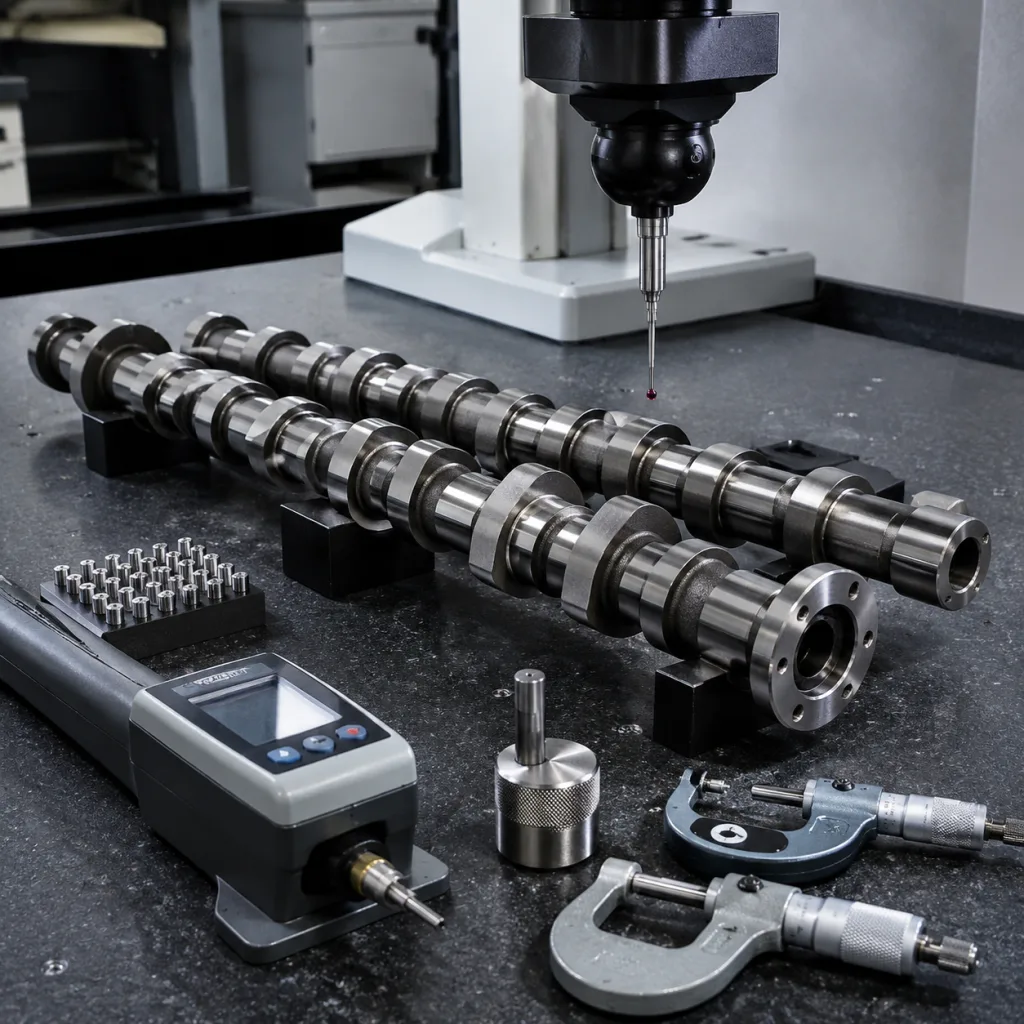
Typical evidence includes dimensional inspection, thread gauge results, hardness testing, tensile testing, wedge tensile or head soundness checks where applicable, coating thickness measurement, salt spray testing when specified, and torque-tension or torque-angle evaluation. For warranty-sensitive engine fasteners, the supplier should retain batch records and isolate affected lots quickly if a complaint appears.
Use sampling rules that match risk. For a new supplier or new SKU, inspect at least 3 complete kits from the pilot lot for content, marking, coating, thread gauge, and key dimensions. For destructive tests, agree the quantity per heat-treatment batch or lot before ordering. Many buyers require tensile and hardness checks from each production lot plus retained samples for 12–24 months. For repeat supply, define AQL or zero-defect characteristics. Missing bolts, wrong threads, wrong lengths, and mixed kits should normally be critical defects, not cosmetic issues.
Testing is only useful if it reflects installation reality. Confirm whether validation was performed dry, oiled, or with a specified coating lubricant. Friction differences can change clamp load even when the same tightening angle is used. A usable torque-angle report should show tightening sequence, test fixture or cylinder head assembly, lubricant state, torque steps, angle steps, achieved clamp load where measured, bolt elongation where measured, and any thread pull-out or head-seat damage.
A practical approval sequence:
1. Confirm drawing, application list, and kit bill of materials. 2. Receive initial samples from the intended production route, not hand-made prototypes. 3. Inspect dimensions, thread gauges, coating, marking, and packaging. 4. Run torque-angle or installation trials on representative cylinder head assemblies. 5. Review inspection data against agreed acceptance criteria and record deviations. 6. Freeze the material source, heat treatment, thread-rolling method, coating system, and packaging layout. 7. Approve a signed control plan before bulk production.
Do not approve samples if the supplier cannot confirm that mass production will use the same material source, heat-treatment process, tooling, thread-rolling method, and coating system. If any of these change later, require notification, revalidation, and written approval before shipment.
Price Comparison Scenario: Cheap Quote vs Controlled Supply
The cheapest line item can become the most expensive supplier. Unit price should be compared with total landed cost, operational workload, and warranty exposure. Weak lot control creates hidden costs through mixed kits, delayed corrective actions, inconsistent catalogue data, and extra incoming inspection.
Ask for a quotation structure that separates product price, tooling cost if any, packaging cost, sample cost, testing cost, and freight terms. Then compare suppliers under the same assumptions.
Commercial factors to confirm:
MOQ by part number, by shipment, by carton, and by packaging format; typical B2B aftermarket MOQs may range from 100–500 sets per SKU for standard references and 500–2,000 sets for new or private-label items, depending on tooling and coating batch size.
Price breaks by volume, such as 100, 300, 500, 1,000, and 3,000 sets, with a clear statement of what changes at each level.
Standard lead time for first orders, repeat orders, and urgent replenishment; a practical benchmark is 45–75 days for first production with packaging approval and 25–45 days for repeat orders after forecast confirmation.
Capacity for seasonal demand, promotion builds, and new-range launches, including monthly output by product family.
Incoterms, carton dimensions, palletisation, gross weight, and container loading efficiency.
Payment terms, sample-charge policy, tooling ownership, and tooling-maintenance responsibility.
After-sales response time for 8D reports, containment action, and corrective-action requests; require immediate containment within 24–48 hours and a full corrective-action plan within 5–10 working days for serious complaints.
Availability of English technical labels, installation notes, barcode files, and batch traceability labels.
Build a landed-cost model before awarding business. Include ex-works or FOB unit price, inland freight, export charges, sea or air freight, duty, insurance, bank charges, incoming inspection, repacking, and expected claim cost. A low unit price can disappear if the supplier requires high MOQ, ships slow-moving SKUs in full cartons only, or forces six months of inventory into your warehouse.
The right commercial balance depends on the channel. For distributors, mixed-SKU shipment flexibility may beat a low MOQ on one fast-moving reference. For repair chains, packaging consistency and barcode accuracy can reduce branch-level errors and technician delays. For OEM or Tier-1 service programmes, change control, validation records, deviation approval, and stable process capability usually matter more than short-term price reductions.
A strong offer combines reliable part matching, controlled production, clear documentation, predictable lead time, MOQ flexibility, and fast problem resolution. Price is one input. It is not the whole decision.
Final Q-and-A Scorecard Before Supplier Nomination
A scorecard turns a sourcing debate into a controlled decision. Weight the criteria according to your channel and risk profile. A wholesaler may prioritise range coverage and mixed-order flexibility. A repair chain may prioritise failure-rate history, packaging accuracy, and rapid claim response. An OEM service buyer may require stronger validation evidence, change-control discipline, and traceability.
Does manufacturing control cover critical processes?
20%
Process flow, control plan, audit report
Does testing reflect real installation conditions?
20%
Tensile, hardness, coating, torque-angle reports
Is the quality system relevant to the factory?
15%
IATF 16949:2016, ISO 9001:2015 certificates
Do commercial terms support your channel?
15%
MOQ, lead time, pricing, Incoterms
Can support teams trace and resolve problems?
15%
Traceability labels, inspection reports, 8D process
</tr></thead><tbody> </tbody></table>Score evidence, not promises. Set a minimum pass score before nomination, such as 80/100 overall with no critical gap in material traceability, heat treatment, thread control, or kit packing. Record open actions after audits or sample reviews, assign owners, and do not award production business until critical risks are closed or formally accepted.
A practical award path is staged: RFQ screening, document review, sample approval, pilot order, first shipment inspection, and repeat-order performance review. Track on-time delivery, claim rate, response time, catalogue accuracy, and price stability for the first 3–6 shipments. If the supplier misses a critical metric, pause new-SKU expansion until corrective action is verified.
Driventus manufactures engine and powertrain components in Taizhou, Zhejiang, and exports to more than 60 countries. For head bolt set sourcing, we support application review, sample inspection, production traceability, and export documentation for B2B buyers. Buyers can compare related engine components at our catalog and send drawings, target references, or sample requirements through request a quote. Driventus is an independent aftermarket manufacturer; brand names are referenced for fitment only.
Frequently asked questions
Request IATF 16949:2016 and ISO 9001:2015 certificates, material certificates, dimensional reports, hardness and tensile test results, coating records, torque-angle or torque-tension validation data, packing specifications, lot traceability labels, and sample control plans. For EU supply, ask for REACH (EC) No 1907/2006 declarations where relevant.
For a new supplier, test samples from the intended production process, not hand-made prototypes. As a practical starting point, inspect at least 3 complete kits from a pilot lot for content, dimensions, threads, coating, marking, packaging, and installation checks, then agree destructive test quantities by lot or heat-treatment batch according to application risk.
Yes, if the factory has controlled manufacturing, documented validation, stable catalogue data, traceability, and flexible packaging. OEM service demand usually requires stricter change control, PPAP-style documentation, and tighter lot records, while aftermarket distribution often needs broader coverage, mixed-SKU orders, MOQ flexibility, and consistent availability.
If you are evaluating head bolt set suppliers, Driventus can review your target applications, technical specifications, documentation needs, MOQ, price-break, and lead-time requirements. Send your sourcing brief through /contact.html