A clutch kit Jeep supplier should reduce sourcing risk, not simply confirm that a part number exists. For importers, wholesalers, repair-chain buyers, and marketplace operators, the real questions are sharper: will the kit fit the intended engine and gearbox combination, release cleanly, survive export handling, pass documentation checks, and remain repeatable across reorders? Jeep-fitment aftermarket programs can cover 3.6L, 3.8L, 4.0L, 4.2L, and 2.5L petrol engines, AX, NV, NSG, and other manual gearbox families, plus model-year breaks and regional variants. A wrong disc diameter, spline count, cover height, bearing travel, or accessory pack can turn a profitable SKU into a return-heavy listing. This guide reframes supplier selection around decisions, failure modes, specification control, audit evidence, launch planning, private-label development, and quotation comparison. Driventus manufactures clutch kits and related powertrain components in Taizhou, Zhejiang, under IATF 16949:2016 and ISO 9001:2015 quality management systems. Driventus is an independent aftermarket manufacturer; brand names are referenced for fitment identification only.
Start With the Sourcing Decision, Not the Part Number
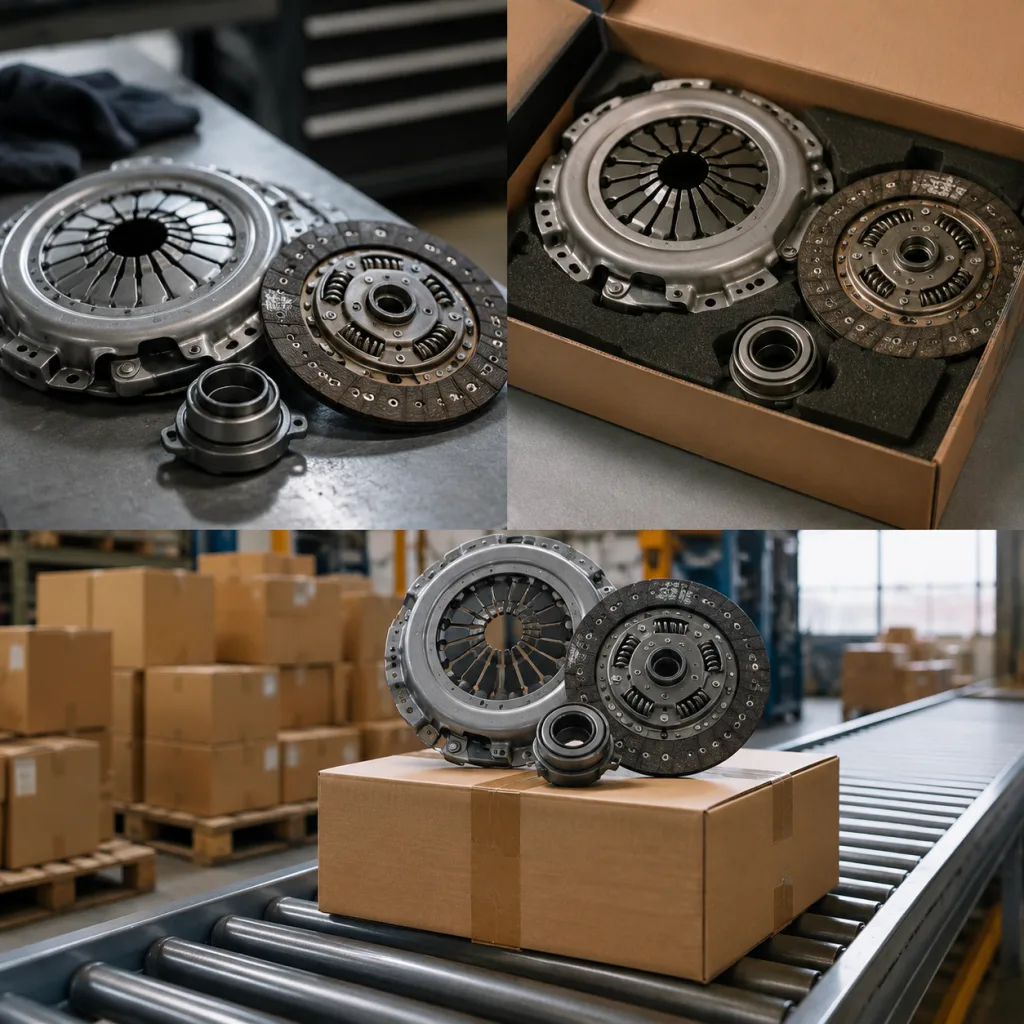
The first decision is whether the supplier can control the kit as a system. A Jeep-fitment clutch kit is not just a disc, cover, and bearing packed into one carton. The disc diameter, spline form, damper design, pressure plate height, diaphragm spring load, release bearing face, pilot bearing, bolts, grease, and alignment tool all have to match the target application and the installer’s expectation.
Ask for the supplier’s bill-of-materials structure before relying on a cross-reference list. The application file should identify engine code, gearbox type, production year range, market region, OE part-number cross-reference format where available, and kit level, such as a 3-piece disc-cover-bearing kit or a 4/5-piece kit with pilot bearing, bolts, or hydraulic unit. Loose application claims are not enough for Jeep-fitment programs because small model-year or gearbox differences can change the release system.
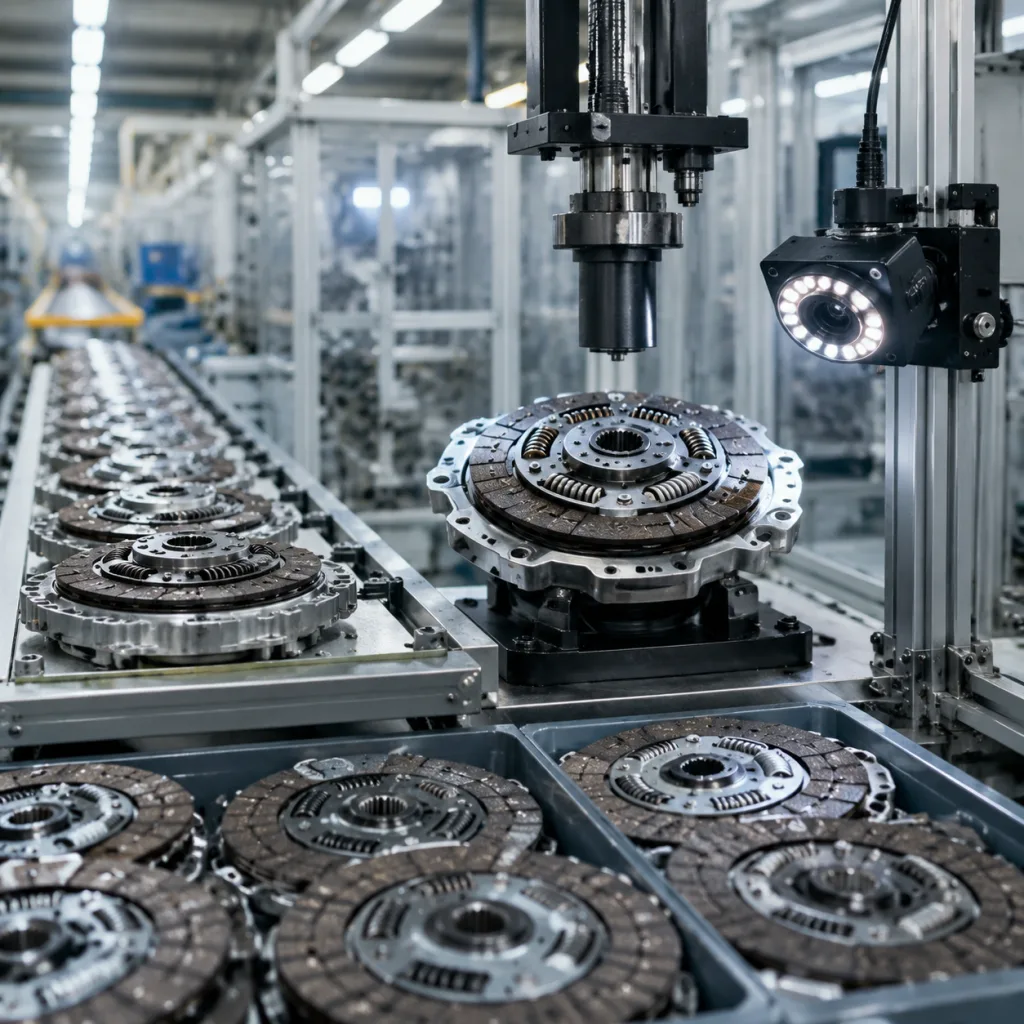
Next, check how much of the kit is controlled in-house. A factory that manages diaphragm springs, cover stampings, friction facings, hubs, machining, and final assembly can usually trace pedal effort, slippage, drag, noise, and wear complaints faster than a packer that only consolidates components. If bearings, friction lining, rivets, grease, spring steel, or cartons come from outside suppliers, incoming inspection and lot traceability still matter.
Use these expectations as a nomination filter:
Fitment data mapped by platform, engine displacement, gearbox, model year, region, and left-hand/right-hand drive relevance where release hardware differs
Inspection records for cover height, clamp load, disc runout, spline form, balance, bearing dimensions, and kit weight by SKU
Batch traceability from friction material, spring steel, rivet lots, and bearing lots to the packed kit and outer carton mark
Export packaging designed for palletised ocean freight, warehouse handling, courier redistribution, and compression/drop review for heavy clutch kits
Support for distributor labels, neutral packaging, EAN-13 or Code 128 barcodes, cross-reference labels, carton drop testing, and pallet label rules
Clear disclosure that aftermarket fitment references do not imply vehicle manufacturer approval or endorsement
Failure Modes That Specifications Must Prevent
Most clutch kit disputes begin with a detail that looked minor on the quote. A disc can match the application name and still fail because the spline form is wrong. A pressure plate can bolt on and still cause release drag if the installed height is off. A bearing can look correct in photos but have the wrong face profile, grease, or travel range.
Before releasing a purchase order, compare the supplier’s control plan with the target application range and the selling market’s expected kit contents. For Jeep-fitment kits, common driven disc diameters often fall in the 228–280 mm range depending on engine and gearbox, but diameter is only one variable. Spline count, major/minor diameter, release geometry, clamp-load curve, and accessory content must be confirmed by data, not by model name alone.
Item
Procurement check
Practical control target to request
Typical risk if uncontrolled
Driven disc outside diameter
Match application drawing and tolerance plan
Nominal OD with ±0.5 mm drawing tolerance or supplier control limit
Slippage, interference, incorrect torque capacity
Spline count and major diameter
Verify against gearbox input shaft
Tooth count, major/minor diameter, pressure angle, and go/no-go gauge record
Non-fitment, difficult installation, or spline wear
Disc lateral runout
Confirm measurement after assembly
Common aftermarket target ≤0.50–0.80 mm measured near OD
Judder, drag, uneven engagement
Disc thickness and parallelism
Check compressed thickness and lining batch
Thickness tolerance, rivet head clearance, and parallelism record
Release drag, early wear, or inconsistent bite point
Pressure plate clamp load
Review test curve and sample data
Load curve with release stroke, clamp force, and ±8–10% batch control where agreed
Slippage, short service life, or heavy pedal effort
Cover assembly height
Check release system compatibility
Installed height and release-finger height measured on fixture
Incomplete disengagement or release bearing overload
Dynamic balance
Confirm cover and/or disc balance process
Balance grade or residual unbalance limit stated by SKU
Vibration, noise, and driveline complaints
Release bearing dimensions
Confirm inner diameter, face profile, travel, and mounting style
ID/OD/height, face radius, travel range, grease spec, and batch code
Noise, premature bearing failure, or non-fitment
Friction material
Confirm asbestos-free declaration and intended duty level
Copper/metal content where relevant, burst/temperature test evidence, and duty rating
Regulatory exposure, warranty risk, or poor heat resistance
Fasteners and accessories
Confirm kit contents by SKU and market
Accessory checklist, bag weight check, and carton content photo
Installer claims, missing parts, and returns
</tr></thead><tbody> </tbody></table>Driventus can align kit content by regional expectation. Some markets accept a three-piece kit; others expect flywheel bolts, pilot bearings, alignment tools, grease sachets, installation notes, or hydraulic release units in the box. Freeze the kit-content checklist before artwork approval. One missing pilot bearing can create returns even when the main clutch assembly is correct. Buyers can review broader drivetrain and engine-related SKUs through our catalog.
Audit File: What Proves the Factory Can Repeat the Result
A certificate is a starting point, not the audit file. Supplier qualification should show how the clutch kit is controlled from material receipt to packed carton. Request the current certificate scope, process flow, PFMEA or risk review, control plan, incoming material checks, in-process inspection records, final inspection reports, calibration status, and corrective-action examples.
For an initial nomination, ask for three recent lot records for similar clutch kits, one sample inspection report, one non-conformance/CAPA example with closure evidence, and a gauge calibration list. The calibration list should cover load testers, height gauges, micrometers, calipers, balancing equipment, and any fixtures used for cover height or release-finger measurement.
Driventus operates under IATF 16949:2016 and ISO 9001:2015 quality management systems. For clutch kit sourcing, the audit focus should be practical: diaphragm spring heat treatment, friction material bonding, rivet control, pressure plate machining, dynamic balance, bearing sourcing, grease specification, torque control on cover assembly, and final kit verification. Inspection frequency should be clear. Packed-kit visual and accessory checks may be 100%; dimensional and load tests may follow first-piece, patrol, final-sample, or AQL sampling rules.
Documentation buyers commonly request includes:
IATF 16949:2016 evidence for automotive quality management and process discipline
ISO 9001:2015 evidence for document control, process control, and quality management principles
REACH (EC) No 1907/2006 declarations for chemical substance obligations in the EU supply chain
Asbestos-free material declarations for friction components where required by the destination market
Heavy-metal, packaging, and restricted-substance declarations for EU, UK, North American, or marketplace channels
Packaging material declarations covering carton, label, pallet, and fumigation status where applicable
Buyers can review Driventus process controls through the quality system page before arranging a factory audit. For higher-volume programs, request a pre-shipment dossier with final inspection data, accessory checklist, carton-mark photos, pallet photos, and traceability codes before balance payment or vessel booking.
MOQ and Lead Time: Build the Launch Around Constraints
MOQ is rarely just an assembly-line number. For a clutch kit Jeep supplier, order quantity depends on existing tooling, standard friction material, shared bearings, carton type, label setup, and whether the SKU is active or newly developed. For current Jeep-fitment references, mixed-SKU trial orders are often easier to discuss. For slow-moving applications, the constraint may be spring steel, friction-lining batch size, bearing MOQ, or printed-carton MOQ.
Plan the launch by separating easy wins from bottlenecks. A buyer launching 12 Jeep-fitment SKUs, for example, should group fast-moving active references, low-volume long-tail references, and tooling-required gaps. That prevents one new-development SKU from delaying the entire shipment.
Typical commercial planning points:
Sample preparation: commonly 2–4 weeks for available references, or 4–8 weeks when the supplier must match buyer samples, validate drawings, or source a special bearing
Mass production: commonly 45–75 days after order confirmation, deposit, technical freeze, and packaging approval; add 10–20 days if new tooling, carton artwork, or hydraulic components are involved
MOQ: active standard SKUs may be discussed from mixed-SKU trial quantities; private-label cartons usually need higher batches because printing and label setup costs must be absorbed
Price logic: separate product, packaging, tooling, artwork, samples, testing, and freight basis so EXW, FOB, CIF, and DDP offers can be compared correctly
Tooling: required when cover stamping, hub, damper, diaphragm spring, pressure plate casting/machining, or release-bearing geometry is not in the existing range
Documentation: inspection report, packing list, carton marks, material declarations, batch traceability, and agreed shipment photos before dispatch
Shipment mode: LCL, FCL, rail, express, or air shipment depending on launch urgency, carton weight, warehouse deadline, and landed-cost target
A strong RFQ gives the supplier enough data to quote without padding risk into the price. Include annual forecast, first order quantity, target market, application list, retail kit content, packaging requirement, barcode format, warranty allowance, and claim-handling process. Clear launch data reduces sampling rework, keeps pricing assumptions visible, and helps both sides reserve capacity before peak-season demand.
Private Label Scenario: From Sample to Shelf-Ready Kit
Consider a distributor that wants a consistent clutch range across Jeep-fitment, 4x4, SUV, pickup, and light truck applications. The product has to work mechanically, but the shelf-ready result also needs correct labels, barcodes, carton strength, accessory packs, cross-references, and repeatable reorder data. That is where private-label control becomes more than artwork.
Driventus supports private-label carton design, neutral packaging, kit content adjustment, barcode application, cross-reference labelling, and export-ready carton structures. Custom product development may include different friction materials, revised damper spring characteristics, adjusted clamp-load targets, higher-temperature lining options, revised release-bearing sourcing, or kit consolidation to improve regional inventory efficiency.
A normal development path is direct and evidence-led: sample receipt and teardown, drawing or measurement confirmation, feasibility quotation, prototype build, dimensional report, function testing, buyer approval, pilot run, and mass-production release. For a new cover or driven disc, plan for tooling approval and prototype validation before committing catalog launch dates. Driventus does not claim approval or endorsement by any vehicle manufacturer. Aftermarket brand and model names are used only to identify fitment requirements.
A practical development file usually includes:
Buyer sample or drawing package, including used and new samples where wear comparison helps define target geometry
Target OE cross-reference format if available, such as OE 06A… only when supplied by the buyer, plus any aftermarket interchange references
Required kit contents, accessories, installation notes, grease requirement, and whether the alignment tool must be included
Target annual volume, first order quantity, launch date, reorder frequency, and SKU priority ranking
Destination-market compliance requirements, including asbestos-free, REACH, packaging, and retailer-specific restricted-substance rules
For engineered programs or distributor-exclusive ranges, buyers can review custom manufacturing options. The best launches freeze fitment, kit contents, carton artwork, and barcode data before pilot production; changes after sampling can reset price, MOQ, and lead-time assumptions.
Quote Comparison: The Questions That Expose Real Cost
A lower unit price can be the most expensive option if the kit has weak fitment coverage, inconsistent release performance, missing accessories, unclear warranty terms, or packaging that fails during export handling. Compare suppliers on landed risk, not just product cost. Normalise currency, Incoterms, MOQ, kit contents, carton type, inspection documents, tooling charges, and production lead time before ranking offers.
Use these questions before nomination:
Does the quote define kit contents for every SKU, including release bearing, pilot bearing, bolts, alignment tool, grease, and instruction sheet where required?
Are dimensions, application notes, sample photos, test data, and cross-reference assumptions attached to the offer?
Is the MOQ separated for standard packaging, neutral packaging, printed carton, barcode label, and distributor-exclusive references?
Are sample charges, tooling charges, mould maintenance, artwork costs, testing costs, and refund/offset rules stated clearly?
Does the supplier provide inspection records, material declarations, traceability codes, carton photos, and shipment photos with each order?
Are warranty terms based on documented inspection, installation evidence, mileage or time limits, and returned claim samples?
Can the factory support repeat orders within the required 45–75 day lead-time window and reserve capacity for seasonal demand peaks?
Does the supplier disclose independent aftermarket status and avoid implying vehicle manufacturer approval?
The weighting changes by buyer type. Multi-location repair chains need consistent pedal feel, release travel, and accessory packs because technicians expect the same installation experience across branches. Wholesalers care about carton strength, barcode accuracy, and cross-reference clarity because those reduce warehouse errors and customer-service workload. Marketplace sellers need clean documentation, compliant claims, and packaging that survives courier redistribution.
A quote that is 3–5% cheaper may not be attractive if it requires higher safety stock, takes longer to replenish, lacks claim evidence, or forces the buyer to rework labels and missing accessories locally. Driventus is an independent aftermarket manufacturer; brand names are referenced for fitment identification only.
Frequently asked questions
Send the target vehicle applications, engine and gearbox details, required kit contents, annual volume, first order quantity, packaging format, destination market, target Incoterm, and any available OE cross-reference data. Photos, drawings, or samples help confirm disc diameter, spline count, cover height, release bearing geometry, pilot bearing, bolts, and accessory requirements.
Yes. Driventus supports neutral packaging, distributor labels, carton artwork, barcode application, cross-reference labelling, and kit content adjustment. MOQ and lead time depend on whether the reference is active, requires new tooling, uses standard cartons, or needs printed private-label packaging.
No. Driventus does not claim approval or endorsement by any vehicle manufacturer. Driventus is an independent aftermarket manufacturer; brand names are referenced for fitment identification only.
For RFQ review, sample planning, or factory-audit documents, contact Driventus with your application list, target volumes, required Incoterm, packaging requirements, compliance needs, and launch timeline. You can [request a quote](/contact.html).