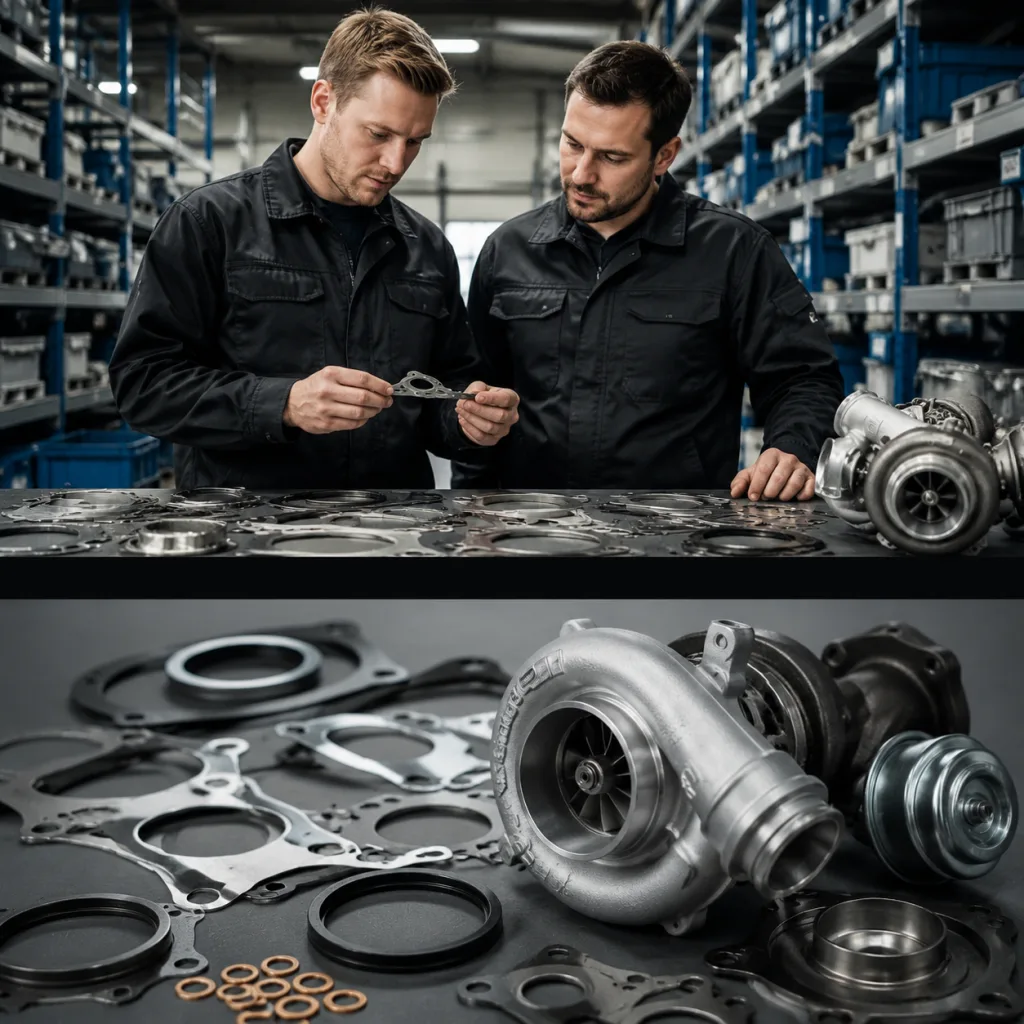
Choosing a turbo gasket kit supplier is a sourcing decision, not a catalogue exercise. The wrong kit can look acceptable on paper and still fail at the flange: leaks, boost loss, oil seepage, repeat claims, and avoidable downtime. The right supplier reduces that risk with controlled dimensions, traceable materials, clear OE cross-references, and packaging that survives distribution.
For buyers in the EU, UK, US, Canada, Australia, and Brazil, the decision should also account for fitment data quality, certification, lead time, and whether the supplier can support standard or custom programmes without losing control of the spec. Driventus is an independent aftermarket manufacturer; brand names are referenced for fitment only. Start with the technical file, then pressure-test the commercial terms, then validate samples against the application before placing volume orders.
Decision first: what matters more than unit price
When people ask how to choose a turbo gasket kit supplier, the first mistake is starting with price. Price only matters after the kit is proven to fit the engine family, turbocharger interface, and service procedure.
A low-cost offer is still expensive if the flange geometry is off, the bolt-hole pattern is wrong, or the sealing bead does not match the joint. In sourcing terms, that is not a bargain; it is a return rate.
Check these fitment points first
Engine code and displacement
Turbocharger model and housing type
OE cross-reference, where available
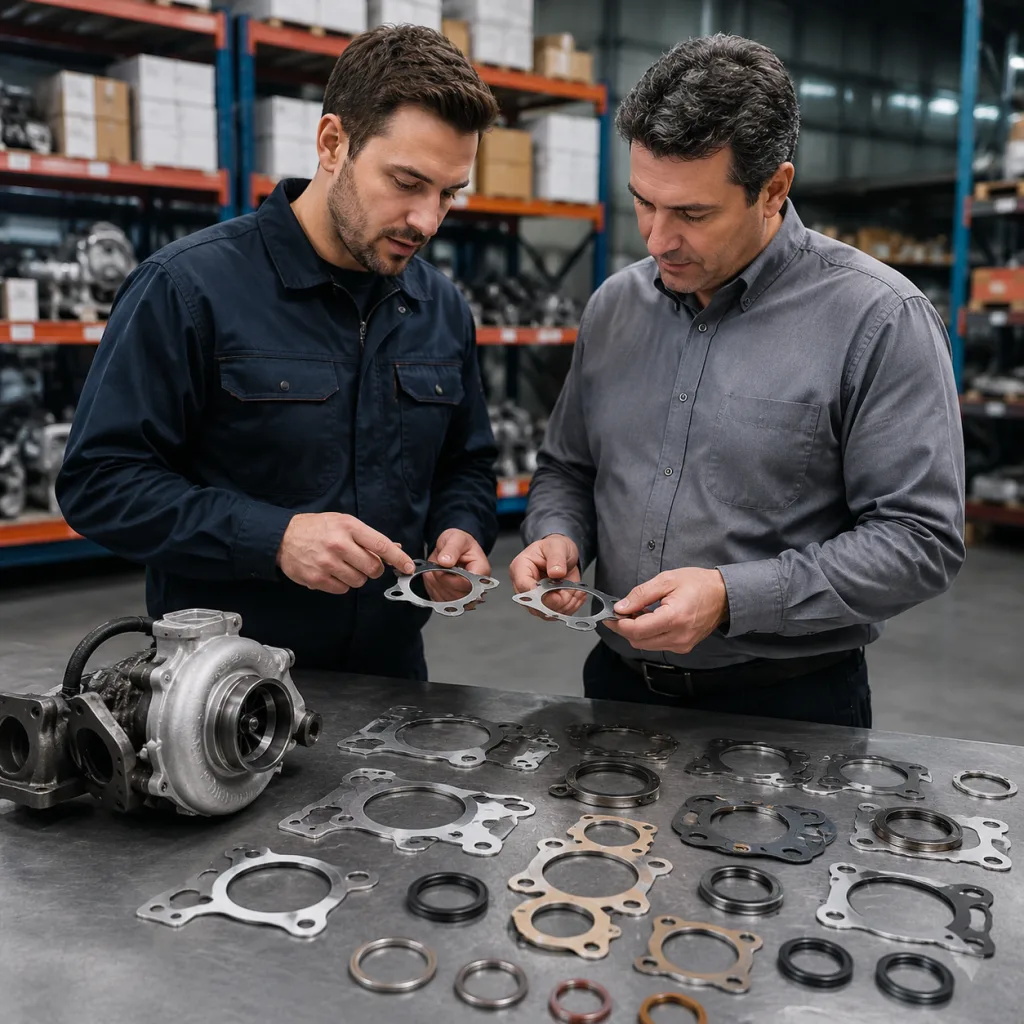
Gasket material for exhaust, oil, and coolant interfaces
Multi-layer steel, graphite, or composite construction
Included hardware and whether it matches the repair process
If the supplier cannot explain the application in technical terms, treat the quote as incomplete. For mixed vehicle coverage, ask for part-number mapping by VIN range, engine code, or OE-style reference where relevant.
Failure modes that expose a weak supplier
Turbo gasket kits fail in predictable ways, and those failures usually point back to poor supplier control. The most common problems are not mysterious. They are dimensional drift, inconsistent material selection, weak inspection discipline, and packaging that allows damage before the part ever reaches the workshop.
Common failure modes include:
Exhaust leakage from poor sealing face alignment
Boost loss from flange mismatch or deformation
Oil seepage from incorrect material choice
Premature blowout after heat cycling
Mixed kits or missing components in shipment
If you are comparing vendors, ask which defects they see most often and how those defects are contained. A strong supplier will answer directly. A weak one will talk around the question.
What a serious quality file should include
A credible supplier should be able to show how each lot is controlled, not just say that it is controlled. For automotive B2B sourcing, ask for IATF 16949:2016 and ISO 9001:2015 certificates, plus proof of incoming inspection, in-process checks, and final release records.
Use this audit frame:
Topic
What to ask for
Material control
Supplier declarations, heat or batch traceability, and incoming material checks
Dimensional control
Critical dimensions, tolerances, and inspection frequency
Process control
Pressing, cutting, coating, or forming parameters
Traceability
Lot coding on packaging and internal records
Nonconformance handling
Containment, root-cause method, and corrective action timing
</tr></thead><tbody> </tbody></table>For EU-bound programmes, also ask whether packaging and declared substances align with REACH (EC) No 1907/2006 where applicable. If the answer is vague, keep digging.
Material and sealing performance, compared
Turbo gaskets operate in a harsh mix of heat, vibration, pressure, and chemical exposure. A supplier should be able to explain why a material is chosen for the joint, not just list it on a datasheet.
Typical material choices include:
Multi-layer steel for high-temperature exhaust joints
Graphite or graphite-faced materials for conformability
Stainless or coated steel reinforcements for creep resistance
Viton or equivalent elastomers for certain oil and coolant sealing elements
Ask for performance data where available: temperature range, compression recovery, and thickness stability after heat cycling. If the kit is marketed for diesel use, ask whether it has been validated for soot loading and elevated exhaust backpressure. Contextual references such as SAE J2527 or ECE R-83 can help frame the discussion, but only if the supplier can state exactly what was tested.
Commercial terms that affect day-to-day sourcing
Lead time, MOQ, and packaging discipline matter because gasket kits are usually bought in service batches, not one at a time. A good supplier will give realistic lead times, stable minimum order quantities, and packaging that protects shape, dryness, and traceability.
Ask these questions: 1. What is the standard MOQ for stocked kits? 2. What is the lead time for non-stock parts? 3. Can the supplier support staggered shipments? 4. Are barcodes, batch labels, and carton marks available? 5. Can packaging be adapted for distributor, warehouse, or workshop channels?
The commercial risk is often not the gasket itself but the logistics around it. Mixed labels, poor carton marking, and missing lot data slow receiving and complicate warranty handling.
How to validate samples before volume award
Sample approval should include both dimensional and functional checks. A catalogue image or a verbal match is not enough.
Use this sequence:
Compare the sample to the OE part and the removed gasket
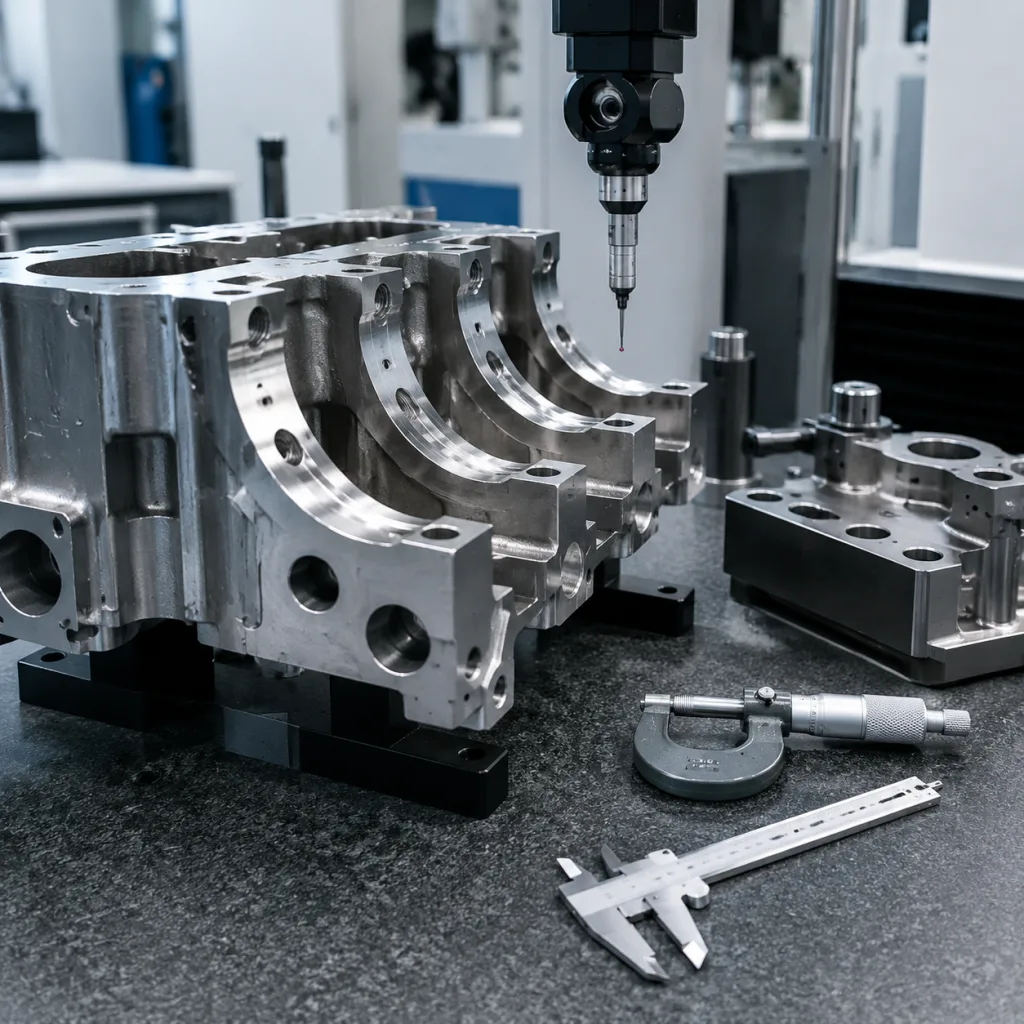
Measure critical dimensions with calibrated tools
Check hole alignment, bead position, and thickness
Confirm bolt clearance and flange coverage
Review installation feel and torque behaviour on a test build
Inspect for heat marks, blow-by, or oil seepage after validation runs
If the application is mission-critical, request a pre-production sample, a buyer-retained control sample, and a signed technical approval record. That is especially useful when one kit family covers multiple SKUs.
A simple scorecard for final supplier selection
A scorecard keeps the award decision grounded in evidence instead of sales talk. Weight the technical items first, then the commercial ones.
Suggested scoring categories:
Fitment accuracy: 30%
Material and dimensional control: 20%
Quality documentation: 15%
Lead time and MOQ: 15%
Packaging and traceability: 10%
Engineering response speed: 10%
Driventus supports aftermarket programmes, private label supply, and custom manufacturing for buyers that need different packaging, kit content, or specification control. You can review our catalog and quality system to compare the technical approach with your current sourcing list. For broader engine and powertrain programmes, see engine components when relevant.
Frequently asked questions
Ask for product specification sheets, material declarations, dimensional drawings, inspection records, and quality certificates such as IATF 16949:2016 or ISO 9001:2015. For export markets, request packaging and substance compliance details where applicable.
Match the engine code, turbocharger type, and OE reference first. Then verify dimensions on a physical sample against the removed part and the installation flange. A trial build is the safest final check.
Yes. Driventus can support aftermarket programmes that need packaging changes, kit-content changes, or specification-controlled variants. Driventus is an independent aftermarket manufacturer; brand names are referenced for fitment only.
If you are comparing suppliers for an upcoming programme, send your fitment list and target volumes, and we will help you review options. Use the form at /contact.html to request a quote.