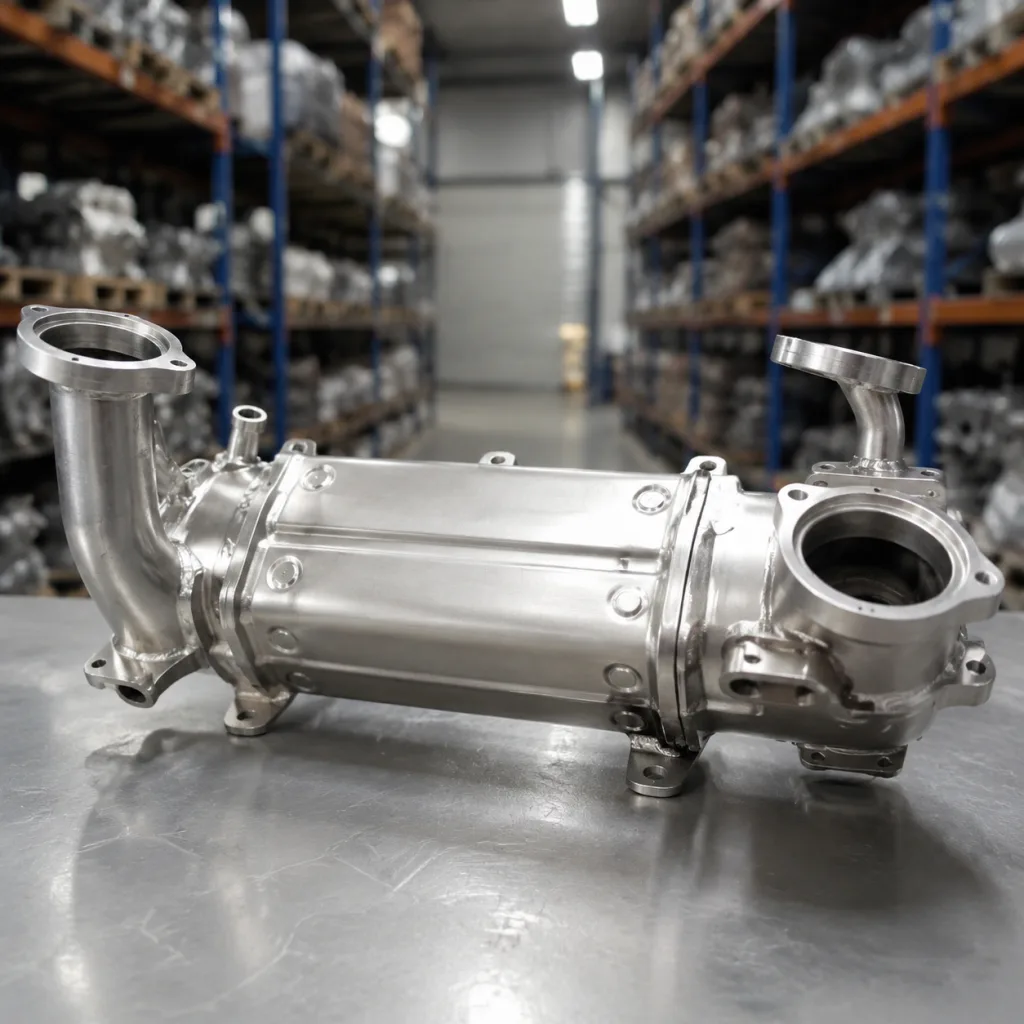
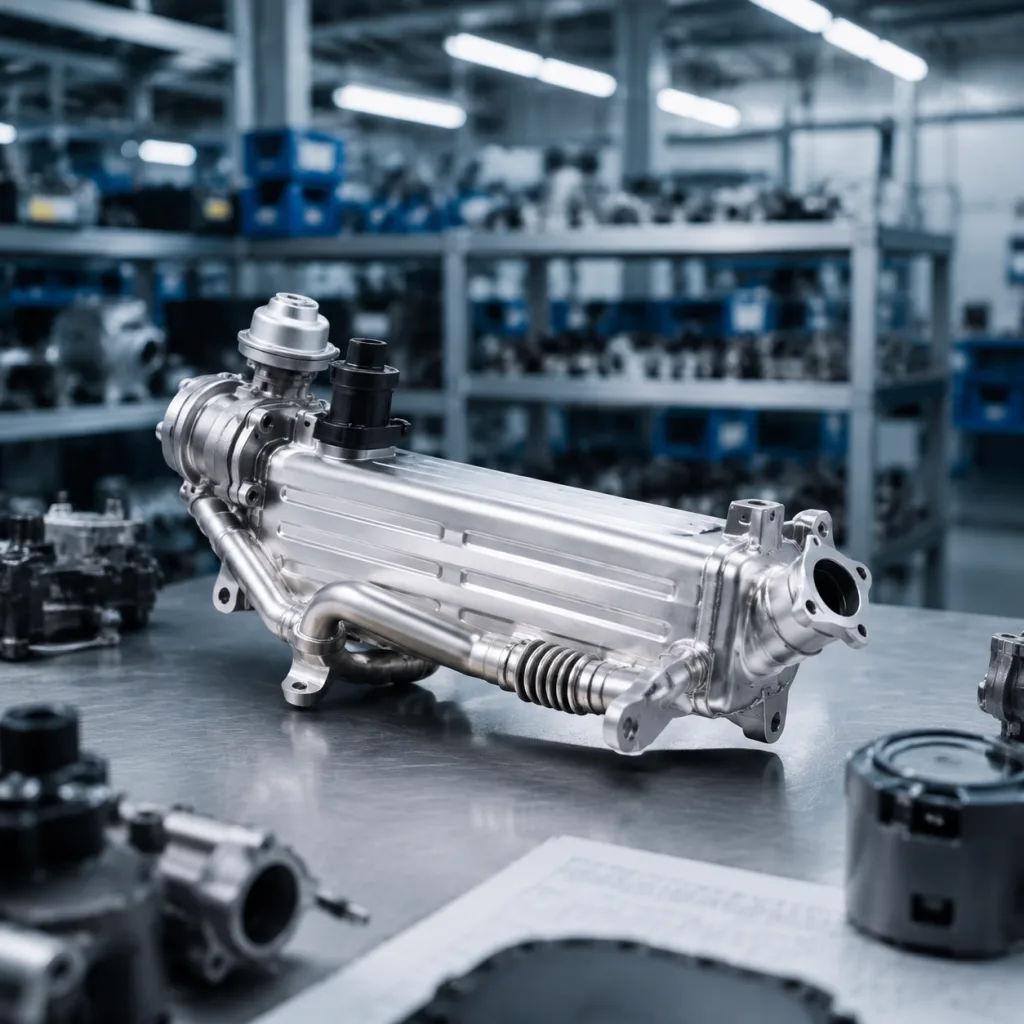
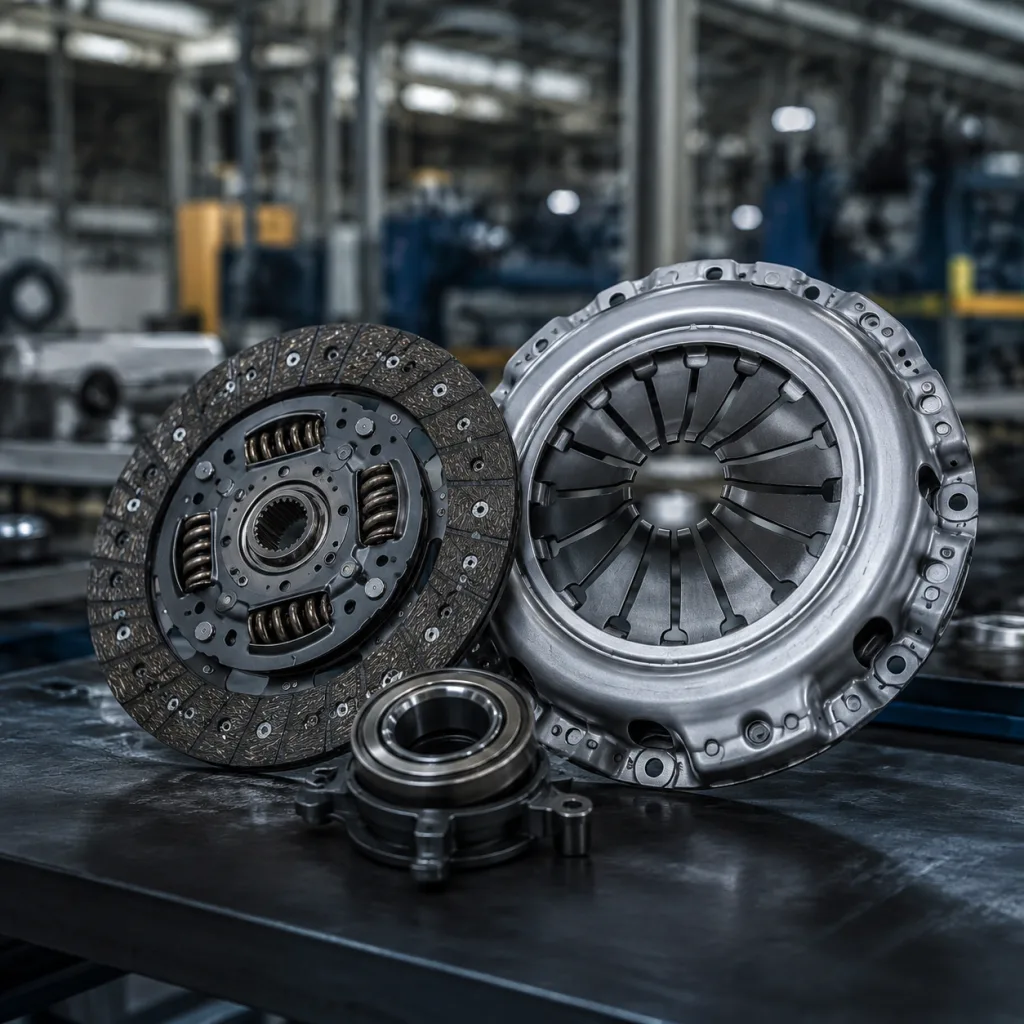
Mercedes-Benz EGR cooler sourcing is less about finding a part and more about avoiding costly mismatch. Wholesale buyers need fitment discipline, welded-joint consistency, and paperwork that survives cross-border procurement. Driventus is an independent aftermarket manufacturer; brand names are referenced for fitment only. We manufacture engine and powertrain components in Taizhou, Zhejiang, and supply B2B customers in more than 60 countries under `IATF 16949:2016` and `ISO 9001:2015` systems. This guide walks through the decision points that matter before you place volume orders: which specs to lock, which failure modes to screen out, how to compare supplier capability, and where commercial terms can quietly change landed cost.
Start with the failure modes, not the price
What usually goes wrong
Risk area
What to check
Fitment drift
Engine code, chassis range, OE reference
Heat damage
Weld quality, material grade, thermal-cycle evidence
</tr></thead><tbody> </tbody></table>A lower unit price does not help if the cooler fails installation or returns after a few weeks. For wholesale programmes, the safest starting point is a verified application, a locked drawing, and proof that the supplier can hold the same standard across repeat batches.
Compare suppliers on capability, not claims
The useful question is not “Can you make it?” but “Can you make it repeatedly to the same spec?” Driventus runs a vertically integrated process, which helps control variation across machining, welding, cleaning, and final inspection. That matters when a distributor needs replenishment, not just a sample.
Use this comparison lens:
OE cross-reference verification before quotation
Sample review against an approved drawing
Batch production planning for repeat demand
Export packing built for regional distribution
Documentation that matches buyer audit requirements
Wholesale sourcing gets messy when the part definition changes midstream. The specification should be fixed early, especially if the programme spans multiple markets or engine revisions.
Spec checklist for buyers
Engine code and chassis range
OE reference and cross-reference notes
Construction type: stainless steel, aluminium alloy, or mixed design
Gasket set, clamp style, and port-face flatness
Required packaging format and carton quantity
If a programme needs non-standard hose connections, bracket revisions, or changed port positions, use custom manufacturing to align the part before volume release. That reduces rework later and keeps the catalogue cleaner.
Ask for validation data, not a generic test claim
A wholesale EGR cooler should come with evidence, not just a statement that it was tested. Ask which method was used, what the acceptance criteria were, and how many samples were run.
Relevant references may include `IATF 16949:2016`, `ISO 9001:2015`, `REACH (EC) No 1907/2006`, and, where applicable, `ECE R-83`.
Validation checks that matter
Pressure integrity at the specified operating load
Weld seam inspection and sampling method
Dimensional check against the approved drawing
Material declaration for regulated substances
Packaging performance after transit simulation
For corrosion or durability screening, buyers often request salt-spray, vibration, or thermal-cycling evidence. If a supplier cannot describe the test setup clearly, treat that as a warning sign.
Use one scenario to test the supply model
Imagine a distributor serving several workshops across different regions. One engine family needs a Mercedes-Benz EGR cooler, but the vehicle population is split across revisions. In that case, a visually similar part is not enough.
The wholesale model should answer three questions:
1. Which exact application is approved for release? 2. Which drawing and inspection record define the batch? 3. How quickly can the supplier replenish the part without changing spec?
That scenario is where fitment discipline pays off. It reduces wrong-part shipments, cuts claims, and makes stock release easier at goods receipt. Driventus is an independent aftermarket manufacturer; brand names are referenced for fitment only. That distinction helps keep catalogue language precise and avoids confusion when several engine variants share similar hardware.
Review commercial terms after the technical fit is confirmed
Price is only one part of landed cost. MOQ, lead time, and reserve capacity can matter more once freight, storage, and claims are included.
Questions worth asking during quotation:
What is the MOQ per part number or engine family?
What is the standard lead time after sample approval?
Can safety stock be reserved for repeat demand?
Is mixed-SKU palletisation available?
What inspection report ships with each order?
For import managers, the best setup is simple: one confirmed specification, one approved sample, and one replenishment rhythm. If you are ready to price a programme, send your OE reference, annual volume, target market, and packaging requirement through request a quote.
Frequently asked questions
Yes. We support B2B wholesale orders for distributors, repair chains, and importers. We confirm application data, produce to approved drawings, and ship with batch traceability and export packing.
Yes. We work from OE cross-references provided by the buyer and verify dimensions against the approved sample or drawing. Brand names are referenced for fitment only.
Typical documents include dimensional data, inspection records, material declarations, and quality-system information. We can also discuss sample approval and production scheduling during quotation.
If you are building a wholesale programme for Mercedes-Benz applications, send your OE reference, annual volume, and packaging needs through /contact.html so we can review fitment and availability.