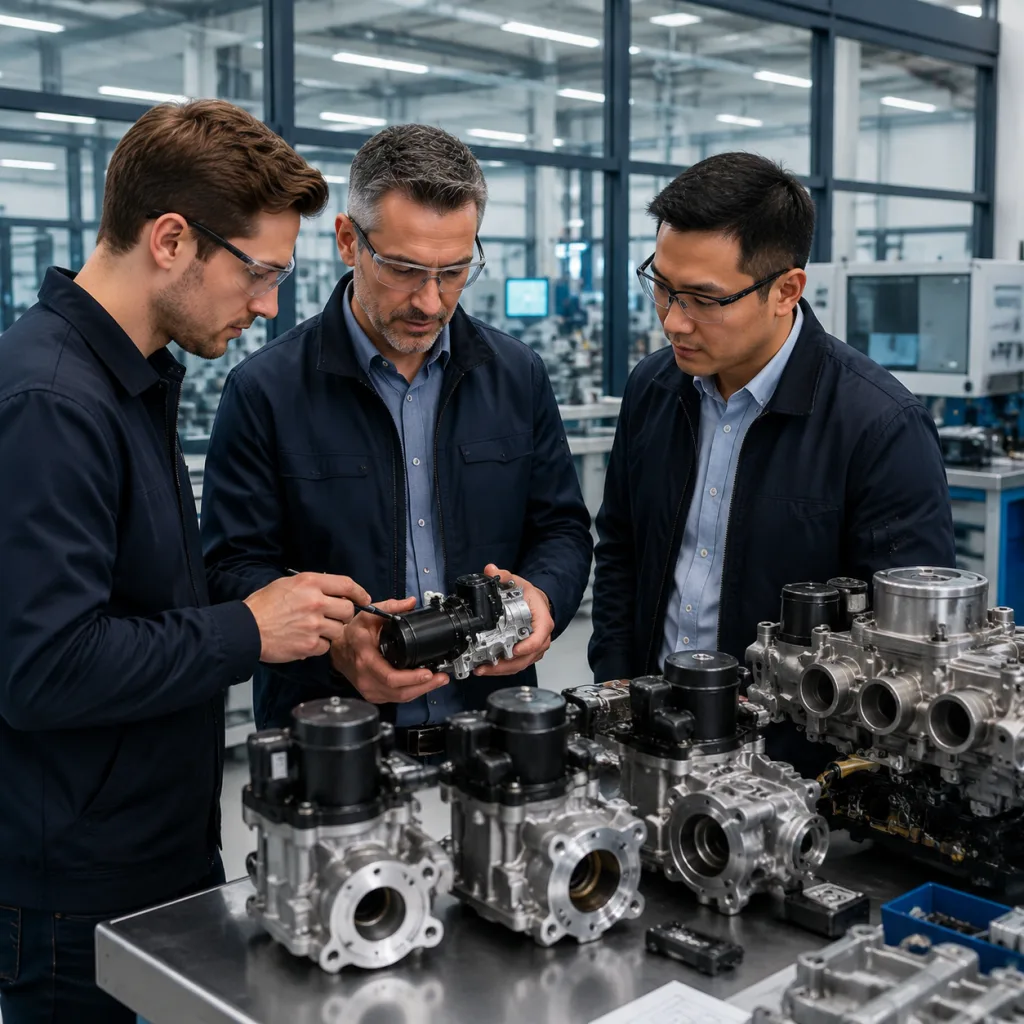
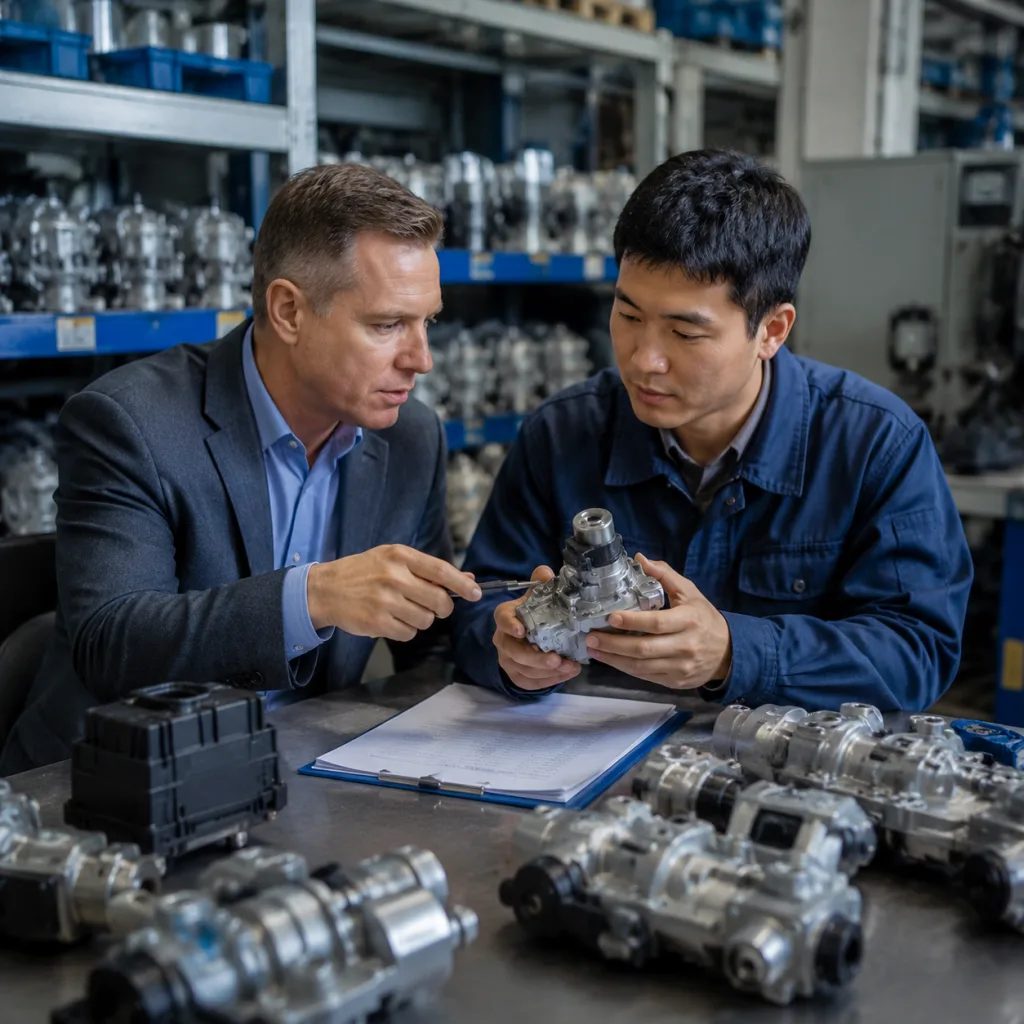
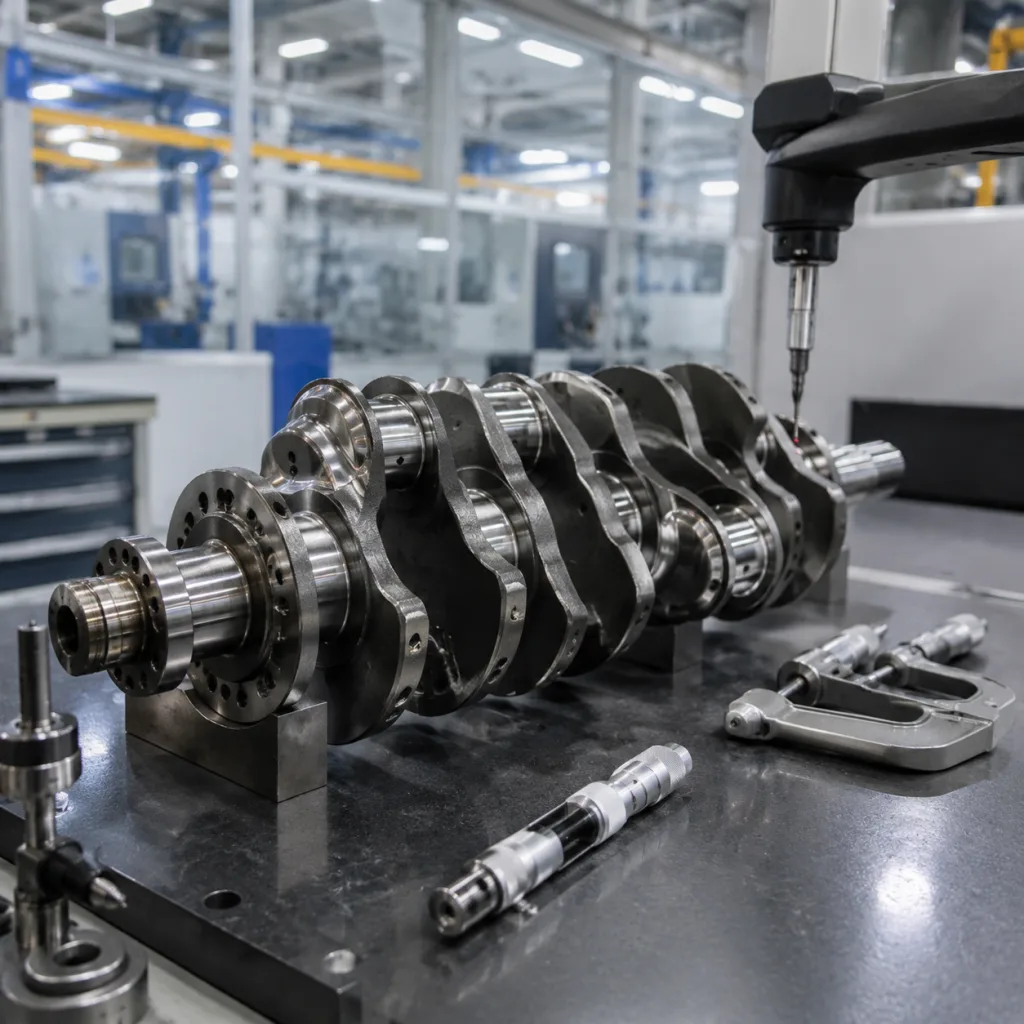
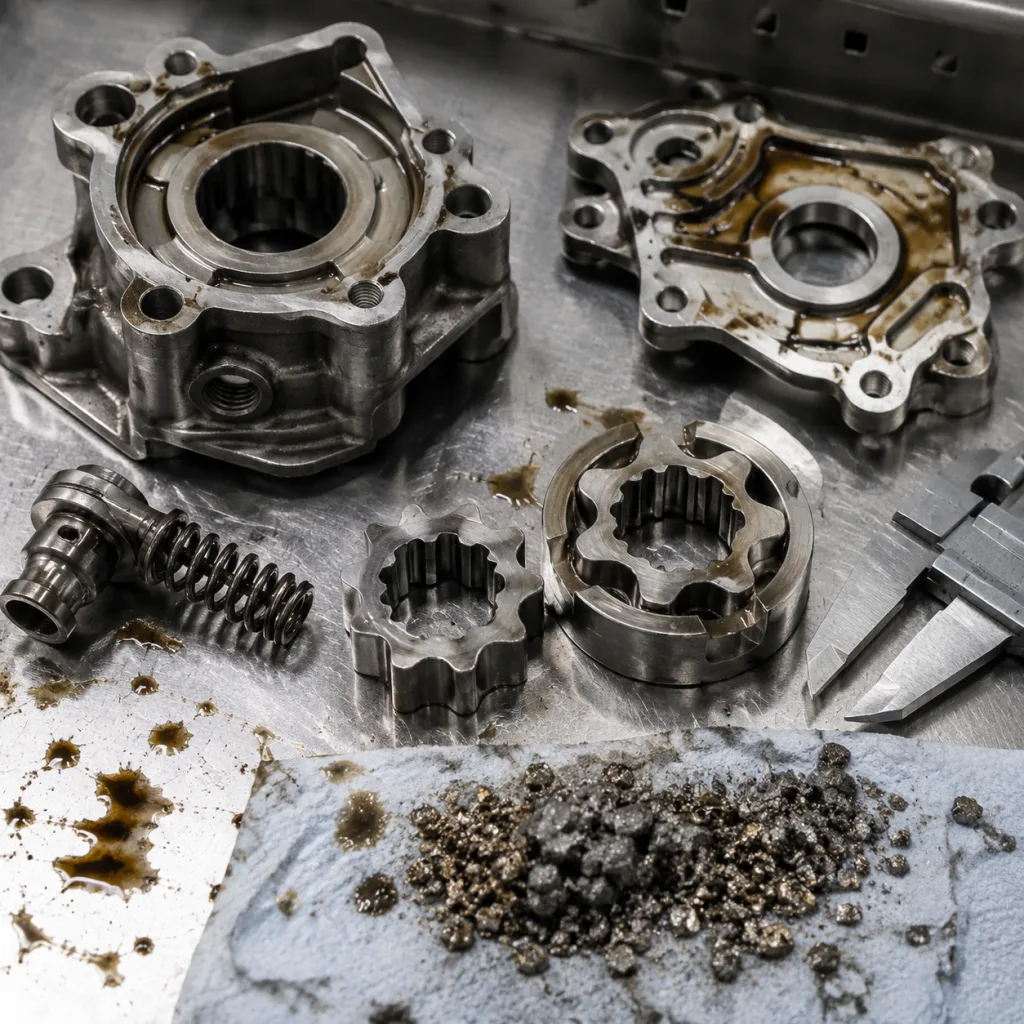
How to Choose an EGR Valve Supplier for B2B Sourcing
Choosing an EGR valve supplier is not a unit-price exercise. The decision affects fitment accuracy, ECU feedback, actuator stability, leakage control, catalogue returns, warranty exposure, and replenishment reliability. A cheap valve that bolts on but triggers a diagnostic fault is not cheap for an importer, distributor, sourcing engineer, or repair-chain buyer.
Start with the risks that create cost after the purchase order: wrong OE cross-reference, unstable motor response, poor machining repeatability, weak sealing, incomplete batch records, uncontrolled engineering changes, and slow claims analysis. A qualified supplier should be able to support OE reference mapping, emissions-related functional validation, traceability, controlled change management, and export documentation for the markets you serve.
Before nomination, define the part range, expected annual volume, sample test plan, acceptable defect rate, launch MOQ, replenishment schedule, packaging rules, and warranty process. EGR valve failure can affect exhaust gas recirculation flow, drivability, fuel economy, diagnostic trouble codes, and emissions performance.
Driventus manufactures engine and powertrain components in Taizhou, Zhejiang, and supplies B2B customers in more than 60 countries. Driventus is an independent aftermarket manufacturer; brand names are referenced for fitment identification only. This guide explains how to choose a egr valve supplier before placing a trial order or adding a new source to your approved vendor list.
1. Build the buying brief first: range, risk, and replenishment logic
The first supplier filter is not price. It is whether the supplier can quote the exact EGR valve range you actually need.
EGR valves vary by actuation type, cooling interface, connector geometry, voltage, mounting flange, sensor feedback, gasket design, and engine application. Vehicle names alone are not enough. Two valves may look almost identical on a screen and still behave differently once installed.
Create a controlled sourcing file before requesting prices. Include:
Target vehicle applications, engine codes, model years, emission stage, and market regions
OE cross-references where available, using the correct OE format when relevant to your program
Then split the range by commercial behavior. A-class fast movers may justify 300–1,000 pieces per part number per year and stricter stocking rules. B-class references may sit at 100–300 pieces. C-class long-tail numbers often need mixed-SKU MOQ logic, such as 20–50 pieces per item but 300–500 pieces per shipment.
This classification prevents a common trap: the supplier quotes attractive prices on high-volume references but makes the slow movers impossible to source profitably.
For distributors, validate the range against vehicle parc, common failure rates, and repair frequency in the target region. For OEM service or Tier-1 sourcing, add drawings, material specifications, special characteristics, PPAP level if required, and customer-specific quality requirements. If you are building a broader engine-parts program, review our catalog and the related engine components range before narrowing the RFQ.
2. Failure mode screen: separate a real manufacturer from a catalogue reseller
Many sourcing problems start with a simple mistake: treating catalogue coverage as manufacturing capability.
A reliable EGR valve source should be able to explain how the part is produced, inspected, tested, packed, and traced. If casting, machining, actuator assembly, calibration, end-of-line testing, or traceability are subcontracted, you need to know who controls them and how failures are contained.
</tr></thead><tbody> </tbody></table>During an audit, ask for the actual process flow. Certificates are useful, but they are not the process.
A controlled EGR valve process typically includes incoming inspection of castings, coils, motors, sensors, springs, seals, and connectors; CNC machining of flange and valve-seat features; ultrasonic or solvent cleaning; subassembly of shaft, valve plate, bushing, and actuator; leak testing; electrical calibration; end-of-line functional testing; laser marking or label application; final inspection; and batch release.
Check the details that reveal discipline:
Are critical gauges calibrated at defined 6- or 12-month intervals?
Is there first-piece approval before batch production?
Are EOL test failures separated by failure mode?
Can one carton be traced back to production date, line, operator, and test result?
What is the casting defect ppm?
What is the first-pass yield at end-of-line testing?
Are torque settings, rework approvals, and quarantine rules documented?
Factory capability can be checked by onsite audit, video audit, or third-party inspection. Ask to review incoming inspection records, process control charts, gauge R&R where applicable, work instructions, nonconforming material quarantine, and corrective-action records.
Driventus operates under IATF 16949:2016 and ISO 9001:2015 management systems. Details of the quality system can be reviewed as part of supplier qualification.
3. Spec deep-dive: what EGR valve validation should prove
EGR valves are emissions-related components, so validation language matters. An aftermarket supplier should not claim vehicle manufacturer approval unless that approval is formally documented and applies to the exact part number.
For most B2B sourcing teams, the practical question is narrower and more useful: can the supplier demonstrate OE-equivalent function for the intended application?
Key validation points include:
Valve opening and closing response at minimum, nominal, and maximum operating voltage, for example 9 V, 12 V, and 16 V on a 12 V system
Flow-rate consistency across the operating range, checked at defined pressure differentials and valve positions
Leakage rate when the valve is closed, with test pressure, medium, and maximum allowable leakage clearly stated
Position sensor accuracy, linearity, signal stability, and return signal range where applicable
Connector retention force, terminal stability, insulation resistance, and contact resistance
Thermal cycling performance, from low-temperature storage to high engine-bay temperature exposure
Vibration resistance for engine-mounted installation, including fixture orientation and test duration
Salt-spray or corrosion resistance for exposed parts, especially brackets, fasteners, and cast surfaces
Gasket sealing performance after heat ageing and repeated assembly load
Noise, sticking, return-spring force, and hysteresis during repeated operation
A useful validation report should contain numbers, not just “OK.” Look for sample size, test bench, ambient condition, pressure differential, operating voltage, commanded opening percentage, measured flow, leakage limit, response time, sensor output range, and acceptance criteria.
For launch samples, buyers commonly test 3–5 pieces per part number. For high-volume nomination, sample size may rise to 10–30 pieces across different production batches. Endurance requirements depend on the application and contract, but the supplier should at least show whether the same design family has passed cycle testing, heat soak, thermal shock, vibration, and corrosion exposure.
Reference standards help frame the review. Quality management should align with IATF 16949:2016 and ISO 9001:2015. Material compliance may require review against REACH (EC) No 1907/2006 for EU supply. Vehicle emissions regulations such as ECE R-83 may be relevant to the vehicle system context, but an individual aftermarket valve should not be presented as certifying the whole vehicle.
For North American customers, documentation expectations may include material declarations, import records, customer-specific test protocols, and warranty analysis reports.
Ask for sample validation reports before relying on marketing sheets. Reports should show test method, sample size, acceptance criteria, date, equipment identification, calibration status, and result summary. If your program needs extra endurance cycles, environmental exposure, or application-specific calibration checks, confirm whether custom manufacturing can be supported before nomination.
4. Scenario test: the valve fits the flange but fails the vehicle
A common aftermarket failure scenario looks harmless at first.
The EGR valve bolts onto the engine. The connector locks. The gasket sits correctly. The installer starts the vehicle, and the ECU logs a fault after a short drive cycle. The buyer receives a return that looks like a quality failure, but the root cause is wrong cross-reference discipline.
Two visually similar valves can differ in software feedback range, connector angle, coolant port layout, internal flow path, flange geometry, or gasket interface. That difference may not appear in a basic photo comparison.
Require a controlled fitment file with:
OE reference mapping, using exact source data where permitted
TecDoc-style vehicle attributes when selling into Europe
Engine code, fuel type, emission stage, transmission notes, and production date range
Interchange notes for superseded or revised part versions
Product images from multiple angles, including connector, valve seat, pipe port, and flange close-ups
Critical dimensions with tolerances and measuring points, such as bolt-hole center distance, port diameter, flange thickness, and gasket groove depth
Electrical information, including pin count, terminal width, sensor type, and expected resistance or signal range where applicable
Package contents, including gasket, bolts, clamps, or installation accessories if supplied
Notes on exclusions, market differences, and left-hand/right-hand drive variations where relevant
For aftermarket distribution, accurate fitment data lowers returns, catalogue disputes, and customer service workload. A practical review method is to select the top 20–50 high-volume references and compare supplier data against your existing catalogue, OE information, returned-part photos, and installer feedback.
Classify every mismatch. Is it a data error? A physical difference? A supersession issue? A market-application difference? Do not load a new supplier’s full file into your ERP or web catalogue until those conflicts are closed.
For repair-chain supply, fitment discipline reduces technician time and comeback risk. For OEM service and Tier-1 projects, it supports engineering change control and avoids unintended substitutions. Change control should include revision date, reason for change, affected OE numbers, affected stock, and a clear rule for old-version depletion or quarantine.
Do not accept a supplier file that lists only brand and model names. Brand names should be used only for fitment reference. Driventus is an independent aftermarket manufacturer; brand names are referenced for fitment identification only. No part description should suggest endorsement, sponsorship, or approval by a vehicle manufacturer unless legally documented.
5. Commercial decision matrix: price, MOQ, packaging, lead time, and claims
Commercial terms belong after technical screening. A low unit price cannot offset high returns, vague warranty rules, weak delivery control, or packaging that fails in export transport.
Use the negotiation as a decision matrix, not a price chase:
MOQ: Confirm whether MOQ is per part number, per shipment, per carton design, or per private-label packaging version. A common aftermarket structure is 50–100 pieces per active part number, lower for samples, and 300–500 pieces total for a mixed-SKU shipment. Actual terms depend on tooling, components, and packaging.
Price logic: Ask whether price changes at 50, 100, 300, 500, and 1,000 pieces. Confirm whether the quote includes gasket, bolts, EOL test, private label, inner box, master carton, pallet, and export packing.
Lead time: Separate tooling, first article, pilot order, mass production, inspection, and export documentation timing. Existing part numbers may ship in 30–45 days after deposit. New tooling or application development may require 60–120 days depending on casting, mould, fixture, and validation workload.
Forecast flexibility: Confirm whether monthly call-offs, mixed-SKU orders, consignment stock, or phased range launches are possible.
Packaging: Specify neutral box, customer label, pallet pattern, VCI or moisture protection where needed, anti-impact inserts, and drop-test expectations.
Spare documentation: Require invoice, packing list, certificate of origin where needed, HS code confirmation, and material compliance evidence.
Warranty process: Define claim window, evidence required, analysis timeline, replacement or credit method, and responsibility for repeated defects.
Traceability: Ensure date code, batch code, or serial reference can link the product back to production, inspection, and test records.
A typical sourcing project should include a sample stage, inspection stage, and controlled first shipment. For a new distributor, a limited launch range reduces inventory exposure while testing supplier performance. A practical pilot order may cover 10–30 priority SKUs, with 20–100 pieces per SKU depending on demand.
For high-volume buyers, annual blanket agreements can stabilise pricing and capacity. Write the quality, change-control, and delivery-performance rules into the agreement rather than leaving them to email history.
Inspection terms should be numeric. Define AQL level, critical/major/minor defect categories, carton-drop requirement, label scan rate, and dimensional sample size. Critical safety or function defects may require zero acceptance. Visual packaging defects can follow a separate minor-defect limit.
Agree in advance what happens after a failed inspection: sorting, rework, replacement, air freight recovery, or delayed shipment at supplier cost.
When comparing quotes, ask each supplier to separate product cost, packaging cost, testing requirements, tooling or fixture cost, and logistics assumptions. Clear cost breakdowns make price changes easier to challenge and total landed cost easier to compare.
6. Approval workflow: how to choose a egr valve supplier without relying on instinct
A practical approval process combines engineering review, commercial review, and risk control. It should be repeatable enough that the next buyer reaches the same conclusion from the same evidence.
Use this sequence:
1. Create the target range. Define part numbers, applications, annual volume, launch priority, and documentation needs. 2. Request capability evidence. Ask for certifications, production flow, test equipment list, sample reports, traceability examples, and recent internal defect data. 3. Check fitment data. Compare OE references, dimensions, connectors, vehicle attributes, application notes, and supersession rules. 4. Order samples. Inspect appearance, dimensions, connector quality, movement, packaging, labelling, supplied accessories, and batch marking. 5. Run functional testing. Validate response, leakage, flow, sensor feedback, diagnostic compatibility, and repeatability where applicable. 6. Audit the supplier. Review IATF 16949:2016 or ISO 9001:2015 implementation, calibration, nonconforming material control, change management, and EOL test records. 7. Approve a pilot order. Set AQL inspection level, shipment documents, packaging checks, traceability rules, and claim-handling rules. 8. Measure field performance. Track return rate, defect mode, catalogue accuracy, claim speed, replenishment reliability, and on-time delivery.
A scorecard keeps the decision from becoming subjective. One simple 100-point model assigns 30 points to technical validation, 20 to manufacturing capability, 15 to fitment data, 15 to commercial terms, 10 to documentation, and 10 to communication and corrective-action speed.
Set a minimum approval score, such as 80/100. Also define automatic blockers. A critical validation failure, missing traceability, or refusal to support claim analysis should not pass just because the total score looks acceptable.
Keep records of every approval step. They speed up future range expansion and provide evidence if quality issues occur. If a supplier cannot provide basic documents before the first order, the risk usually increases after shipment because problems become harder to verify and correct.
After approval, review performance quarterly: on-time delivery, claim rate, 8D response time, repeat defects, catalogue corrections, and price stability.
Driventus can support standard aftermarket EGR valve sourcing as well as application-specific development. To review available references or begin a technical RFQ, buyers may request a quote.
Frequently asked questions
Ask for IATF 16949:2016 or ISO 9001:2015 certificates, production flow, control plan summary, test equipment list, sample test report, material compliance statement, fitment data, packaging specification, traceability example, and warranty process. For regulated markets, also review REACH (EC) No 1907/2006 compliance where applicable.
No. OE cross-reference is only the starting point. Buyers should verify connector layout, mounting dimensions, actuator type, sensor feedback, flow performance, gasket interface, coolant-port layout, and application notes. Similar-looking EGR valves can create diagnostic faults if the electrical or flow characteristics differ.
Compare total landed cost, not only unit price. Include MOQ, price breaks, test level, packaging, lead time, tooling or fixture cost, defect response, documentation, and traceability. A lower price can become more expensive if return rate, fitment errors, or delayed replenishment increase operating cost.
If you are qualifying an EGR valve source for distribution, OEM service, or repair-chain supply, Driventus can review your part list, MOQ plan, validation needs, and documentation requirements. Send your RFQ through /contact.html