diagnostics · 2026-06-09

Head Gasket Leak Repair Cost Guide for Buyers

A failed head gasket can turn a routine workshop booking into a high-value engine repair decision. For procurement teams, the cost is not limited to the gasket. It includes diagnostic labour, cylinder head inspection, machining where required, coolant and oil replacement, fasteners, claim handling, vehicle downtime and the risk of a repeat repair.

This head gasket leak repair cost guide helps buyers separate a confirmed gasket failure from related faults such as warped cylinder heads, cracked blocks, restricted radiators, failed thermostats, poor surface finish or incorrect torque procedures. It is written for distributors, import managers and multi-location repair chains that need consistent technical criteria across workshops, supplier reviews and warranty claims.

Driventus is an independent aftermarket manufacturer; brand names and OE-style references are used only for fitment identification. Driventus manufactures engine components in Taizhou, Zhejiang, under IATF 16949:2016 and ISO 9001:2015 controls, supporting B2B customers that require repeatable gasket quality, batch traceability and documented inspection.

Typical cost elements in a head gasket repair

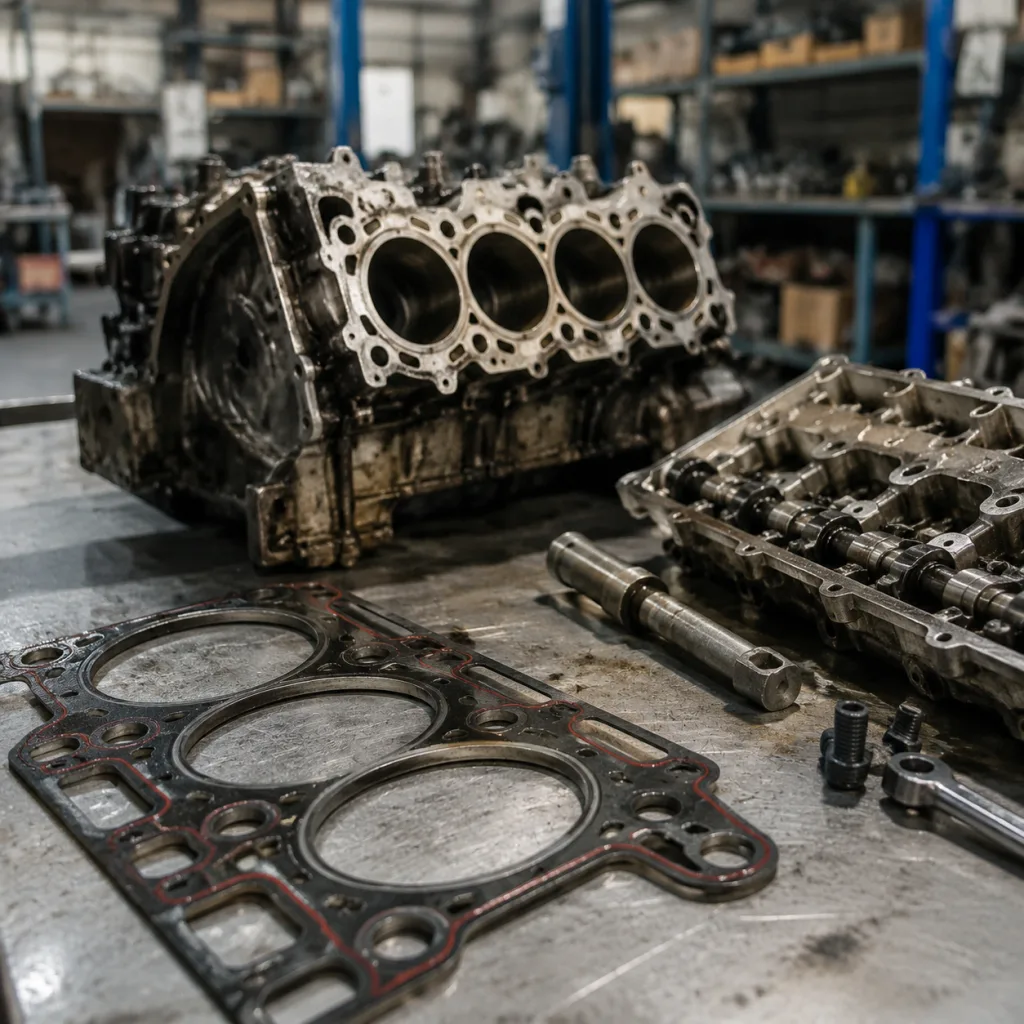
A head gasket is often a low-to-medium value component, but the repair is labour-intensive. On many inline engines, workshops must remove intake and exhaust components, timing drive parts, fuel rails, coolant lines and the cylinder head before the sealing surfaces can be assessed. V-type engines can increase the scope substantially if both cylinder banks require inspection or repair.

For a repair chain or distributor, cost modelling should separate the part price from the process risk:

</tr></thead><tbody> </tbody></table>In many markets, labour is the dominant cost driver. A lower gasket price rarely offsets a second teardown if coating adhesion, bore ring crush, embossment control or material compressibility is inconsistent. Buyers should therefore evaluate gasket cost together with kit completeness, installation requirements and supplier evidence for critical dimensions.

Symptom-to-cause diagnostic workflow

A reliable cost estimate should not begin with parts replacement. It should begin with evidence. Head gasket leakage can appear as combustion gas entering the cooling system, coolant entering a cylinder, oil and coolant mixing, or compression loss between adjacent cylinders. Similar symptoms can also come from oil coolers, EGR coolers, external coolant leaks, trapped air, cracked castings or cooling system faults.

Common symptoms and checks include:

  • Coolant loss with no external leak: pressure-test the cooling system, inspect spark plugs, check for coolant in cylinders and use a combustion gas test at the expansion tank.
  • White exhaust vapour after warm-up: confirm it is not condensation, then inspect for coolant entry into one or more cylinders.
  • Overheating under load: check radiator flow, thermostat operation, water pump function, fan control and coolant concentration before condemning the gasket.
  • Milky oil or sludge: inspect oil cooler integrity and breather condition as well as the head gasket interface.
  • Misfire on cold start: perform compression and leak-down tests to identify cylinder-to-coolant leakage or loss between adjacent cylinders.
  • Bubbles in coolant: verify with a block tester and rule out trapped air after previous coolant service.

A practical workflow is: capture symptoms, inspect for external leaks, pressure-test the cooling system, run compression and leak-down tests, perform a combustion gas test, then proceed to controlled teardown only when the evidence supports it. If the cylinder head is removed, flatness, surface roughness, erosion and cracks must be checked before a replacement gasket is installed. This sequence protects the repair estimate and gives procurement teams better evidence when reviewing supplier claims.

Why final repair cost varies by engine design

This head gasket leak repair cost guide should be used as a decision framework, not a fixed price list. Labour hours vary by engine access, timing drive layout, turbocharger packaging, emissions hardware and whether special locking tools are required. A transverse four-cylinder engine may be faster to strip than a longitudinal V6 with dual overhead camshafts, turbo plumbing and limited access around the bulkhead.

Procurement teams should ask workshops to report the following fields on repair orders:

  • Engine layout and cylinder count
  • Turbocharged or naturally aspirated configuration
  • Timing belt, timing chain or gear drive removal requirement
  • Single-head or dual-head repair
  • Cylinder head machining required or not required
  • Crack testing required or not required
  • Head bolts replaced or reused according to service procedure
  • Root cause recorded: overheating, detonation, poor surface finish, incorrect torque, coolant contamination or unknown

This data helps category managers identify repeat failures by engine family, installation pattern or supplier batch. It also supports better stocking decisions for gasket sets in our catalog, especially where repair chains need complete kits rather than individual gaskets. Over time, repair-order data can show which applications need bundled head bolts, valve cover gaskets, intake seals or cooling system parts to reduce stalled repairs.

Gasket selection criteria that affect warranty risk

A technically suitable head gasket must match the engine’s combustion pressure, coolant passages, oil feed holes, surface finish requirements and head/block materials. Common constructions include multi-layer steel, graphite composite and coated steel-elastomer designs. The correct choice depends on the original sealing concept, the service procedure and the operating environment.

Key specification checks for buyers:

  • Bore diameter and bore ring geometry verified against application data
  • Oil and coolant hole alignment checked against the cylinder block and head
  • Layer count, embossment profile and stopper design controlled for MLS gaskets
  • Coating type compatible with engine coolant, oil exposure and installation conditions
  • Compressed thickness controlled within drawing tolerance
  • Surface finish requirements communicated clearly to repair networks
  • Packaging designed to prevent bending, corrosion and coating damage
  • Batch traceability linked to material lot, stamping, coating and final inspection

Driventus applies process controls aligned with IATF 16949:2016 and ISO 9001:2015. Material declarations and restricted substance controls can be managed for applicable markets under REACH (EC) No 1907/2006 where required by the buyer’s compliance programme. The quality system should be reviewed during supplier approval, including incoming material inspection, in-process measurement, final inspection and nonconforming product control. These checks help buyers reduce warranty exposure before the gasket reaches the workshop.

Inspection points before authorising replacement

Before approving a repair estimate, fleet and chain operators should require photographic or measured evidence. A gasket that failed because of overheating will fail again if the radiator, thermostat, water pump, coolant concentration, pressure cap or fan control fault remains. The same applies when a warped cylinder head or damaged block deck is reassembled without correction.

Minimum teardown inspection record

  • Cylinder head flatness measured with a straight edge and feeler gauge according to the engine service procedure
  • Block deck visually inspected for erosion, fretting, corrosion and pulled threads
  • Surface finish checked for compatibility with the gasket type, especially MLS designs
  • Bolt holes cleaned and checked for fluid or debris that can cause false torque readings
  • Head bolts measured or replaced where torque-to-yield fasteners are specified
  • Cylinder head pressure-tested or crack-tested where overheating, coolant loss or casting damage is suspected
  • Cooling system flushed if oil contamination, corrosion or sealant debris is present
  • Root cause statement recorded before warranty approval

For distributors, this information is valuable when assessing claims. A returned gasket with combustion tracking may indicate low clamp load, surface distortion, overheating or incorrect installation rather than a manufacturing defect. A disciplined inspection template reduces disputes, protects repair margin and creates a clearer feedback loop between the workshop, distributor and gasket supplier.

Sourcing strategy for distributors and repair chains

A stable gasket programme should combine accurate application data, controlled manufacturing and packaging suitable for export handling. Buyers should avoid evaluating only the unit price, because missing components in a gasket set, weak fitment data or poor packaging can create higher operating cost than the part itself. The best sourcing decisions compare total repair risk as well as landed cost.

When qualifying a supplier, request:

  • Application coverage by engine code, displacement and production year
  • Cross-reference policy for OE-style numbers, using generic references only where relevant, such as OE 06A…
  • Dimensional inspection reports for critical openings and thickness
  • Coating adhesion and visual inspection criteria
  • Batch traceability and retention sample policy
  • Export carton specification and humidity protection
  • Kit contents list with gasket, seal and fastener options clearly defined
  • Corrective action process for field claims

Driventus supports aftermarket distributors, OEM/Tier-1 buyers and multi-location repair chains with gasket and engine component programmes. For private-label or application-specific requirements, custom manufacturing can include drawing review, material selection and validation planning. If your team is benchmarking head gasket sets, engine kits or related cooling system components, you can request a quote with target applications, annual volume, packaging requirements and required documentation.

Frequently asked questions

Labour is usually the largest variable, followed by machining and ancillary parts. Engine layout, timing system access, turbocharger packaging and whether one or both cylinder heads require removal often affect total cost more than the gasket unit price.

They should be replaced when the engine procedure specifies torque-to-yield fasteners or when measurement shows stretch, corrosion or thread damage. Reusing unsuitable bolts can reduce clamp load and cause repeat sealing failure.

Often, yes. Compression testing, leak-down testing, cooling system pressure testing and combustion gas testing can provide strong evidence. Final confirmation and root cause analysis usually require cylinder head removal and deck inspection.

If your procurement team needs consistent gasket quality, inspection documents or application coverage for repair networks, contact Driventus with your target engine families and volume plan at /contact.html

Request a Quote
Cost element Typical scope Procurement relevance
Diagnostic labourCompression test, leak-down test, cooling system pressure test, borescope inspectionReduces unnecessary gasket returns and premature teardown
Gasket setCylinder head gasket, valve cover gasket, intake/exhaust gaskets, sealsSet completeness affects bay time and first-time fit
FastenersTorque-to-yield head bolts or studs where specifiedIncorrect reuse can reduce clamp load and cause repeat failure
FluidsCoolant, engine oil, filter, cleaning chemicalsRequired after coolant/oil cross-contamination or heavy teardown
MachiningHead flatness check, crack testing, resurfacing if within limitsPrevents sealing failure on distorted or damaged surfaces
Ancillary partsThermostat, water pump, radiator cap, hoses if overheating is the root causePrevents repeat thermal overload after gasket replacement
Warranty allowanceRework labour, claim handling, returned-part analysisLinked to diagnostic discipline, installation control and gasket quality