flex plate · 2026-06-22

Flex Plate vs Glyco Alternative: Fitment and Sourcing

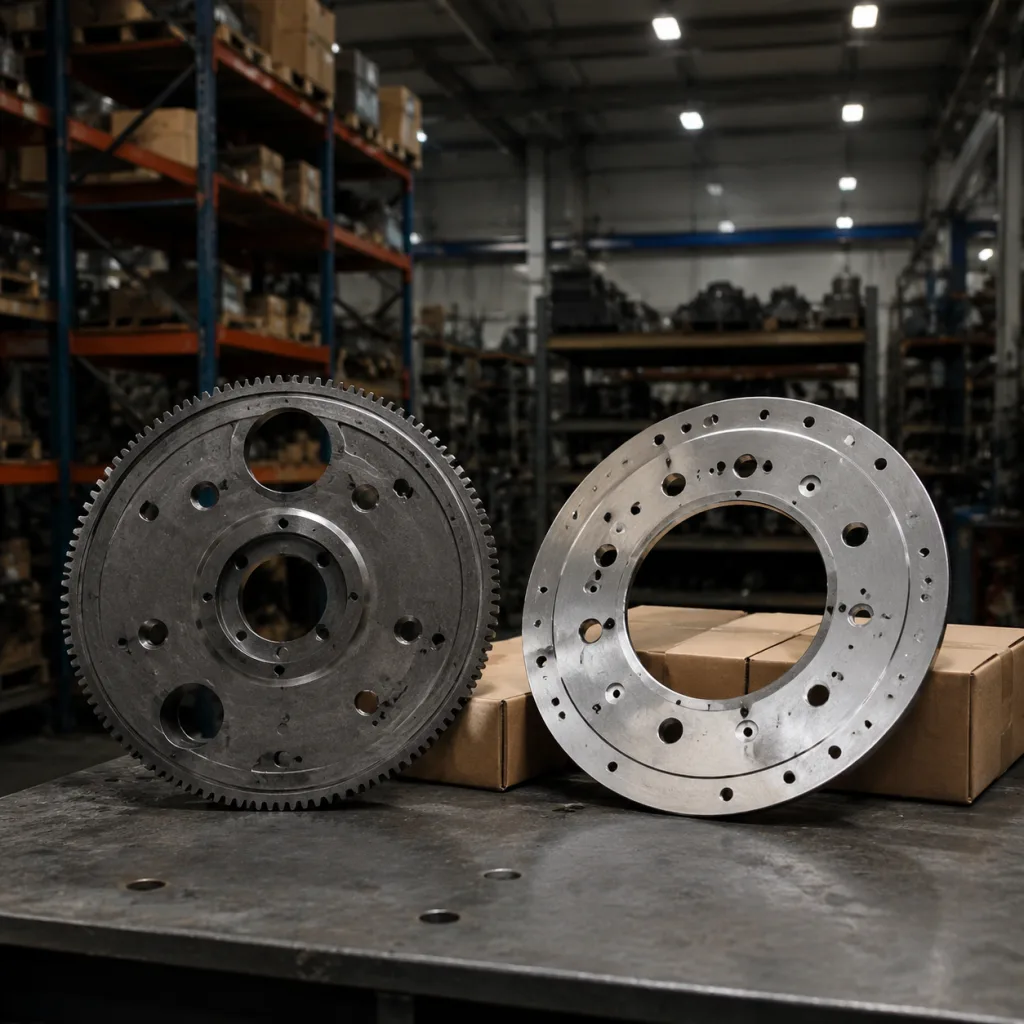
When procurement teams compare a flex plate vs Glyco alternative, the failure point is rarely the catalogue headline. It is the assumption behind it: that a part with similar diameter, tooth count, or application wording is safe to release. Flex plates do not forgive small errors. Bolt-circle geometry, crankshaft flange position, converter pad height, offset, thickness, starter-ring engagement, flatness, and runout all interact. A 0.5 mm offset error, a misread PCD, or excessive ring-gear runout can become starter noise, poor mesh, vibration, converter misalignment, oil-seal stress, or cracking around the crank flange.

For B2B sourcing, the decision is not about which name is printed on the carton. It is whether the part matches the approved drawing, can be inspected the same way every time, and is backed by traceability that survives an audit or warranty discussion. Driventus is an independent aftermarket manufacturer; any brand names are referenced for fitment and cross-reference context only. We supply engine and powertrain components for distributors, repair networks, importers, and OE-linked programmes that need stable dimensions, controlled releases, and clear documentation. Use the framework below before issuing a PO, approving a substitute, or moving from samples to replenishment stock.

Decision framework: approve the geometry before you approve the source

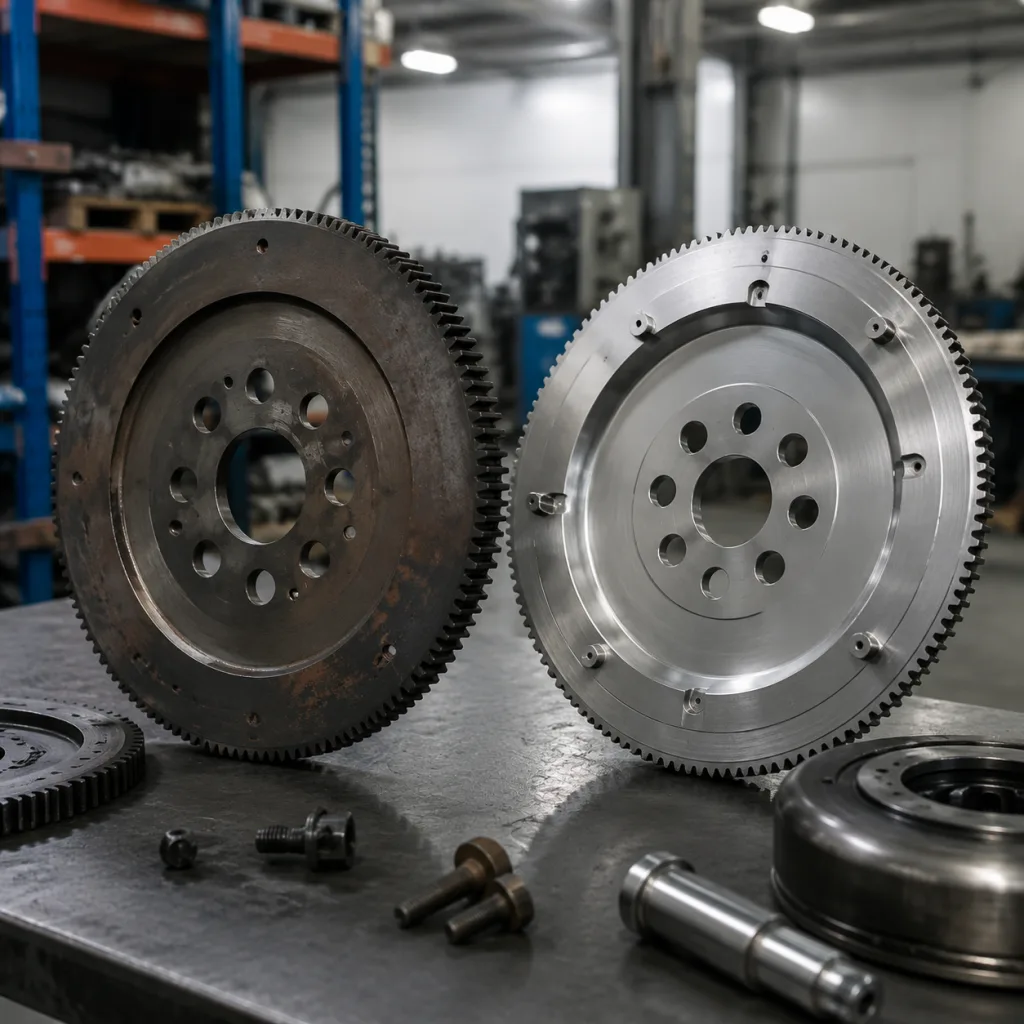
Start with a simple rule: a flex plate is not approved because it looks right. It is approved because its working geometry matches the crankshaft, torque converter, bellhousing, and starter interface.

That means the first sourcing decision should be technical, not commercial. The plate connects the crankshaft to the torque converter and carries the starter ring gear. Geometry, stiffness, hole condition, tooth form, and surface finish all affect installation and service life.

Use these approval gates before treating any flex plate vs Glyco alternative option as an interchange:

  • Bolt pattern and PCD: confirm crankshaft flange pattern, converter pad spacing, hole diameter, hole position tolerance, pilot bore, angular spacing, and any asymmetric indexing hole. Hole count alone is not evidence.
  • Overall thickness: many applications sit around the 2.0–4.0 mm range, but the drawing controls the true requirement. A 0.2–0.3 mm change can affect converter engagement, clamp load, and starter mesh.
  • Runout and flatness: define the measurement method before comparing results. Typical procurement limits may call for axial runout around 0.25–0.50 mm TIR and local flatness within 0.30–0.50 mm, but the approved drawing should set the limit.
  • Tooth count and ring-gear pitch: verify tooth count, outside diameter, chamfer direction, induction-hardened zone, and lead-in condition. The starter pinion must engage cleanly through the full rotation, not only at one checked position.
  • Offset and dish depth: measure from the crank mounting face to the converter pad face. Do not measure from a convenient visual edge. Offset controls converter alignment, bellhousing clearance, and starter-area spacing.
  • Material and heat treatment: carbon steel grade, tensile strength, plate hardness, ring-gear hardness, and heat-treatment distortion affect crack resistance and dimensional stability.
  • Burr control and coating: specify deburring around crank holes, converter holes, and ring-gear teeth. Select zinc phosphate, black oxide, e-coat, or oil protection according to storage route and corrosion exposure.

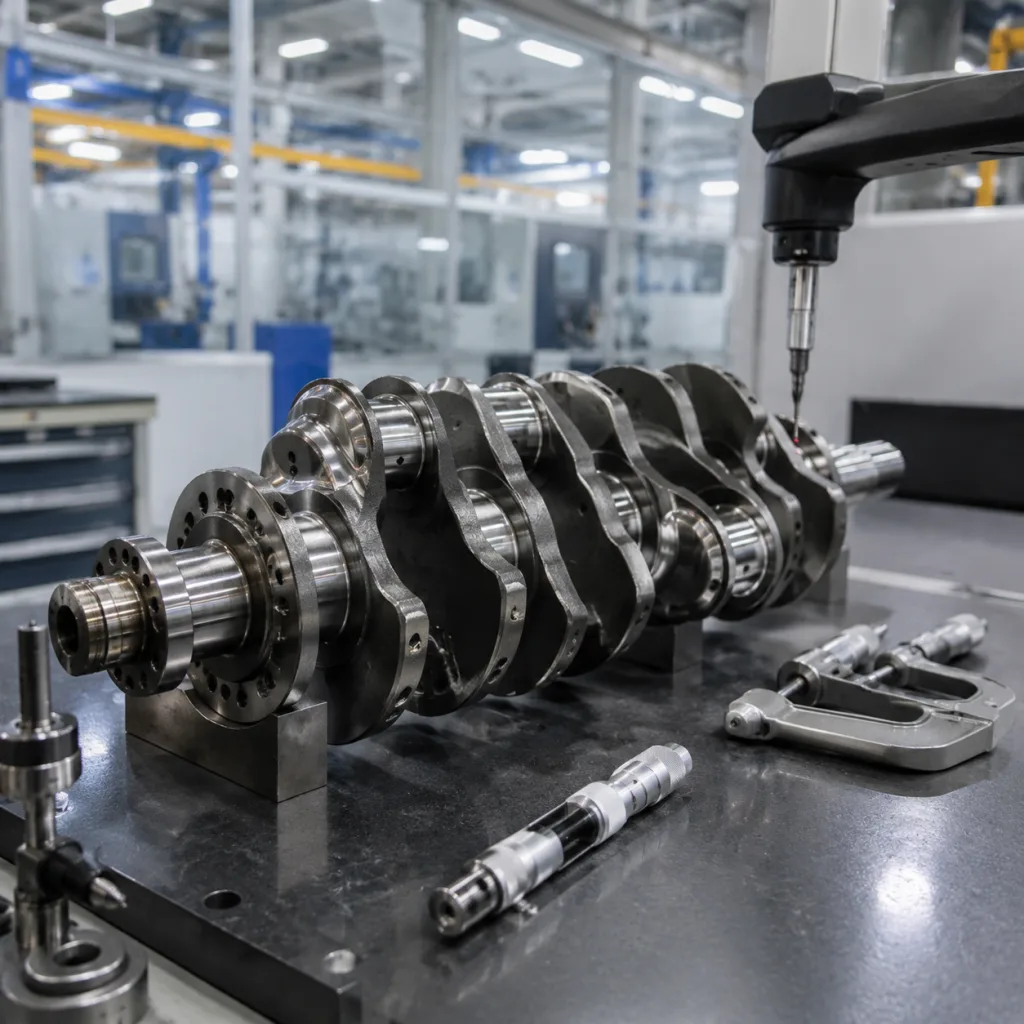
If the sourcing brief contains only vehicle model and engine family, stop before release. Ask for the drawing, OE reference, or validated sample. A practical incoming check uses a flat granite table or fixture, height gauge, CMM or optical measurement for PCD, dial indicator for runout, hardness tester for ring gear, and go/no-go gauges for mounting holes. For buyers building a wider shortlist, our catalog and engine components pages are a practical starting point.

Comparison that matters: carton brand, aftermarket stock, or controlled supply

The phrase "flex plate vs Glyco alternative" often appears when a buyer needs an OE-style replacement and is weighing supply route, availability, documentation, and price. The useful comparison is not promotional. It is risk-based: can the supplier prove the part will fit, repeat, and arrive in saleable condition?

</tr></thead><tbody> </tbody></table>For repeat buyers, the safer option is the one that arrives with consistent geometry, usable records, and predictable replenishment. A lower unit price can disappear quickly if the line creates returns, warranty discussions, or workshop delays.

Separate the commercial layers. Sample cost is not production cost. Tooling or fixture cost is not unit price. Freight can change the landed comparison. A common sourcing path is 2–5 samples for validation, then a 50–100 piece pilot lot for a new application, then production MOQs often around 200–500 pieces per reference depending on material, ring-gear tooling, packaging, and forecast.

Unit price normally improves when buyers move from small lots to carton or pallet quantities because setup, stamping changeover, heat treatment, coating, and inspection time are spread across more pieces. Lead time is usually driven by drawing confirmation, raw material, ring-gear availability, tooling status, coating queue, and export packing. Validate samples first. Release volume only after dimensional approval.

Comparison that matters: carton brand, aftermarket stock, or controlled supply

Documentation deep-dive: what the inspection file must prove

Treat the document pack as part of the product. A flex plate is an engineered rotating component, not a simple stamped blank. For regulated markets, importer audits, repair-chain approvals, and OE-linked programmes, documentation should be requested before production release or final shipment.

A useful approval file includes:

  • Dimensional inspection report covering PCD, hole diameter, pilot diameter, dish depth, offset, thickness, tooth count, and outside diameter
  • Material certificate or mill traceability where applicable, showing grade, heat number, and mechanical properties when available
  • Hardness verification for the plate and relevant ring-gear areas; many ring gears are checked on the tooth area after heat treatment, with limits agreed by drawing
  • Runout and flatness data measured against agreed limits, with fixture description, datum face, and dial-indicator position stated
  • Coating or surface-treatment details, including salt-spray requirement or storage protection expectation where specified
  • Packaging specification for export, storage, and warehouse handling, including bag, divider, carton, pallet, gross weight, and moisture-control method
  • REACH (EC) No 1907/2006 declaration where required
  • PPAP-style support where the programme or customer approval process requires it, such as PSW, control plan, process flow, FMEA, MSA, and initial sample inspection
  • Sample approval record linked to the production lot where appropriate

Management systems such as IATF 16949:2016 and ISO 9001:2015 help buyers evaluate process discipline, corrective-action handling, document control, and repeatability. They do not replace part-level fitment validation. Driventus is an independent aftermarket manufacturer; brand names are referenced for fitment only.

Ask how the supplier controls each process step: blanking, forming, ring-gear joining, heat treatment, surface cleaning, coating, and final packing. At minimum, specify 100% visual inspection, critical-dimension checks per lot, runout checks on a defined sample size, and first-off/last-off inspection for each production run. If your internal team audits suppliers, review the quality system before sampling. Buyers who need a new drawing, private-label packaging, or a vehicle-specific production run can also review custom manufacturing.

Failure modes that justify a custom run

Some programmes can use an off-the-shelf replacement after normal cross-reference checks. Others should not. When the application has known service issues or the supply base is unstable, a controlled custom run can be lower risk than repeated substitute buying.

Custom manufacturing is worth considering when:

  • The OE part is discontinued, restricted, or affected by long lead times
  • The application has a known vibration, cracking, or starter-noise issue
  • The starter, crankshaft, or converter stack-up is outside normal tolerance
  • You need a market-specific coating, label, carton, or pallet standard
  • A distributor wants one managed reference to cover several adjacent vehicle builds
  • A fleet or repair network needs consistent supply for older platforms

The technical file should define the crank flange, converter pad geometry, tooth profile, offset, balancing requirement, coating, corrosion expectation, packaging method, and inspection plan. Put numbers against the risk points: bolt-hole diameter and tolerance, PCD tolerance, pilot bore tolerance, converter pad height, offset from crank face, plate thickness, ring-gear outside diameter, axial runout, radial runout, tooth count, and allowable burr height.

Balance deserves a separate line item. If the original application is sensitive to balance, state whether neutral balance is required or whether balance weights, holes, or indexed orientation must be copied from the approved sample.

A controlled development process should be gated:

1. Confirm OE reference, vehicle application, and physical sample. 2. Reverse-engineer and issue a controlled drawing. 3. Produce samples and measure them against the drawing. 4. Trial-fit on the crank, converter, bellhousing, and starter interface where available. 5. Approve a pilot lot before repeat production.

For fleet buyers and repair chains, this process reduces returns and avoids workshop delays caused by trial fitting or uncertain interchange. If you are comparing a flex plate against a Glyco alternative for an older platform, approve the part only after dimensional confirmation and sample validation. A visual match can screen candidates. It should not release production.

Failure modes that justify a custom run

PO release checklist: turn assumptions into written controls

Before issuing the PO, convert every critical assumption into a written requirement. Email threads are easy to miss. Purchase orders, control plans, and approval records are what protect repeat supply.

Use this checklist before PO release and sample approval:

1. Confirm engine code, transmission type, build range, and OE reference. 2. Match the drawing or approved sample, not only the catalogue description. 3. Verify tooth count, ring-gear pitch, bolt circle, offset, dish depth, and thickness. 4. Check crankshaft flange holes and converter pad geometry against the application. 5. Request runout, flatness, hardness, and critical-dimension data. 6. Confirm coating, burr control, and surface condition expectations. 7. Review packaging for export transport, warehouse handling, and customer presentation. 8. Check certification, declarations, and traceability files before shipment. 9. Align the approved sample with your receiving inspection plan. 10. Confirm MOQ, lead time, reorder process, and any private-label requirements.

Add commercial controls to the PO as well: sample quantity, target annual volume, MOQ per reference, carton quantity, pallet quantity, incoterm, requested delivery window, inspection documents, label format, and whether mixed references can share one shipment.

A typical path might be 3 approved samples, a 100-piece pilot, then 300–500 pieces per batch once workshop feedback is clean. If demand is seasonal, provide a 3- to 6-month forecast so the supplier can plan steel, ring gears, coating, and packing material without emergency pricing.

For B2B buyers, these controls separate a stable replenishment line from a recurring complaint file. If you need assistance with sampling, volume planning, or a sourcing review, start with request a quote.

Frequently asked questions

No. Interchangeability depends on crank flange pattern, converter pad geometry, thickness, offset, tooth count, ring-gear pitch, and starter engagement. Two parts can look similar and still fail because of runout, flatness, or converter alignment. Always compare against the drawing, OE reference, and approved sample before release.

Start with dimensional inspection data, material traceability where applicable, hardness results, runout and flatness values, coating or surface-treatment details, packaging specification, and REACH declaration where required. For controlled programmes, request PPAP-style support or an equivalent approval file.

Yes. Provide a sample, drawing, OE reference, or target application and we can review geometry, feasibility, MOQ, tooling needs, documentation, and lead time. We support B2B buyers that need stable supply, packaging control, and validation data before launch.

If you need a drawing review, fitment check, sampling plan, or production quote, [request a quote](/contact.html).

Request a Quote
Criterion Driventus flex plate Typical aftermarket alternative Buyer action
Fitment basisDrawing-driven, with OE cross-reference checkedMay rely mainly on catalogue coverageVerify flange, offset, tooth data, and converter pattern
Dimensional controlMeasured against approved specificationsControl level varies by sourceRequest an inspection report before release
Runout and flatnessCan be checked as part of the quality fileMay not be reported unless requestedDefine acceptable limits in the PO or control plan
TraceabilityBatch control and process records availableOften limited to carton or invoice dataAsk for lot traceability and production date control
Surface conditionControlled stamping, finishing, and coatingBurrs, scale, and coating consistency may varyInspect ring gear, mounting holes, and crank face
PackagingExport-ready packing designed to reduce transit damagePacking quality depends on supplier and laneConfirm inner protection, carton strength, and palletisation
DocumentationCertificates, declarations, and test records on requestNot always complete at shipmentRequire a pre-shipment document pack
Supply planningB2B production planning and repeat-order supportAvailability can change by distributor stockReview MOQ, lead time, and reorder forecast early