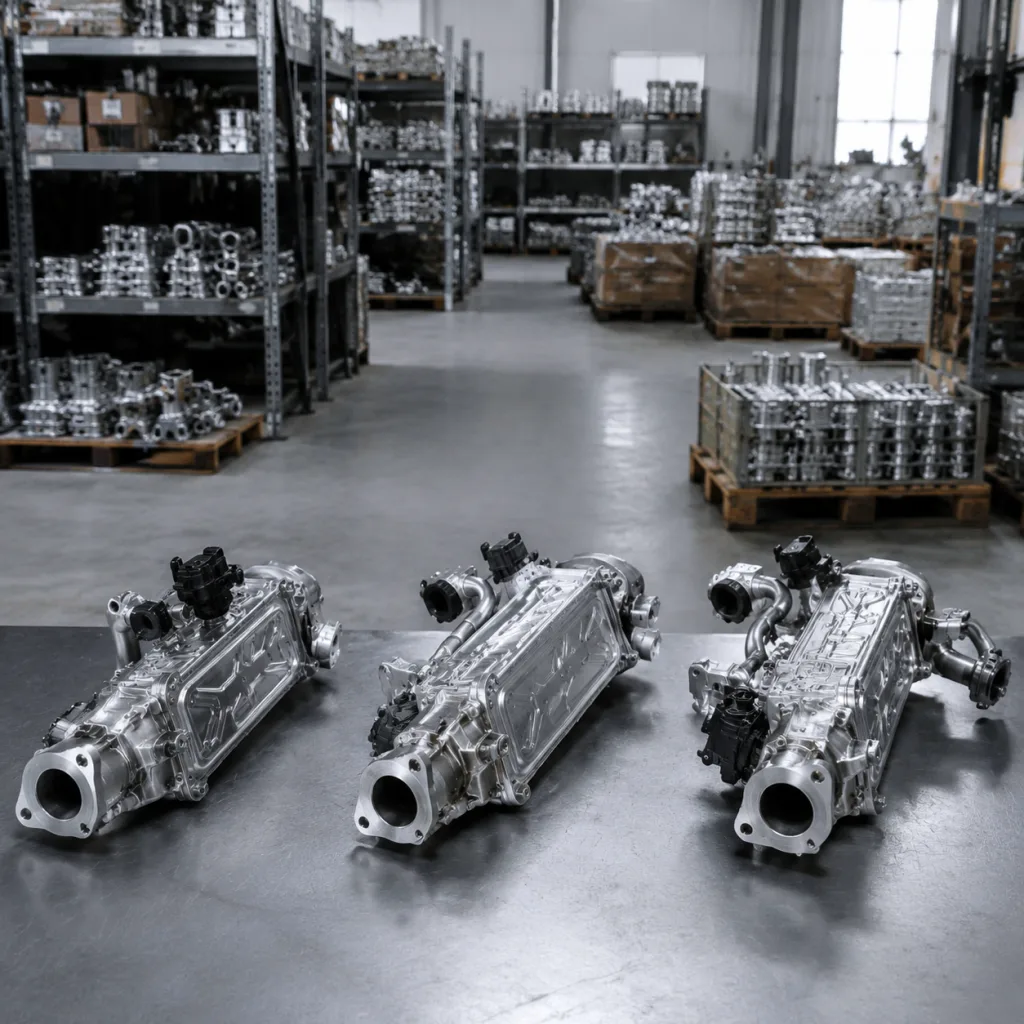
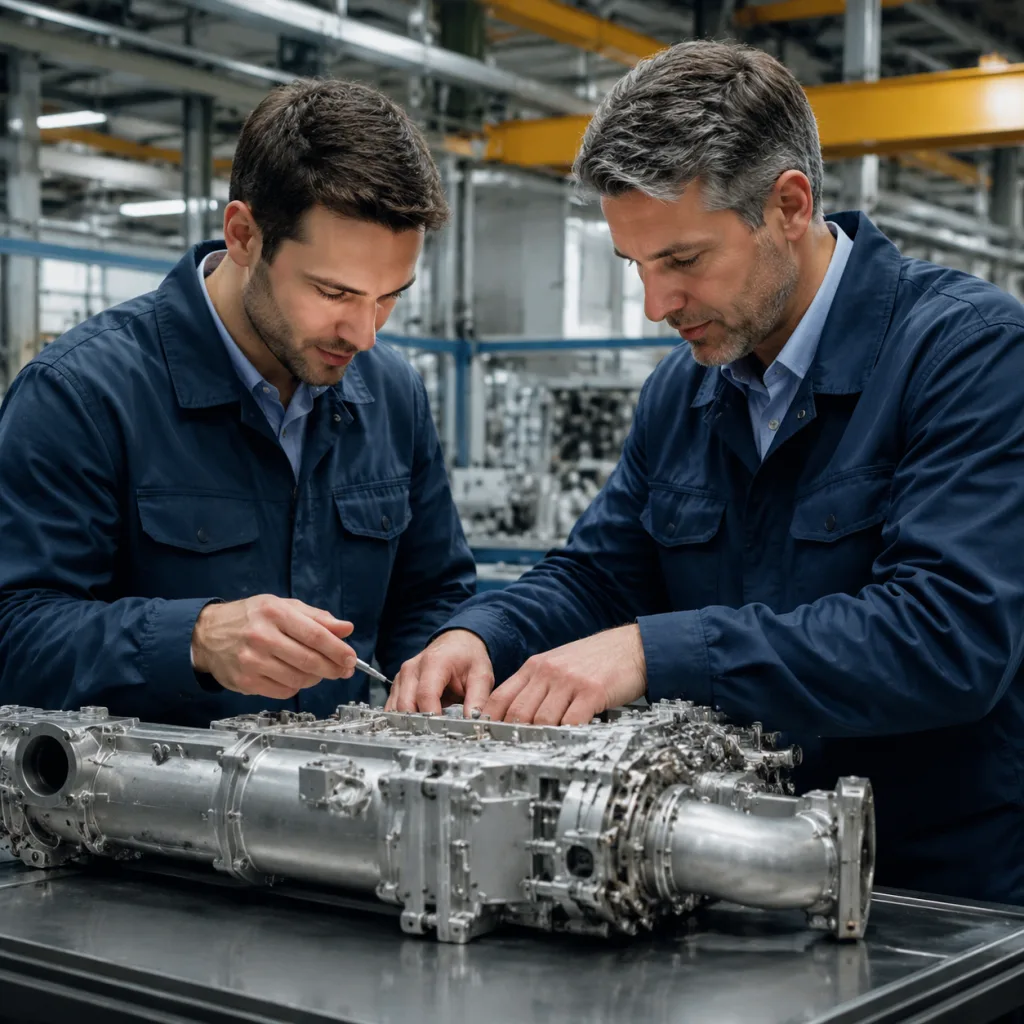
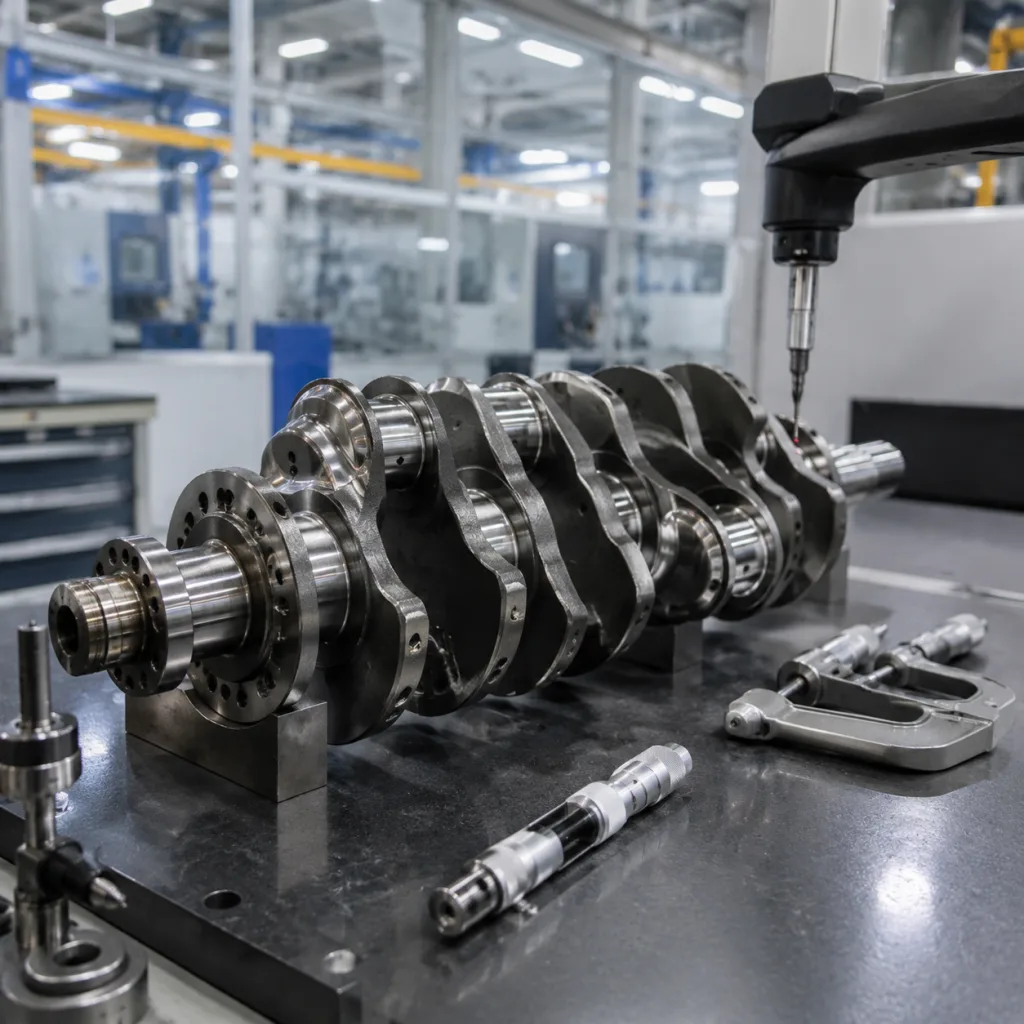
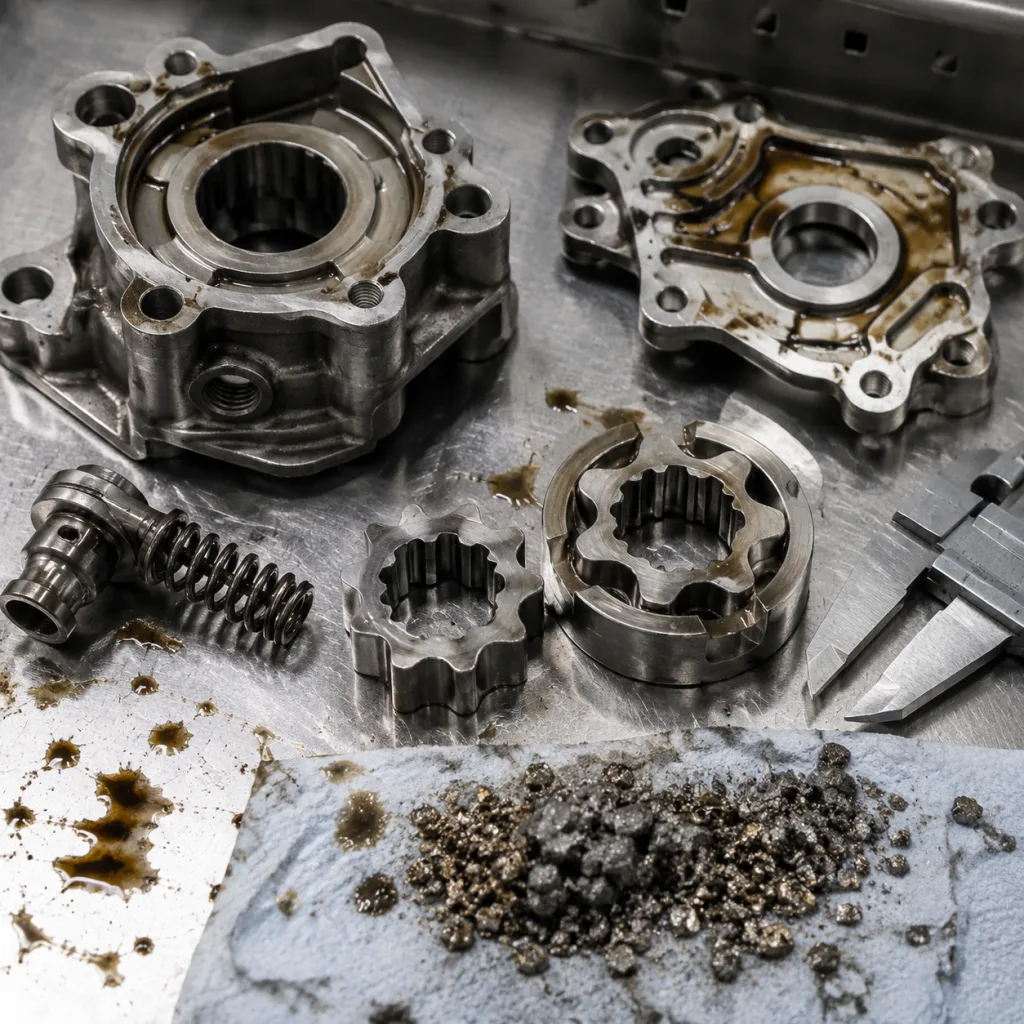
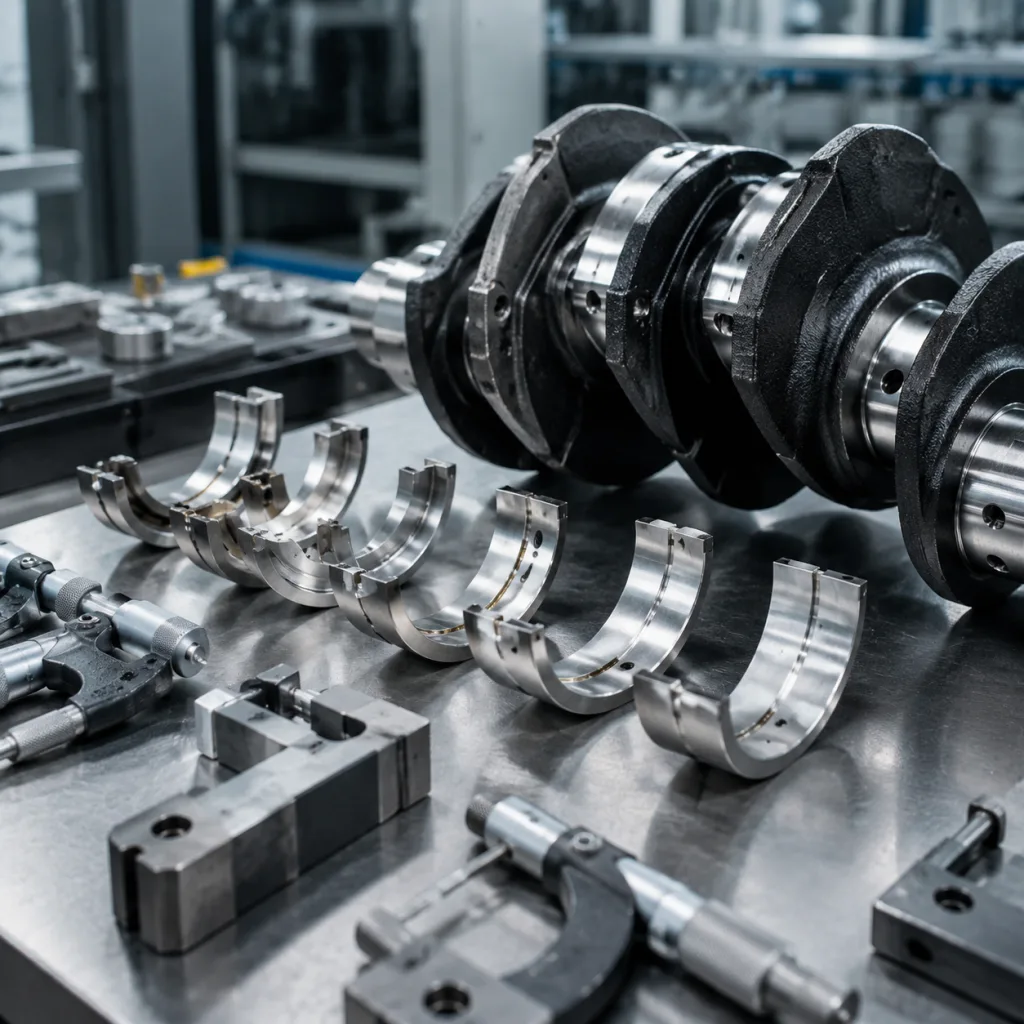
Selecting an EGR cooler Volvo supplier is not a catalogue-matching exercise. It is a risk decision that affects warranty cost, repair-network confidence, inventory planning and audit readiness. The part may look simple from the outside, but inside the sourcing file are questions about stainless steel grade, tube or plate integrity, flange flatness, leak-test discipline, gasket matching, export packaging and batch traceability.
Driventus manufactures engine and powertrain components in Taizhou, Zhejiang, under IATF 16949:2016 and ISO 9001:2015 certified systems. We supply aftermarket distributors, wholesalers, OEM and Tier-1 programmes, and multi-location repair networks in more than 60 countries.
This guide is written for B2B buyers comparing Volvo-fitment EGR cooler sources. It covers how to frame the RFQ, where failures usually start, how to compare specifications, what realistic MOQ and lead-time planning looks like, and which audit evidence matters before scaling orders. Driventus is an independent aftermarket manufacturer; vehicle brand names are used for fitment identification only.
Start with the sourcing decision, not the part number
A Volvo-fitment EGR cooler project should begin with the business case behind the buy. Are you replacing a supplier because of leakage claims? Launching a new aftermarket SKU? Supporting a repair-chain contract? Consolidating slow-moving engine parts into one shipment? Each scenario changes the required sample plan, documentation level, packaging work and launch timing.
A supplier should not quote from a model name alone. Heavy-duty trucks, buses, light commercial vehicles and passenger cars can use different cooler geometries, flange layouts, bypass systems, actuator arrangements and sensor interfaces. Procurement teams need a technical application file before asking for a firm price.
Confirm these points before quotation:
Application type: passenger car, commercial vehicle, truck, bus or off-highway engine.
Engine family, displacement, rated power band and emissions configuration, such as Euro 4, Euro 5 or Euro 6 equivalent.
OE-style cross-reference, if available, such as the customer’s 06A… or 11251… format where applicable.
Cooler type: tube bundle, plate-fin, integrated bypass or non-bypass design.
Connection details: exhaust flange bolt pattern, coolant port diameter, actuator plug, sensor thread and gasket interfaces.
Required supply format: cooler only, cooler with gaskets, or complete repair kit with clamps, studs, O-rings and brackets.
Annual volume, first order quantity, forecast split by quarter and destination market.
The buying path matters. A replacement-source project may start with 5–10 samples for fitment and leak testing, then a 100–300 piece pilot lot before normal ordering. A new SKU may need extra catalogue confirmation, carton artwork, barcode setup and launch-stock planning. A customer-specific programme may require drawings, control plans and formal approval records.
Buyers can review related engine components in our catalog or the engine component family page at /products/engine-components.html. For non-catalogue dimensions, kit changes or dedicated packaging, custom manufacturing is usually a better route than a spot purchase.
Where EGR cooler sourcing fails first
Most sourcing problems do not come from one dramatic defect. They start with small mismatches: a flange that does not sit flat, a gasket hole pattern that is almost correct, a tube wall that was substituted quietly, a carton that survives domestic handling but not export freight. The cooler may pass a visual check and still create warranty risk.
For sourcing engineers, the material stack and validation plan matter more than appearance. EGR coolers face repeated thermal cycling, exhaust soot exposure, vibration and coolant-side corrosion. A supplier comparison should therefore test how the part is built, how it is inspected and how changes are controlled.
Risk point
What to define or verify
Why it matters
Cooler core material
Stainless steel grade agreed by drawing or sample, commonly 304/316/441-type equivalent depending on design
Controls corrosion resistance and thermal fatigue life
Tube or plate thickness
Verified by drawing, sample teardown or approved control plan; common checks are in the 0.3–1.0 mm range
Prevents low-cost substitution and early perforation
Flange flatness
Defined by customer drawing or PPAP file; many buyers target ≤0.10–0.20 mm across sealing faces
Reduces exhaust leakage and gasket claims
Mounting and port dimensions
Critical dimensions checked by fixture, CMM or caliper; tolerances often ±0.10–0.30 mm depending on feature
Supports fast installation and avoids bracket stress
Leak test medium
Air or water test, pressure set by specification; coolant-side tests often use 2–6 bar and exhaust-side settings follow design limits
Confirms coolant and exhaust circuit integrity
Weld and braze inspection
Visual, section analysis, dye penetration or process audit where required
Reduces early leakage risk
Gasket interface
Matched to supplied gasket or customer seal, with thickness and hole pattern confirmed
Prevents assembly mismatch in repair networks
Packaging drop resistance
Export carton and internal protection test, often checked by 80–120 cm drop simulation for sample packs
Limits freight damage for long routes
</tr></thead><tbody> </tbody></table>Specification review should also separate bare-component supply from service-kit supply. Gaskets, O-rings, clamps, studs and brackets must match the repair process used by the customer’s network. One missing clamp or incorrect seal can turn an acceptable cooler into a delayed repair.
Ask the supplier which features are checked 100%, which are sampled by AQL, and which are validated only at first-article approval. That distinction is important. A one-time sample check does not protect every production batch.
Driventus aligns production documentation with IATF 16949:2016 and ISO 9001:2015 practices. Depending on project scope, documentation may include control plans, process flow charts, inspection records, material declarations and batch traceability. For markets where chemical compliance is required, buyers may also request declarations related to REACH (EC) No 1907/2006. Driventus does not claim approval or endorsement by any vehicle manufacturer.
Compare commercial offers on equal terms
An EGR cooler Volvo supplier should give terms that match the project reality. Universal stock promises are rarely useful. MOQ and lead time depend on tooling status, material procurement, gasket inclusion, packaging design, inspection scope and whether the part is an existing catalogue item or a customer-specific build.
Use this planning logic when reviewing quotes:
Existing catalogue item: sample supply may be 1–10 pieces if stock or semi-finished inventory is available; pilot orders are commonly 50–200 pieces per SKU; production lead time is often 30–45 days after deposit and packaging confirmation.
Sample-based development: MOQ is higher because drawings, fixtures, prototypes and validation runs must be prepared; buyers should plan 45–75 days for first samples and 60–90 days for the first production lot after approval.
Private-label packaging: carton artwork, labels, barcodes and pallet configuration can add 7–15 days if files are complete, or longer if compliance text and layout must be revised.
Mixed-container orders: useful for distributors combining EGR coolers with water pumps, gaskets, turbocharger parts or other engine components; MOQ may be calculated by SKU while shipment economics are calculated by carton volume and pallet count.
Peak season planning: sea freight schedules, customs documentation and local holiday periods should be included in reorder timing, with a 2–4 week buffer for long routes.
Do not compare a bare neutral-packed cooler against a full repair kit and treat the price gap as supplier margin. Cost is affected by stainless steel grade and weight, brazing or welding complexity, actuator or bypass content, gasket-kit inclusion, leak-test time, packaging specification and order quantity. To make the comparison fair, request the same Incoterms, currency, packaging level, inspection scope and accessory list from each supplier.
For routine aftermarket supply, a staged order flow works best: sample order, pilot purchase, then rolling forecast. This gives the buyer time to confirm fitment, packaging durability, label accuracy and claim behaviour before committing to large inventory. It also gives the factory time to finalise cartons, barcodes, pallet marks and inspection records.
Driventus can support export packing, carton labelling, pallet marking and shipment documentation for distributors and wholesalers. Buyers with fixed launch dates should share the target date in the first RFQ. Prototype approval, packaging confirmation and pre-shipment inspection can all move the delivery calendar. For seasonal demand, a quarterly forecast helps secure materials and capacity before urgent replenishment is needed.
Audit the process that will build the second order
The first sample matters, but the repeat order reveals the supplier. Factory audit readiness is often the deciding factor for importers, repair-chain buyers and Tier-1 sourcing teams because it shows whether the supplier can reproduce the approved part batch after batch.
Driventus operates under an IATF 16949:2016 and ISO 9001:2015 certified quality system, with controls covering supplier management, incoming inspection, in-process inspection, final validation and corrective action handling.
A practical audit for EGR cooler sourcing should examine:
1. Incoming material traceability — stainless steel, castings, fasteners and seals should be traceable by batch, with heat number or supplier lot recorded where available. 2. Welding and brazing control — operators, fixtures, heat input, furnace parameters and visual criteria should be defined, recorded and linked to the production batch. 3. Leak-test discipline — pressure settings, hold time, calibration records and rejection handling should be recorded; buyers may specify 100% leak testing for coolant circuits. 4. Dimensional inspection — flange, port, bracket and mounting dimensions should be checked against the approved reference, with first-piece and patrol inspection records retained. 5. Nonconforming product control — quarantine, rework and disposition procedures should be visible, with clear prevention of mixed approved and rejected stock. 6. Warranty feedback loop — field-return analysis should lead to corrective and preventive actions, such as weld-parameter adjustment, gasket change or packaging reinforcement.
Go beyond the production line walk-through. Review gauge calibration, training records, work instructions, change-control procedures and packaging verification. For EGR coolers, changes to stainless steel grade, weld parameters, gasket supplier, tooling, fixtures or test pressure can affect performance. Written approval routes should be clear.
A buyer may define notification thresholds: no material-grade change, gasket-source change, fixture revision or test-pressure change without written approval. This prevents silent changes from entering the field after the pilot lot is accepted.
For buyers requiring advanced project documentation, Driventus can discuss PPAP-style submissions where contractually agreed. The exact package depends on product complexity, annual volume and customer requirements. Typical files may include process flow, PFMEA, control plan, dimensional report, material certificate, leak-test record format, packaging approval and pre-shipment inspection report. This lets procurement teams compare suppliers using evidence, not only sample appearance.
Build the RFQ like an engineering handover
A short RFQ creates a long quotation cycle. If the factory has to guess the application, accessory content or inspection level, the first quote will be incomplete and the first sample may be wrong. Treat the RFQ as an engineering handover, not a price request.
Recommended RFQ package:
Target vehicle or engine application and market region.
Photos of the original part from multiple angles, including flanges, ports, brackets, sensor bosses and actuator area.
OE-style cross-reference, if available, using the buyer’s supplied number format.
Sample unit for reverse engineering if no drawing is available, preferably one new unit and one failed unit if failure analysis is needed.
Critical dimensions, including overall length, flange bolt spacing, port inner and outer diameters, bracket location and sensor thread size.
Required accessories: gaskets, clamps, O-rings, studs, bolts or actuator components.
Expected annual demand, first order quantity and target reorder cycle.
Destination port, Incoterms preference and packaging requirements, including neutral box, colour box, bulk carton or pallet loading limit.
Required inspection documents, compliance declarations and labelling format.
Any failure history from the current supplier, such as coolant leakage, exhaust leakage, flange warpage, gasket mismatch or freight damage.
If packaging is part of the programme, include current carton photos, label files, barcode rules and customer-specific inspection criteria. If the existing source has generated field complaints, share the symptoms. Coolant leakage, exhaust leakage, flange warpage and freight damage point to different validation checks.
A target cost or landed-cost expectation can also save time. The factory can then compare practical options: cooler-only supply, kit supply, neutral packaging, private-label packaging or adjusted inspection documentation.
Buyers can request a quote with this information to shorten the technical review cycle. If the part is being developed for a private-label programme, include brand-free packaging specifications and barcode requirements. Driventus is an independent aftermarket manufacturer; brand names are referenced for fitment only.
Scenario: turning a sample approval into a stable supply programme
A stable EGR cooler programme is built after the sample passes, not before. The usual mistake is to treat first-article approval as the finish line. For distributors and repair networks, the real test is whether the supplier can maintain availability, keep carton and label details consistent, respond to claims and protect fitment accuracy across reorders.
Driventus supports B2B customers with engineering review, sample comparison, production planning and export coordination. For distributors, the goal is stable availability, consistent packaging and low claim rates. For OEM and Tier-1 related projects, the focus shifts toward documentation, process control, change management and long-term traceability.
Support may include sample measurement, material review, gasket matching, pressure validation, packaging trials and inspection reporting. When customers consolidate engine and powertrain parts, Driventus can coordinate EGR coolers with related categories such as gaskets, water pumps, pistons, crankshafts and turbocharger components. This can reduce supplier-management load, simplify communication and improve container utilisation.
After launch, buyers should track the data that exposes weak points early:
On-time delivery by order and SKU.
Claim rate by batch.
Carton damage rate.
Backorder frequency.
Forecast accuracy.
Return reason codes.
Stock ageing and slow-moving coverage.
Regional fitment exceptions caused by emissions configuration differences.
Shared data helps refine forecasts, improve kit contents and identify whether a regional emissions configuration needs a separate SKU. It also helps separate a true product issue from an installation, packaging or cataloguing issue.
A stable programme usually works best with a 3–6 month rolling forecast, agreed safety stock for fast-moving SKUs and early notice for promotional or seasonal demand. For slower SKUs, buyers can combine replenishment with other engine components to improve freight economics while avoiding excess inventory. Driventus can review MOQ, packaging count, pallet quantity and shipment timing during each reorder cycle.
As with all aftermarket fitment references, Volvo names and application descriptions are used only to identify compatibility. Driventus does not state or imply vehicle manufacturer approval. Procurement teams should validate final application coverage against their own cataloguing data, regional emissions configuration and customer warranty policy before launch.
Frequently asked questions
Provide engine application, year range, photos, OE-style cross-reference if available, sample or drawing, required accessories, annual volume, first order quantity, destination and documentation needs. Add critical dimensions such as flange spacing, port diameters and sensor thread size when possible. This lets the factory confirm fitment, tooling status, MOQ and lead time.
Yes. Driventus can discuss private-label packaging, carton labels, barcodes, pallet configuration and inspection records for B2B customers. Packaging artwork, label rules and compliance requirements should be supplied during RFQ review to avoid launch delays.
No. Driventus is an independent aftermarket manufacturer; brand names are referenced for fitment only. Any application data should be validated by the buyer against their own catalogue, vehicle parc and regional requirements.
If you are reviewing an EGR cooler Volvo supplier for distribution, repair-chain or programme supply, send your RFQ data, target quantity, accessory list, destination and inspection requirements for technical and commercial review. Start the discussion at /contact.html