Flywheel vs Glyco Alternative: Sourcing Comparison
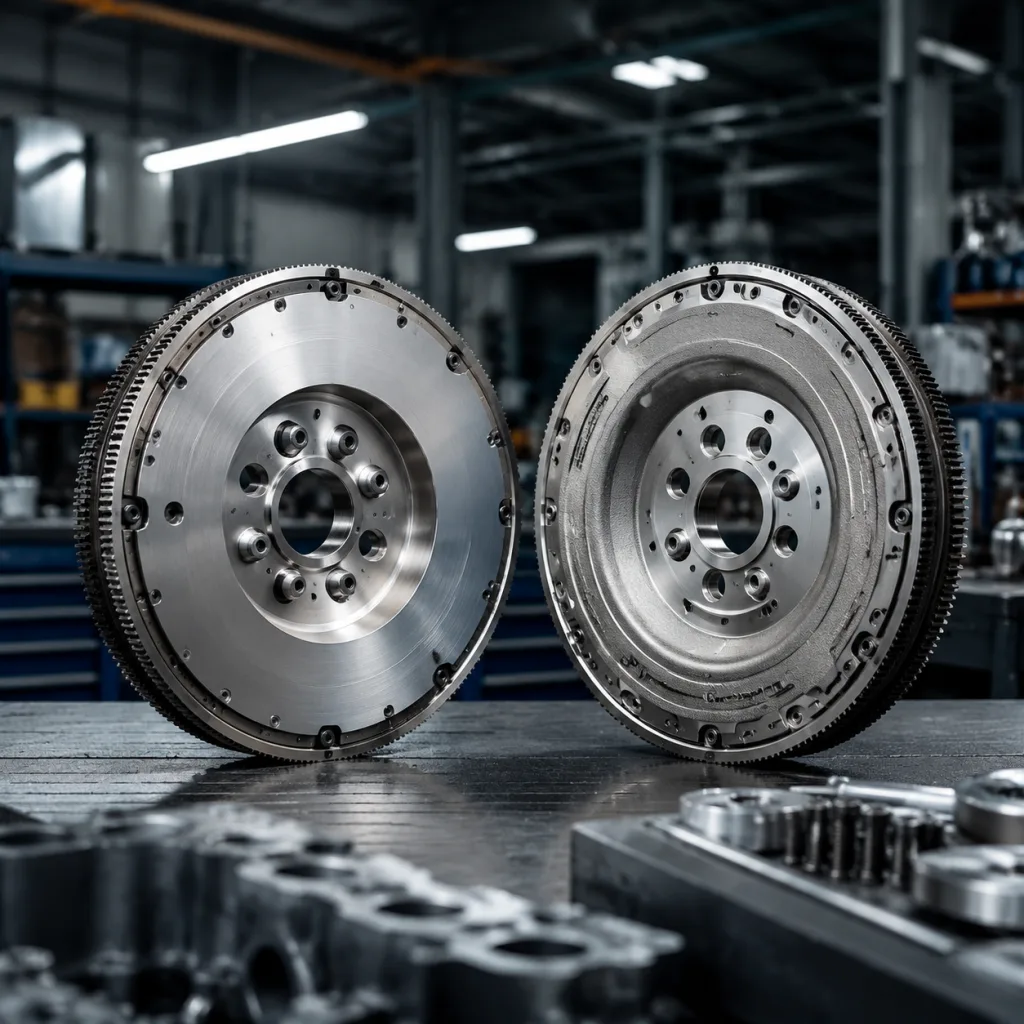
When buyers compare a flywheel vs Glyco alternative, the real question is not branding. It is whether the part matches OE dimensions, mass, ring-gear specification, balance grade, and clutch interface under actual service loads. For procurement teams, the decision usually comes down to fitment risk, test coverage, traceability, supply continuity, and commercial terms such as MOQ, unit price bands, and lead time. Driventus is an independent aftermarket manufacturer; brand names are referenced for fitment only. We supply flywheel products for B2B programmes across aftermarket, OEM, and repair-chain channels, with production controlled under IATF 16949:2016 and ISO 9001:2015. This article compares the two sourcing paths in practical terms, including inspection points, tolerances, test methods, and what to verify before a purchase order is released. If you need a broader view of adjacent engine parts, see [our catalog](/products.html) and [engine components](/products/engine-components.html).
What buyers should compare first
A flywheel is only acceptable if it fits the crankshaft, starter engagement, clutch stack height, and torque transmission requirements. For a Glyco alternative, buyers should compare the same measurable items, not catalogue descriptions.
Check point
What to verify
Typical buyer control target
Outer diameter
Match OE drawing or sample
±0.20 mm on finished OD unless the drawing states otherwise
Ring gear tooth count
Confirm exact count and pitch
100% match to OE reference
Mounting bolt pattern
PCD, hole size, pilot location
PCD ±0.10 mm, hole diameter within drawing limit
Runout
Measured after machining
≤0.05 mm face runout; ≤0.10 mm total indicated runout unless buyer spec is tighter
Mass and inertia
Within programme target
Mass ±1.5% and inertia within agreed tolerance band
Balance
Dynamic balance to agreed limit
Residual unbalance per customer requirement, commonly G6.3 or better for general applications
</tr></thead><tbody> </tbody></table>For procurement, the safest approach is to request dimensional reports, material certification, and sample approval before volume release. A serious supplier should also state which dimensions are 100% inspected, which are SPC-controlled, and which are sample-checked by lot size.
Flywheel vs Glyco alternative: objective trade-offs
The comparison is usually about sourcing strategy rather than part function. A direct replacement flywheel is designed to match a known OE reference. A Glyco alternative may be positioned as a substitute in the market, but it still has to pass the same fitment and validation checks.
Direct OE-equivalent approach: lower installation risk when dimensions, runout, and balance are tightly controlled.
Alternative-brand approach: useful when supply is constrained, but requires stricter verification of drawing data, revision level, and sample conformity.
Aftermarket production approach: gives buyers more control over material specification, packaging, accepted defect rate, and lead time.
Programme risk: the most common failure points are ring-gear mismatch, clutch face runout, incorrect heat treatment, and poor packaging damage.
Commercial impact: a part that looks similar but misses a tolerance can create scrap, rework, warranty claims, and line-down risk.
For fleet and repair-chain buyers, the best commercial outcome is often a qualified replacement that keeps the same installation process and service interval as the reference part. In practice, that means the supplier should commit to drawing revision control, sample traceability, and a stable monthly production plan, not just a catalogue cross-reference.
Technical specification points to request
If you are comparing a flywheel against a Glyco alternative, ask for a complete technical pack. The pack should be usable by purchasing, quality, and workshop teams.
Material grade and heat treatment condition, including hardness range and test location
Finished part mass, moment of inertia, and allowed tolerance band
Mounting face runout, parallelism, and flatness after final machining
Ring gear material, hardness, tooth profile, and press-fit retention method
Clutch face surface finish, typically specified as Ra 1.6–3.2 µm depending on application
Dynamic balance report and the applied residual unbalance limit
Inspection method, gauges used, and sampling plan by lot size
Packaging method, rust-prevention method, and shelf-life expectation
Published standards and systems should be named clearly in the documents. Relevant references include IATF 16949:2016, ISO 9001:2015, REACH (EC) No 1907/2006, and any customer-specific validation requirements. If a programme includes vibration or durability testing, ask for the actual test method, fixture description, cycle count, and pass criteria rather than a general statement. Buyers should also request revision-controlled drawings, first-article inspection records, and a PPAP-style submission where the programme requires formal approval.
Validation that reduces claim risk
Validation should follow the part’s duty cycle. A passenger car flywheel does not need the same test matrix as a commercial fleet application, but both need evidence.
1. Check dimensional conformity on a first-article sample against the approved drawing. 2. Confirm concentricity and face runout after machining, not only after casting or forging. 3. Inspect ring gear fit, press force, and tooth geometry using the agreed gauge standard. 4. Verify balance and mass consistency across the batch and compare against the control plan. 5. Review corrosion protection, packaging compression, and transit damage risk. 6. Record installation feedback from a pilot lot and retain field photos where possible. 7. Lock the approved sample, revision, and label format before mass shipment.
For NVH-sensitive applications, buyers may also request durability and surface performance data aligned to SAE J2527 or customer-equivalent protocols where applicable. If the part is intended for a specific vehicle line, OE cross-reference data should be stated exactly as supplied by the buyer, for example OE 06A107065 when relevant. Where a replacement is sensitive to clutch engagement feel, ask for both dry-fit and road-test confirmation from the pilot build, because a part can pass dimensional inspection and still create chatter if the friction face or balance distribution is inconsistent.
Where Driventus fits in sourcing
Driventus supplies flywheel programmes for distributors, OEM and Tier-1 buyers, and multi-location repair groups. We support sample approval, batch traceability, and repeatable machining control from our Taizhou facility.
Our approach is practical: match the required geometry, control the critical faces and balance, then document the result in a format that procurement and quality teams can use. For buyers needing application-specific changes, custom manufacturing is available under defined drawing and approval rules. If you need to review adjacent product families, start with our catalog and confirm the related engine-component ranges.
Commercially, we can align to a forecast-based release plan, with MOQ, unit price, and lead time set by part complexity and order stability. Typical OEM-style programmes expect a higher MOQ but lower piece price and steadier lead time after approval; service-parts orders often allow smaller MOQ but carry a higher unit price and slightly longer scheduling window. Buyers should expect lead time to be quoted separately for tooling, first articles, pilot lots, and mass production, because each step has different risk and capacity assumptions. A buyer can also use our quality system page to review certification scope, inspection control, and process discipline before audit or RFQ.
Commercial sourcing checklist
Before issuing a PO, confirm the following:
OE or application reference is documented correctly, including revision level and any superseded numbers
Material, heat treatment, machining specs, and tolerances are approved against the drawing
First-article sample has passed dimensional inspection, balance check, and runout measurement
Packaging protects machined faces and ring gear teeth, including anti-rust treatment and divider support
Lead time and MOQ are aligned to forecast demand, safety stock, and replenishment cadence
Traceability records are available by batch, including heat lot and production date
REACH compliance status is declared where required, along with any customer-specific substance restrictions
Commercial terms define price breakpoints, expedite fees, and any charge for special inspection or lab reports
For teams comparing a flywheel vs Glyco alternative, this checklist reduces ambiguity and supports cleaner supplier onboarding. If the application requires a quote with drawing review, pilot sampling, or variant control, use the contact route below. Buyers should also confirm the rejection-handling process in advance: whether nonconforming material is replaced, credited, or reworked, and who pays for freight on claims. That detail matters as much as the headline unit price.
Frequently asked questions
Not automatically. Interchangeability depends on exact dimensions, ring gear specification, mass, balance, runout, and crankshaft interface. A sample check and dimensional report are required before approval, and a buyer should also verify the revision level against the target vehicle application.
Request material data, heat-treatment confirmation, dimensional inspection results, runout and balance records, traceability details, packaging specification, and compliance statements aligned to IATF 16949:2016 and ISO 9001:2015. If the programme is controlled, also request the drawing, first-article report, and any agreed control plan or test summary.
Yes. We support custom manufacturing against approved drawings and sample requirements. Driventus is an independent aftermarket manufacturer; brand names are referenced for fitment only. For programme planning, we can also discuss MOQ, lead time, and price breaks after reviewing the drawing, target annual volume, and required inspection level.
If you are comparing supply options or need a technical review against your drawing, please [request a quote](/contact.html).