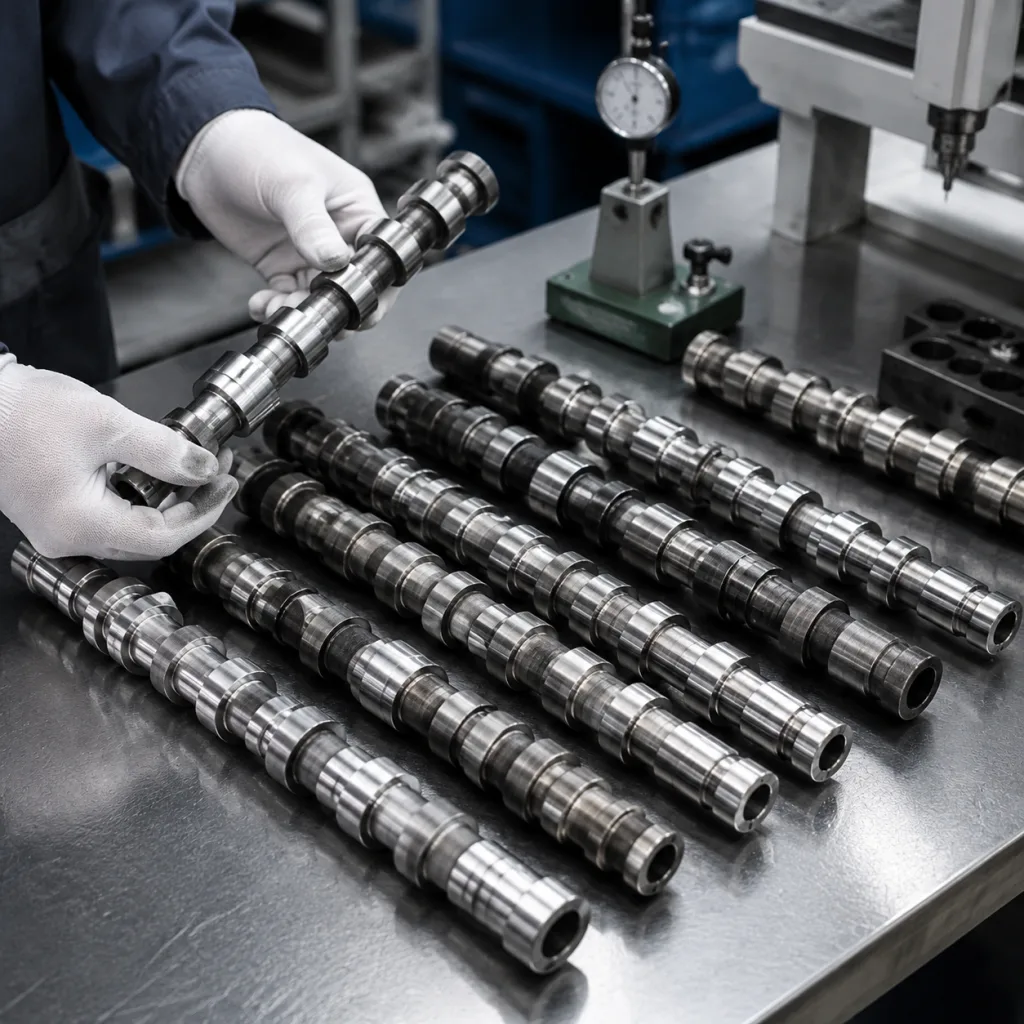
Buying a Subaru camshaft from China is a sourcing decision, not a browsing exercise. The real work is matching the application, confirming the geometry, and proving the factory can hold the part across batches. Driventus is a vertically integrated engine component manufacturer in Taizhou, Zhejiang, supplying aftermarket and OEM customers in 60+ countries. We work to IATF 16949:2016 and ISO 9001:2015 processes, with material and dimensional checks tied to each production lot.
For Subaru applications, the critical variables are lobe profile, journal diameter, overall length, thrust surface condition, and finish consistency. When a buyer searches for a camshaft Subaru manufacturer China, the question is whether the supplier can keep those dimensions stable and back them with test data. Driventus is an independent aftermarket manufacturer; brand names are referenced for fitment only. This article focuses on the decisions, failure modes, and verification steps that matter to distributors, repair networks, and import managers.
Start with fitment, not price
Before comparing quotes, lock down the exact application. Subaru camshafts look simple on a catalog page, but the sourcing risk lives in the details: engine family, valve-train layout, intake or exhaust position, and OE cross-reference.
What to verify first
Engine code and displacement
Cam type: intake, exhaust, or paired set
Journal count, journal diameter, and overall length
Lobe lift, base circle, and lobe separation if applicable
Surface treatment, hardness target, and runout limit
Packaging, labelling, and traceability requirements
A strong RFQ asks for measured values, not just names. For example, a buyer may require journal diameter at 24.00 mm ±0.01 mm, overall length within ±0.20 mm, and runout below 0.03 mm TIR. If the part is for an OE-equivalent program, request the intake and exhaust cam as separate line items because the pricing and inspection burden are often different.
If the seller cannot state inspection points in measurable terms, the quotation is not procurement-ready.
Where camshafts fail in production
A camshaft is geometry-sensitive. Small drift can change valve timing, idle quality, oil film behavior, and wear rate. That is why the factory’s control plan matters as much as the final drawing.
Control point
What to confirm
Typical procurement risk
Material
Alloy steel grade, heat-treatment route, hardness range
Premature lobe wear
Journal geometry
Diameter, cylindricity, surface finish
Oil film loss
Lobe profile
Lift, timing event, profile repeatability
Misfire or low power
Runout
Measured after grinding and finish operations
Noise and bearing load
Cleanliness
Residual abrasive and debris limits
Engine contamination
</tr></thead><tbody> </tbody></table>Ask the supplier to name the full process window: blank forging or casting route, rough machining, heat treatment, finish grinding, and final wash. A serious factory should also be able to quote a hardness band such as 50–58 HRC where applicable, plus a surface finish target around Ra 0.2–0.4 μm on journals or the drawing-specific equivalent.
The most common failure mode is not one dramatic defect. It is a stack of small misses: inconsistent grinding, weak traceability, and no 100% runout check before packing. A supplier with in-house machining and inspection is easier to audit than a trading-only source. Driventus integrates production of engine components and can align camshaft work with the dimensional control used across its powertrain range.
Compare the supplier options
Buyers usually have three sourcing paths: trading company, specialty machine shop, or vertically integrated manufacturer. The cheapest quote is rarely the lowest-risk one.
How the options differ 1. Trading company: fastest to quote, weakest on process control and traceability. 2. Specialty machine shop: stronger on machining, sometimes narrower on export documentation and program support. 3. Vertically integrated manufacturer: best when you need repeatable supply, inspection records, and tighter lot control.
For a program that must scale, compare the supplier on five points: process ownership, dimensional evidence, heat-treatment control, traceability, and response time. If a factory outsources heat treatment or finish grinding, ask who owns the rejection cost when a lot misses hardness or runout.
This is also where a buyer should separate fitment from branding. Driventus is an independent aftermarket manufacturer; brand names are referenced for fitment only.
Request a quote that can be verified
A usable supplier quote should state MOQ by part number, sample lead time, production lead time, and packing details. If any of those are vague, the quote is not ready for procurement approval.
Typical sourcing questions
What is the MOQ per OE reference or application?
How long for samples, and are they production-spec samples?
What is the standard lead time after order confirmation?
Can the plant support factory audits or remote document reviews?
Which records are retained for lot traceability?
In practice, many factory quotes fall into three patterns: sample orders at 1–5 pcs for fitment validation, MOQ at 50–200 pcs per part number for standard aftermarket programs, and 30–45 days for repeat production after deposit, depending on heat-treatment load and machining capacity. Custom packaging, new tooling, or special hardness testing can extend the schedule by 7–14 days.
If you are building a regional programme, ask for demand-based release planning rather than one-off shipments. That reduces stock-outs and helps control freight cost. Buyers who need a broader engine range can review our catalog and engine components together.
Check the document pack before approval
A credible source should provide more than a sales sheet. At minimum, request dimensional reports, hardness checks, and material certification by lot. For export programmes, compliance reviews may also touch REACH (EC) No 1907/2006 for chemical substance reporting where applicable.
Driventus operates under quality system controls aligned with IATF 16949:2016 and ISO 9001:2015.
Useful documents for procurement
PPAP-style dimensional data, when requested by the buyer
Material certificate and heat-treatment record
Hardness report by lot
Final inspection checklist
Packaging and labelling specification
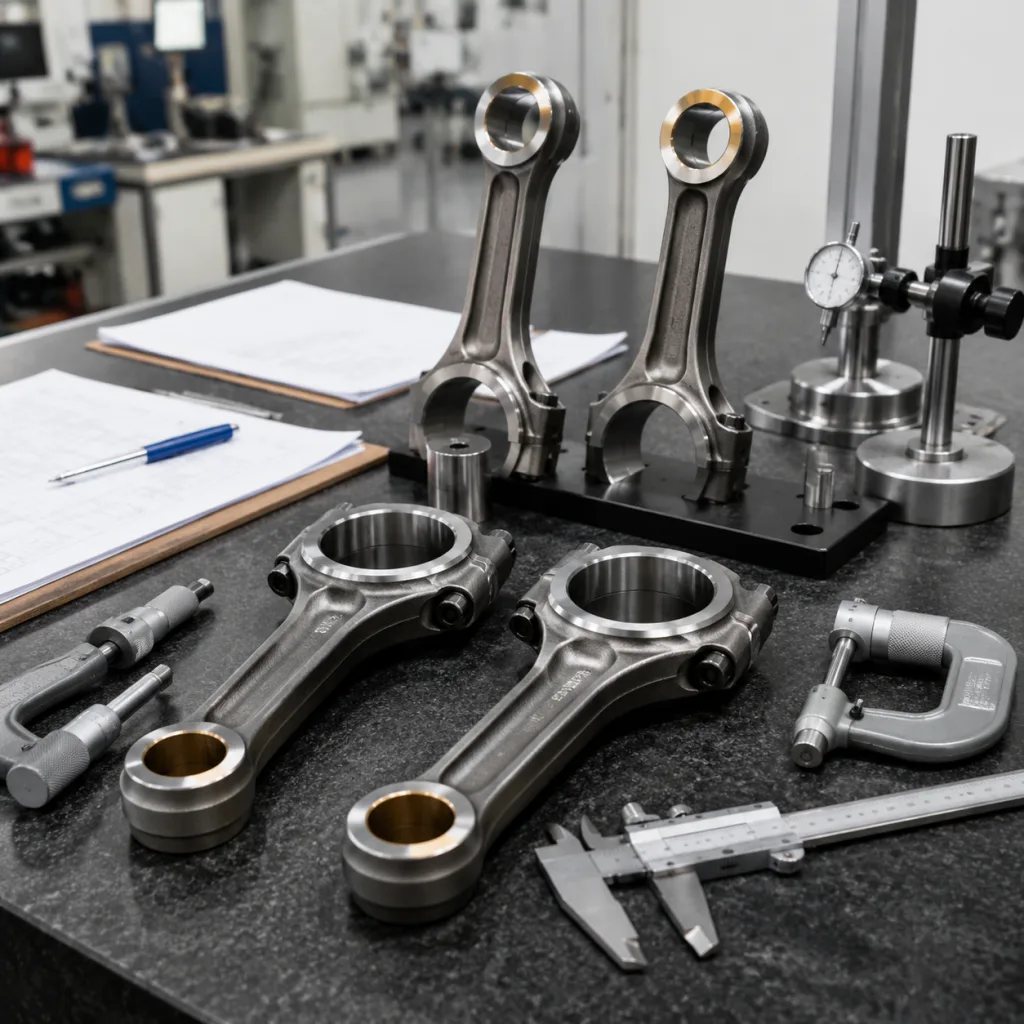
For Subaru camshafts, a practical incoming spec pack should also include a sampling plan, usually AQL-based, the measurement method used for runout and lobe lift, and the acceptable rejection path. Ask for the actual gauge list, for example micrometers, V-block runout fixtures, CMM if available, and Rockwell hardness equipment calibration dates. If a supplier says “OEM quality” but cannot show lot-level data, the claim is not actionable.
When custom work is the right move
Custom camshaft work makes sense when a buyer needs a discontinued reference, a regional variant, or a private-label programme with controlled packaging. It is also useful when a workshop network needs a consolidated reference across multiple Subaru engine families.
Driventus supports custom manufacturing for buyers who need application-specific geometry, private branding, or revised packing specifications. This is usually the right path when the target part must match a strict OE envelope but the market requires new tooling or a modified supply plan.
Use custom work when:
The OE reference is scarce or discontinued
The buyer needs a dedicated catalogue number
The programme requires country-specific labelling
The application demands controlled batch traceability
For custom projects, clarify whether the supplier will build to drawing or to sample, and require a signed approval record before mass production. Define prototype cost, sample charge, production MOQ, and rework policy up front. Treat the first sample as a validation step, not an approval by the vehicle maker.
Frequently asked questions
Yes. Private-label supply is available when the buyer provides packaging, labelling, and application requirements. The part must still pass dimensional and quality checks before release.
Ask for material certification, hardness results, dimensional inspection data, and packing specifications. For larger programmes, request traceability records and audit access to the quality system.
Yes, when the catalogue already contains the relevant reference. Cross-references are used for fitment only, and the final part still needs application verification.
If you are sourcing a Subaru camshaft programme from China, send your target application, volume, and required documents. Use our contact form at /contact.html to request a quote.