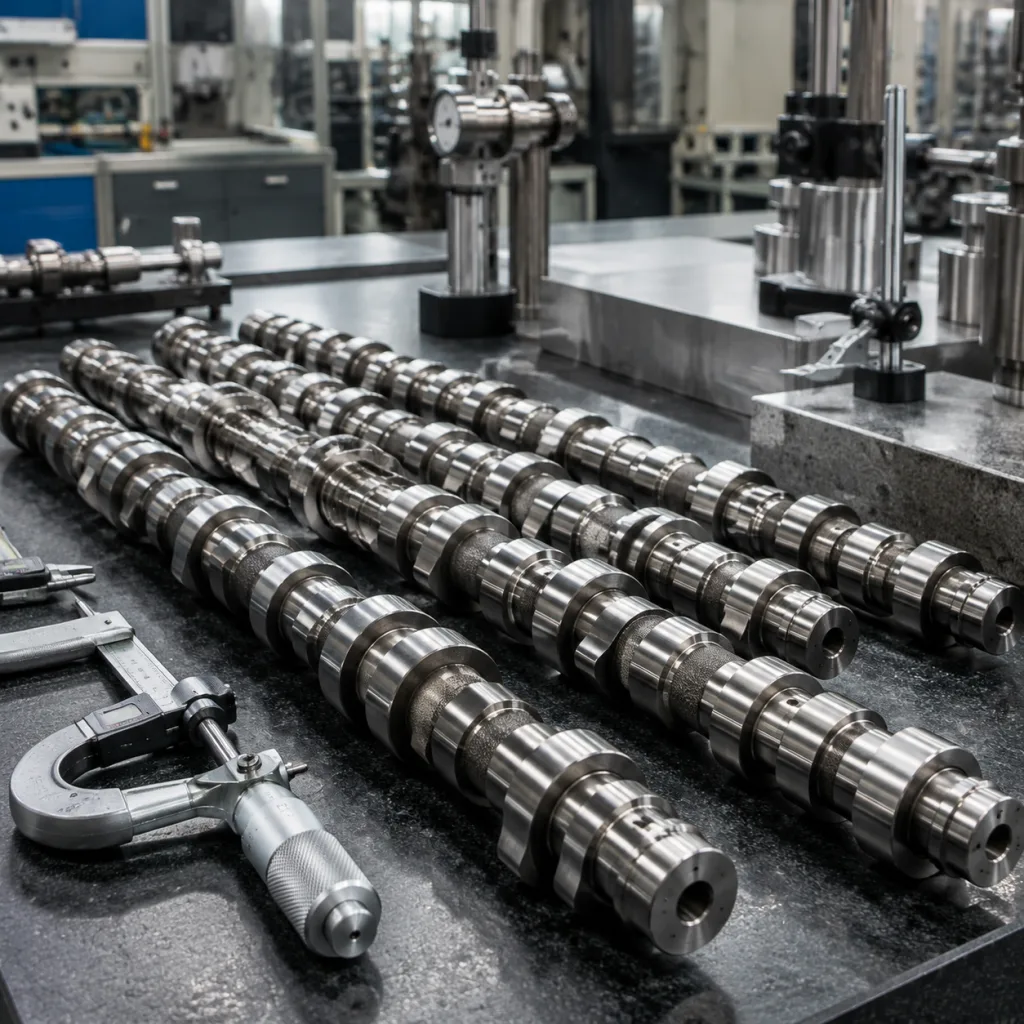
Camshaft for Mini Countryman Replacement: OE-Equivalent Fit
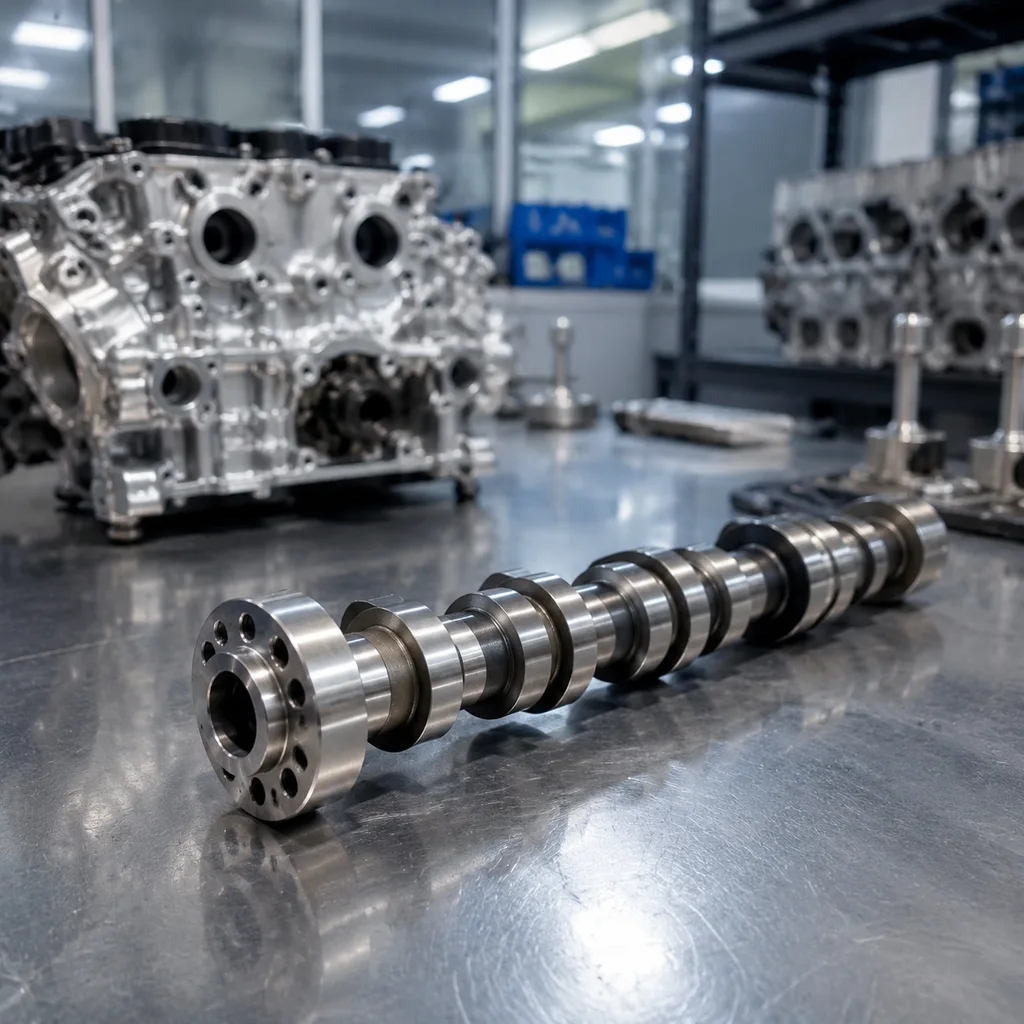
Selecting a camshaft for Mini Countryman replacement means checking more than the vehicle badge. Buyers need the correct engine code, OE cross-reference, lobe profile, journal diameter, overall length, trigger wheel geometry, and the actual valve timing spec before approving any order. A mismatch as small as 0.10 mm on journal fit, 0.20 mm on end play, or a few degrees in lobe phasing can affect idle quality, emissions performance, oil pressure stability, and long-term wear. Driventus supplies camshafts for aftermarket and B2B programmes with controlled machining, hardness verification, and inspection records aligned with IATF 16949:2016 and ISO 9001:2015. Driventus is an independent aftermarket manufacturer; brand names are referenced for fitment only. For procurement teams, the priorities are traceability, material specification, tolerance control, MOQ clarity, and packaging that protects finished surfaces in transit. When an OE-equivalent part is required, the most reliable route is to validate against the original sample or confirmed OE number before release.
What buyers should verify first
A replacement camshaft is only correct when its physical and functional details match the engine application. For Mini Countryman programmes, begin with these checks:
Engine code and model year range
Intake or exhaust position
OE reference, for example `OE 06A107065` when the catalogue uses a confirmed cross-reference
Overall length, journal count, and journal diameter
Lobe lift, base circle, lobe separation angle, and cam timing centerline
Trigger wheel or phaser interface, if fitted
Surface finish and hardness specification
Chain sprocket keyway, bolt pattern, and end thrust detail
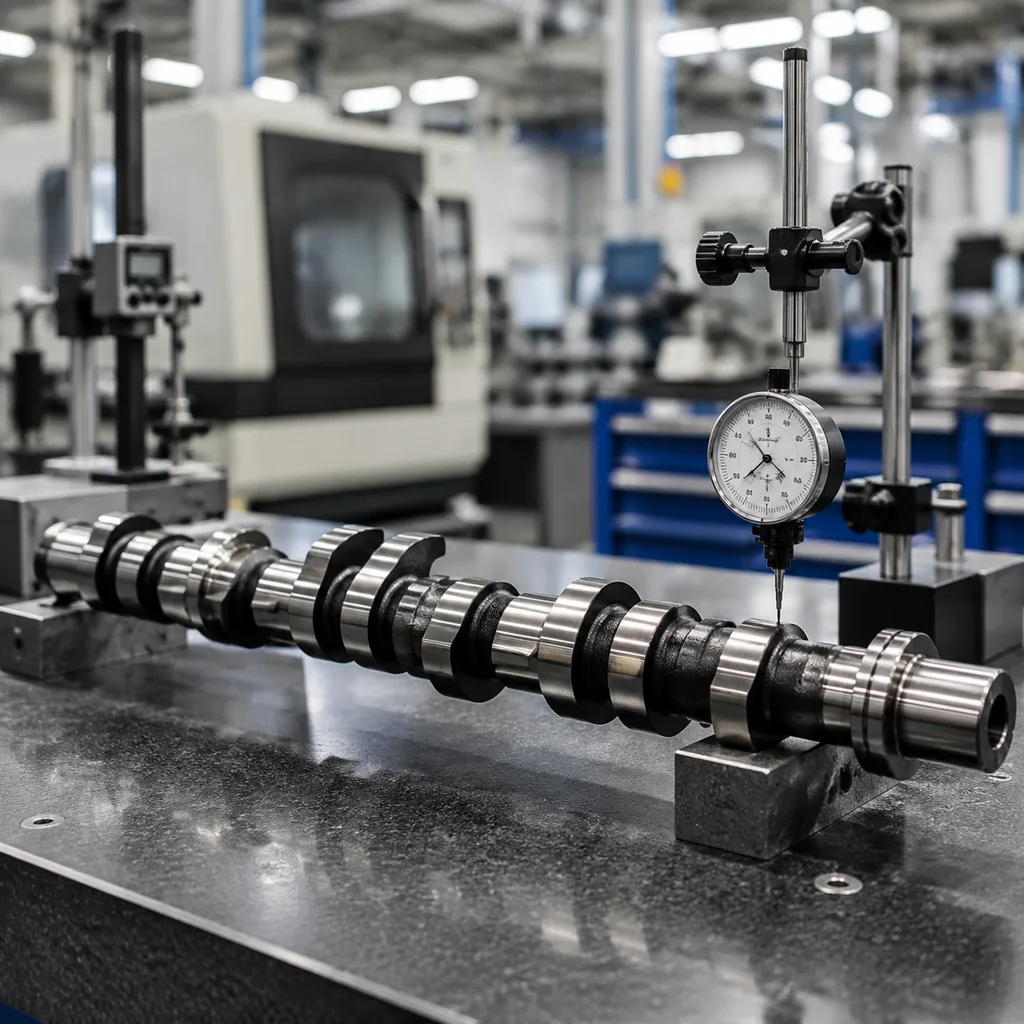
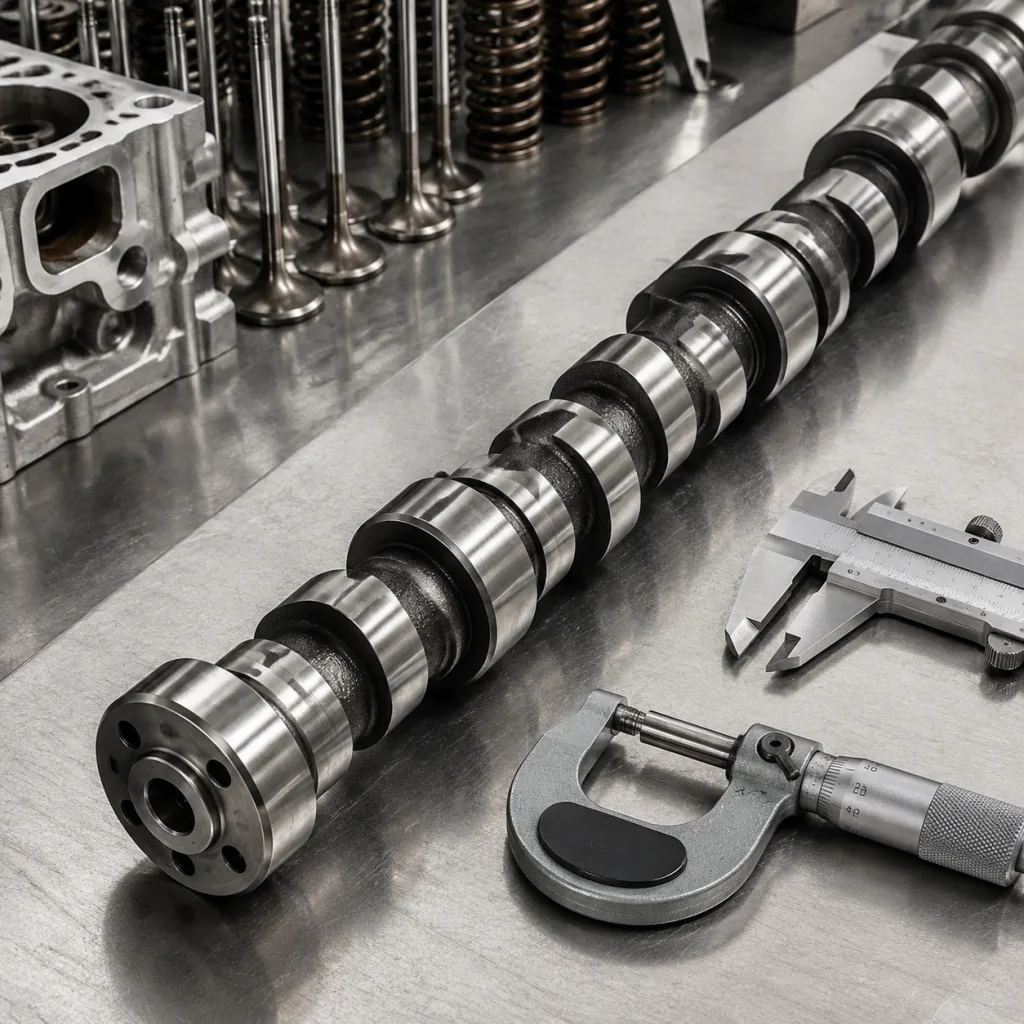
For purchasing teams, the safest process is a side-by-side comparison with the removed part and confirmation against the vehicle build data. Measure the sample with a micrometer and V-block setup, then confirm the critical dimensions against the drawing before purchase order release. Typical buyer acceptance checks include overall length within ±0.20 mm, journal diameter within ±0.01 mm, runout within 0.03 mm TIR, and lobe lift within ±0.05 mm of the approved reference. A label that only says "Mini Countryman camshaft" is not enough for stock release.
OE-equivalence and dimensional control
For replacement supply, OE-equivalence means the part performs like the original component without requiring adaptation. That depends on dimensional control and repeatable heat treatment, not just a visual match.
Check point
What to confirm
Typical buyer risk if missed
Journal diameter
Matches bearing support dimensions, typically held to ±0.01 mm on critical fits
Noise, oil film loss, premature wear
Overall length
Fits cylinder head layout and thrust spacing, often controlled to ±0.20 mm
Assembly interference
Lobe profile
Matches valve timing events, including lift and duration
Power loss or rough idle
End geometry
Fits sprocket or phaser interface, including bolt circle and keying
Timing error
Surface hardness
Meets wear requirements, commonly verified by HRC or HV methods
Rapid lobe or follower damage
Runout and concentricity
Stays within the drawing limit, often 0.02-0.05 mm TIR depending on design
Vibration, uneven wear
</tr></thead><tbody> </tbody></table>For B2B sourcing, OE-equivalence should be supported by a drawing, a measured first article, or a known OE sample. Driventus controls machining and inspection against the drawing specification provided by the customer or confirmed OE reference. That gives procurement teams a clearer basis for inbound inspection and reduces returns from channel customers. Where a customer requires tightened control, we can align acceptance with the sample and lock the revision so future deliveries stay consistent.
Validation testing for replacement supply
A credible camshaft programme needs more than dimensional inspection. Validation should cover material, heat treatment, and functional checks before production release.
Key controls commonly used in replacement supply:
Chemical composition verification on the base material, with mill certificate review before forging or machining release
Hardness testing after heat treatment, typically across specified lobe and journal points
Runout and concentricity checks on journals, plus end float confirmation where the design requires it
Lobe profile measurement against the approved drawing, using a profile projector or cam analyzer
Surface roughness inspection on bearing and lobe areas, with Ra limits set to the print
Packaging review to prevent nicks during export, including oiling, sleeve protection, and tray separation
Typical validation samples for buyer approval are 3-5 pcs for dimensional sign-off, with 1 pcs retained as a golden sample when the programme is repeated. In regulated markets, buyers may also request compliance evidence for REACH (EC) No 1907/2006 on restricted substances in the supply chain. For quality management, IATF 16949:2016 and ISO 9001:2015 support traceability, document control, and corrective action when a deviation is found. A practical release pack should include the inspection report, material traceability, hardness record, and packaging photos.
Sourcing terms that matter to distributors and repair chains
Replacement camshafts move through different channels, and each has a different buying profile.
Aftermarket distributors need stable packaging, barcoding, and low claim rates
Multi-location repair chains need consistent fitment data and short lead times
OEM and Tier-1 suppliers need PPAP-style documentation, sample approval, and change control
Importers often need MOQ, price breaks, and forecast-based allocation
For planning purposes, many camshaft programmes run with a typical MOQ of 50-100 pcs per part number for stock items, while custom or low-volume builds may require 200-500 pcs depending on tooling and surface treatment. Lead time for stocked items is commonly 15-25 days, while made-to-order parts are often 30-45 days after sample approval; export packing and ocean transit can add another 10-30 days depending on destination. Buyers should also ask for tiered pricing at 100/300/500 pcs, sample cost handling, and whether the quoted price includes export cartons, inner sleeves, and palletization. Driventus supports B2B sourcing with export experience across more than 60 countries and controlled production from Taizhou, Zhejiang. Buyers can review our catalog and the wider engine components range when building a consolidated sourcing list. For internal supplier qualification, the quality system explains our inspection and traceability approach.
When custom manufacturing is the better route
Not every application should be solved with a stock replacement. Custom manufacturing is appropriate when the OE part is discontinued, when an engine variant differs by region, or when the buyer needs a private-label programme.
Typical triggers for a custom order include:
Missing OE stock in the target market
Multiple engine variants under one model name
Requirement for revised surface treatment or packaging
Need for a customer-specific cross-reference sheet
A target tolerance or coating requirement that differs from the stock item
For custom jobs, buyers should expect a longer approval cycle: drawing confirmation, sample production, dimensional report, hardness verification, and final sign-off before mass production. A practical commercial structure is to request an RFQ with target annual volume, required MOQ, packaging spec, and requested lead time, then compare landed cost rather than unit price alone. In those cases, custom manufacturing can be used to align material, machining, and traceability with the target application. That is often the most efficient path for importers who need consistent supply without redesigning the end product. If the application is urgent, ask for an existing sample against which we can match the lobe profile, journal diameter, and end geometry before quoting.
Frequently asked questions
Confirm the engine code, intake or exhaust position, OE reference, and physical measurements from the removed part. Measure overall length, journal diameter, and lobe lift; model name alone is not enough because variants can share badges but use different camshafts.
Yes, when the OE reference is confirmed from the customer’s data or sample. We use cross-references for fitment only and do not claim manufacturer endorsement. For final approval, we recommend matching the sample and locking the revision against the confirmed OE number.
Documentation can include inspection records, material traceability, hardness reports, and dimensional data aligned with IATF 16949:2016 and ISO 9001:2015. For release, buyers can request sample reports, packing photos, and lot traceability; specific document sets depend on the order and market.
If you are sourcing a camshaft for Mini Countryman replacement, send the OE number, engine code, or sample photos for review. Use our contact form to request a quote: /contact.html