Engine Mount Infiniti Manufacturer China: Sourcing Guide
For procurement teams evaluating an engine mount Infiniti manufacturer China partner, the main priorities are fitment accuracy, rubber-to-metal bonding consistency, and dependable supply. Engine mounts need to control vibration, maintain drivetrain alignment, and withstand heat, oil mist, and road loads without excessive deflection. For B2B buyers, the decision is less about appearance and more about OE reference matching, material specification, auditability, and repeatable batch quality. Driventus is an independent aftermarket manufacturer; brand names are referenced for fitment only. We supply distributors, repair networks, and OEM-related buyers from Taizhou, Zhejiang, with IATF 16949:2016 and ISO 9001:2015 systems in place. This article explains what to verify before placing a purchase order, how to compare suppliers, and which documents matter during supplier approval and incoming inspection.
What buyers should verify first
For this part family, supplier selection should begin with dimensional and functional match rather than unit price alone. A mismatched mount can shift powertrain position, increase cabin vibration, or accelerate wear on exhaust and driveshaft components.
Minimum sourcing checks
OE reference and application range confirmed against the vehicle list
Bracket geometry, stud size, and hole centre distance checked from drawings or samples
Rubber hardness specified in Shore A, with an acceptable tolerance defined by the buyer
Bond strength and static load capacity documented on the technical sheet
Coating or plated finish matched to corrosion exposure
Sample approval completed before bulk release
For production control, request the actual critical dimensions in millimetres, not just a “fits” statement. Typical buyer-controlled tolerances include hole centre distance ±0.2 mm to ±0.5 mm, stud thread class or pitch verified against the mating bracket, rubber hardness within ±5 Shore A, and overall height or stack-up within ±0.5 mm where the mount interfaces with multiple brackets. If the application uses a hydraulic or voided design, ask for cavity volume, fluid fill spec, or void geometry confirmation, because those details directly affect vibration isolation and collapse rate.
Where the application is tied to a specific OE cross-reference, use the part number format already specified by your sourcing file, for example `OE 11251…` or `OE 06A…` where applicable. Do not accept a supplier description that only says “fits” without traceable dimensional evidence.
Why certification matters in supplier approval
A serious factory should be able to support controlled production, traceability, and corrective action. For procurement teams, that usually means an auditable quality system rather than a sales promise.
Area
What to ask for
Why it matters
Quality system
`IATF 16949:2016`, `ISO 9001:2015` certificates
Confirms process control and documented quality management
Material control
Rubber compound declaration, metal grade, adhesive or bonding method
Reduces variation in load and ageing performance
Compliance
`REACH (EC) No 1907/2006` statement where relevant
Supports EU chemical compliance expectations
Validation
Static load, fatigue, heat ageing, oil resistance data
Helps assess service life before field release
Traceability
Batch coding and inspection records
Supports claims handling and supplier review
</tr></thead><tbody> </tbody></table>Driventus is an independent aftermarket manufacturer; brand names are referenced for fitment only. Buyers should also request copies of incoming inspection criteria and the final inspection checklist used at dispatch. Our quality system page outlines the controls used for export production.
For technical approval, ask for the compound formulation family, metal substrate specification, adhesive cure window, and a PPAP-style document pack if your internal process requires it. A practical approval file usually includes dimensional report, material certificate, salt-spray or corrosion result for coated brackets, and a first-article sample signed off against the target vehicle application. If the mount is supplied into a warranty-sensitive channel, define the rejection limit in advance, for example rubber durometer drift greater than ±5 Shore A, bond-line separation, or visible cracks after heat ageing.
Lead times, MOQ, and packaging for export
Engine mount programs are typically sold on a repeat-order basis, so logistics matter as much as tooling. For import managers, the real cost often sits in inventory carrying, delay risk, and mismatch returns.
Typical commercial points to confirm
MOQ by part number and by combined order
Sample lead time and production lead time
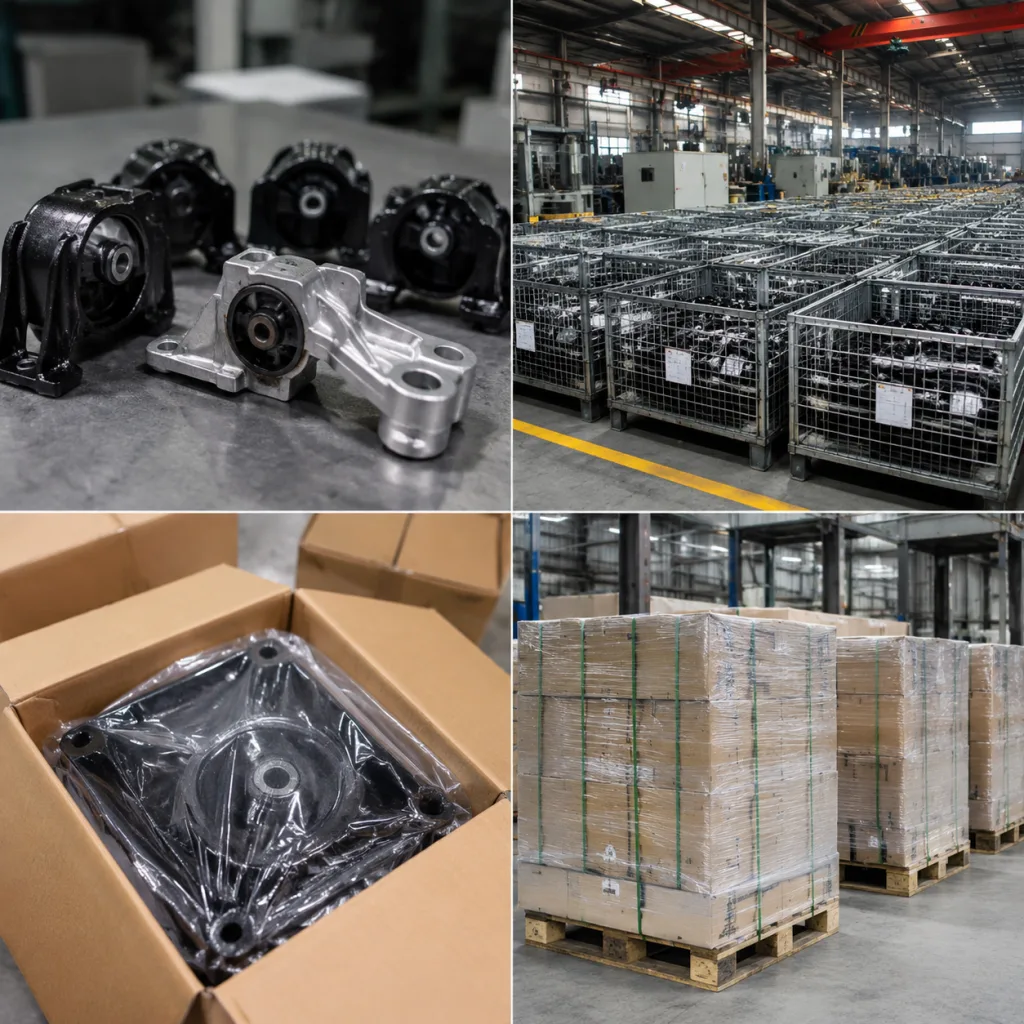
Carton quantity, pallet pattern, and export label format
Country-of-origin marking and barcode requirements
Acceptance of mixed-model cartons when distribution demand is fragmented
For stable aftermarket supply, ask whether the factory can support rolling forecasts and a safety stock agreement. If the part is shared across several Infiniti applications, confirm whether packaging can be standardised across the range to reduce warehouse handling. You can review adjacent powertrain categories in our catalog or the broader engine components section.
As a working benchmark, samples are often available in 5–10 working days when the design already exists, while new-tool or revised-compound programs can take 20–35 days for samples and 30–45 days for bulk production after approval. MOQ depends on complexity: standard catalogue mounts may start around 50–200 pcs per part number, while private-label cartons or mixed-SKU consolidations may require a higher combined order to keep line changeovers economical. For buyers comparing offers, ask for pricing in three tiers—sample, trial order, and repeat order—so you can see whether the factory is discounting only at volume or building in hidden setup fees.
Price logic should be tied to material and process, not just the finished shape. A simple bracketed mount with standard rubber usually prices lower than a hydraulic, voided, or heavy-gauge bracket version. Request whether the quote includes export carton, inner sleeves, barcode labels, and palletisation. Also confirm whether the lead time is ex-works or finished-goods ready for shipment, because a low unit price can disappear if packaging, testing, or consolidation adds unquoted days.
Testing and validation before release
A purchase order should be backed by evidence that the part survives the duty cycle expected in service. For engine mounts, the most common failure modes are rubber cracking, separation at the bond line, and excessive compression set.
Common validation checks
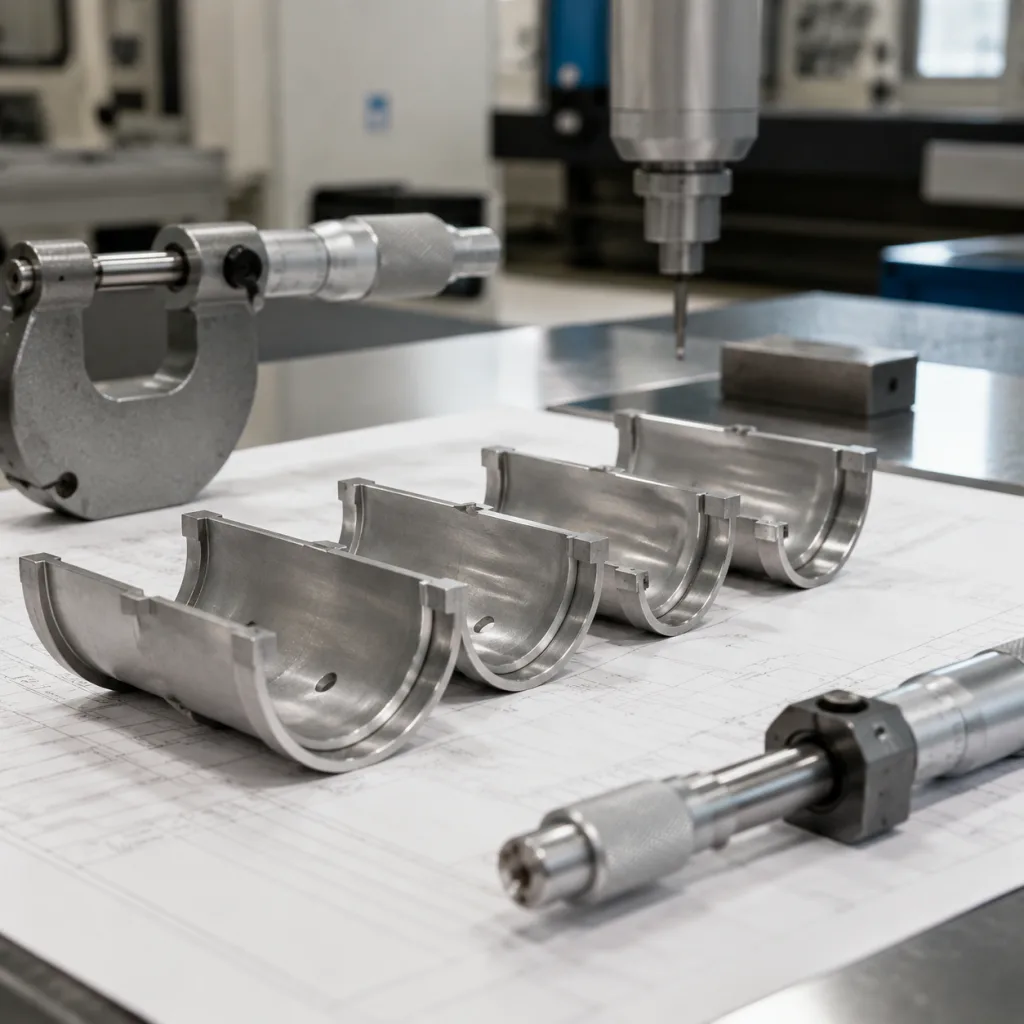
Dimensional inspection with calipers, gauges, and fixture checks
Static compression and shear load testing
Heat ageing and oil exposure screening
Road vibration or durability simulation where available
Fitment trial on the target subframe and bracket set
When the mount is used in markets with strict durability expectations, buyers often ask for test methods referenced by name, such as `SAE J2527` for accelerated ageing of polymer-based materials where applicable. For certain exhaust-adjacent applications, `ECE R-83` may also be relevant to the vehicle system context, although the mount itself is not homologated under that rule. The key is consistent evidence, not paper claims.
A useful buyer-side release test set includes three checks: a static load test at the rated installation position, a thermal soak cycle that simulates engine-bay heat, and a fitment check on a live vehicle or accurate jig. Acceptable limits should be written into the purchase specification. For example, many buyers require no visible separation after thermal cycling, less than 10% change in compression set after the agreed test window, and no interference with adjacent brackets, exhaust shields, or drive shafts during engine torque movement. If the vehicle platform has known vibration complaints, ask for a before-and-after NVH comparison on the prototype vehicle so you can quantify whether the mount solves the issue rather than only meeting nominal dimensions.
How Driventus supports custom programs
Some buyers need catalogue supply only. Others need a private-label or dimensional-variant program for a regional fleet, remanufacturer, or multi-country distribution channel.
Custom manufacturing options
Dimensional matching to a submitted sample or drawing
Rubber compound adjustment for heat or oil exposure
Bracket material and coating changes for corrosion resistance
Private label packaging for distributor networks
Consolidated sourcing across related powertrain parts
If your team needs a non-catalog application, our custom manufacturing service can support drawing review, sample development, and pilot production before mass order release. This approach is useful when the target part number is tied to multiple platform years or when the buyer needs a local-market packaging specification.
For custom work, define the acceptance target up front: reference sample, target vehicle VIN, and any special packaging or labelling rules. Buyers typically move faster when they provide a 2D drawing, 3D file, or a clean sample with the old OE number, plus photos showing the installation side, engine side, and bracket orientation. If a program is forecast-driven, ask for a pilot run of 20–50 pcs before the first container, then lock the final spec once the sample passes fitment and validation. That avoids costlier revisions after cartons and labels have already been printed.
Procurement checklist for a clean order
Use a simple approval file before committing to volume.
OE reference, vehicle range, and engine code confirmed
Critical dimensions approved against drawing or sample
Material declaration and test report reviewed
Certificate copies checked for `IATF 16949:2016` and `ISO 9001:2015`
Packaging and labelling agreed in writing
MOQ, lead time, and incoterms confirmed
Inspection AQL or acceptance criteria documented
For buyer teams that need a fast RFQ cycle, send the OE number, annual volume, target market, and sample photos together. That shortens quotation time and reduces back-and-forth on the first offer. If you are evaluating an engine mount Infiniti manufacturer China partner, ask for a controlled sample set before placing a container order.
Before release, make the commercial terms as specific as the technical ones. State the target annual volume, forecast split by quarter, requested sample quantity, and whether the first order is trial, stock build, or line-replenishment. Include the acceptable price band by order size if you have one, because it helps suppliers quote honestly on tooling, setup, and packaging. Confirm incoterms, inspection point, and claim window in writing. A clean order file should let procurement, QA, and logistics all answer the same question without rechecking emails.
Frequently asked questions
Yes. Driventus supplies B2B buyers including distributors, wholesalers, repair networks, and OEM-related accounts. We support sample approval, batch traceability, and export packaging for repeat orders.
Yes. We can support private-label packaging and custom manufacturing based on drawings, samples, or approved dimensional data. Final scope depends on volume, application, and validation requirements.
Ask for the OE reference, dimension sheet, material declaration, test data, certificate copies, MOQ, and lead time. For compliance-sensitive markets, also request any `REACH (EC) No 1907/2006` declaration that applies.
If you are qualifying a new supplier, send your OE reference, target annual volume, and packaging requirements for a quotation review. Contact us at /contact.html.