Clutch Kit Acura Supplier: Sourcing and Quality Guide
Buying a clutch kit for Acura applications is less about catalog volume and more about control. The right clutch kit Acura supplier has to prove fitment, repeatability, and supply stability before procurement can treat the part as production-ready. That means matching OE references, holding dimensions, documenting materials, and keeping batches traceable from input to carton. Driventus manufactures drivetrain and engine components in Taizhou, Zhejiang, and exports to 60+ countries under IATF 16949:2016 and ISO 9001:2015 systems. Driventus is an independent aftermarket manufacturer; brand names are referenced for fitment only. Use this guide to compare supplier capability, inspect failure points, and decide whether a source is fit for your programme.
The first decision: is the supplier fitment-safe?
When evaluating a clutch kit Acura supplier, start with fitment control, not sales claims. If the application does not map cleanly to OE reference, spline count, spline diameter, cover bolt pattern, friction diameter, and diaphragm spring load, the sourcing risk is already high.
Minimum sourcing checks
OE cross-reference support for the target application, such as `OE 06A107065` where relevant
Documented material specifications for friction facings, cover, plate, and release components
Batch traceability and incoming material control
Packaging control for export and warehouse handling
Stable MOQ and repeatable lead time
A supplier serving EU, UK, US, Canada, Australia, and Brazil should also understand paperwork for REACH (EC) No 1907/2006 where applicable, plus customer-specific declaration formats. If the programme includes private label or catalog consolidation, ask whether the factory can support custom manufacturing without changing the tested core design.
Buyer-ready spec targets
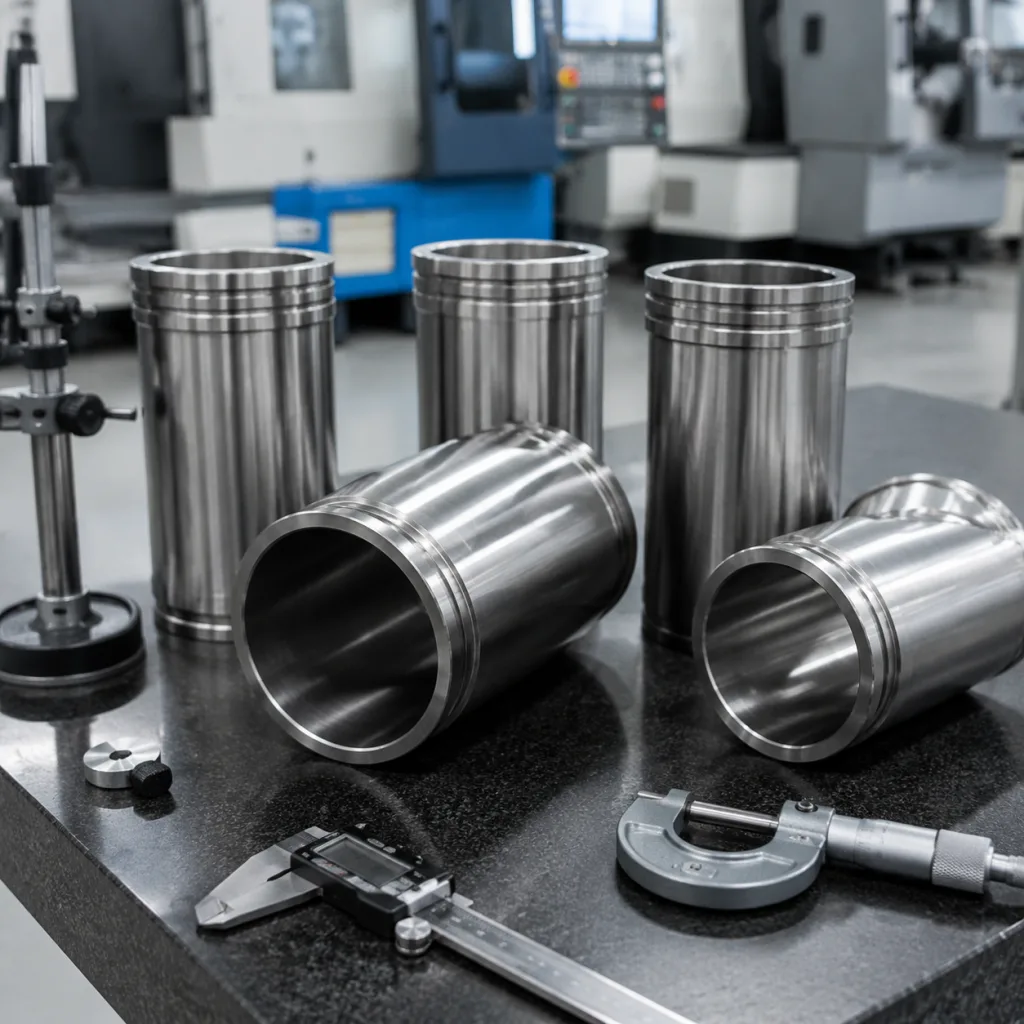
Friction disc OD tolerance: typically `±0.30 mm` on critical catalog-controlled applications
Hub spline fit: target `0.03–0.08 mm` side clearance to prevent bind without excess backlash
Pressure plate cover flatness: within `0.20 mm` across the mating face after final machining
Clamp-load repeatability: batch-to-batch variation within `±7%` on the approved reference part
Release bearing noise: no abnormal noise at `1,000 rpm` for `60 seconds` in final check where the line test is applied
Ask the supplier to map every claimed fitment to these values or to an equivalent internal control plan. If they cannot state the measurement method, gauge type, and acceptance limit, the spec is not procurement-ready.
What usually fails in the field
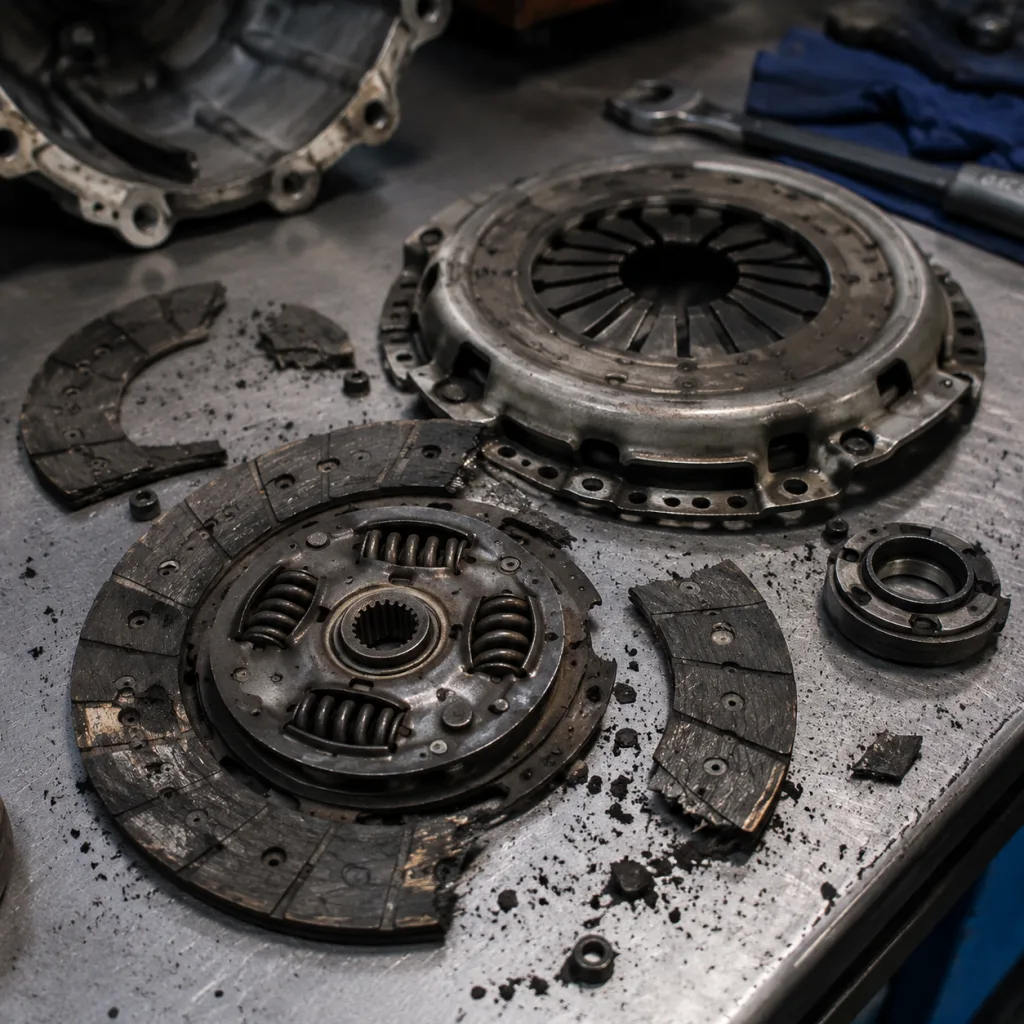
Returned clutch kits usually fail for a small number of reasons: the part does not fit, the clamp load drifts, or the friction material behaves differently from lot to lot. Those are sourcing failures first and product failures second.
Common failure modes
Fitment mismatch on hub spline, OD, or cover geometry
Clamp-load drift caused by inconsistent spring behavior or machining variation
Premature wear from unstable friction material or poor curing control
Noise from release bearing grease, seal loss, or bearing contamination
Packaging damage that distorts parts before installation
The most useful supplier response is not a promise that failures never happen. It is proof that the factory can detect and contain them. That means dimensional inspection on critical fits, torque and release-force checks, friction lot tracking, and visual defect control for rivets, cracks, and contamination.
For higher-volume customers, request a release sample approved against the actual vehicle application, not only against a drawing. That matters when one platform has multiple engine codes or transmission variants. Driventus aligns production under IATF 16949:2016 and ISO 9001:2015, which supports controlled repeat orders and audit-ready documentation.
Process evidence that matters in sourcing
Incoming material COA matched to the lot used on the finished kit
In-process checks at key operations such as riveting, facing, machining, and assembly
Final functional test results for a statistically defined sample size, such as `n=5` per lot or the customer-agreed AQL plan
Record of corrective action closure within `10` working days for quality escapes
Retention sample policy, commonly `12–24` months depending on customer requirements
If a supplier only offers visual inspection and no numerical thresholds, field returns remain hard to control.
What should be inside the kit?
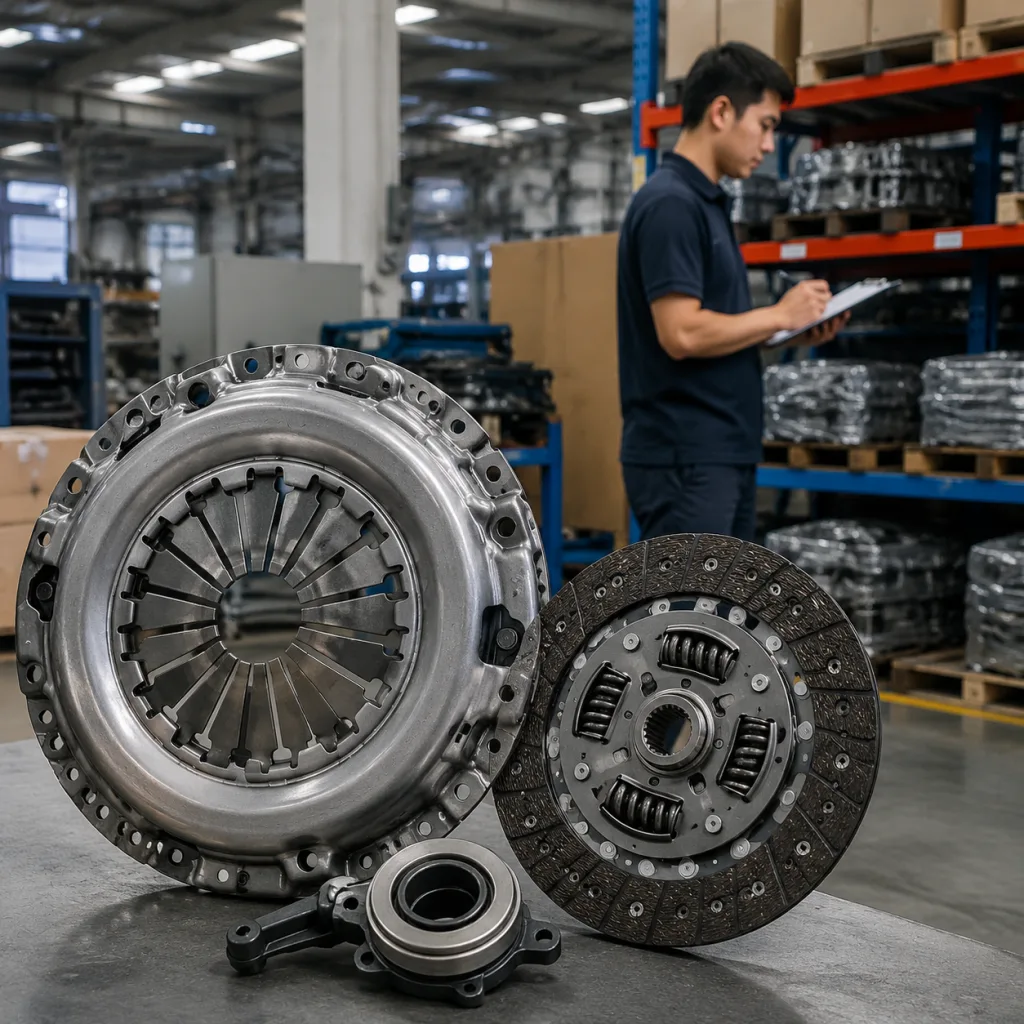
A complete kit usually combines the friction disc, pressure plate, and release bearing. Some programmes also add alignment tools or fasteners, but those should be treated as separate line items unless the specification explicitly requires them.
Component
Buyer check
Typical control point
Friction disc
Facing material, hub spline, runout
Static balance, lining bond integrity
Pressure plate
Clamp load, cover flatness, finger height
Spring rate, heat treatment, plate distortion
Release bearing
Noise, grease fill, seal life
Rotation smoothness, axial play
Hardware
Thread class, coating, packaging
Corrosion resistance, count accuracy
</tr></thead><tbody> </tbody></table>The real question is whether each subcomponent is built to a controlled spec. Ask for dimensional drawings, PPAP-style data where available, and inspection records from final assembly.
Practical build details to request
Friction lining thickness before assembly and allowable wear-layer variation, usually held within `±0.15 mm`
Rivet head height and bond margin on the disc, with a documented minimum edge distance
Diaphragm finger height spread, ideally within `0.50 mm` across the plate after assembly
Release bearing grease fill amount and seal leakage limit under a `72-hour` heat-soak check
Packaging count verification with inner-carton and master-carton label correlation
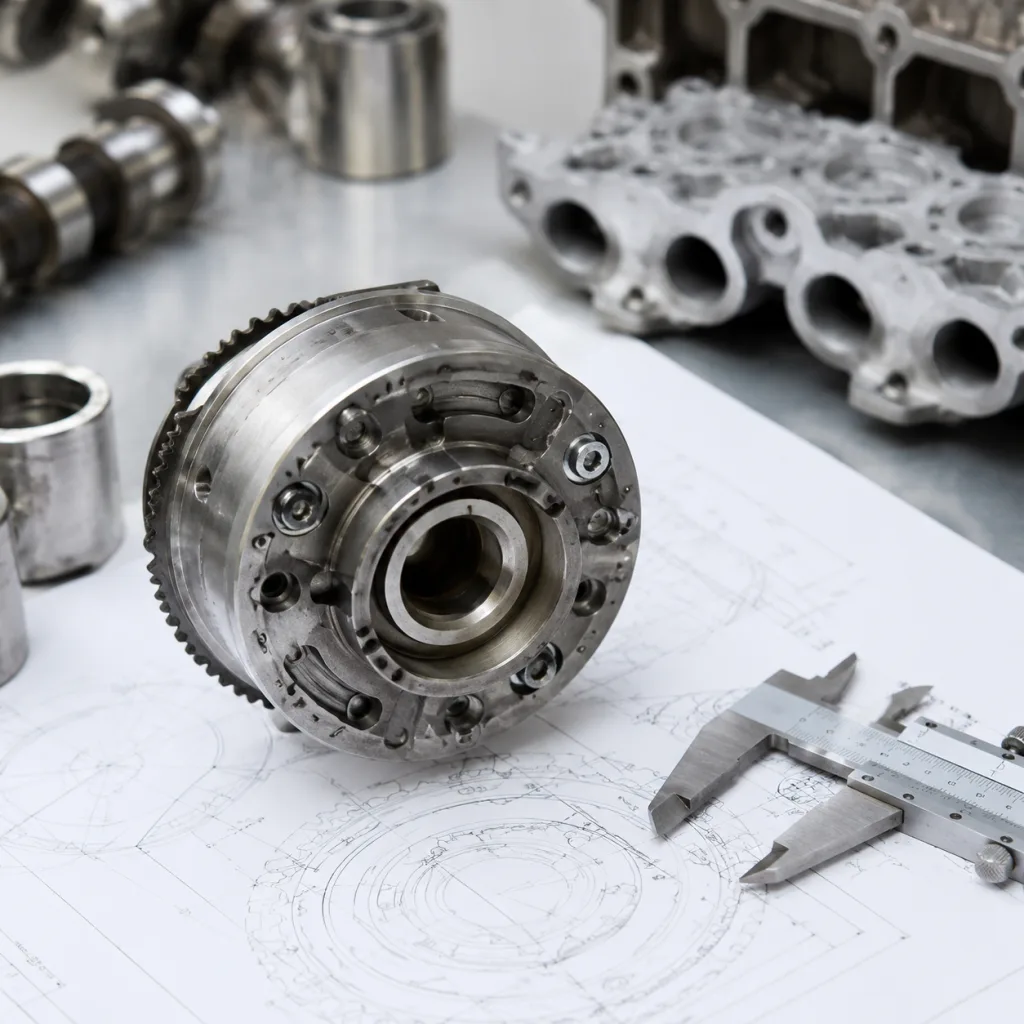
If the supplier also supplies adjacent drivetrain lines, ask whether the same gauge set and inspection format is used across the programme. Shared control methods reduce variation and make replenishment more predictable.
How to buy without creating returns
Procurement teams rarely win by choosing the lowest unit price alone. They win by reducing stock-outs, inbound rejections, and customs delays. A serious supplier should publish a clear MOQ by part family, quote a realistic lead time, and explain how capacity is protected for repeat programmes.
For audit planning, ask for:
Factory profile and process flow
Quality manual summary and inspection checkpoints
Sample traceability from incoming material to finished carton
Export packing method and container loading practice
Response time for corrective action reports
Commercial logic buyers can use
MOQ for cataloged clutch kits is often best managed at `50–100` sets per SKU for first orders, with lower trial quantities only if the plant already has tooling and materials in stock
Production lead time for repeat items should be quoted separately from tool-ready first runs; a practical range is `25–35` days for standard repeat orders and longer if special packaging or validation is needed
Price should be tiered by volume, commonly with breaks at `100`, `300`, and `500+` sets so distributors can model landed cost accurately
Buyers should request whether the quotation includes export cartons, inner boxes, labels, and palletization, because hidden packaging charges distort true unit economics
A valid supplier quote should state validity for at least `15–30` days, especially for orders tied to freight bookings or seasonal replenishment
If the clutch line is part of a broader engine and drivetrain programme, it helps to source from a manufacturer with adjacent product capability such as our catalog and engine components. That can simplify consolidation for buyers handling multiple SKU families across one supplier base.
What to confirm before issuing a PO
First article sample approval date
Net lead time after deposit or PO release
Capacity reserved per month for repeat orders
Packaging specification and carton drop-test standard
Whether price changes if the customer requests tighter tolerances or special labeling
These commercial points prevent disputes later. A low quote is not useful if the supplier cannot hold the ship date or repeats with a different friction material lot.
Why Driventus fits B2B procurement workflows
Driventus is set up for B2B buying, not retail fulfilment. The process is built around catalog matching, documentation, and repeat production rather than single-unit dispatch.
What procurement teams can expect
OE cross-referencing support for fitment confirmation
Private label or drawing-based custom manufacturing when specifications are stable
Commercial follow-up for samples, MOQ, and production scheduling via request a quote
For importers and distributors, the main benefit is consistency. The same application can be supplied repeatedly with controlled specifications, reducing the risk of catalog drift between seasons or replenishment cycles. That is the practical value of a supplier that manufactures components directly rather than assembling sourced parts from multiple unknown sources.
Procurement workflow that works in practice 1. Share the OE reference, engine code, transmission type, and target market. 2. Confirm the critical dimensions, especially spline count, OD, and cover bolt pattern. 3. Review drawings, photos, and sample parts against the approval checklist. 4. Lock the commercial terms: MOQ, unit price by tier, lead time, and packaging. 5. Approve a pre-shipment sample or first article before mass dispatch. 6. Keep one approved retention sample and one production sample per lot for traceability.
If you manage multiple brands or aftermarket channels, this process reduces rework and improves fill rate. It also gives buyers a repeatable way to compare one clutch kit Acura supplier against another on facts rather than claims.
Frequently asked questions
Yes, where the application is defined by an OE cross-reference, the part can be matched by reference, dimensions, and build spec. Brand names are used for fitment only.
Typical documents include product specification, inspection checkpoints, material declarations, and export packing details. Additional compliance files can be prepared to suit customer requirements.
Yes. Driventus can support stable-volume programmes with drawing-based or sample-based custom manufacturing, provided the application and acceptance criteria are clearly defined.
If you are comparing suppliers for an Acura clutch programme, send the OE reference, target volume, and destination market details through /contact.html and we will review fitment and quotation options.