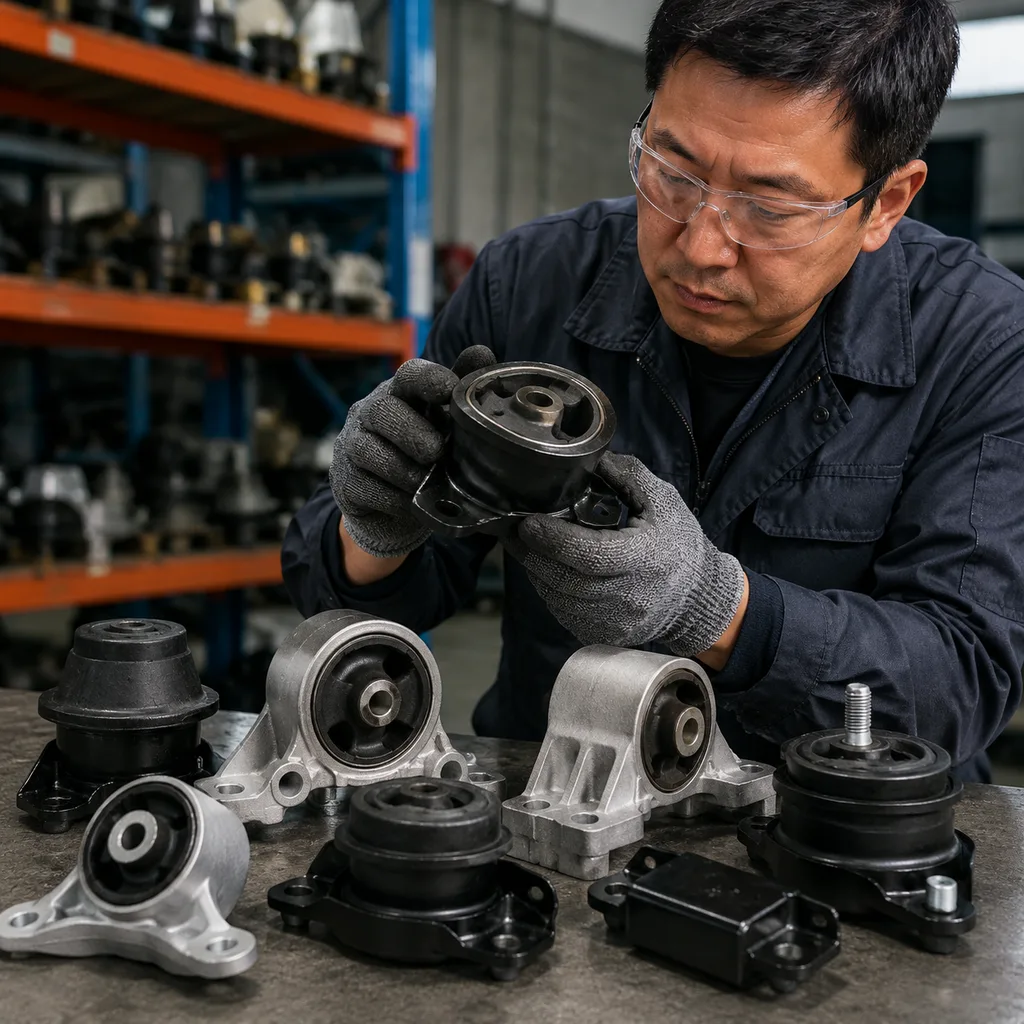
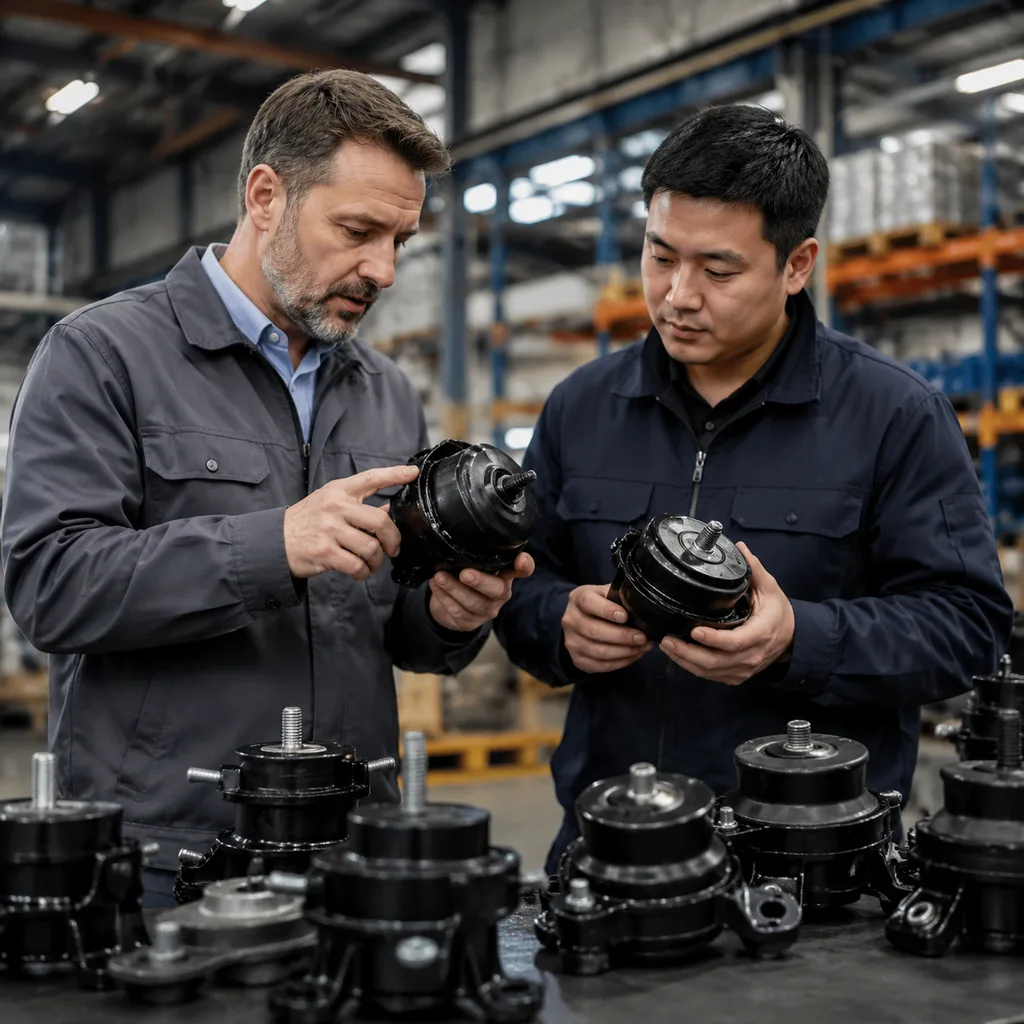
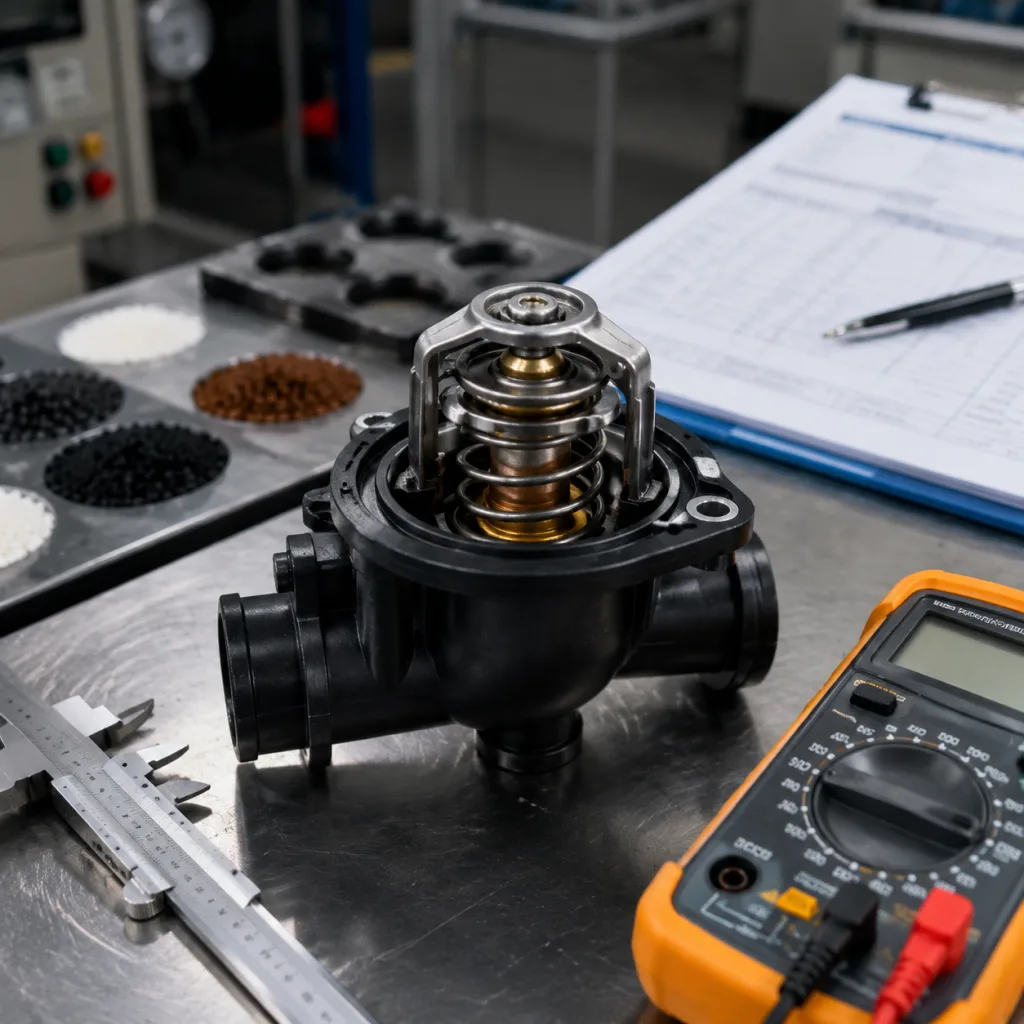
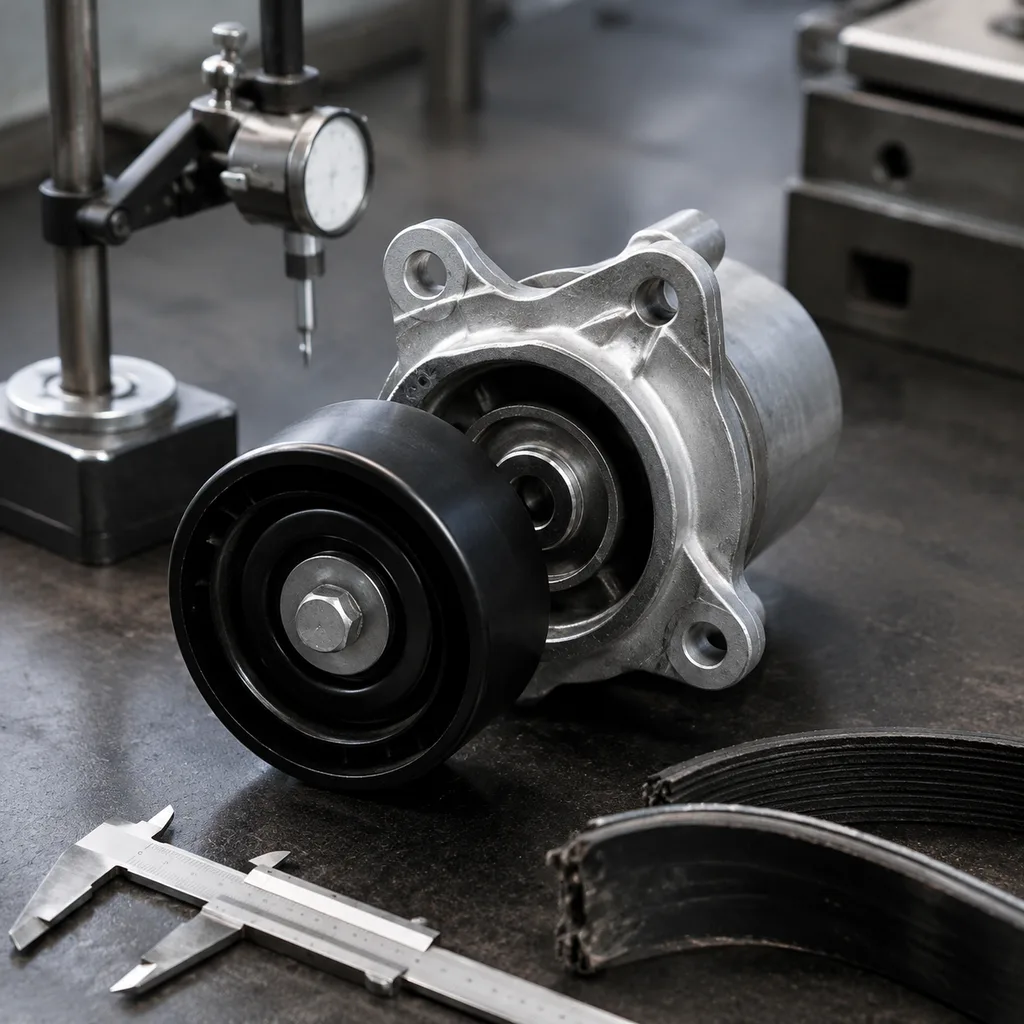
A Hyundai engine mount can pass a quick visual check and still fail the buyer. Wrong rubber rate: idle vibration complaints. Poor bonding: early separation. Slight bracket error: technicians force the part into place, then blame the brand. That is why an engine mount Hyundai wholesale programme needs to be managed as a fitment, NVH, and process-control purchase rather than a simple price list exercise.
For importers, distributors, repair chains, and OEM/Tier-1 buyers, the sourcing decision comes down to five controls: correct application data, stable rubber-to-metal bonding, repeatable geometry, export-ready packaging, and traceable batches. Driventus Auto Parts supplies engine and powertrain components from Taizhou, Zhejiang to customers in more than 60 countries, with support for OE-style fitment references, sample validation, private-label packaging, export documentation, and buyer audits. Driventus is an independent aftermarket manufacturer; vehicle brand names are used only to identify application compatibility.
Start with the buying decision: what must be locked before RFQ
Before asking for price, decide what you are actually buying. With Hyundai engine mounts, two parts can look interchangeable in a catalogue image but behave differently once installed. Front, rear, left, right, upper, lower, torque, manual-transmission, and automatic-transmission mounts may share a similar outline while using different rubber rates, installed heights, load paths, or bracket details.
Application data: platform, model year range, engine displacement, engine code where available, transmission, 2WD/AWD where relevant, and production years.
Buying plan: annual volume forecast, first order quantity, and reorder cycle; for example, 300 pieces first order with 150 to 200 pieces/month replenishment.
Reference format: OE-style 11251... numbers, TecDoc-style cross references, or internal SKU codes used in the buyer database.
Mount type: conventional rubber, hydraulic, torque strut, or bracketed assembly.
Position and handedness: front, rear, left, right, upper, lower, manual transmission, or automatic transmission.
Sample plan: normally 2 to 5 pieces per reference for fitment and bench checks before mass production.
Rubber target: hardness range or approved benchmark sample. Many solid rubber mounts are controlled around 55 to 75 Shore A depending on design; torque strut bushings may need a different target because cavity geometry changes stiffness.
Critical dimensions: hole centre distance, stud height, installed height, thread pitch, bracket flatness, locator position, and bushing orientation.
Packaging: neutral carton, customer-brand carton, barcode label, QR code, bulk tray, or mixed-SKU pallet.
Label requirements: language, country of origin, SKU, batch number, production date code, and marketplace traceability where applicable.
Documentation: customs documents, chemical declarations, platform approval files, or customer audit records.
Avoid the phrase “same as original” unless you are sending a physical master sample or approved drawing. It creates arguments later. For many bracketed mounts, practical inspection targets may include ±0.3 mm to ±0.5 mm for critical hole spacing, around ±1.0 mm for installed height where the design allows, go/no-go checks for M8, M10, or M12 threads, and defined visual limits for burrs, plating coverage, rubber flash, and bonded edge separation. Final tolerances should come from the drawing, benchmark sample, and installation risk.
A precise RFQ also makes quote comparison honest. One supplier may include carton testing, label control, gauge checks, and batch inspection; another may quote only the part in a bag. The cheaper line is not always cheaper after warranty freight, labour claims, and distributor returns.
Buyers can review related engine and powertrain parts in our catalog. If the purchasing team is building a wider engine parts programme, categories such as gaskets, pumps, pistons, and other components can be evaluated through the same qualification route.
MOQ and lead time: choose the scenario before negotiating price
MOQ is not a fixed number pulled from a price sheet. It changes with mould status, bracket complexity, rubber compound, line scheduling, carton artwork, inspection workload, and whether the order is a trial, repeat shipment, or new development.
Use the sourcing scenario first, then negotiate.
Sourcing scenario
Typical MOQ basis
Lead-time driver
Buyer action
Existing catalogue item
100-300 pcs/SKU or mixed pallet quantity
Finished stock and production queue, often 15-35 days
Confirm fitment list, position, and label format
Existing mould with new private label
300-500 pcs/SKU plus carton/label MOQ
Carton printing, barcode setup, label approval, often 25-45 days
Approve artwork and packaging data before production
Existing mould with buyer-specific inspection requirement
Batch quantity and test workload
Extra measurement, hardness checks, or reporting, often +3-7 days
Define AQL, test records, and inspection checkpoints
New mount based on buyer sample
Tooling and validation batch
Mould build, bracket sourcing, dimensional approval, often 45-90 days
Send sample, drawing, photos, or 3D scan data
Annual distributor programme
Quarterly call-off plan
Capacity allocation and material planning
Share rolling forecast and safety stock target
</tr></thead><tbody> </tbody></table>Existing fast-moving references may start from 100 to 300 pieces per SKU when combined with other items. Slow-moving or bracket-heavy mounts often need 300 to 500 pieces to justify setup. Private-label packaging may be governed by carton or label printing MOQ, commonly 500 to 1,000 boxes per artwork. New references usually require tooling plus a pilot batch of 50 to 200 pieces after sample approval, depending on bracket sourcing and test requirements.
Price follows the cost structure. Rubber compound, steel or aluminium bracket weight, adhesive system, reject rate, machining, welding, packaging, inspection level, and shipment mix all matter. A 100-piece trial order spreads fixed setup and inspection across fewer units. A 12-month call-off can reduce unit cost if the buyer commits to forecast bands, such as ±20% monthly variation, and releases orders against an agreed calendar.
For repeat Hyundai engine mount wholesale programmes, Driventus recommends a 3- to 6-month rolling forecast with reorder points. Fast movers often need 6 to 10 weeks of local safety stock plus in-transit stock. Slow movers may be safe at 2 to 3 months of demand if mixed-container replenishment is stable. This stabilises compound purchasing, metal insert preparation, bonding line capacity, carton procurement, and export planning.
Repair-chain buyers should plan around real failure patterns: fleet use, taxi applications, heat, rough roads, oil exposure, and common engine-transmission combinations. Wholesalers serving several countries may need different language labels or barcode formats for the same physical mount. Keep the product specification separate from the packaging specification; it prevents unnecessary SKU confusion.
Audit the failure points, not just the certificate
A certificate is a starting point, not proof that an engine mount will survive in service. Driventus operates under IATF 16949:2016 and ISO 9001:2015 frameworks for automotive process control, corrective action, documentation, and traceability. Buyers can review our quality system before scheduling a factory audit.
The audit should follow the failure modes. Engine mounts usually fail buyers through catalogue errors, weak rubber-to-metal bonding, poor curing control, bracket deformation, thread defects, hydraulic leakage, packaging damage, or mixed labels. Each failure mode needs a process control.
Ask these questions on site or in the supplier file:
Are rubber batches traceable from incoming compound to finished goods, with lot number, mixing date, shelf-life control, and compound recipe approval?
Are steel or aluminium brackets checked for coating quality, burrs, thread condition, cracks, deformation, and weld penetration where applicable?
Are incoming metal inserts measured by sampling plan, for example AQL 1.0 or tighter for critical dimensions and 100% visual sorting for cracks or missing threads?
Are bonding agents stored, mixed, and applied under controlled conditions, with expiry dates, viscosity or mixing records, and controlled drying time?
Are surface preparation steps such as degreasing, phosphating, shot blasting, or abrasive cleaning defined and monitored?
Are mould temperature, pressure, curing time, and operator records maintained by batch, including first-piece approval before mass production?
Are first-piece, in-process, and final inspections documented with clear acceptance criteria?
Are gauges or fixtures available for bracket hole spacing, installed height, stud position, bushing orientation, and thread checks?
Is rubber hardness checked with a calibrated Shore A durometer after curing, normally on 3 to 5 pieces per batch or according to the control plan?
Can non-conforming parts be isolated and traced to a production batch or shipment within 24 hours of a complaint?
Are carton labels, part numbers, quantities, and mixed-pallet lists verified before loading?
A strong control plan names the CTQ dimensions, inspection frequency, measuring tools, and reaction plan. Bracket hole spacing may be checked with a fixed gauge every 30 to 60 minutes. Installed height may be measured at first-piece and final inspection. Threads should be verified by go/no-go gauges. Rubber-to-metal bond areas need visual checks for exposed metal, poor adhesive coverage, blistering, voids, tearing, or edge lift.
Do not ignore packing. Engine mounts are dense parts, often around 1.0 to 4.5 kg each. Export cartons need enough strength for stacking, mixed-pallet handling, and container movement. Heavy mounts packed above light cartons can crush labels, deform boxes, and create receiving disputes.
For regulated chemical markets, buyers may request material declarations linked to REACH (EC) No 1907/2006 or other market-specific rules. EU and UK importers should also review multilingual labels, online marketplace traceability, and distributor-level batch records early.
The best audit result is not a pass-or-fail score. It is an agreed control plan: what is inspected, how it is recorded, who approves deviations, how long records are retained, and how corrective actions are handled when field feedback repeats.
Spec deep-dive: the engineering checks that prevent NVH and fitment claims
An engine mount is not just a rubber block. It holds load, controls movement, and filters vibration. If the geometry is off, the technician struggles. If the rubber rate is wrong, the driver feels idle shake or harshness. If bonding is weak, the part may look acceptable at receiving inspection and fail after heat, oil, and torque cycles.
For Hyundai fitment programmes, the core engineering checks are:
Dimensional match: bracket hole spacing, stud height, thread pitch, locator pin position, bushing orientation, and installed height. Common controlled items include M8/M10/M12 thread fit, hole centre distances within drawing tolerance, and bracket flatness that allows installation without forced alignment.
Application position: confirmation of front, rear, left, right, or torque mount location to avoid catalogue substitution errors, especially where manual and automatic transmission mounts share similar silhouettes.
Rubber hardness: controlled Shore A range according to the design target or approved benchmark, often recorded as nominal value plus tolerance, such as 60 ±5 Shore A where suitable for the design.
Bonding integrity: rubber-to-metal adhesion verified by destructive testing, peel or tear checks, process-controlled checks, or agreed validation evidence.
Static load behaviour: deflection under specified vertical, lateral, or torque loading. Buyers can set a benchmark curve using an approved sample and compare production pieces against an agreed deflection window.
Dynamic performance: vibration isolation characteristics compared with a benchmark part where required, especially for premium repair channels where idle shake and cabin resonance complaints are costly.
Hydraulic mount performance: fluid sealing, damping behaviour, vacuum port condition if applicable, and leak checks after handling and temperature exposure.
Environmental resistance: heat ageing, oil exposure, ozone resistance, salt spray or corrosion checks for metal parts, and coating thickness verification for brackets.
Installation review: thread quality, bracket clearance, fastener access, harness or hose clearance, and compatibility with surrounding engine-bay components.
For new references, send more than a number. A useful sample pack includes one new benchmark part, one used failed part if available, application notes, and photos showing installation position. Drawings, inspection reports, photos, or 3D scan data reduce guesswork. If only an OE-style number is available, the supplier should still confirm the full application and position because regional catalogues can differ by engine, transmission, drivetrain, and production month.
Driventus supports custom manufacturing when the purchasing team needs a controlled alternative to an existing part-number family, a private-label variant, or a region-specific application.
Validation should match SKU risk. Low-risk catalogue repeats may need a dimensional report, hardness report, visual bonding check, and installation confirmation. High-risk hydraulic or new bracketed mounts may need load-deflection comparison, leak testing, heat ageing, salt spray on metal components, and pilot-lot approval before full shipment. A typical approval package includes a 2D drawing or inspection layout, 3 to 5 sample measurements, Shore A hardness results, photos of critical features, packaging sample, and batch code format.
No vehicle manufacturer approval or endorsement is implied. Hyundai and other vehicle brand names are referenced for fitment identification only. Final qualification should be based on buyer specifications, sample approval, agreed test methods, and production inspection records.
Compare offers by landed risk, not just unit price
A reliable quotation tells the buyer what is included. A weak quotation hides the cost until the first dispute. For an engine mount Hyundai wholesale order, the quote should state the part reference, vehicle position, mount type, material and bracket description, packaging quantity, gross and net weight, carton dimensions, MOQ, lead-time, payment terms, and Incoterms.
For landed-cost analysis, check HS classification, duty rate, pallet count, container utilisation, inspection cost, and any market-specific documentation fees. Then compare commercial terms:
Price basis: EXW, FOB Ningbo/Shanghai, CIF, DAP, or another agreed Incoterm.
Currency, validity period, payment terms, and bank charges; quotations commonly hold for 15 to 30 days where rubber, steel, and freight costs are volatile.
Sampling cost and whether it is credited after mass production.
Tooling ownership, maintenance terms, storage period, and modification responsibility for new references.
Labelling format: neutral, distributor brand, QR code, customer SKU, batch number, production date, or marketplace label.
MOQ and price must be read together. A 100-piece trial order may carry a higher unit price because setup, inspection, and export packing are fixed costs. A 500-piece order or quarterly call-off may improve unit economics, but only if the buyer has demand and storage capacity. For mixed Hyundai engine mount wholesale containers, ask whether MOQ applies per SKU, per mould family, per carton artwork, or per shipment. That one detail can change cash flow and inventory exposure.
For multi-location repair chains, consistency is part of the commercial value. A mount used across many branches needs stable fitment, durable packaging, and clear labels so technicians receive the correct part without delays. For wholesalers, mixed-SKU pallet planning can reduce inventory pressure while keeping fast-moving Hyundai applications available. Pallet plans should state carton count, gross weight, stacking limit, and whether heavy mounts are placed on lower layers to prevent carton crush.
Return risk belongs in the price comparison. A cheaper mount that creates noise, harshness, leakage, or fitment complaints can generate freight costs, labour claims, customer service workload, and lost account confidence. The better long-term offer is usually the one with competitive pricing plus defined inspection standards and traceable production records.
First shipment playbook: qualify, release, inspect, then scale
Treat the first order as a controlled launch, not a normal replenishment. The goal is to prove application accuracy, packaging, traceability, and inspection discipline before volume increases.
Recommended approval flow:
1. Send the application list, expected monthly volume, destination market, and OE-style 11251... references or internal SKUs already used in your system. 2. Request a quotation with MOQ, lead-time, packaging, Incoterms, documentation, and inspection terms. 3. Confirm whether the item is an existing catalogue reference, existing mould with packaging changes, or a new development project. 4. Approve drawings, photos, samples, or 3D data before tooling or mass production. 5. Test samples for installation, vibration behaviour, hardness, dimensional match, and visible bonding quality. 6. Confirm carton artwork, labels, barcode data, country-of-origin marking, packing quantity, and master-carton dimensions. 7. Release the first order with written pre-shipment inspection criteria. 8. Review the first shipment for packaging condition, label accuracy, batch traceability, and receiving inspection results. 9. Collect field feedback and adjust forecast, safety stock, or SKU mix after 60 to 90 days.
The first-shipment checklist should be practical. Use 100% label verification on mixed-SKU orders. Open random cartons before loading. Sample critical dimensions on high-risk SKUs. Check hardness by batch. Record pallet condition with photos. Confirm that batch numbers on cartons match the inspection report.
If using third-party inspection, specify general AQL II for appearance and packaging, with tighter sampling or 100% checks for critical dimensions, mixed labels, thread defects, and missing hardware. Do not leave the inspector to guess which features matter.
When a defect is reported, the claim file should include part number, batch number, vehicle application, mileage or installation time, photos or video, installation notes, and complaint type: fitment, noise, leakage, cracking, thread failure, or packaging damage. This separates catalogue error from installation issue, transport damage, material failure, bonding issue, or dimensional non-conformance. Corrective action should state containment, suspected cause, permanent action, responsible owner, and completion date.
This staged approach gives both sides evidence at each decision point. It also helps the supplier prepare the right moulds, inserts, compounds, labels, and export documents before production pressure begins.
Driventus is an independent aftermarket manufacturer; brand names are referenced for fitment only. For engine mount Hyundai wholesale projects, the strongest RFQ is specific, measurable, and connected to the buyer’s sales channel. To discuss an active sourcing programme, buyers can request a quote with target applications, forecast volume, packaging needs, and required documentation.
Frequently asked questions
Send the application list, mount position, reference numbers already used in your system, target annual volume, first order quantity, packaging requirements, and destination market. Photos, samples, drawings, or 3D data help confirm bracket geometry, rubber design, thread size, installed height, and installation details.
Yes. Driventus can support neutral cartons or customer-brand packaging, subject to MOQ, artwork approval, barcode data, carton specifications, and export labelling requirements. Packaging details should be confirmed before production because printed cartons and labels may add MOQ and 7 to 15 days of preparation time.
No. Driventus is an independent aftermarket manufacturer; brand names are referenced for fitment only. Product qualification is based on buyer specifications, sample approval, process control, agreed inspection criteria, and field feedback.
If you are building a Hyundai engine mount sourcing programme, share your SKU list, target MOQ, destination market, packaging needs, annual forecast, sample standard, and documentation requirements. Driventus can review fitment, inspection, and export planning at /contact.html