engine mount · 2026-06-04

Engine Mount Dodge Supplier: Sourcing, Specs and QA

Buying engine mounts for Dodge applications is a sourcing exercise, not just a fit check. Procurement teams need controlled dimensions, stable rubber properties, documented validation, and a supplier that can support audits, samples, and export paperwork. If you are screening an engine mount Dodge supplier, the key question is whether the part can carry the required load path across heat, vibration, and long service intervals without unacceptable NVH or bracket movement. Driventus is an independent aftermarket manufacturer; brand names are referenced for fitment only. We support distributors, wholesalers, repair chains, and OEM or Tier-1 buyers that need repeatable quality, practical MOQ planning, and clear lead-time assumptions. The most efficient RFQ starts with vehicle application, mounting geometry, target annual volume, packaging requirements, and the validation scope expected before production release.

What buyers should verify from an engine mount Dodge supplier

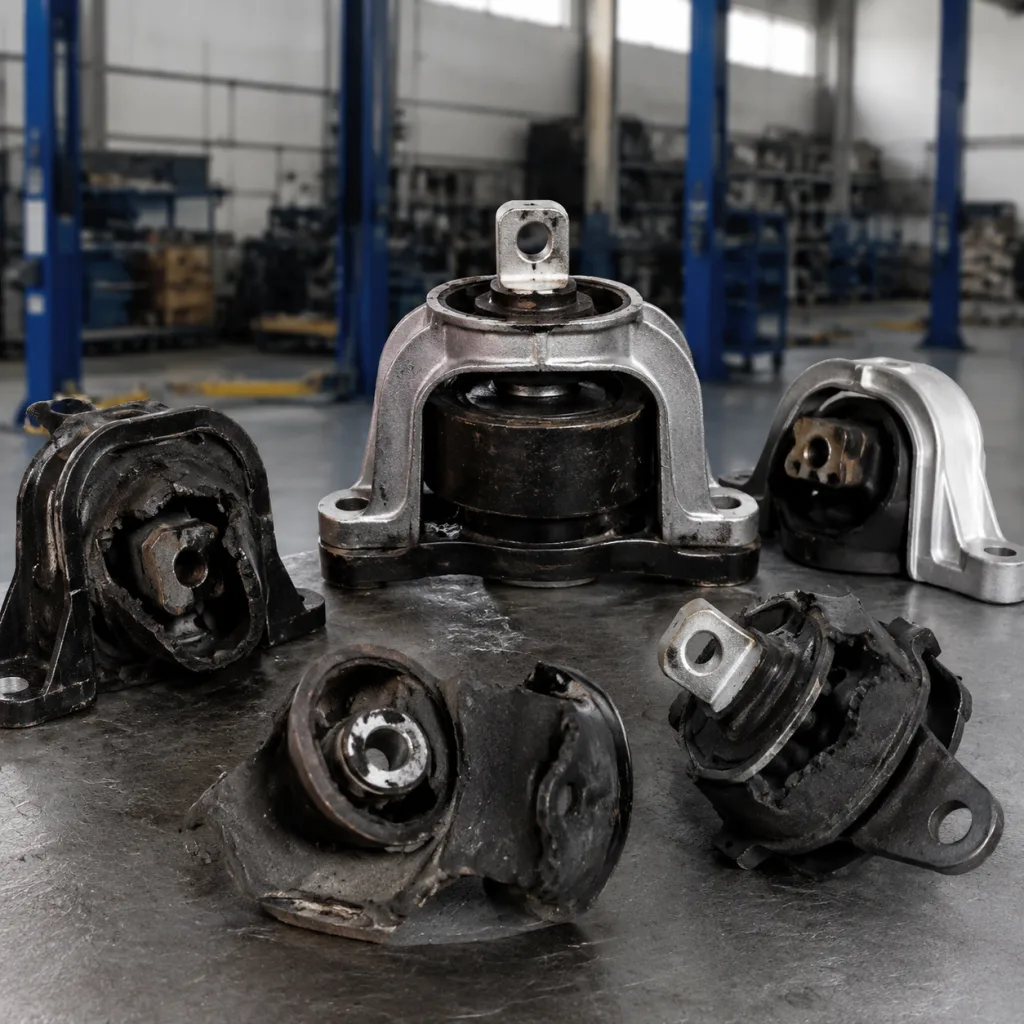
Before you issue an RFQ, confirm the exact mount family and the evidence behind it. A capable engine mount Dodge supplier should be able to map the part to a specific vehicle line, engine code, and model-year breakpoint, then show how the design was validated against the loads expected in service. That matters because visually similar mounts can differ in stud length, bracket orientation, rubber hardness, void geometry, and clearance behavior. Those differences decide whether the part installs cleanly or becomes a source of NVH and fitment complaints later.

At minimum, the sourcing file should identify the mount type, such as bonded rubber, hydraulic, torque rod, or bracketed insulator. It should also define the interfaces that control fit: bolt-center distance, stud diameter and thread, bracket angle, clocking, installed height, and nearby clearance limits. When those dimensions are missing, the risk is not just a bad sample; it is a programme that cannot be reproduced consistently in later production runs.

The specification package should also cover the material and finish controls that affect durability. Buyers should ask for rubber hardness targets, typically stated in Shore A with a tolerance band, heat-ageing limits, compression set expectations, coating type, weld quality, and corrosion protection on exposed steel parts. If the supplier cannot explain those choices in the context of vehicle duty cycle, the part is being sold as a catalogue item rather than as a controlled application.

A complete sourcing file should also show whether the programme is catalogue-based or tool-specific. Review our catalog for existing coverage, then check the quality system documents before you commit volume. If the mount sits inside a broader powertrain programme, aligning it with engine components can reduce mismatch across related parts.

Materials and durability drivers

Engine mount life is usually limited by compound choice, bond quality, and bracket finish. For light-duty applications, bonded rubber designs are often the simplest and most cost-stable option because they balance vibration isolation, production repeatability, and manageable tooling complexity. Typical elastomer specifications are set by application, but many programs sit in the 45 to 70 Shore A range, with final selection driven by static deflection, engine mass, and vibration isolation targets. For higher isolation requirements, hydraulic designs may be used, but they need tighter cleanliness control, more rigorous leak testing, and closer monitoring of internal fluid behavior under temperature swing.

Material selection should be tied to measurable service conditions, not generic automotive language. Heat exposure, road splash, oil contamination, idle shake, and torsional load all influence whether a mount performs as intended. A supplier should therefore be able to explain rubber compound selection, metal substrate choice, and adhesive or bonding system in terms of performance and manufacturing control. If the mount uses a steel bracket, bracket thickness, weld integrity, and coating system matter just as much as the rubber itself because corrosion or distortion in the metal structure can change the load path and shorten service life.

Key specification fields

  • Rubber hardness and tolerance band
  • Static load rating at installed height
  • Dynamic deflection limit under defined load
  • Heat-ageing window and test temperature
  • Compression set after thermal cycling
  • Coating type and corrosion target
  • Fastener grade and torque specification
  • Bond strength or peel resistance where applicable
  • Leak test criteria for hydraulic designs

For export programmes, material declarations should support REACH (EC) No 1907/2006. Where corrosion validation is required, buyers may also ask for cyclic corrosion data using published methods such as SAE J2527 or neutral salt spray testing such as ASTM B117, where applicable. The goal is not a generic durability claim, but a documented match between duty cycle, material system, and tested design. That is the difference between an acceptable sample and a dependable production part.

Supply models and trade-offs

Different buying models suit different risk profiles. The table below is a practical way to compare them, but the real decision should be based on how much engineering control and inventory certainty your programme needs. If demand is steady and the fitment is already proven, catalogue supply can reduce time-to-ship and simplify replenishment. If you are supporting a service network that wants consistency across locations, an OE-reference programme can provide a better balance between cost, repeatability, and documentation. If the application needs a unique bracket, stiffness curve, or packaging format, custom manufacturing is the safer route because it gives you direct control over the final configuration.

</tr></thead><tbody> </tbody></table>There is also a commercial trade-off that buyers should not ignore. Catalogue items generally reduce upfront complexity, but they may limit packaging options, brand control, or late-stage geometry changes. Custom builds increase project work at the front end, yet they often reduce long-term cost when the programme has recurring volume, specific branding requirements, or a need to match an internal technical standard. Use custom manufacturing when the bracket, stiffness curve, coating, or packaging format needs to be locked to your programme. Driventus is an independent aftermarket manufacturer; brand names are referenced for fitment only.

Quality controls buyers should ask for

A reliable supplier should be able to show process control, not only a sample part. For engine mounts, the quality discussion should start with the controls that protect repeatability: incoming compound checks, adhesive or bond preparation, mould temperature monitoring, cure-time control, dimensional inspection, and final audit records. Buyers should also ask how the supplier manages lot traceability, because traceability is what allows a problem to be contained quickly if a field issue appears after shipment.

For higher-risk programmes, a PPAP-style submission is often useful even when the customer does not require a full automotive approval stack. The purpose is not paperwork for its own sake. It is to confirm that the supplier can repeatedly make the same part, in the same way, using the same inputs, and that the part meets the declared function under controlled conditions. A strong submission should include dimensional data, material declarations, test summaries, control plans, and evidence that any special characteristics are being monitored.

Driventus operates under IATF 16949:2016 and ISO 9001:2015, so the discussion should start with repeatability, calibration, and nonconformance control. A factory audit, virtual or on-site, should cover raw material receipt, moulding, bonding, curing, inspection, packing, and segregation of rejected lots. Review the supporting documents on the quality system page before you compare suppliers. If the first 20 pieces match but the next 500 drift out of spec, the programme is not ready for production release. A supplier that cannot explain where variation comes from usually cannot contain it either.

RFQ details that shorten quotation time

The fastest quotation comes from a complete, structured RFQ. The goal is to remove avoidable assumptions before the supplier starts pricing, because most quote delays come from missing application data rather than from actual manufacturing complexity. If the part is being replaced, start with the OE reference or equivalent part description, then add photos of the old mount and mounting points so the supplier can verify the geometry and the orientation of the interfaces. If the part is new to the market, a dimensional sketch or drawing is even better than a verbal description.

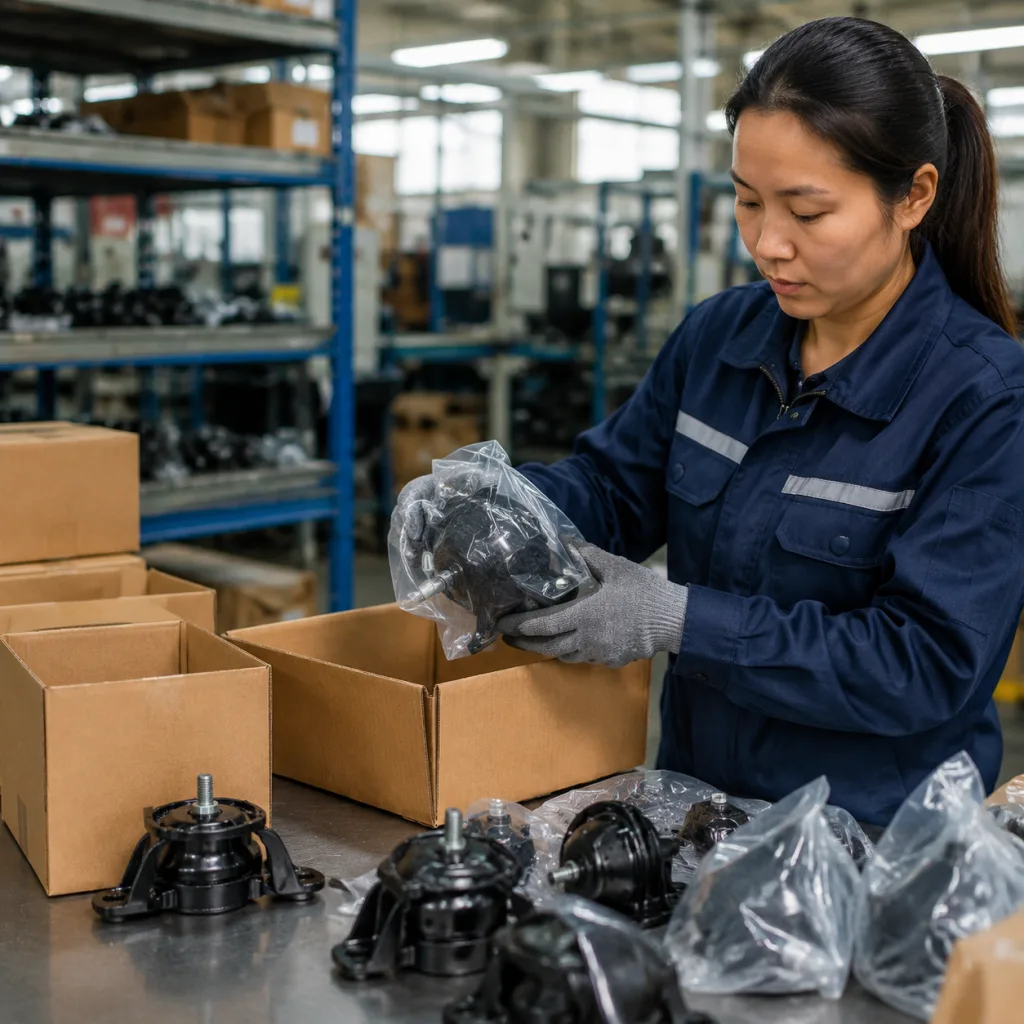
A useful RFQ should also separate commercial demand from technical requirements. Annual demand should be stated by market and by delivery window so the supplier can decide whether stock planning, batch production, or tooling-based release is the right model. Packaging should be defined with the same level of care as the part itself: carton count, barcode format, pallet pattern, and whether carton-level labelling is needed all affect the final shipping plan and the internal handling flow at your warehouse or distribution center.

Required certifications, test methods, and declarations should be listed explicitly. If you need a revised bracket geometry, a compound change, or a specific stiffness target, say so in the RFQ rather than during sample review. Late changes tend to create rework, because they alter both tooling assumptions and validation scope. Include destination country, incoterms, and any customs or document needs as well, since those details influence freight planning and landed cost.

  • OE reference or equivalent part description, if available
  • Photos of the old part and mounting points
  • Annual demand by market and by delivery window
  • Target packaging, barcode, and pallet format
  • Required certifications, test methods, and declarations
  • Any request for revised bracket geometry or compound tuning
  • Destination country, incoterms, and shipment document requirements

MOQ and lead time depend on tooling status, cavity count, test scope, and whether the part is stocked or built to order. For new projects, plan for sample approval before mass production. For a direct enquiry, use request a quote and include destination country, incoterms, and whether carton-level labelling is required.

Frequently asked questions

Send the OE reference if available, clear photos, dimensions, annual volume, destination country, and any test or packaging requirements. If the application is still being defined, include the engine code, model year, mount location, and any clearance constraints. That reduces back-and-forth and improves fitment accuracy.

Yes. Use the custom manufacturing route when the bracket geometry, rubber compound, or packaging needs to be adjusted for your programme. We review drawings, sample targets, validation scope, and target load conditions before release so the final part matches the sourcing brief rather than a generic fitment.

Yes. Typical documents include material declarations, inspection records, and traceability by batch. We also work within IATF 16949:2016 and ISO 9001:2015 quality controls for repeatable production. Where required, we can align documentation with shipment and audit requirements for distributors, wholesalers, and OEM or Tier-1 buyers.

Send your drawings, OE reference, and target volume, and we will return a sourcing quote with lead-time assumptions and validation notes. [request a quote](/contact.html)

Request a Quote
Supply model MOQ profile Lead-time profile Validation scope Best use
Catalogue partLower MOQ, faster replenishmentShorter if stock is availableBasic dimensional and material checksDistributors and repair networks
OE-reference programmeMedium MOQ, stable repeat ordersModerate, tied to sample approvalFit, load, and traceability reviewMulti-location service chains
Custom manufacturingHigher setup effort, project-basedLonger, tied to tooling and testsFull drawing control and approval packPrivate label and platform-specific demand