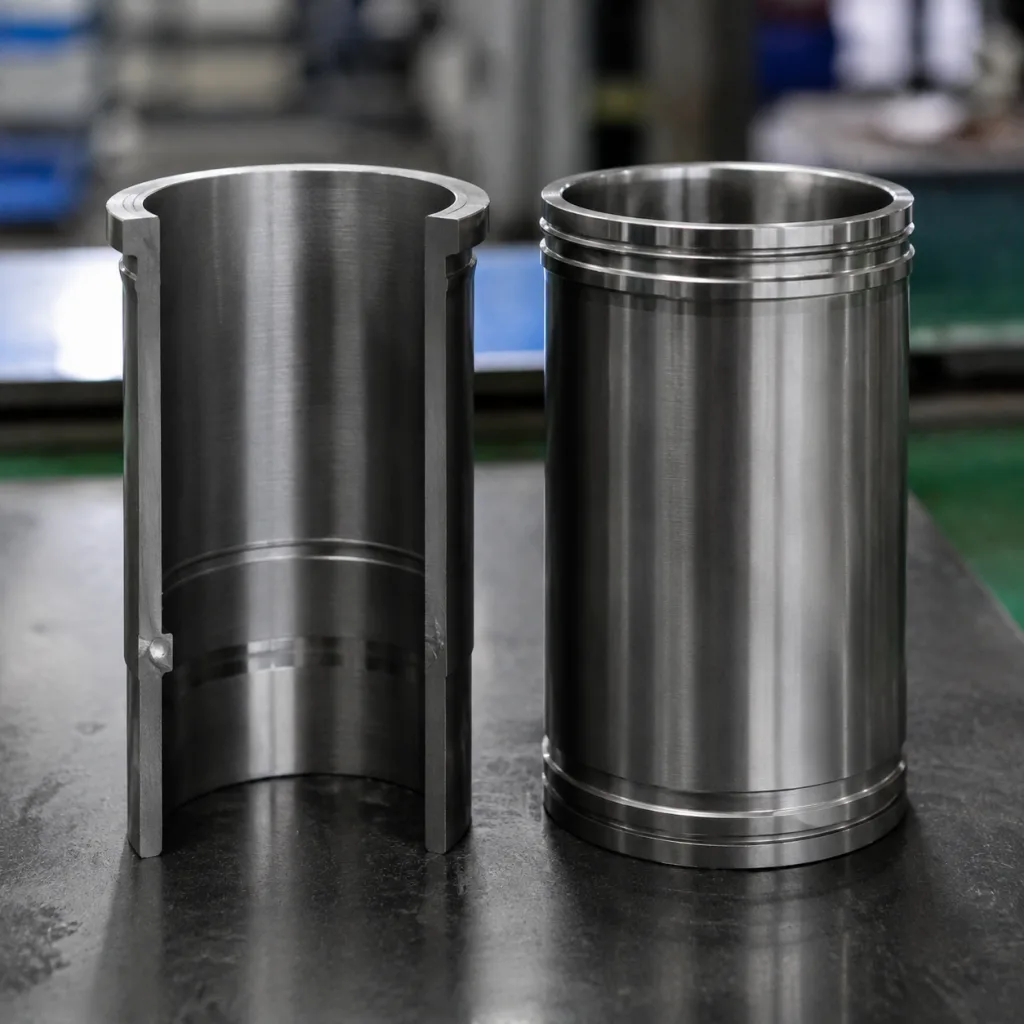
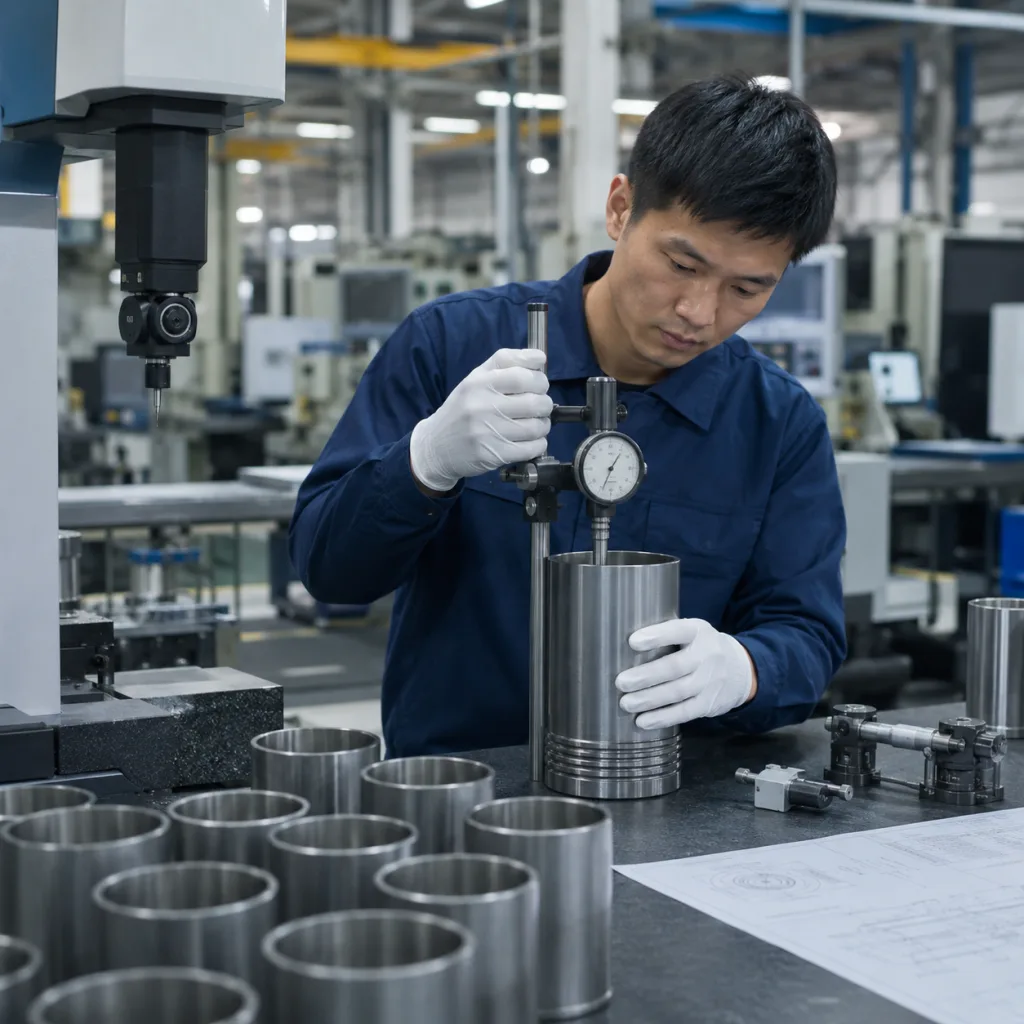
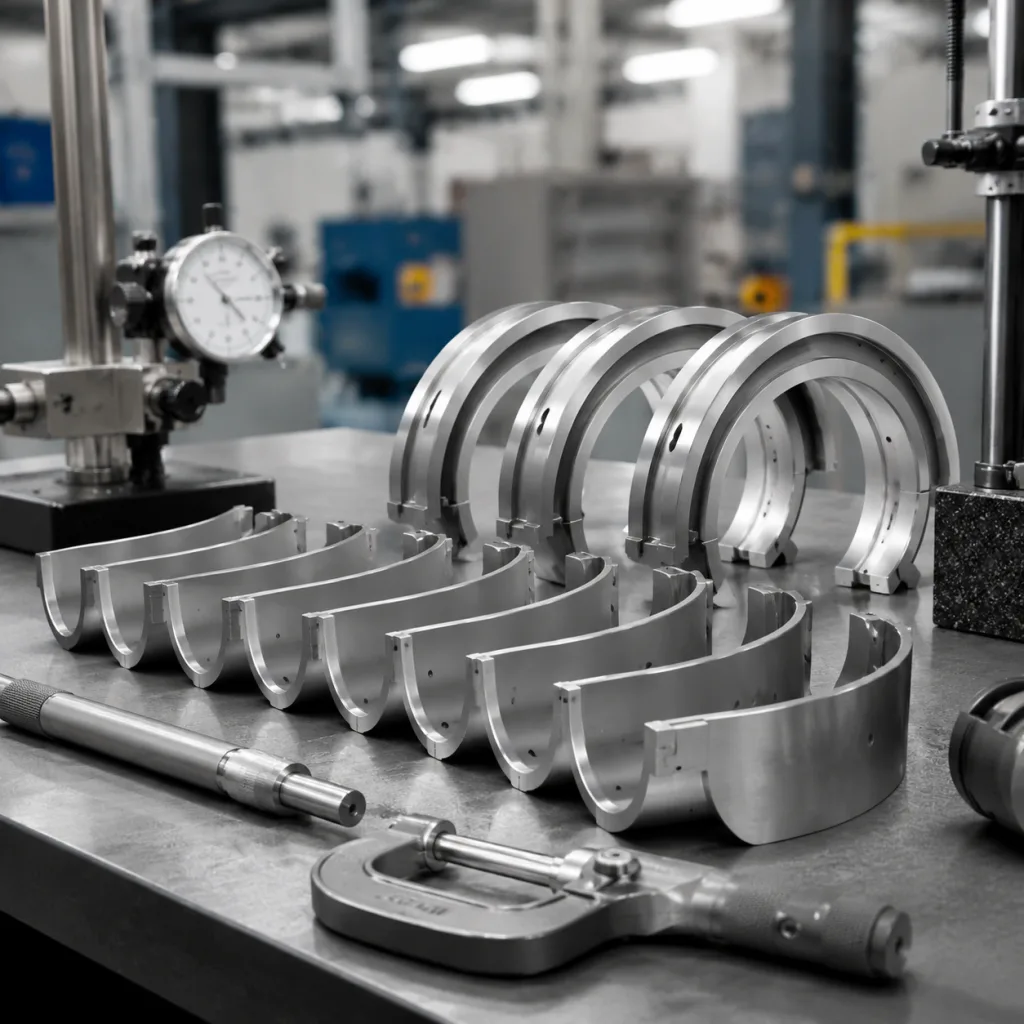
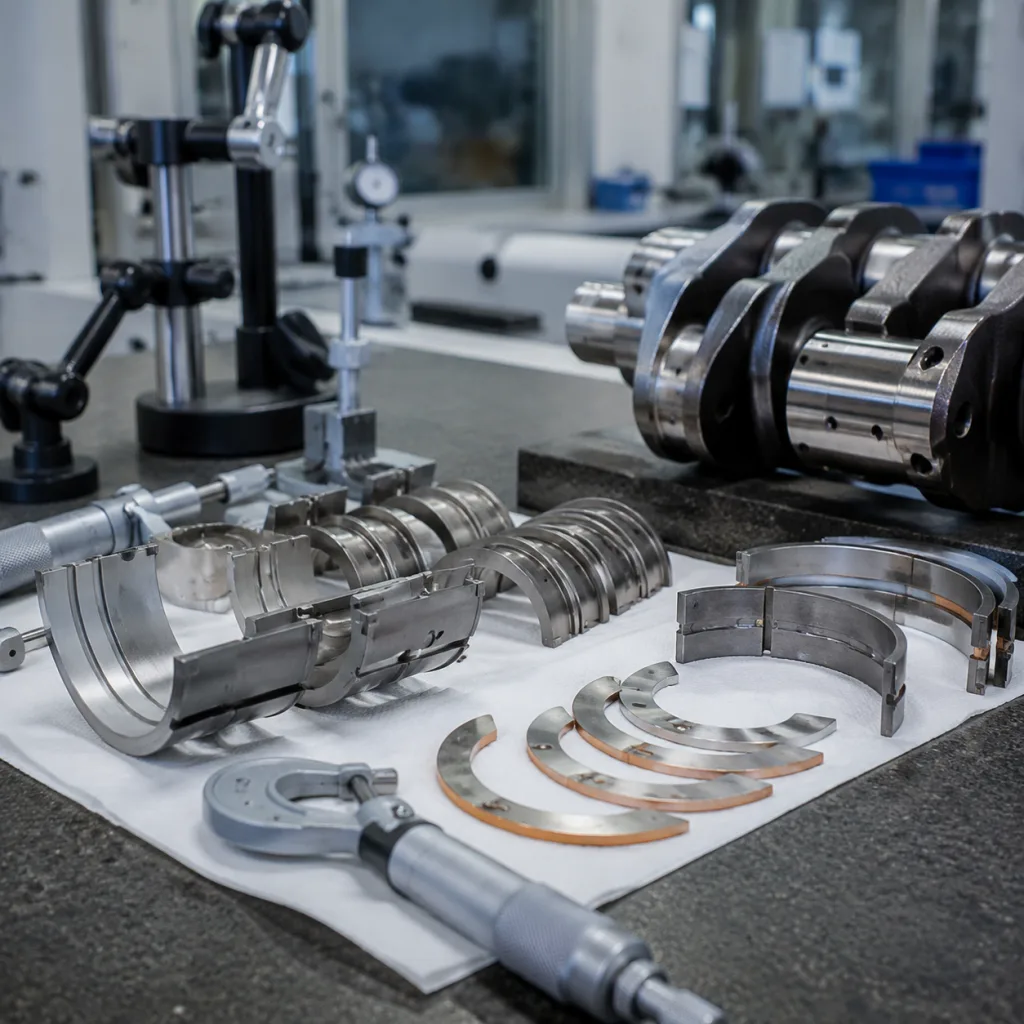
Procurement teams searching for a cylinder liner Subaru OEM supplier usually need three things at once: fitment confidence, stable supply, and evidence that the factory can control dimensions and metallurgy at production scale. For Subaru applications, the cylinder liner must match the parent block geometry, thermal load, and finishing requirements used in the engine family, not just the nominal bore size. Driventus is an independent aftermarket manufacturer; brand names are referenced for fitment only. We manufacture engine and powertrain components in Taizhou, Zhejiang, and supply B2B customers in more than 60 countries. Our work is built around IATF 16949:2016, ISO 9001:2015, and documented export controls for traceability, packing, and inspection. If you are comparing suppliers for aftermarket distribution, OEM / Tier-1 programmes, or repair-network replenishment, the main sourcing questions are MOQ, lead time, dimensional tolerance, and validation data.
What procurement teams should confirm first
When a buyer evaluates a cylinder liner Subaru OEM supplier, the first step is to lock down the application data. Subaru engine families can differ by bore, deck height, liner wall thickness, flange form, and interference-fit requirement. A supplier should be able to confirm the exact engine code, cylinder count, finish requirement, and whether the part is dry or wet. For procurement, the useful question is not only “can you make it,” but “can you repeat it across batches with stable inspection records?”
Minimum data set to request:
Engine code and OE cross-reference, for example OE 06A107065 when relevant to the application family
Bore diameter and allowable tolerance, typically specified on the engineering drawing as a unilateral or bilateral band such as ±0.01 mm to ±0.03 mm depending on the block and finish stage
Overall length, flange OD, flange thickness, and step height, with critical-to-fit dimensions identified separately from reference dimensions
Material specification and heat-treatment condition, including the target hardness band, for example HB 180–240 for certain cast-iron applications or another controlled range per print
Surface finish requirement after honing or finish machining, commonly requested as Ra 0.8–1.6 μm on the working bore when ring seating and oil retention are tightly controlled
Packaging, labelling, and country-of-origin documentation
Interference-fit allowance to the block, often checked in the range of 0.03–0.08 mm depending on design and parent bore condition
Straightness, roundness, and taper limits, because these affect ring seal and rebuild consistency
If the target programme requires it, ask whether the supplier can support PPAP-style documentation, dimensional reports, and lot traceability. For serial sourcing, ask for a control plan, first-article dimensional data, and a sample acceptance criterion before you issue the first volume order. That matters more than a sales promise.
Factory capabilities that reduce sourcing risk
A supplier for cylinder liners should have controlled machining, metrology, and process discipline. Driventus operates as a vertically integrated manufacturer, which helps reduce hand-offs between casting, machining, inspection, and packing. For procurement teams, that structure lowers the chance of mixed lots and improves response time when revisions are needed.
IATF 16949:2016, ISO 9001:2015, inspection reports
Supports supplier approval
Packing
Corrosion prevention, lot separation, carton labels
Reduces transit damage and picking errors
Process capability
Cp/Cpk data for critical diameters, typically targeting ≥1.33 on stable lines
Shows the line can hold tolerance at volume
</tr></thead><tbody> </tbody></table>A buyer should also ask how the factory handles revision control. A practical minimum is a locked part number, a controlled drawing revision, and a sample/production difference log so the sales sample cannot drift from the mass-production lot. If a supplier cannot explain how they quarantine nonconforming stock, that is a procurement risk regardless of price.
Cylinder liners are not commodity cylinders. The wrong material or interference fit can create seizure, coolant leakage, or loss of compression. Buyers should compare suppliers on measurable characteristics, not on generic product claims.
Key technical points
Material: cast iron or alloyed iron depending on application and wear target; request the exact chemistry window, not just a generic grade label
Hardness: specify a controlled range, not a nominal target only; many programs will ask for a band such as HB 200–260 or a customer-defined equivalent on the finished part
Roundness and taper: must be controlled after machining and after any thermal treatment; a good sourcing target is often ≤0.01–0.02 mm on critical bore geometry, subject to print
Flange geometry: critical for deck seating and block retention; verify flange thickness and step height with a CMM or a dedicated height gauge
Surface finish: relevant for oil retention and ring bedding; confirm whether the bore is supplied rough-machined, semi-finished, or finish-honed, because the acceptable Ra changes with the process stage
Corrosion protection: important for export storage and marine-humidity routes; ask whether the supplier uses VCI paper, oil film, desiccant, and sealed cartons as standard export practice
Where an application demands emissions or durability validation, request test references that align with published standards such as SAE J2527 for corrosion-related evaluation where applicable, or customer-specific endurance testing. For emissions-regulated systems, ensure the liner is part of a validated engine build rather than a standalone assumption against ECE R-83 requirements. The supplier should not claim vehicle-manufacturer approval unless it is formally documented; Driventus does not do that. If your team needs a pre-award checklist, ask for sample dimensions, hardness data, bore finish, and a 3D report before you compare commercial offers.
MOQ, lead time, and export control
For B2B buyers, supply terms often matter as much as geometry. A cylinder liner programme can be held back by a high MOQ, weak packing control, or slow revision handling. Driventus supports export customers with production planning for distributor, OEM, and repair-chain demand profiles.
Typical procurement questions include:
1. What is the MOQ per part number or engine family? 2. What is the standard lead time for production and inspection? 3. Can the supplier hold safety stock for repeat orders? 4. Are cartons and pallets suitable for sea freight and mixed-SKU shipment? 5. Can the supplier provide commercial invoice, packing list, and country-of-origin data without delay? 6. What is the price break between sample, trial, and annual-volume orders?
For planning, buyers usually see three commercial stages: sample orders at the highest unit cost, pilot lots at a lower but still setup-sensitive price, and repeat volume orders where the price improves once tooling, cycle time, and packing are stable. A common sourcing pattern is a small sample lot of 5–20 pieces, a pilot run of 50–200 pieces, and then a monthly or quarterly call-off schedule once the part is approved. Lead time also changes by stage: first articles may need 10–20 working days, while repeat production can often be scheduled into 20–35 days depending on raw material availability, machining load, and inspection depth. If the drawing revision changes or the packaging spec is nonstandard, expect the clock to reset for the new approval run.
For import managers, another practical point is regulatory handling. Materials and surface treatments should be assessed for REACH (EC) No 1907/2006 where relevant to the destination market. If you need product families that cross multiple engines and regions, our custom manufacturing page explains how we manage specification changes, sampling, and programme scaling.
How to qualify a supplier before placing volume orders
A short qualification cycle is usually better than a large first order. For a cylinder liner programme, request samples, a dimensional report, and one production lot packed to export standard. Compare those samples against the block drawing, not only against the old part.
Practical qualification sequence:
Confirm OE reference and application scope
Review sample dimensions against the target block, including bore, OD, flange thickness, length, and step dimensions
Check interference fit, flange contact, and bore finish requirements using the same gauges you will use at incoming inspection
Inspect packaging and traceability labels
Verify inspection records and revision control
Place a pilot order before annual volume commitment
Confirm corrective-action response time, ideally with a documented reply path within 24–72 hours for fitment or dimensional concerns
When you compare samples, do not evaluate only one measurement. A robust approval should include at least bore diameter, roundness, taper, concentricity, flange face flatness, and surface roughness. If the supplier can provide a full dimensional sheet with tolerance callouts and a lot code, your incoming team can match the sample to the production standard instead of relying on visual inspection.
If the supplier passes the pilot stage, then move to recurring orders with fixed part revision and agreed inspection criteria. That approach is usually safer than buying on price alone, especially where the engine family has known thermal or wear sensitivity. For compliance and document control, review our quality system before approval.
When custom manufacturing is the right option
Not every cylinder liner purchase should follow an off-the-shelf model. Some Subaru engine programmes require a non-standard bore, revised flange profile, or a production run tied to a specific rebuild market. In those cases, custom manufacturing can reduce field failures and simplify inventory.
Use a custom route when:
The OE part is discontinued or difficult to source
The block has been repaired and needs oversize compatibility
The customer needs packaging, labelling, or country-specific paperwork
The programme requires a private-label or house-brand supply model
The application needs controlled revision management across multiple SKUs
You need a special tolerance stack, such as a tighter OD/ID relationship within 0.01–0.02 mm to match a specific block repair method
A custom project should begin with the drawing or a physical sample, followed by a DFM review, a dimensional map, and an agreed acceptance plan. For recurring build programmes, ask for a pre-production sample, then a pilot lot, then a locked mass-production revision. If the part is intended for rebuilders, you may also want oversize options or matched sets so the shop can avoid hand-selecting liners on the floor.
Driventus can support these projects as an independent manufacturer with engineering, machining, inspection, and export coordination in one supply chain. If you are building a long-term sourcing list for distributors or repair networks, the most efficient next step is to request a quote with engine code, drawing, and annual demand.
Frequently asked questions
Yes, we can manufacture to application data, drawing, or sample. We do not claim OEM approval. Brand names and OE references are used for fitment only. Buyers can request controlled tolerances, dimensional reports, and batch traceability before approval.
Buyers can request dimensional reports, material information, batch traceability, inspection records, and export documents. We can also discuss sample approval, revision control, and a pilot lot before volume commitment. For critical dimensions, ask for bore, OD, flange, roundness, taper, and surface finish data together.
Yes. Custom manufacturing is available for special bore sizes, packaging requirements, and programme-specific specifications. Typical projects start with a sample or drawing review, then a pilot run, then repeat production after the first lot is approved.
If you are comparing suppliers for a Subaru engine programme, send your application data, annual volume, target tolerance, and delivery terms. We will review the fitment, confirm the production path, and respond with a production proposal at /contact.html