Engine Mount Chevrolet OEM Supplier: Sourcing Guide
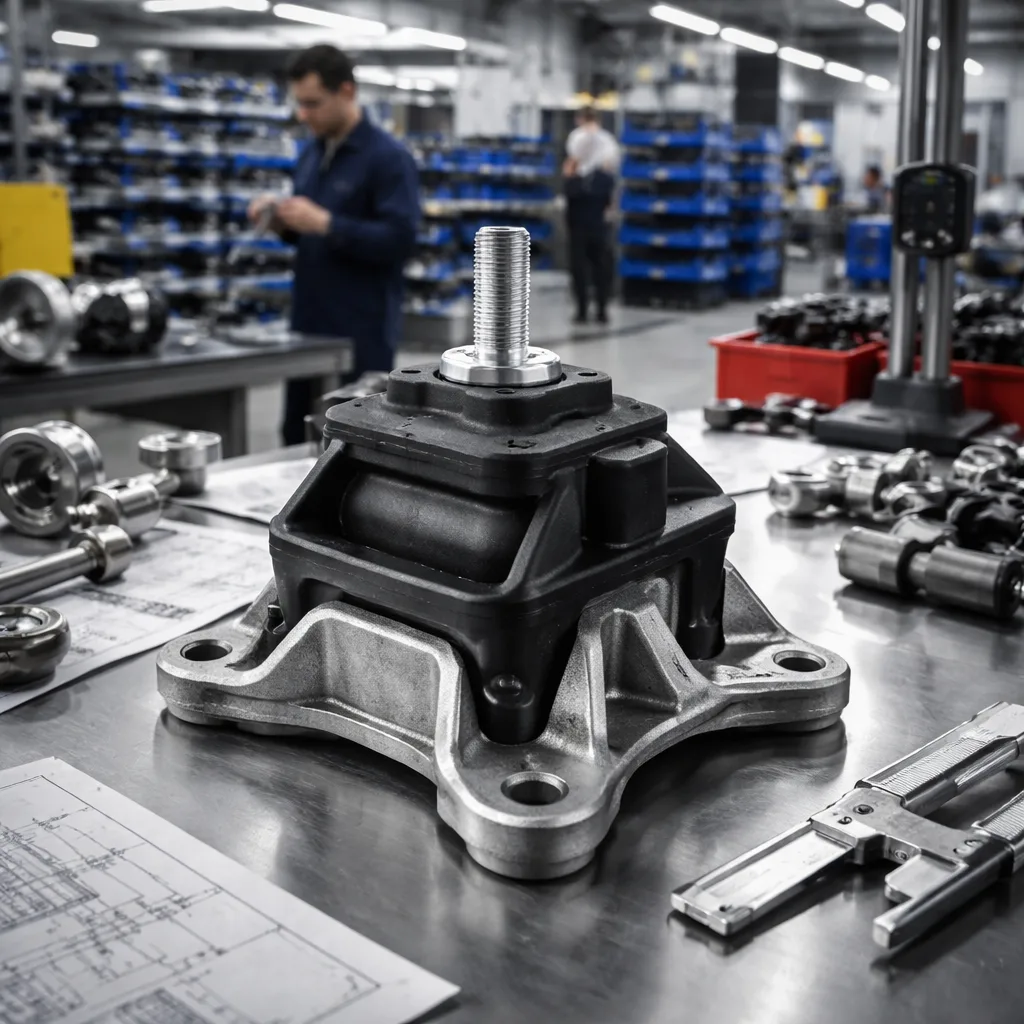
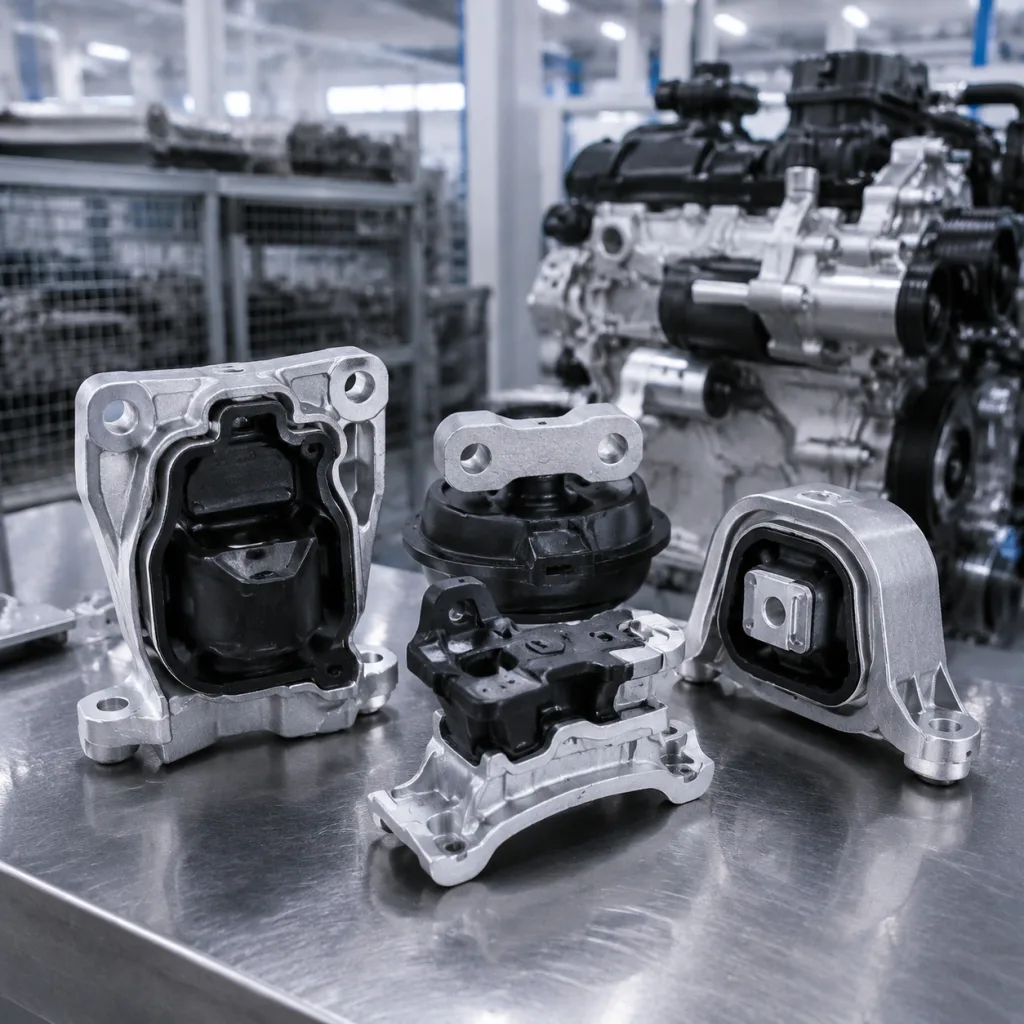
Sourcing an engine mount Chevrolet OEM supplier takes more than confirming a vehicle platform. Procurement teams need dimensional control, material consistency, vibration performance, and traceability that holds across production batches. In aftermarket, OEM, and Tier-1 supply, the mount must keep the engine positioned under torque load, isolate cabin vibration, and resist premature rubber crack growth. Driventus manufactures engine and powertrain components in Taizhou, Zhejiang, with IATF 16949:2016 and ISO 9001:2015 systems in place. Driventus is an independent aftermarket manufacturer; brand names are referenced for fitment only. Buyers typically begin with OE cross-references, then confirm bracket geometry, durometer, bonded steel interface, and validation data before approval. This guide outlines the sourcing criteria, technical checks, and supplier controls that matter when you are buying engine mounts for Chevrolet applications in export markets.
What buyers should verify first
For an engine mount Chevrolet OEM supplier, the first filter is fitment discipline. Start with the OE cross-reference, vehicle platform, engine code, transmission layout, and mount position; do not begin with branding. A mount that appears similar can still fail on bracket offset, stud length, rubber height, or stop clearance.
Minimum buyer checks
OE reference and exact application range by model year
Mount type: hydraulic, bonded rubber, or torque strut
Bracket hole pattern, centre distance, and stud thread size
Installed height and free height, typically controlled within ±0.5 mm to ±1.0 mm depending on platform sensitivity
Rubber hardness, usually specified by durometer, with a practical production band of ±5 Shore A unless the drawing says otherwise
Steel insert thickness, weld quality, and coating class
Static load, dynamic deflection, and engine roll-stop requirement
A buyer should also define the acceptable tolerance stack before sampling. For example, if bracket centre distance, stud projection, and overall height are not specified on the RFQ, the supplier may build to a visual match that still fails assembly. For catalogue screening, use our catalog and the engine-component range at /products/engine-components.html. If you need a non-standard bracket, custom manufacturing is the right path.
Driventus supports OE 06A107065 style cross-reference workflows when the customer already has the reference in its bill of materials or service data. We do not claim OEM approval; we validate against the supplied target specification and can work to a drawing, sample, or approved reference part.
Materials and construction controls
A durable engine mount depends on the bond between rubber and metal. For Chevrolet fitment programs, the supplier should control metal stamping, surface preparation, vulcanisation, and coating so the part performs consistently in service.
Control point
What to verify
Typical buyer spec or target
Typical risk if weak
Rubber compound
Heat and oil resistance, durometer stability
Shore A 55–75 depending on engine mass and NVH target
Softening, cracking, sagging
Steel bracket
Gauge, weld quality, plating
Common production gauges 2.0–4.0 mm, zinc or e-coat finish
Deformation, corrosion
Bond line
Adhesion strength after cure
No visible separation after load and heat ageing checks
Delamination under load
Geometry
Mount height, stud location, stop clearance
Critical dimensions usually held to ±0.5 mm to ±1.0 mm
NVH increase, misalignment
Finish
Salt-spray resistance and coating uniformity
Coating should survive the agreed corrosion test window without red rust on critical zones
Early corrosion
</tr></thead><tbody> </tbody></table>For supply into EU and UK channels, buyers often request REACH (EC) No 1907/2006 declarations for regulated substances. For broader environmental and durability screening, ask for the supplier’s material declaration, coating specification, and control plan. A strong RFQ should also ask for the rubber compound family, cure profile, and bond-process controls because those three items usually explain most field variation in engine mounts.
Driventus can align production documents to a customer drawing or validation pack when the target is fixed by OE cross-reference. If a buyer shares the installed height, durometer window, and bracket drawing, the factory can quote against a controlled spec instead of a visual sample alone.
Validation that reduces field returns
A supplier should prove the mount before shipment, not after complaints. For engine mount programs, the most relevant checks are static load, fatigue, oil exposure, heat ageing, and vibration behaviour.
Common validation references include:
IATF 16949:2016 process control
ISO 9001:2015 quality management
SAE J2527 for accelerated exterior weathering where coating durability is part of the concern
OEM or customer-specific bench cycling, when the buyer needs a defined torque and displacement curve
The exact test matrix depends on the platform, but buyers should ask for: 1. Dimensional inspection report with critical dimensions and measured values 2. Material certificate for rubber and steel, including batch traceability 3. Sample approval record with sign-off status 4. Load, deflection, and fatigue summary with pass/fail criteria 5. Packaging, lot code, and carton traceability record
A practical validation brief should include numeric acceptance limits. For example, a buyer may require no visible bond failure after repeated loading, dimensional drift within the agreed drawing tolerance, and no functional crack growth after heat-soak exposure. If the supplier cannot state the test load, cycle count, or temperature range, the approval is not yet actionable.
For multi-location repair chains and distributors, batch-to-batch consistency matters as much as one-off performance. Stable hardness, consistent cure time, and clear traceability reduce the chance of warranty spread across regions.
Supplier profile for procurement teams
A practical sourcing decision includes factory capability, not just part price. Driventus is a vertically integrated manufacturer in Taizhou, Zhejiang, and exports to 60+ countries. That matters because engine mounts rely on repeatable control of metal parts, rubber bonding, and final inspection.
Supplier attributes buyers usually request
IATF 16949:2016 and ISO 9001:2015 certification
Defined MOQ by part family and tooling status
Stable lead time for production and replenishment
Incoming, in-process, and final inspection records
Export packing suitable for palletised freight
Support for drawing-based or sample-based approval
Clear change-control notice for compound, tooling, or coating changes
For quotation planning, buyers normally separate three cases. Stock items can often ship on shorter replenishment windows, sample-verified standard runs usually need a normal production queue, and new-tool or new-geometry parts need tooling and first-article time on top of mass production. A realistic sourcing file should therefore ask the supplier to quote MOQ, unit price, and lead time separately for sample order, trial batch, and repeat order.
If your sourcing team needs to compare supplier coverage across product lines, start with our catalog and then move into quality system documents. For OEM or private-label programmes, custom manufacturing is the route for drawings, branding neutralisation, and packaging control.
How to structure an RFQ
A strong RFQ shortens sampling cycles and reduces rework. For an engine mount Chevrolet OEM supplier brief, include all fitment and quality data up front so the supplier can assess feasibility without back-and-forth.
RFQ checklist
OE reference or internal part number
Vehicle model, year range, engine code, and transmission type
Drawing, sample, or master part image
Required annual volume and forecast split
Target MOQ, lead time, and shipping terms
Packaging specification and label data
Required declarations: REACH, material, and traceability
Target critical dimensions, tolerance bands, and hardness window
Required validation method, cycle count, or acceptance standard
A useful RFQ also asks for commercial logic. Buyers should request the supplier’s MOQ by part number, price breaks by volume tier, and lead time by order type. For example, a sample quantity may be quoted separately from a production MOQ, while repeat orders may qualify for a lower unit price once tooling is stable. If the part needs tooling, ask for the tooling charge, ownership status, and amortisation method so the landed cost is clear before approval.
If you need a custom quotation for a Chevrolet programme, request a quote with the OE reference, target market, expected annual demand, and any hard limits on height, durometer, or coating. Driventus will confirm feasibility, tooling needs if any, the sample path, and a realistic production lead time before release.
For procurement teams, the most useful supplier is the one that answers drawing questions early, controls variation, and ships repeatable batches.
Frequently asked questions
Yes. Provide the OE reference, application details, target market, and any drawings or sample photos. We validate fitment against the supplied specification, confirm whether the part is standard production or needs a custom run, and return MOQ, unit price, and lead time based on the exact request.
Typical requests include dimensional inspection, material declaration, traceability record, sample approval data, and certification evidence for IATF 16949:2016 or ISO 9001:2015. Buyers often also ask for the test load, cycle count, hardness range, and coating specification so the approval is measurable.
Yes. We can support custom manufacturing, export packing, and label requirements for distributors, OEM programmes, and repair chains. If needed, we can also align carton marks, barcode format, and pallet configuration to the buyer’s warehouse rules.
If you are sourcing a Chevrolet engine mount programme, send your OE reference, volume target, packaging requirements, tolerance requirements, and target lead time through /contact.html and we will review the specification with you.