Engine Block Jeep Manufacturer China: Sourcing Guide
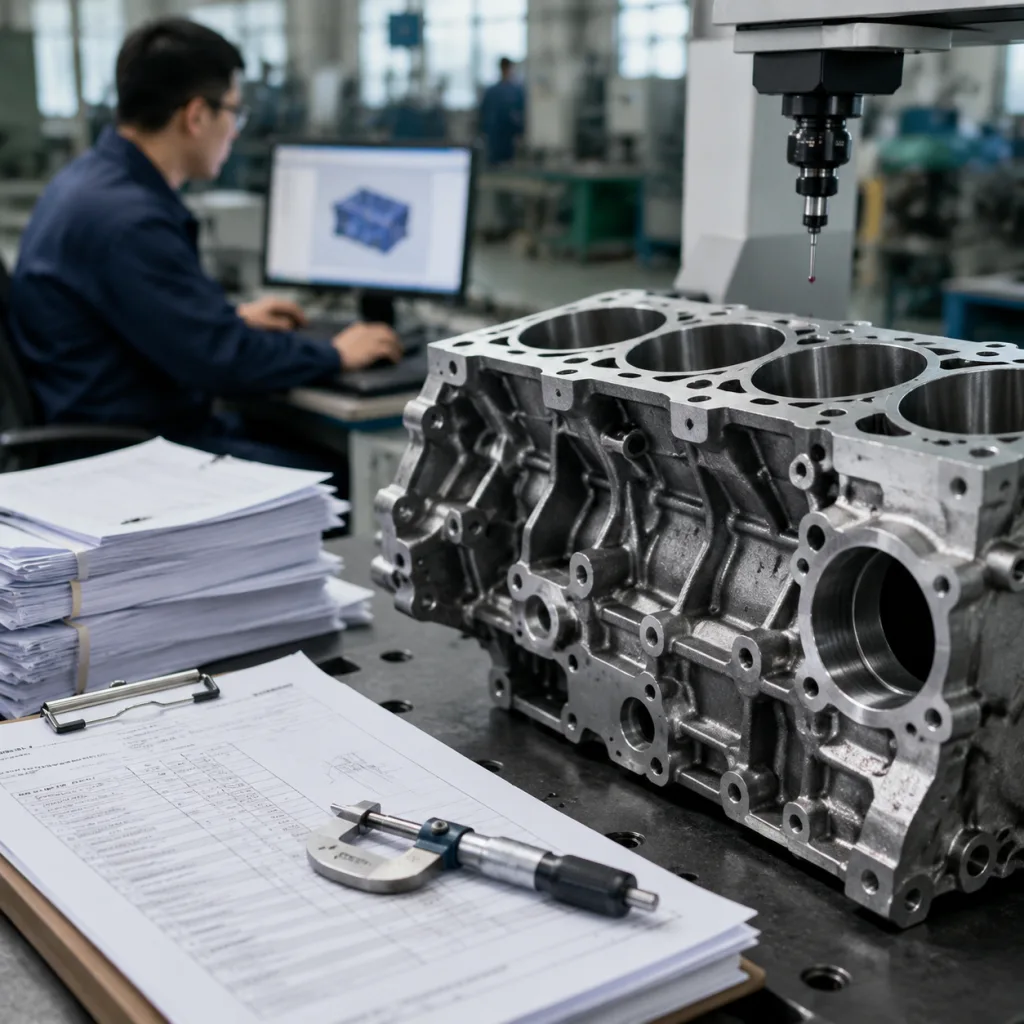
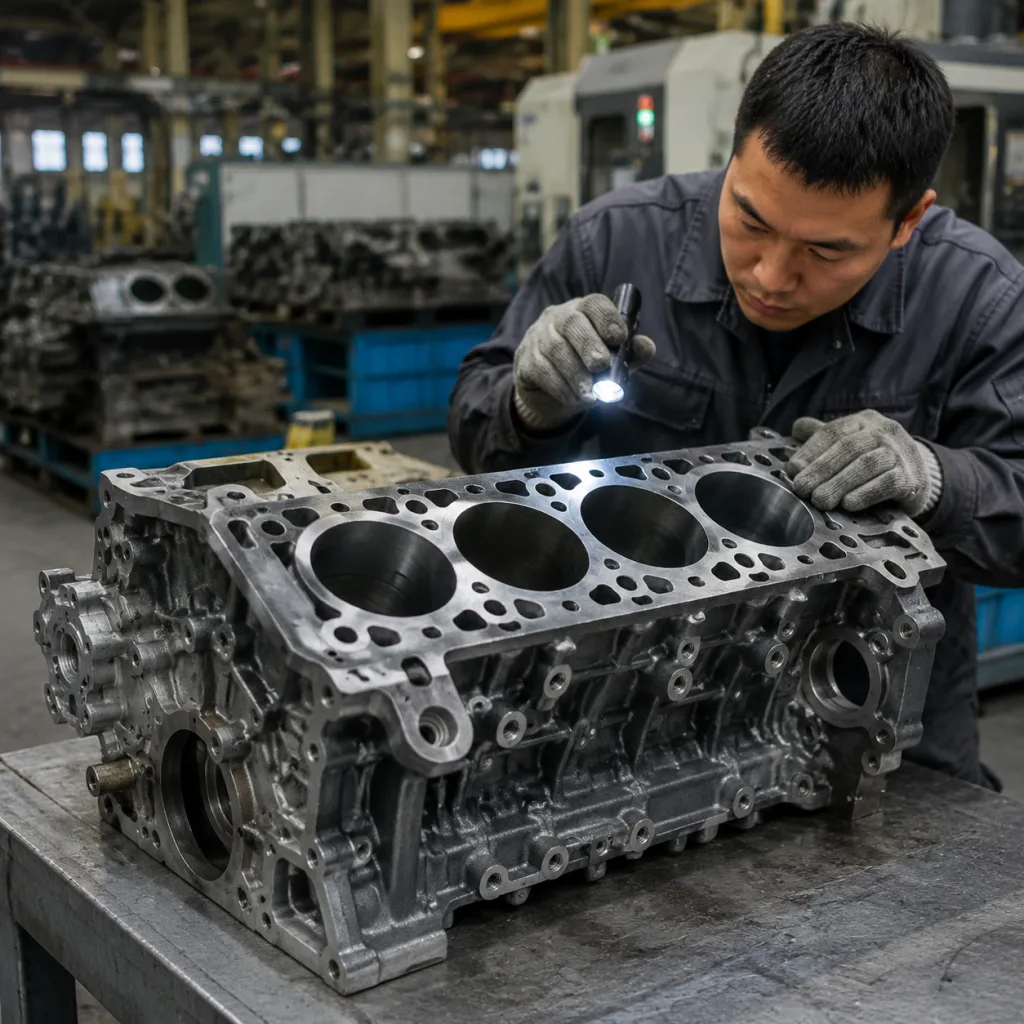
Buying Jeep-fitment engine blocks from China is not a catalogue exercise. One weak bore, warped deck face or untested water jacket can turn a low unit price into warranty claims, rework and stalled inventory. The right supplier discussion starts with process evidence: casting control, material grade, CNC machining accuracy, pressure testing, cleaning, traceability, export packing and inspection records.
Driventus Auto Parts manufactures engine and powertrain components in Taizhou, Zhejiang for distributors, wholesalers, repair chains and OEM/Tier-1 supply projects. Our production model combines controlled casting partners, CNC machining, in-process inspection, final validation and export packing under IATF 16949:2016 and ISO 9001:2015 procedures.
For a Jeep-fitment block RFQ, define the part status first: rough casting, semi-finished, or fully machined. Then specify material grade, bore size, deck finish target, main tunnel tolerance, pressure-test requirement, annual forecast, first-order quantity and delivery term. This article gives procurement teams a more practical way to evaluate an engine block Jeep manufacturer China buyers can audit before releasing a purchase order. Driventus is an independent aftermarket manufacturer; Jeep and other brand names are referenced for fitment identification only.
Decision Gate 1: Prove the Block Is Quoted at the Right Manufacturing Stage
The first sourcing mistake is simple: comparing prices for different products. One supplier may quote a rough casting. Another may quote a semi-finished block. A third may include final honing, pressure testing, washing, core plugs, anti-rust protection and export crating. The unit prices are not comparable until the supply condition is identical.
Before price negotiation, confirm the manufacturing stage:
- Bare or rough casting: suitable when the buyer controls machining elsewhere
- Semi-finished block: some reference surfaces or rough machining completed; final dimensions still buyer-controlled
- Fully machined block: bore, deck, main tunnel, threads and key interfaces finished to agreed tolerances
- Assembly-ready block: machined, leak-tested, washed, protected and supplied with agreed plugs, caps, sleeves or dowels
Engine blocks carry high downstream risk because defects often appear late: during machining, engine build, installation or early service. A small dimensional error can affect piston-to-bore clearance, crankshaft alignment, oil pressure, coolant sealing, head gasket life, noise or vibration.
Use this first decision gate before shortlisting any supplier:
- Casting process route, mould/core tooling status and foundry control plan
- Material specification for grey iron or aluminium alloy, depending on application
- Heat treatment or stress relief where applicable, with temperature/time records
- CNC machining capability for bores, deck face, main bearing tunnel and threaded features
- Cylinder bore geometry measurement: diameter, roundness and taper
- Deck flatness and surface finish matched to gasket type
- Pressure testing for water jacket and oil gallery integrity
- Cleanliness control for oil and coolant passages after machining
- Thread inspection for head bolts, mounts and accessories using go/no-go gauges
- Traceability from casting batch, melt number or heat lot to final inspection record
- Export packing suitable for sea freight, warehouse handling and inland delivery
For RFQ comparison, ask the supplier to mark the drawing with critical-to-quality items. Typical buyer-controlled characteristics include cylinder bore diameter tolerance of about ±0.01-0.02 mm after final honing where the block is supplied finished, bore roundness/taper within 0.01-0.015 mm, deck flatness commonly within 0.03-0.05 mm across the gasket face, main bearing tunnel alignment within 0.01-0.02 mm, and threaded-hole position checks for head bolts and mounts. Exact limits must follow the target engine drawing or approved master sample, not a generic catalogue claim.
If drawings are not available, the supplier should work from an agreed reference sample, a clear OE part-number cross-reference format such as OE 06A… where applicable, and a documented inspection plan. The quotation should state whether the block includes pressure testing, final washing, anti-rust oil, individual crate packing and inspection documentation. These items can materially change landed cost.
Driventus lists related engine components in our catalog, including cylinder heads, pistons, crankshafts, gaskets and water pumps for bundled procurement.
Audit Evidence That Separates a Real Factory from a Trading Quote
Certificates help, but they do not prove that a specific block programme is under control. A credible engine block Jeep manufacturer China sourcing project needs process evidence: what is inspected, when it is inspected, what happens when it fails, and how the batch is traced.
Ask for current IATF 16949:2016 and ISO 9001:2015 certificates, including scope and expiry dates. Then move quickly to the production route.
| Audit area | Evidence to request | Practical acceptance point | |
|---|---|---|---|
| Quality management | IATF 16949:2016 and ISO 9001:2015 certificates, internal audit records, corrective action logs | Certificate scope covers machining or engine components; CAPA closure is tracked | |
| Machining control | CNC equipment list, fixture photos, tool life records, first-article reports, CMM reports | First-piece approval at shift start and after tool/fixture change | |
| Casting control | Material certificates, melt records, hardness results, foundry control plan | Heat/lot records link to casting batch and final serial or batch code | |
| Validation | Pressure test data, bore measurement reports, leak test parameters, surface finish records | 100% leak test for machined blocks where agreed in the control plan | |
| Cleanliness | Air blow, washing, plug protection and passage inspection records | Oil galleries and coolant passages protected after washing and before packing | |
| Traceability | Batch codes, inspection sheets, packing labels, retention sample policy | Batch can be traced from carton/pallet label to inspection report | |
| Export control | HS code review, commercial invoice, packing list, certificate of origin where required | Paperwork matches quantity, weight, package count and part description |
| Failure mode | Likely cause | Approval control | |
|---|---|---|---|
| Head gasket leakage | Deck flatness, roughness or porosity issue | Record flatness and surface roughness; inspect gasket face | |
| Early bore wear | Bore geometry or material hardness issue | Measure bore at multiple heights/angles; verify hardness/material | |
| Low oil pressure | Gallery blockage, machining burrs or alignment issue | Cleanliness inspection and oil passage verification | |
| Crankshaft binding | Main tunnel alignment or cap mismatch | Inspect with caps torqued to specification | |
| Coolant loss | Casting porosity or plug-seat defect | Water-jacket pressure test with recorded parameters | |
| Thread pull-out | Poor thread depth, material or tapping control | Go/no-go gauge and thread-depth checks | |
| Transport damage | Weak packaging or exposed machined faces | Approve packing design before shipment |
| Stage | Typical quantity | Typical lead time | Procurement objective |
|---|---|---|---|
| Technical review | 1 reference sample or drawing set | 3-7 working days | Confirm feasibility and quotation basis |
| Sample order | 1-5 pcs | 30-60 days | Validate casting, machining and fitment |
| Pilot order | 20-50 pcs | 45-75 days | Check process repeatability and packaging |
| Repeat production | 50-200+ pcs | 45-90 days | Stabilise cost, inventory and shipping plan |