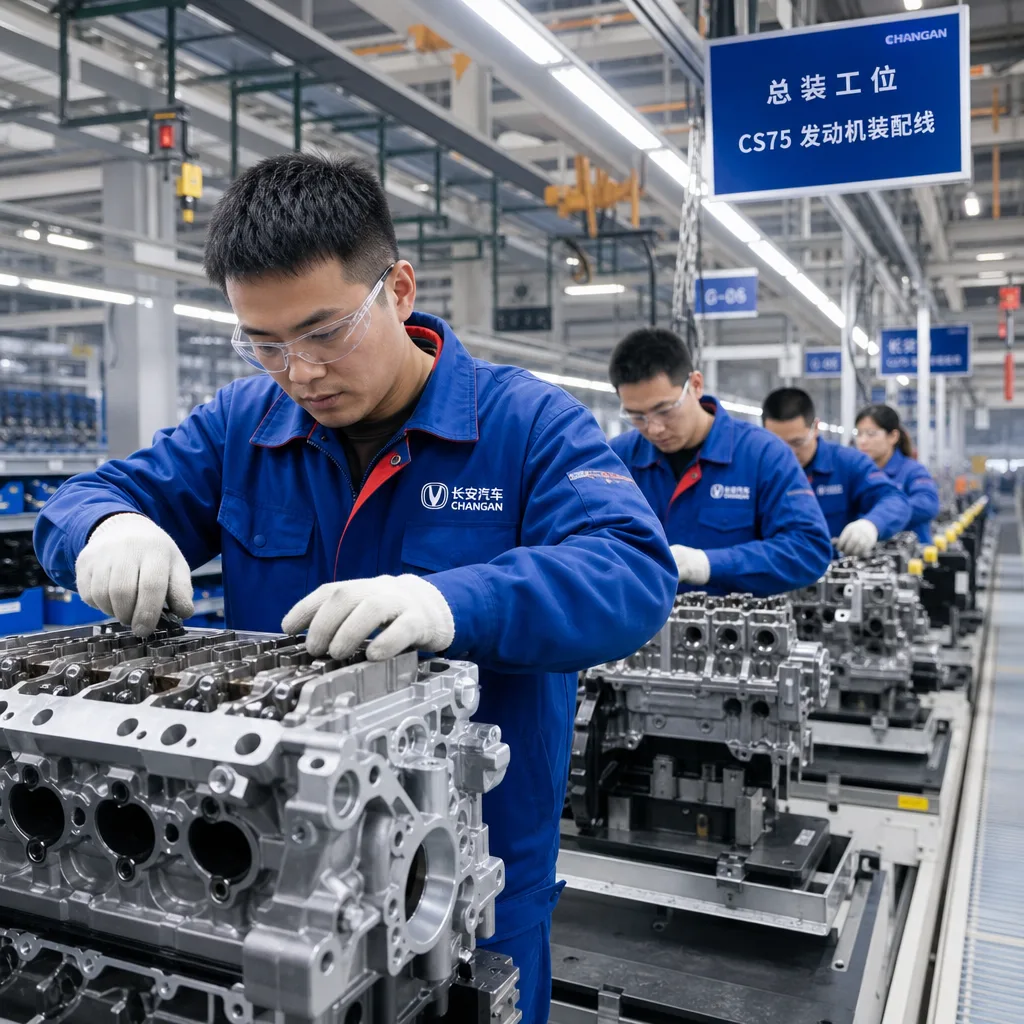
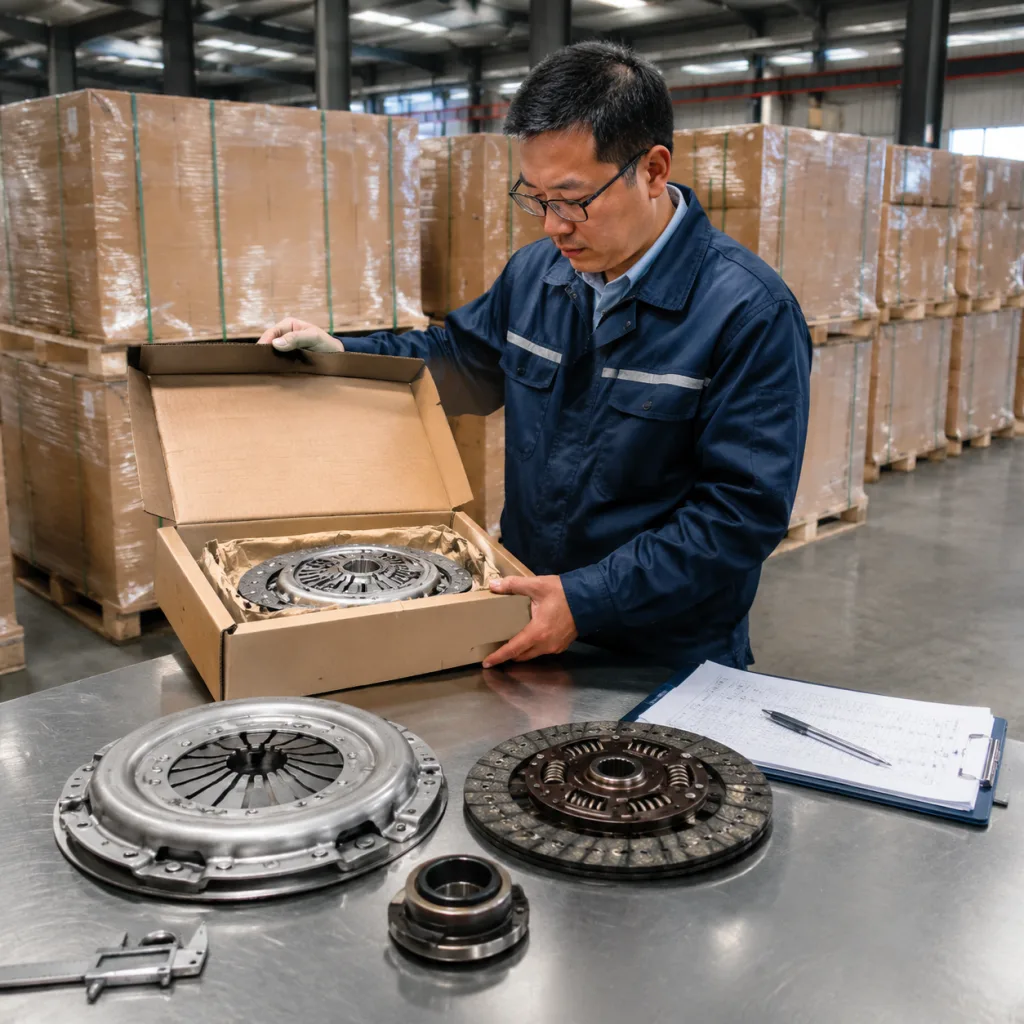
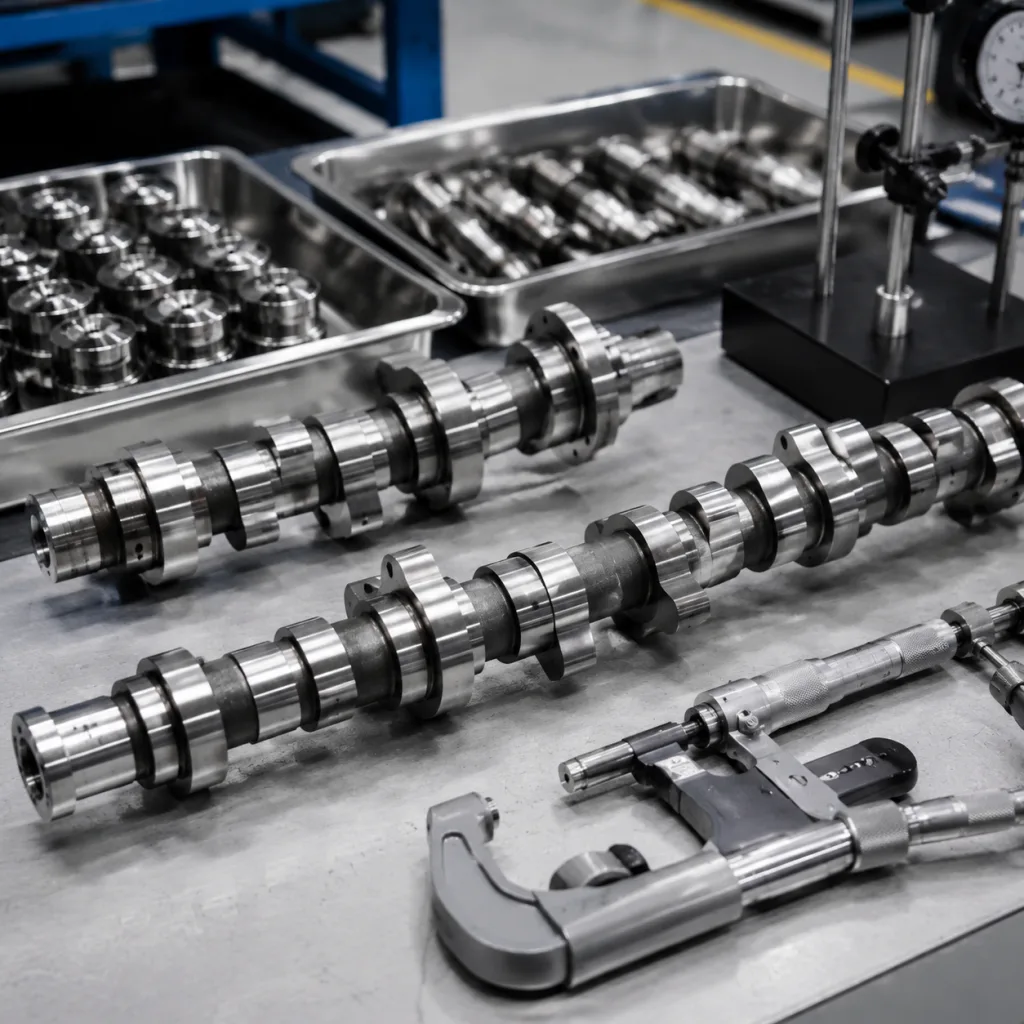
Connecting Rod for BMW X3 OE Equivalent: Fitment Checklist
A connecting rod for BMW X3 OE equivalent replacement should not be sourced from the vehicle badge alone. The X3 name covers multiple petrol and diesel engines across markets and production years. Those engines may differ in crank journal size, piston pin diameter, rod length, bearing stack-up, bolt specification, cap design, oiling details, and rod mass class.
The safer B2B route is to treat the rod as an engineered part, not a catalogue line. Start with the engine code. Then confirm the sample or drawing, measure the critical geometry, check the material and heat-treatment route, and require inspection records that can be linked to the shipped lot.
For a standard replacement program, buyers can usually plan around 7-15 days for sample approval and roughly 25-45 days for production when the design already exists. New tooling, special coating, custom geometry, or strict weight matching will extend that timeline. Typical order planning is 1-2 pcs for samples, 10-20 pcs for a pilot run, and 50-200 pcs for a wholesale batch, depending on whether the rod is forged, powder-metal, or custom machined.
Driventus is an independent aftermarket manufacturer. BMW and X3 names are used only to identify fitment context. The goal is simple: repeatable replacement supply based on evidence, not guesswork from a broad application title.
Decision first: is the rod truly OE-equivalent for this X3 engine?
OE-equivalent does not mean “similar shape” or “listed for BMW X3.” For a connecting rod, equivalence is proven by working geometry, strength route, machining accuracy, fastener control, and finished balance against the original application.
Use this decision sequence before accepting a quotation:
1. Confirm the exact engine code, displacement, fuel type, model year, and market version. 2. Match the rod against a clean used sample, approved drawing, or verified dimensional data. 3. Check whether the cap style, bolt design, pin end, bearing housing, and oiling features match the target engine. 4. Review material route and heat treatment. 5. Ask how the supplier controls bore size, bore alignment, weight, and bolt condition by lot.
A chassis generation or trim name is not enough. X3 platforms have used several engine families, and connecting rods are not interchangeable across all of them. Even within one engine family, revisions may change the rod bolt, piston pin fit, bearing shell stack-up, or mass target.
The preferred reference should be one of the following:
- A clean used sample from the target engine
- An original drawing or approved aftermarket drawing
- A verified OE part reference used only for fitment cross-checking
- Complete dimensional data from the repair or remanufacturing team
For procurement approval, the rod should match centre-to-centre length, big-end bore, small-end bore or bushing specification, big-end width, small-end width, cap joint type, bolt size, and finished mass range. Ask the supplier to state the actual tolerance band on critical dimensions. As buyer-side acceptance thresholds, many teams request centre distance within ±0.02 mm, big-end bore roundness within 0.01 mm after bolt torque, and set weight matching within 1-3 g. The engine drawing always takes priority, but these figures help expose weak process control.
Material route matters too. Ask whether the part is forged steel, powder-metal, or another controlled metallurgy route. Request the finished hardness range by batch. For many forged passenger-car rods, a tempered hardness window around HRC 28-36 is common, though the correct target must be checked against the original design.
Driventus supplies independent aftermarket components. Vehicle and brand references identify application context only and do not imply original equipment affiliation.
Failure modes that usually trace back to missed dimensions
Most wrong-part claims start small: one missing measurement, one assumed engine variant, one catalogue title treated as proof. In a connecting rod, that mistake can become bearing noise, low oil pressure, piston misalignment, side clearance problems, or an engine that cannot be assembled without rework.
Before issuing a purchase order, confirm the dimensions that control fitment and clearance:
- Centre-to-centre length between the big-end and small-end bores, ideally measured to 0.01 mm resolution
- Big-end bore diameter after cap assembly and final honing
- Big-end housing width and bearing location details
- Crank journal compatibility and bearing shell thickness range
- Small-end bore diameter, piston pin diameter, and bushing requirement
- Small-end width and piston boss clearance
- Bolt diameter, thread pitch, under-head length, and tightening method
- Cap alignment style, such as fracture-split or machined joint where applicable
- Oil hole position, chamfer direction, and side marking orientation
- Finished rod weight and big-end/small-end balance target
Add tolerances to the spec sheet, not just nominal dimensions. Useful buyer-side controls include:
- Big-end bore ovality and taper: request no more than 0.01 mm unless the engine drawing allows more
- Big-end side width tolerance: commonly within ±0.05 mm
- Small-end bushing press fit: supplier should declare the interference fit and final bore finish method
- Bore surface finish: request a clear Ra target, especially where bearing shells or bushings seat
- Rod beam straightness: require a controlled check to reduce alignment risk
- Bolt stretch or torque value: verify whether the fastener is torque-to-yield, reusable, or single-use only
If the engine family is unclear, do not guess. Send photos of the removed rod from several angles: cap, bolt area, beam profile, oiling features, and any casting, forging, or laser marks. Photos of the block stamping, piston crown marking, crank journal, and bearing shell codes can also help. Ask the workshop to measure the old rod with a micrometer, bore gauge, and pin gauge, then record the values in a simple template.
A quote tied only to “fits BMW X3” is not procurement-ready. The quote should be tied to an engine code, sample, drawing revision, or verified dimensional set. That reduces returns and protects installation time.
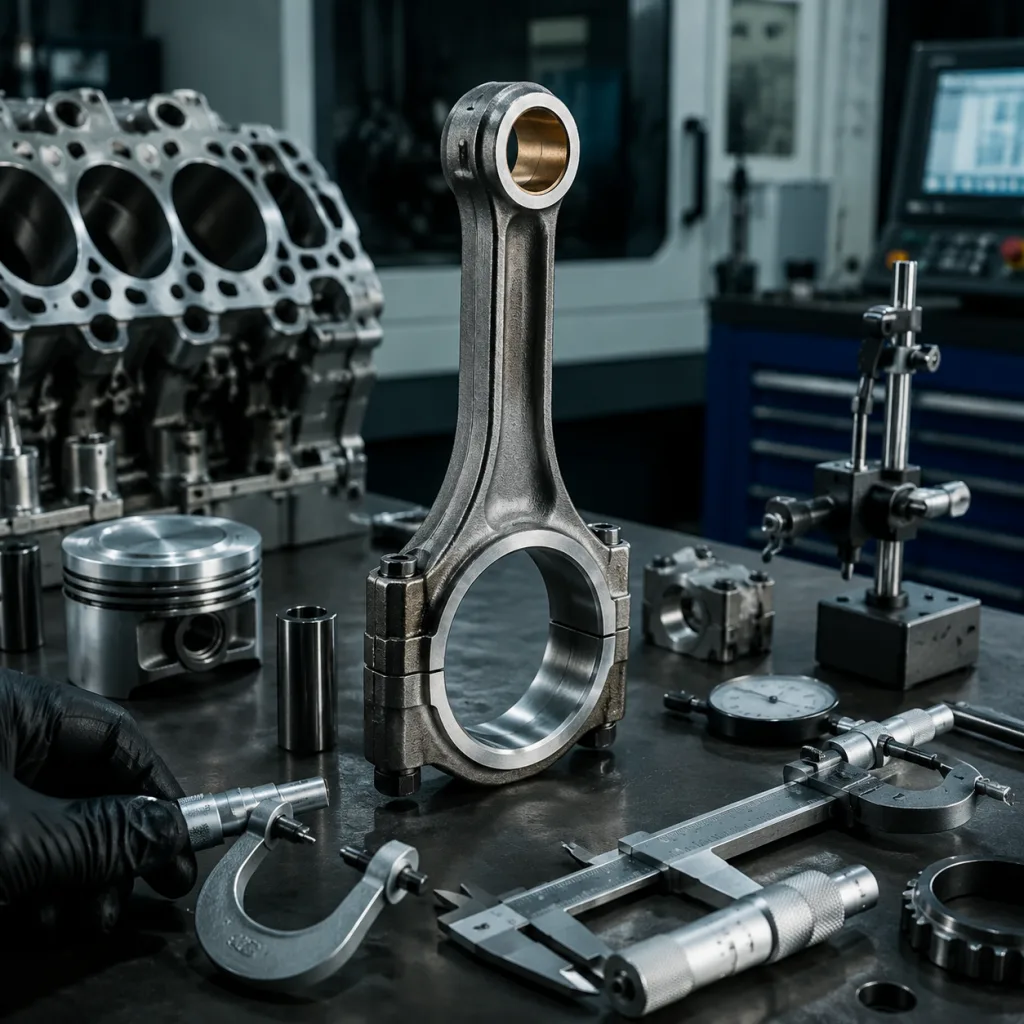
Spec deep-dive: material route, heat treatment, and machining control
A connecting rod is not just a machined shape. It works under repeated tensile, compressive, and bending loads, then depends on microns of bearing and pin clearance to survive in service. For a connecting rod for BMW X3 OE equivalent program, the manufacturing route must suit the original load class.
Common production routes include forged alloy steel, powder-metal processes, and other controlled metallurgy depending on the engine design. The right choice depends on engine load, speed range, and the original specification. Buyers should request the material grade or equivalent standard, heat-treatment method, hardness range, and fatigue-related process controls used for the batch.
A useful technical request package includes:
- Chemical composition or material certificate
- Heat-treatment curve or process summary
- Final hardness range and test method
- Shot peening coverage where specified
- Residual stress control or fracture-split process details where applicable
- Surface finish target on bearing and cap faces
- Wash and debris-cleanliness requirement before packing
Then check the machining plan. The most important control points are:
- Big-end bore roundness and cylindricity after cap tightening
- Parallelism between big-end and small-end bores
- Bore centre distance tolerance
- Surface finish of the bearing housing bore
- Small-end bushing material, press fit, and final bore finish if used
- Bolt seating face quality and thread integrity
- Chamfers and edge breaks that reduce stress concentration
- Weight matching across a set where the engine build requires it
The sequence must be stable from lot to lot: forming or forging, heat treatment, rough machining, cap processing, bolt assembly, final honing, washing, inspection, and packing. A polished product description is less useful than evidence that these steps are controlled.
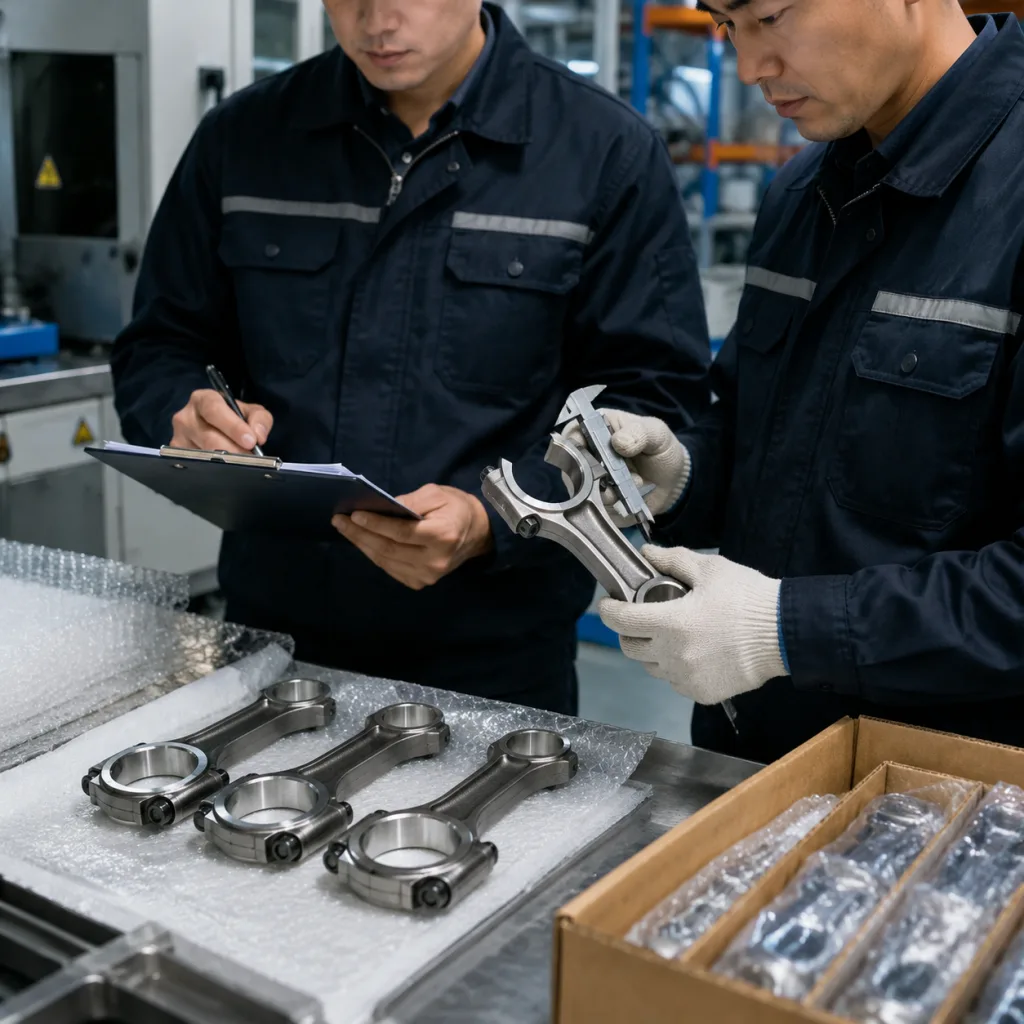
When comparing suppliers, ask for two sample parts from different lots. Check them on a bore gauge, height gauge, and scale. If one supplier holds bore size, width, and mass more consistently, that supplier is often the better long-term source even when the unit price is slightly higher.
Lot validation: what evidence should travel with the shipment?
Validation should be practical, traceable, and tied to the lot being shipped. A generic quality statement is not enough. The supplier should be able to show that the connecting rod was checked against the agreed drawing or approved sample, and that the inspection data belongs to the production batch on the packing list.
Typical quality checks include:
- Incoming material verification or material certificate review
- Heat-treatment and hardness inspection
- Dimensional inspection of all critical bores, widths, and lengths
- Big-end bore measurement after bolts are tightened to the specified condition
- Crack detection or non-destructive testing where required by the process plan
- Surface finish checks on bearing and bushing contact areas
- Bolt torque, thread, and seating checks
- Weight and balance checks for matched sets
- Final visual inspection for burrs, dents, corrosion, and contamination
- Packaging checks to prevent transit damage to machined surfaces
For replacement sourcing, the inspection values that matter most are those that affect clearance and durability: big-end bore size, small-end pin fit, centre distance, bore alignment, material condition, and bolt specification. If these drift, the engine may develop noise, bearing wear, oil pressure issues, piston alignment problems, or early failure.
For lot acceptance, request at least the following with the shipment or on demand:
- First article report for the approved sample
- Batch traceability with heat number or lot code
- AQL or 100% inspection statement for critical dimensions
- Retained-sample policy for claim resolution
- Packing list identifying quantity by part number and revision
The paperwork does not need to be excessive. It does need to be specific. B2B buyers should be able to connect a claim, a carton label, a part revision, and a measurement record without rebuilding the entire supply history from memory.
Procurement scenario: building a repeatable program for chains and wholesalers
A repair chain may only need a few engine rebuilds per month. A wholesaler may need steady stock across several part numbers. An engine rebuilder may see mixed-market X3 engines where catalogues conflict. Each scenario needs a different ordering rhythm, but the same rule applies: remove ambiguity before the part reaches the warehouse.
A practical ordering file should include:
- Vehicle model and model year range
- Engine code and displacement
- Fuel type and market version if known
- OE reference used for comparison, if available
- Sample photos or sample ID number
- Critical rod dimensions and bearing data
- Required quantity, packaging method, and delivery schedule
- Any set-matching or weight-class requirement
- Inspection documents requested with shipment
When pricing a connecting rod program, separate the quote into four buckets: part cost, tooling or setup cost, sample cost, and freight. For an existing design, sample pieces may carry a premium while production pricing drops at 50-99 pcs, 100-499 pcs, and 500+ pcs. Unit price can fall 15-30% between sample quantity and mid-volume ordering because setup, inspection, and packing costs are spread over more units. If a supplier cannot explain the price breakpoints, the quote is not ready for procurement approval.
A realistic lead-time framework is:
- 7-15 days for sample preparation from existing stock or a near-match
- 25-45 days for stable production on an approved existing design
- 45-60 days if new tooling, new packaging, or special inspection is added
- 60-90 days if the design requires custom geometry, weight matching, or process validation
MOQ should match demand. For limited repair-chain usage, a 10-20 pc pilot order may be safer than a large first batch. For steady wholesale demand, 50-200 pcs per part number is usually more efficient. For annual demand above 500 pcs, ask for a supply plan with barcode labels, carton labels, and a reorder threshold.
For uncertain applications, send a sample rod before committing to volume. The supplier can measure it, compare it with an existing drawing, or build a custom manufacturing specification. This is especially useful when a network receives engines from different markets or when catalogue references disagree.
Driventus can support fitment confirmation, drawing review, sample-based development, and production planning for B2B supply. The strongest sourcing outcome comes from matching correct engine data with controlled manufacturing and traceable inspection, so the same connecting rod can be reordered confidently in future batches.
Frequently asked questions
It must match the original application’s critical geometry, material route, heat treatment, machining accuracy, bolt specification, and weight class. Buyers should confirm centre-to-centre length, big-end bore, small-end pin fit, housing widths, fastener details, and finished mass. As practical controls, many teams ask for centre distance within about ±0.02 mm, big-end bore roundness within 0.01 mm after torque, and set weight matching within 1-3 g, unless the engine drawing states otherwise.
Yes. BMW X3 model names do not map one-to-one to connecting rod designs. Different engines and revisions can use different crank journal sizes, piston pins, bearings, and rod specifications. If the code is uncertain, send the old rod, photos, and measured dimensions so the supplier can verify the part before quoting.
Yes. Through custom manufacturing, Driventus can work from a sample, drawing, or verified dimensional set to match the required geometry, finish, material route, inspection plan, and batch quantity for B2B supply. For most custom programs, expect 1-2 pcs for samples, 10-20 pcs for pilot confirmation, and 25-45 days for production after approval, with longer timing if new tooling or special inspection is required.
For fitment confirmation, drawing review, or volume pricing, contact the Driventus team through /contact.html
Request a Quote