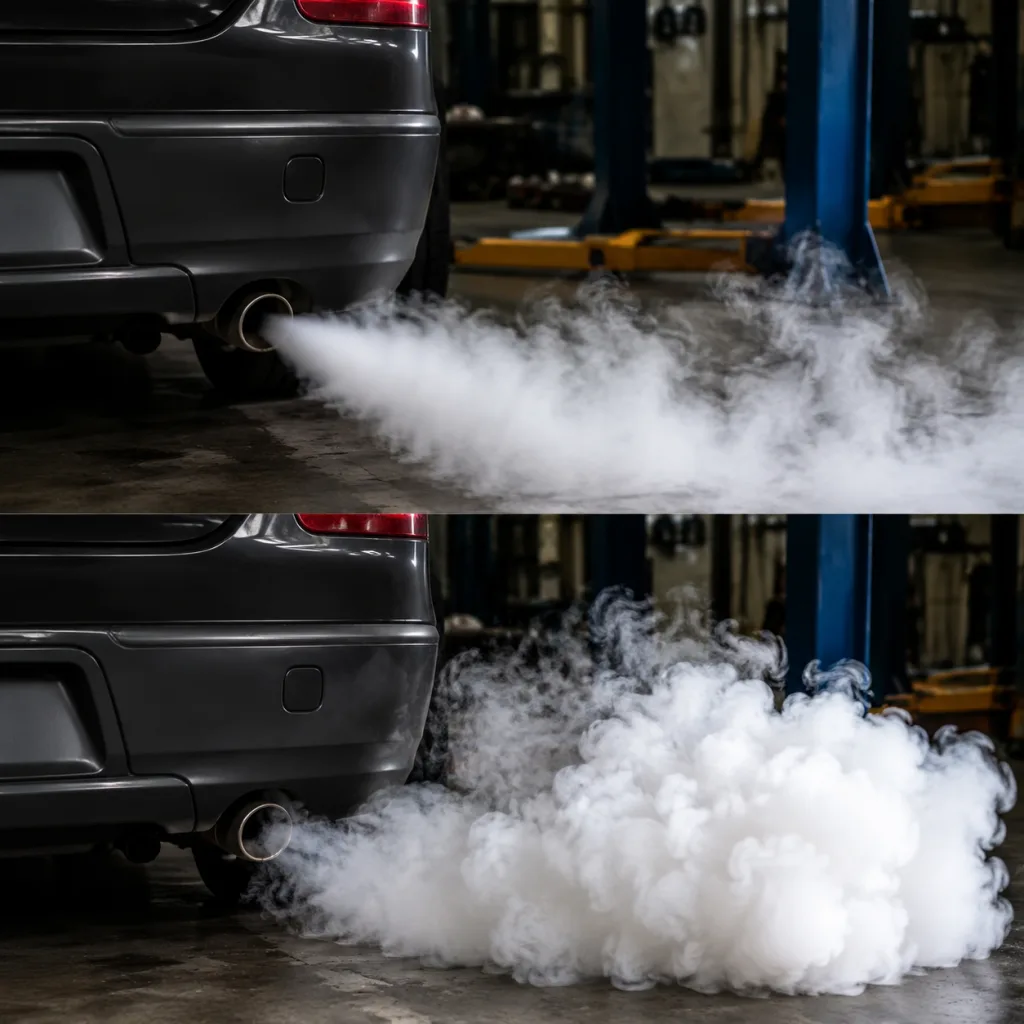
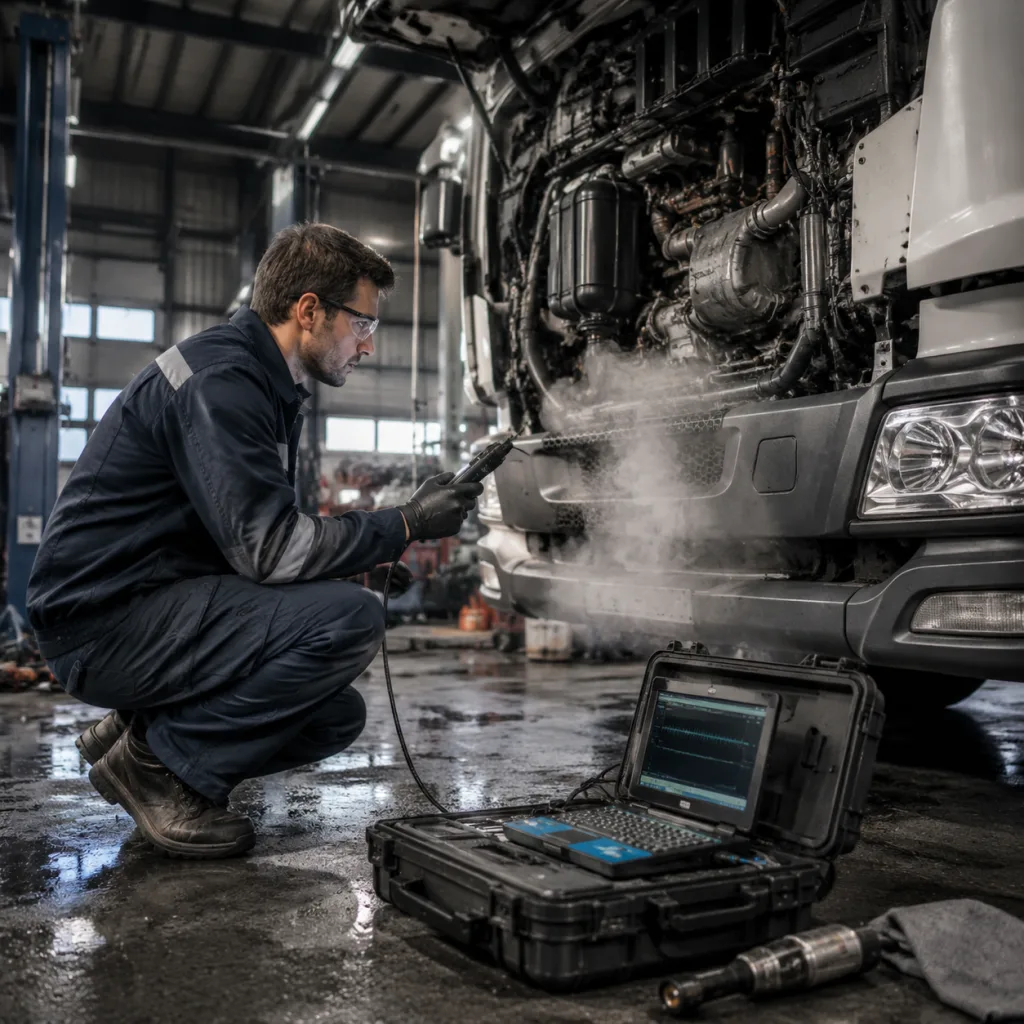
Startup smoke is valuable because it appears before heat expansion, catalyst temperature, closed-loop fuelling, and a hot exhaust can mask the fault. For repair chains, distributors, importers, and fleets, the problem is not only finding the failed part. It is proving the failure path consistently enough to avoid repeat repairs, weak warranty claims, and poor purchasing decisions. This guide explains how to diagnose engine smoke at startup by separating what is seen at the tailpipe from what can be measured: pressure loss, scan data, oil or coolant movement, compression, leak-down, bore condition, injector behaviour, and dimensional conformity. It covers oil entry, coolant intrusion, over-fuelling, air restriction, turbocharger leakage, crankcase ventilation faults, and normal condensation. It also connects diagnosis to B2B sourcing decisions, including fitment, material, sample approval, MOQ, price, lead time, and traceability. Driventus is an independent aftermarket manufacturer; brand names and OE references are used for fitment identification only.
Decision framework: prove the smoke pattern before touching parts
Do not start with disassembly. Start with a controlled cold start. Most false diagnoses come from testing a warm engine, ignoring ambient conditions, or treating smoke colour as proof.
Cold-soak the vehicle for at least 6–8 hours, preferably overnight. Park it level. Start without throttle input unless the service procedure says otherwise. Record ambient temperature, humidity, engine coolant temperature, oil level, coolant level, fuel level, recent service history, and stored or pending diagnostic trouble codes. A useful sanity check is coolant temperature within 3–5°C of ambient after soak. If the scan tool shows a larger difference, verify the sensor before using fuel-trim or cold-start behaviour as evidence.
Use the first start of the day as the baseline. Film the exhaust outlet and instrument cluster in the same shot so engine speed, warning lamps, and smoke duration are visible. Time the event: under 10 seconds, 10–30 seconds, 30–60 seconds, or continuous after warm-up. Then repeat after a 10–20 minute hot soak. That second test often separates overnight oil seepage from hot-soak fuel leakage or pressure-driven coolant entry.
Fuel trims, injector balance, air filter, MAF/MAP readings
Grey, acrid odour
Variable
Mixed oil/fuel or incomplete combustion
Worn rings plus rich fuelling, turbo leakage, misfire
Oil analysis, borescope, turbo inspection, scan data
</tr></thead><tbody> </tbody></table>Colour is a screen, not a conclusion. For warranty approval, supplier claims, or volume purchasing, link the visible smoke to at least one measured defect path. Useful internal thresholds include oil consumption above 0.5–1.0 L per 1,000 km, cylinder compression spread above 10–15%, leak-down above 20%, coolant pressure loss during a 15–30 minute hold, or injector pressure decay outside the vehicle manufacturer’s limit. Local service data always overrides generic limits.
Failure mode deep-dive: blue smoke and oil control faults
Blue smoke means oil has reached the intake tract or combustion chamber. The difficult part is deciding whether the oil came from the top end, bottom end, turbocharger, or crankcase ventilation system. A short overnight puff with normal compression is a very different buying decision from sustained oil consumption with high blow-by.
Work through the fault path in this order:
Oil grade and fill level. Check the dipstick after 5–10 minutes of drain-back on level ground. Overfill, incorrect viscosity, fuel dilution, and extended service intervals can increase oil carry-over. If oil analysis shows fuel dilution above roughly 2–3%, or the oil level is rising with a fuel smell, treat the fuel system as a primary suspect before condemning rings or seals.
Crankcase ventilation. Inspect the PCV valve, oil separator, hoses, breathers, and drain paths. A stuck valve or restricted separator can raise crankcase pressure and push oil past otherwise serviceable seals. Where data exists, compare crankcase vacuum or pressure with the specification; otherwise use a known-good engine and document manometer readings.
Intake and charge-air tract. Remove ducting and inspect before cleaning anything. Oil pooling before the throttle body, in the compressor outlet, or in the charge-air cooler can indicate turbocharger leakage or ventilation carry-over. A light film is common on many boosted engines; measured intercooler drain volume is stronger evidence.
Compression and leak-down. Low compression with high crankcase leakage points toward rings, piston lands, bore damage, or general cylinder sealing loss. Typical trigger points are 10–15% cylinder-to-cylinder compression variation or leak-down above 20–25%, but engine-family data should decide the case.
Borescope evidence. Oil trails down the valve side support valve stem seal leakage. Vertical scoring, polished thrust faces, heavy deposits, broken ring-land marks, or crown damage shift attention to pistons, rings, and bores.
Turbocharger condition. Oil at the turbine outlet or compressor housing must be evaluated with shaft play, compressor wheel contact, boost behaviour, oil drain restriction, and crankcase ventilation. Any wheel-to-housing contact, coked oil drain, kinked drain tube, or restricted vent can destroy a replacement turbo quickly.
For fleet and repair-chain reporting, separate top-end leakage from bottom-end wear. Valve stem seals can create a visible puff after overnight parking while compression remains in specification. Worn rings or damaged bores usually bring sustained oil consumption, higher blow-by, poor leak-down results, and smoke during deceleration or acceleration as well as startup.
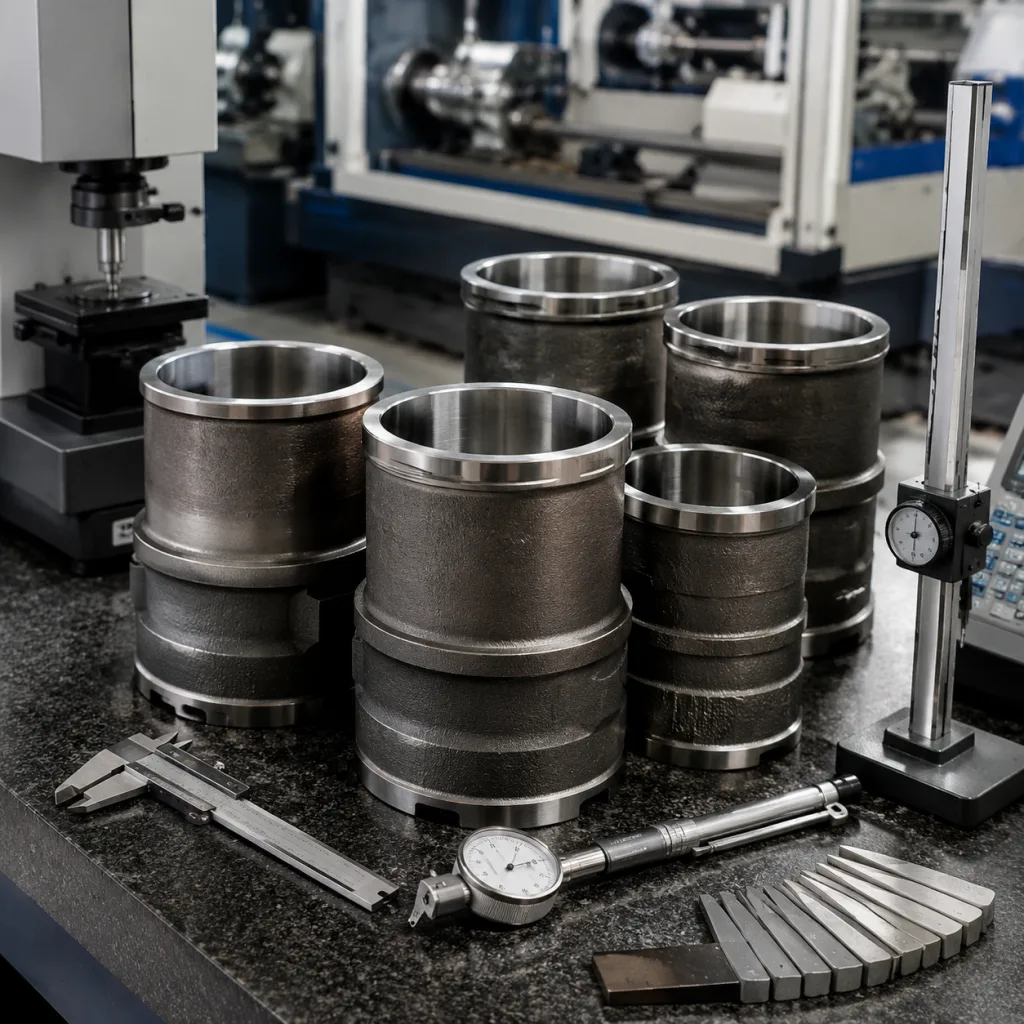
If piston or ring wear is suspected, measure before ordering. Record bore diameter at top, middle, and bottom in two directions; taper; out-of-round; ring end gap; ring groove side clearance; piston skirt diameter; piston-to-wall clearance; and cylinder surface finish. Many light-duty engines hold bore taper and out-of-round within hundredths of a millimetre. Ring end gap often sits around 0.20–0.60 mm depending on bore and ring type. Piston-to-wall clearance is checked at the specified skirt gauge point, not at the crown. These are control prompts, not universal service limits.
Driventus supplies pistons, piston rings, gaskets, and related engine components through our catalog, with production controlled under IATF 16949:2016 and ISO 9001:2015.
Condensation versus coolant entry: a white-smoke comparison
White smoke is the easiest symptom to over-call. In cold or humid weather, light white vapour that clears as the exhaust warms is often normal condensation. Dense white smoke with a sweet odour is different, especially when it persists after warm-up or appears with coolant loss, misfire, overheating, unexplained cooling-system pressure, or one unusually clean cylinder.
Question
Normal condensation usually looks like
Coolant entry usually looks like
Does it clear?
Yes, as the exhaust warms
No, or it returns repeatedly
Odour
Little or no sweet smell
Sweet coolant smell possible
Coolant level
Stable after full cool-down checks
Drops without an external explanation
Engine behaviour
Normal idle and no misfire
Misfire, rough start, overheating, or pressure rise may occur
Cylinder evidence
No single steam-cleaned cylinder
Clean, wet, rust-stained, or stained chamber possible
</tr></thead><tbody> </tbody></table>Before condemning a head gasket or cylinder head, exclude external leaks. Hose joints, radiators, heater cores, water pump weep holes, thermostat housings, expansion tanks, and oil-cooler interfaces can lower the coolant level while normal vapour exits the exhaust. Mark the cold coolant level, drive a fixed route, and recheck only after full cool-down.
Inspection sequence for suspected coolant intrusion
1. Pressure-test the cooling system cold at cap rating or service-specified pressure, commonly around 1.0–1.5 bar on many light-duty systems, and hold for 15–30 minutes. Repeat hot only where the service procedure allows safe testing. 2. Watch for immediate pressure rise after startup. Rapid pressure increase before coolant temperature rises can indicate combustion gas entering the cooling circuit. 3. Use a combustion leak detector at the expansion tank or radiator neck when the design allows. A positive chemical test plus coolant loss is much stronger than white smoke alone. 4. Inspect spark plugs, glow plugs, or injector bores. One unusually clean, steam-washed, rust-stained, or wet cylinder is important evidence. 5. Borescope the chamber after an overnight pressure hold. Look for droplets, coolant tracking, clean piston areas, or staining around the fire ring. 6. Check oil and coolant for cross-contamination, but do not rely on it. A leak into one cylinder may not produce mayonnaise under the cap. 7. Inspect liquid-cooled EGR circuits, intake manifold coolant passages, charge-air coolers, and oil cooler interfaces where fitted.
A head gasket is only one possible cause. Others include casting cracks, liner sealing faults, porous cylinder heads, EGR cooler leaks, intake manifold coolant passages, incorrect surface preparation after a previous repair, and head-bolt clamping loss. For procurement teams, that distinction changes the repair package. A correct order may require a gasket set, torque-to-yield bolts, water pump, thermostat, EGR cooler, machining, pressure testing, and sealing-surface inspection rather than one gasket.
When sourcing sealing components, verify material construction, coating type, fire-ring or bead geometry, bore alignment, coolant passage shape, oil-feed hole position, gasket thickness, and torque-angle compatibility. For cylinder head repairs, require flatness and surface-finish data from the machine shop. Many MLS gaskets need a smoother finish than older composite designs, and excessive roughness or waviness can bring the same white-smoke complaint back. Where applicable, material declarations should consider REACH (EC) No 1907/2006.
Scenario test: black startup smoke after an overnight park
A typical complaint sounds simple: the vehicle sits overnight, starts with a dark plume, runs rough for a few seconds, then clears. The wrong response is to order injectors immediately. Black or dark grey smoke means too much fuel for the available air, or combustion that is too poor to burn the commanded fuel cleanly. The fault may be fuel, air, ignition, sensor input, calibration, or diesel aftertreatment strategy.
Start with the air path. Check air filter restriction, collapsed intake ducting, throttle body contamination, intercooler blockage, charge-pipe leaks, boost leaks, turbo actuator faults, and exhaust restriction. Where possible, record intake restriction and pressure-test charge-air pipes to the service-specified level. Visual checks miss small split hoses.
Then check sensor plausibility. At cold key-on, coolant temperature and intake air temperature should normally be close to ambient. A 10°C or larger offset can materially alter start fuelling. Compare MAF, MAP, intake air temperature, coolant temperature, oxygen sensor or lambda data, barometric pressure, idle airflow, and short- and long-term fuel trim values. A petrol engine with strongly negative short-term fuel trim at cold idle may already be removing fuel to correct a rich condition.
Fuel-system checks should prove both pressure control and cylinder location. Record commanded versus actual rail pressure, low-side pressure, and pressure decay after shutdown. A leaking injector can wet one cylinder while parked; on restart, that cylinder burns excess fuel as dark smoke and may misfire briefly. Confirm with injector balance or correction data, pressure decay testing, return-flow measurement where applicable, plug or bore wetness, and cylinder-specific evidence. For common-rail diesel sets, compare return volume across all injectors during the same timed test. One outlier in the set is more useful than an absolute number borrowed from another engine family.
For petrol engines, do not skip ignition. Weak coils, worn plugs, incorrect plug gap, carbon tracking, or misfire can send unburned fuel into the exhaust. Check plug condition and gap against specification; on some boosted engines, a 0.2–0.3 mm gap error is enough to affect cold combustion.
For diesel applications, include glow plug function, injector correction values, soot loading, DPF regeneration history, differential pressure, and exhaust backpressure. Interpret the data according to the service procedure, not as isolated numbers.
For emissions-sensitive markets, replacement should restore the intended operating function without implying vehicle manufacturer approval. ECE R-83 is commonly referenced for light-duty vehicle emissions in many markets, while local rules may differ.
Warranty file: the evidence that separates defect from guesswork
A smoke complaint without a file is only an opinion. For distributors, multi-location repair chains, fleets, and purchasing teams, the documentation must let one branch compare its case with another branch using the same evidence standard. That is how repeat returns are separated from installation error, wrong oil, calibration issues, unrelated system faults, unsuitable operating conditions, or incomplete diagnosis.
Build the claim package around these items:
Cold-start video showing exhaust outlet, instrument cluster, and ambient condition.
Smoke description: colour, density, odour, duration, and repeatability after hot soak.
Oil and coolant levels before and after the test drive, including distance and cool-down time.
Oil grade, service interval, fill quantity, and recent repair history.
Stored, pending, and freeze-frame diagnostic trouble codes.
Compression readings by cylinder, including gauge type and cranking speed where available.
Leak-down percentage and leakage path: intake, exhaust, crankcase, or coolant.
Cooling-system pressure test result, pressure used, and test duration.
Combustion gas test result where coolant intrusion is suspected.
Borescope images of piston crown, cylinder wall, valve area, and plug, glow plug, or injector bore.
Intake tract, PCV, and turbocharger oil-trace photographs.
Fuel pressure decay, injector balance, or return-flow data where black smoke is present.
Removed part markings, packaging labels, batch traceability, installation notes, torque values, and technician sign-off.
Decision point
Replacement is supported when
More diagnosis is needed when
Valve stem seal leakage
Oil trails from valve area, good compression, repeatable overnight smoke
No oil evidence, intermittent smoke only
Ring or piston wear
Low compression plus high crankcase leakage
Normal leak-down, no oil-consumption record
Head gasket or coolant leak
Coolant pressure loss plus combustion-gas evidence
White vapour only in cold weather
Injector leakage
Fuel pressure decay plus cylinder-specific wetness
Black smoke with normal fuel data
Turbo oil leakage
Oil at compressor or turbine plus abnormal shaft play or drain restriction
Light oil film, normal play, no oil consumption
</tr></thead><tbody> </tbody></table>The strongest warranty cases combine the symptom with a measurable path to failure. For sourcing teams, the same package answers a different question: is the issue a part specification problem, an installation issue, a service procedure gap, or a vehicle-level system fault?
For repeat cases, retain samples. Keep the failed part, mating part where practical, fluid sample, installation photos, and packaging label. Do not scrap the removed component until the supplier has accepted disposition; missing parts often stop root-cause closure.
Driventus supports technical reviews through its quality system, including incoming material controls, in-process inspection, traceability, and dimensional verification aligned with IATF 16949:2016 and ISO 9001:2015.
Sourcing control plan: turn the diagnosis into the right replacement order
Once the root cause is proven, the replacement specification should be controlled with the same discipline as the test process. Startup smoke can lead to piston sets, piston rings, valve stem seals, head gaskets, full gasket kits, water pumps, thermostats, PCV components, injectors, and turbocharger-related components. The bill of materials must follow the measured failure path, not the smoke colour.
Minimum procurement checks:
Confirm fitment by engine code, displacement, build year, fuel type, aspiration type, emissions level, and OE reference format where available, such as OE 06A… or OE 11251….
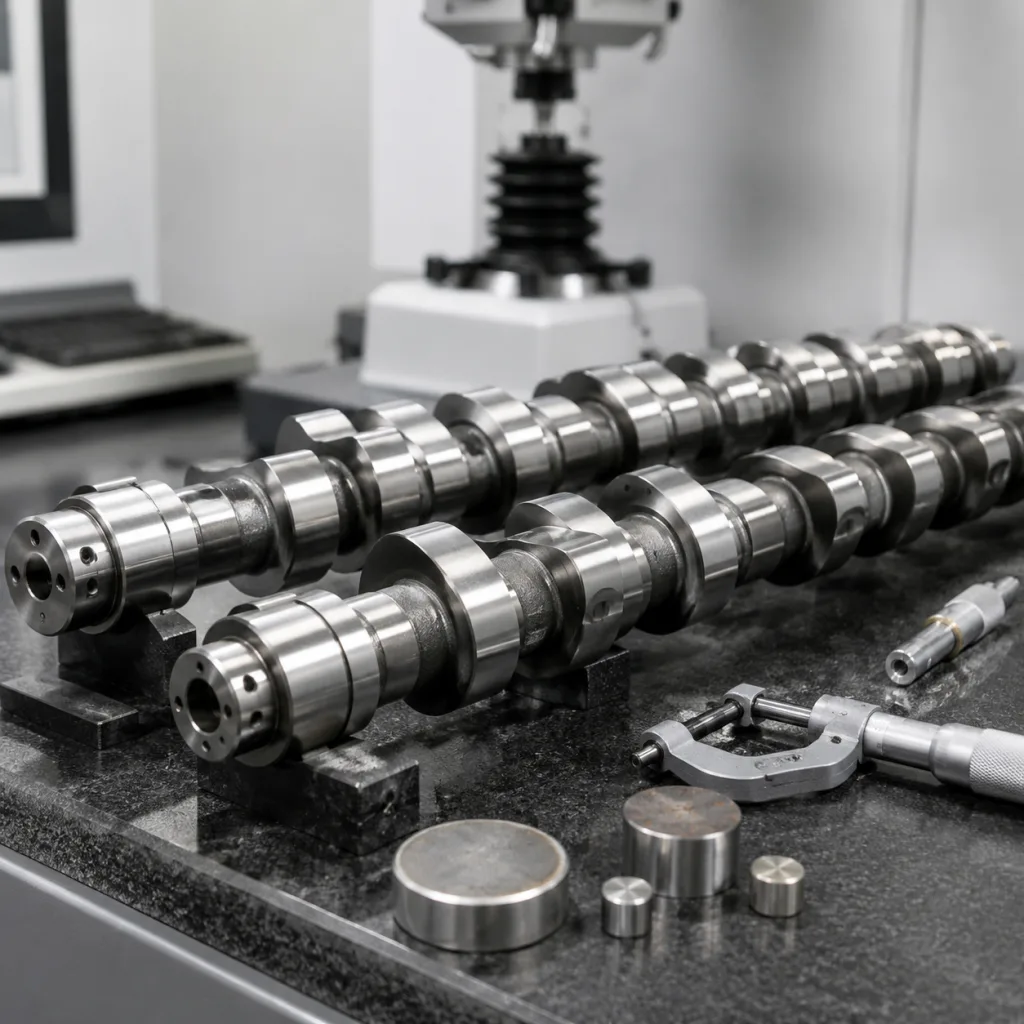
Record critical dimensions: bore diameter, ring width, ring end gap, compression height, pin diameter, gasket bore, gasket thickness, valve stem diameter, seal lip size, and bolt hole pattern.
Specify material and coating data for rings, pistons, valve stem seals, and gaskets, including moly, nitrided, phosphate, graphite, FKM, ACM, MLS, or composite construction where relevant.
Request heat treatment, surface treatment, hardness, coating thickness, or surface roughness records where they affect function.
Require batch traceability, inspection reports, PPAP, or control-plan references for programme supply where needed.
Request compliance documentation for the destination market.
State clearly that brand names and OE numbers are used for identification only.
Driventus can supply catalogue parts or engineered variants for importers and programme buyers. For non-standard applications, custom manufacturing can include drawing review, sample development, tooling assessment, dimensional validation, and production control planning. For standard catalogue items, plan MOQ, price, and lead time by SKU family. Fast-moving gasket or ring sets may support smaller trial orders. Custom pistons, revised ring packs, and private-label kits usually require tooling review, sample approval, and higher minimum order quantities.
A practical sourcing sequence is: RFQ with engine code and annual volume, drawing or sample confirmation, first-article inspection, pilot order, field feedback, then volume order.
Compare price as landed programme cost, not unit price alone. Include gasket kit completeness, piston pin and clip inclusion, ring set packaging, scrap allowance, claim rate, inspection documentation, and freight cube. Separate sample lead time from production lead time. Samples may require several weeks depending on tooling and validation; repeat production depends on material availability, heat treatment, coating capacity, inspection load, and export packing.
Ask suppliers to quote MOQ breaks such as trial, 500 sets, 1,000 sets, and annual contract volume. That keeps engineering approval and purchasing approval aligned. For buyers managing recurring smoke-related repairs across multiple engine families, involve engineering and sourcing early. Shared failure evidence helps decide whether the requirement is a gasket material change, piston ring pack revision, turbo-related component, improved packaging, or a broader engine component package before volume ordering. Driventus is an independent aftermarket manufacturer; brand names are referenced for fitment only.
Frequently asked questions
No. Light white vapour that clears quickly can be normal condensation, especially in cold or humid conditions. Persistent blue, dense white, black, or grey smoke should be checked with pressure tests, scan data, compression, leak-down testing, fluid level tracking, and visual inspection before parts are replaced.
Common causes include valve stem seals, piston rings, cylinder bore wear, turbocharger oil leakage, and crankcase ventilation faults. The correct replacement depends on measured compression, leak-down results, oil traces, borescope evidence, crankcase pressure, and the engine family’s known wear patterns.
Yes. Driventus supplies engine components such as pistons, rings, gaskets, water pumps, and related parts for aftermarket and B2B programmes, with traceability, inspection records, and quality controls under IATF 16949:2016 and ISO 9001:2015.
If your team is reviewing engine smoke failures across a vehicle parc or sourcing replacement engine components, share the engine data, test evidence, target volumes, MOQ expectations, and delivery window with Driventus to request a quote at /contact.html