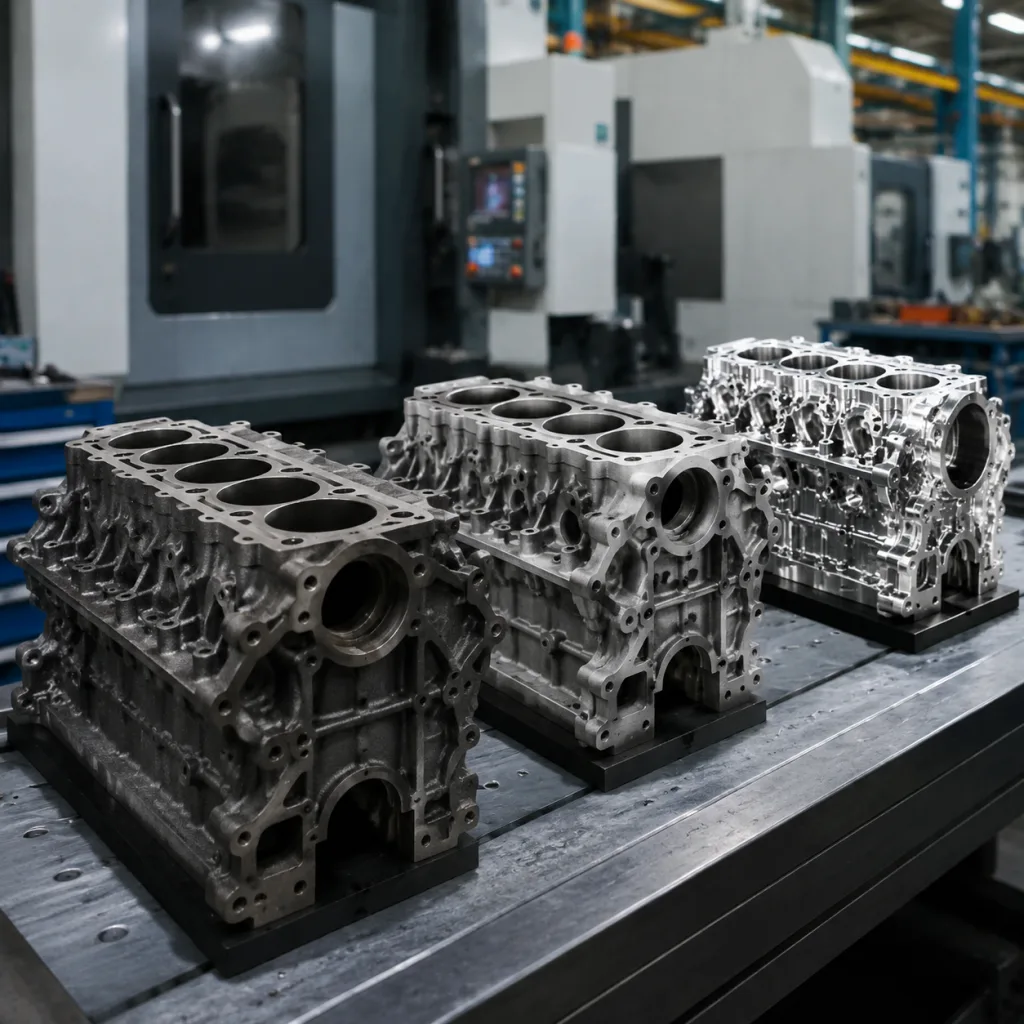
A low quote on a Ford-fit engine block can hide expensive problems: porosity found after machining, bore taper outside tolerance, a deck that will not seal, a main tunnel that will not align, or coolant leakage that appears only at pressure test. The purchasing decision is not just “who can cast it?” It is “who can control the block from melt to machining, inspection, packing, and export release?”
Driventus is an independent aftermarket manufacturer. Ford and other brand names are used only to identify fitment, not to imply affiliation or endorsement.
For distributors, OEM-channel buyers, rebuilders, and multi-site repair networks, the right engine block Ford OEM supplier is the one that can prove print control, material discipline, machining repeatability, traceability, MOQ logic, and shipment reliability. Use this guide as a practical buying framework: define the RFQ, identify the failure modes, choose the right supply state, audit the quality system, plan volume, and decide whether Driventus fits your sourcing route.
RFQ decision framework: define the block before you price it
Many engine-block sourcing problems start before the supplier ever touches metal. The RFQ is vague, the machining scope is assumed, or the buyer asks for “Ford engine block” without locking the family, variant, material, included hardware, and acceptance method. The result is predictable: mismatched casting selection, revised pricing, delayed samples, and arguments over what was included.
Start with the decision points that change cost and risk.
RFQ item
What to state
Why it matters
Application
Engine family, displacement, fuel type, model-year range, and block variant
Prevents the wrong casting route or incompatible machining setup
Supply state
Bare casting, semi-machined, or fully machined
Changes tooling, cycle time, dimensional inspection, and final cost
Affects strength, weight, heat transfer, machinability, and process controls
Critical dimensions
Bore size, bore spacing, deck height, main bore alignment, oil galleries, and water passages
Controls fitment, sealing, bearing life, and rebuild outcome
Validation level
Sample quantity, first article report, pressure test, PPAP-style file, or buyer-specific checklist
Aligns approval expectations before production begins
Volume plan
Annual demand, order frequency, forecast split, and MOQ target
Supports casting slots, machining capacity, and stable pricing
Packaging
Pallet specification, corrosion protection, carton or crate format, labels, and barcode needs
Reduces transit damage, customs issues, and receiving delays
Commercial terms
Incoterms, currency, shipment mode, and destination port or warehouse
Allows accurate landed-cost comparison across suppliers
</tr></thead><tbody> </tbody></table>If you have a drawing, benchmark sample, target bill of materials, or inspection checklist, send it with the RFQ. If you do not, ask for a drawing review, fitment cross-reference check, and manufacturing feasibility review before price is treated as final. That step is faster than correcting a failed sample batch.
Also state what is included with the block. Core plugs, gallery plugs, oil drain fittings, thread inserts, freeze-plug kits, labels, and corrosion protection all affect unit cost and packing design. A good RFQ leaves little room for interpretation.
Failure modes to control: where Ford-fit blocks usually lose consistency
A casting can look acceptable and still fail in assembly. The expensive issues tend to appear after machining, cleaning, pressure testing, or final build. That is why machining capability should be treated as a supplier-qualification item, not an optional service.
Watch the failure points that directly affect fitment and service life:
Cylinder bores with taper, out-of-round, poor surface finish, or inconsistent honing
Deck surfaces outside flatness, parallelism, or finish requirements
Main bearing tunnels with alignment error that affects crankshaft rotation and bearing life
Threads that fail GO/NO-GO checks on head bolts, mounts, covers, or accessory points
Oil galleries and coolant passages left with machining debris or casting residue
Coolant jackets that leak under pressure test
Burrs or chips that create contamination during assembly
Lot-to-lot variation caused by weak fixtures, uncontrolled gauges, or unstable processes
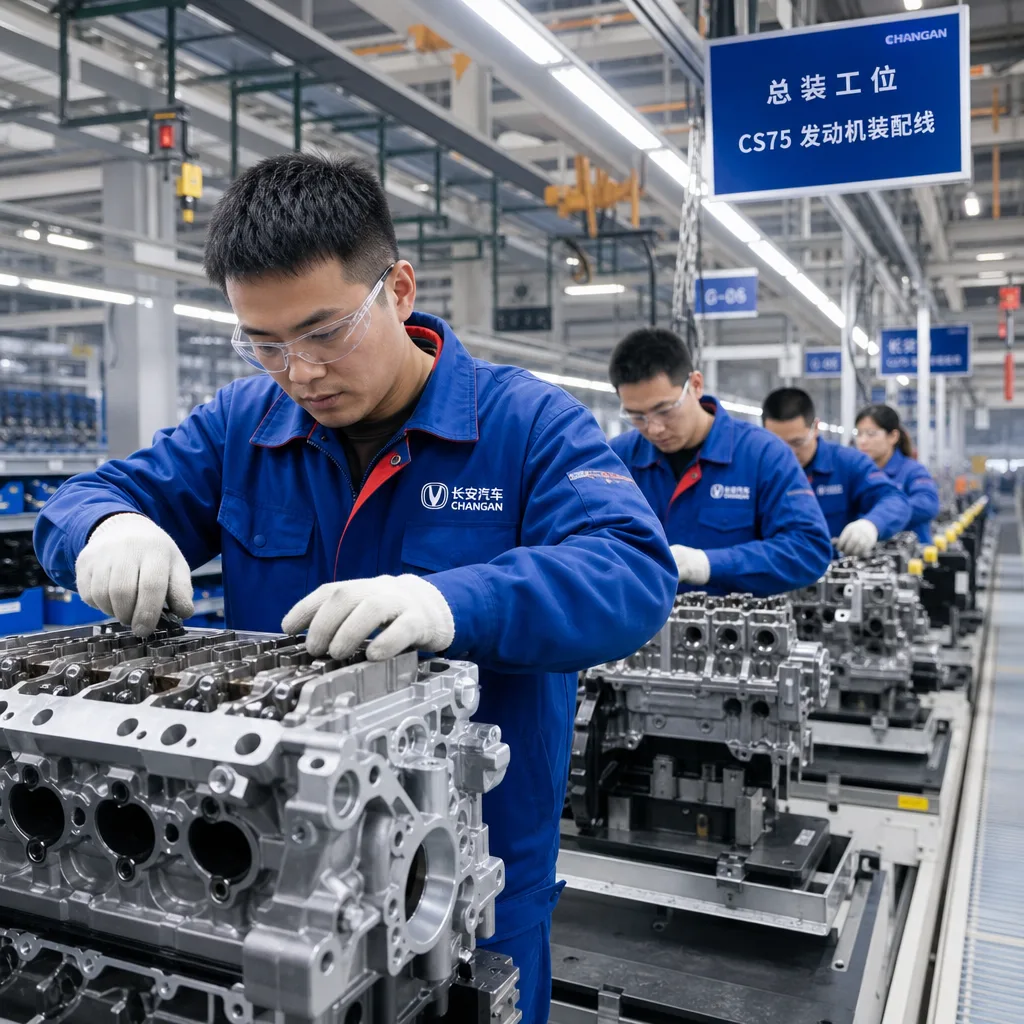
A disciplined supplier should be able to explain the route from casting to finished part: core assembly, melt control, pouring temperature window, cooling, shot blasting, stress relief where required, rough machining, washing and flushing, finish machining, leak testing, final inspection, corrosion protection, and packing.
Typical buyer-facing acceptance targets are drawing-dependent, but fully machined or rebuilt-block programmes often use measurable limits such as:
Cylinder bore diameter within print tolerance, commonly around ±0.01 mm to ±0.03 mm depending on application
Bore taper and out-of-round below about 0.01 mm to 0.02 mm on critical bores
Deck flatness controlled around 0.03 mm to 0.10 mm across the relevant surface, subject to print
Main bore alignment verified by line-bore gauges, dedicated fixtures, or CMM inspection
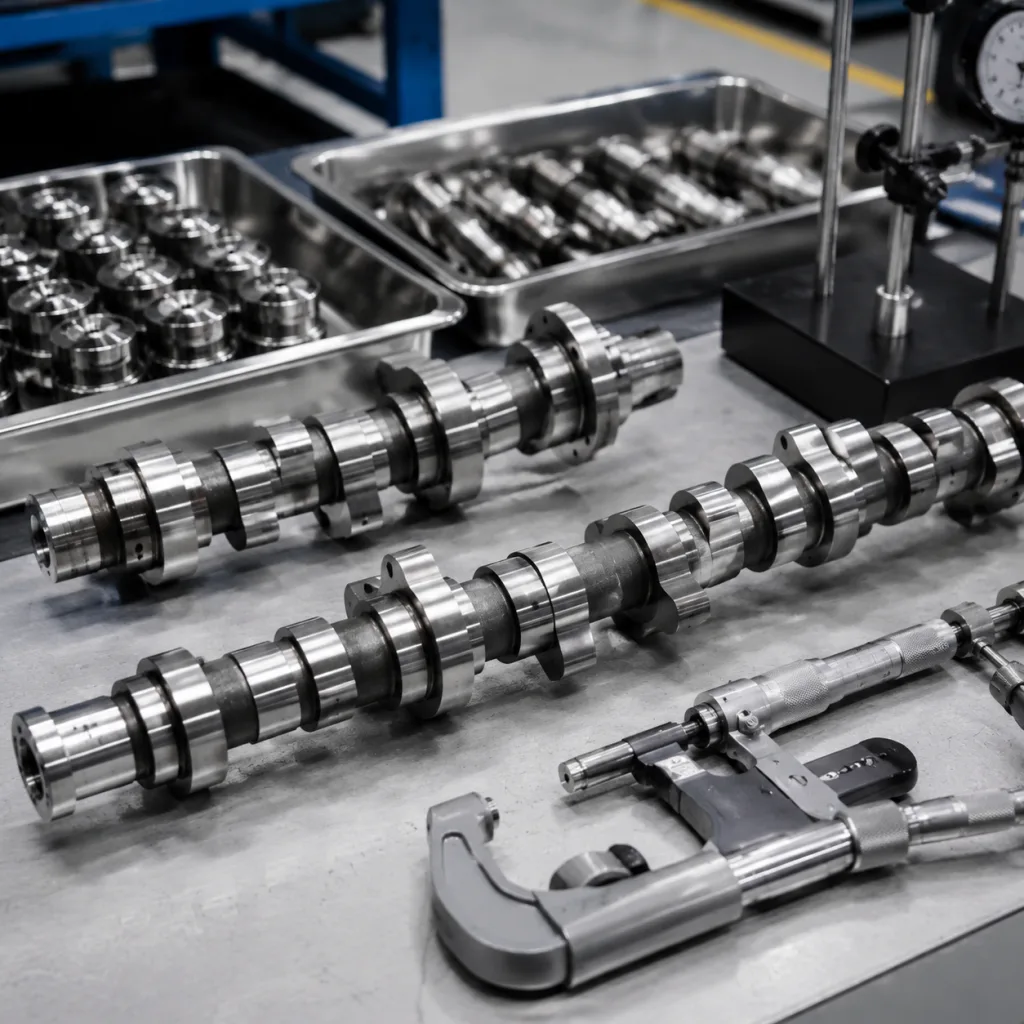
Thread acceptance using GO/NO-GO gauges for critical threaded features
These figures are not universal. The engineering print controls the part. Still, the supplier should be able to discuss datums, tolerance stack-up, gauge method, inspection frequency, and process capability in concrete terms.
Repeat the critical drawing requirements on the purchase order: tolerances, datums, surface finish, leak test, cleaning standard, and documentation. Then make sure those same points appear on the inspection report. If your team needs related fitment support before RFQ release, review our catalog and the broader engine components range to identify compatible sourcing routes and documentation needs.
Bare, semi-machined, or fully machined: which supply route fits your operation?
There is no single best way to buy an engine block. The right route depends on your machining capacity, inspection capability, launch timing, inventory model, and appetite for technical risk. A bare casting may look cheaper. A fully machined block may reduce downstream labour and scrap. The correct comparison is landed, inspected, usable cost.
Supply model
Best for
Advantages
Trade-offs
Bare casting
Rebuilders, machine shops, and buyers with established local machining
Lowest processing cost at source; maximum control over final machining
More incoming work, longer local processing time, and higher dependence on buyer-owned fixtures and gauges
Semi-machined block
Distributors with local finishing capacity or regional machining partners
Balanced cost and control; fewer operations than a raw casting
Requires a clearly defined split between supplier operations and buyer operations
Fully machined block
Repair chains, fast-turn rebuild programmes, and importers without machining lines
Faster build readiness, fewer local steps, and clearer batch inspection
Higher unit cost and tighter supplier qualification requirements
Exact specification control, packaging control, and dedicated validation path
Longer qualification cycle, sample approval time, and forecast commitment
</tr></thead><tbody> </tbody></table>Use this filter:
Choose bare casting if you own the fixtures, gauges, skilled machinists, and process controls.
Choose semi-machined if you want supplier efficiency on early operations but still need local finishing control.
Choose fully machined if speed, repeatability, branch-level service, and clear dimensional accountability matter most.
Choose custom if you control the print, packaging, label format, or a private-label launch.
Ask every potential engine block Ford OEM supplier to break pricing into casting cost, machining cost, testing cost, packaging cost, tooling amortisation, and logistics assumptions. A low raw-casting price can become expensive once local fixtures, labour, rework, and scrap allowance are included. In some programmes, landed usable cost can move 15% to 40% after these factors are added.
At minimum, request:
Tooling charge, either one-time or amortised over forecast volume
Piece price at 100, 500, and 1,000 unit annual demand levels
Sample price and whether it is credited against production orders
Rework or remake responsibility if an out-of-spec condition is found before shipment
The best supplier will not force one answer. If the casting and machining route allow it, they should quote more than one supply state so your team can compare cost, timing, and risk on the same basis.
Audit deep-dive: documents are useful, but the floor tells the truth
Product photos do not prove process control. A credible supplier should show how it controls incoming material, casting quality, machining fixtures, in-process measurement, gauge calibration, cleaning, nonconforming material, and lot traceability. Engine blocks need that discipline because defects often surface late, when the part has already consumed machining time and freight budget.
Driventus operates under IATF 16949:2016 and ISO 9001:2015 quality systems. For EU shipments, material declarations and chemical compliance information should be available under REACH (EC) No 1907/2006 where applicable. If your company requires PPAP-style submission or a customer-specific approval file, confirm the document list before the sample order.
Documents to request before approval
Material certificate, melt record, or alloy declaration
First article inspection report with drawing references
Critical dimension record and sampling plan
Pressure test or leak test record, where applicable
Process flow, control plan, or inspection checklist for controlled programmes
Gauge calibration evidence for critical measurement points
Nonconformance and corrective-action process description
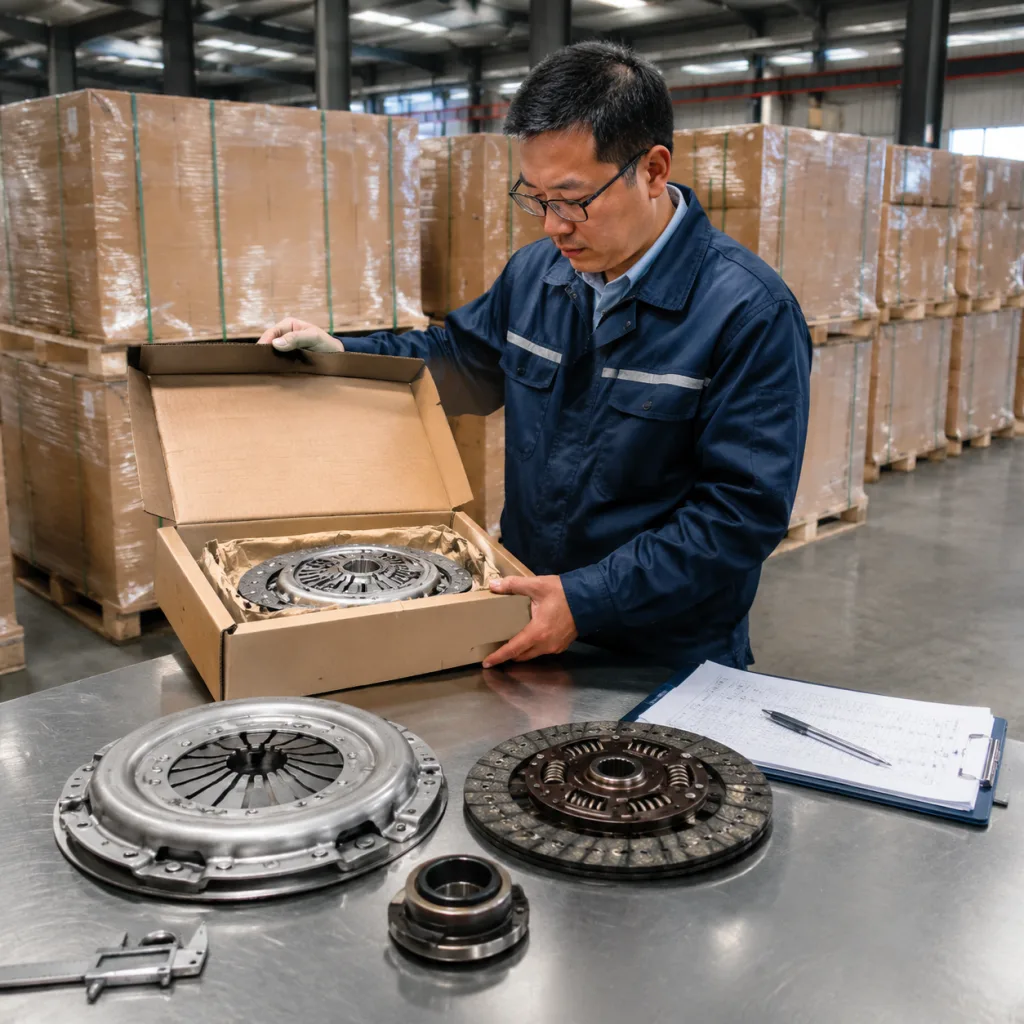
Packaging specification, corrosion-control method, and label format
Country-of-origin, packing list, commercial invoice, and export documents
During a factory audit, go beyond the conference-room file. Verify gauge availability, calibration status, fixture condition, machining-line stability, cleaning and flushing process, segregation of nonconforming parts, batch identification, pallet protection, and label control.
Sampling also needs a clear rule. For an initial production batch, many buyers require 100% inspection on critical characteristics, then move to tightened or normal sampling after process stability is proven. Non-critical visual or packaging features may follow a buyer-defined AQL plan. Bore size, deck finish, main-line results, and leak-test status often deserve 100% checks on the first lot.
If a supplier cannot explain the difference between a visual check and a controlled metrology routine, the programme is not ready for technical release.
Planning scenario: when MOQ, lead time, and inventory collide
Imagine a distributor needs a Ford-fit block for three regional warehouses. Sales wants fast availability. Finance wants low inventory. The machine shop wants stable specifications. Freight wants full pallets. The supplier wants a sensible production run. This is where MOQ and lead time become planning tools, not just commercial terms.
Engine block sourcing is capacity-driven. Casting, heat treatment where required, machining, cleaning, inspection, packing, and export booking all compete for time. MOQ should be explained by part family, tooling status, machining state, raw-material plan, and shipment efficiency. A supplier that can explain the MOQ is usually easier to manage than one that simply quotes a number.
A useful planning discussion covers:
1. Forecast horizon: 90, 180, or 365 days, depending on demand stability 2. Sample timing: feasibility review, engineering sample, pre-production sample, and bulk release 3. Production lead time: casting slot, machining slot, cleaning, inspection, packing, and booking 4. Safety stock: held at origin, at destination, or split between both locations 5. Reorder triggers: minimum stock level, rolling forecast update, and emergency replenishment rules 6. Incoterms: EXW, FOB, CIF, or other terms aligned with your freight model 7. Revision control: drawing updates, fitment changes, and approval responsibility
Typical commercial planning ranges, subject to tooling and capacity, often look like this:
Samples from existing tooling: 2 to 4 weeks for a basic trial lot, longer with a first article report or leak test
New tooling or major engineering change: 6 to 12 weeks, sometimes longer if core boxes, fixtures, or gauges must be built
MOQ for machined blocks: often 20 to 50 pieces for a standard production release, with lower quantities possible at a higher unit price
MOQ for raw castings: often 50 to 100 pieces or more, especially where furnace, mould, and shipment efficiency drive the run size
Price usually moves with four variables: volume, machining scope, tolerance tightness, and commercial packaging. Higher volume can reduce unit price, but the discount may not beat the cost of slow-moving inventory. A 10% price reduction is not useful if it adds 45 days of stock you cannot turn.
For import managers, incomplete documents, weak packing, or moving ship dates can erase the benefit of a low quote. Define forecast ownership, order cut-off dates, engineering-change control, inspection release, and the exception contact path. Also ask for a lead-time breakdown by casting, machining, inspection, packing, and export booking. That breakdown quickly shows whether the supplier is capacity-planned or guessing.
Supplier fit Q-and-A: where Driventus is strongest
What type of buyer is Driventus built for? B2B buyers that need repeatable supply, engineering communication, and export-ready documentation. This includes distributors, OEM-channel programmes, private-label buyers, rebuilders, and regional repair networks.
Can Driventus support Ford application sourcing? Yes. Driventus supports fitment-based cross-referencing, sample review, and specification discussion for Ford applications. This does not imply brand affiliation or endorsement. Driventus is an independent aftermarket manufacturer; Ford and other brand names are referenced for fitment identification only.
What quality support is available? Our quality system is built around controlled process steps, traceable inspection, and practical support for buyer audits. Depending on programme scope, buyers can request dimensional reports, material data, process records, packing photos, and pre-shipment documentation.
Can the programme be customised? Yes. Where a project requires a special machining state, packing method, label format, or private-label approach, custom manufacturing can be defined around the drawing, sample approval route, and forecast.
How should a buyer judge supplier readiness? Use three questions: Can the factory hold the print? Can it document the result? Can it ship to the schedule your network requires? If those answers are supported by inspection records, stable process controls, and clear communication, the sourcing relationship is much easier to scale.
For controlled programmes, Driventus can support a phased launch: engineering sample, pilot lot, then volume production. That sequence reduces risk because bore, deck, leak-test, and main-line results can be locked before large inventory commitments are made.
Frequently asked questions
No. Driventus supports multiple engine families and fitment-based cross-references. Brand names are referenced for fitment identification only, and Driventus is an independent aftermarket manufacturer.
Provide the engine family, block variant, supply state, annual volume, critical dimensions, material specification, validation requirements, packaging needs, Incoterms, and target lead time. A drawing, sample, and forecast improve pricing accuracy and reduce sample revisions. If possible, include target tolerances for bore diameter, deck flatness, and main-bore alignment so the quotation reflects the real machining scope.
Yes. Buyers can request inspection records, material data, traceability details, and process documents aligned with IATF 16949:2016 and ISO 9001:2015. Audit scope can include machining control, calibration, nonconforming material handling, packaging, and export documentation. For tighter programmes, we can also align sample approval files with first-article or PPAP-style requirements.
If you need a drawing review, MOQ discussion, or sample timing plan, please request a quote via /contact.html