Engine Block BMW Manufacturer China: Sourcing Guide
Buying a BMW-fitment engine block from China is not a catalogue exercise. The risk sits in the foundry, the machining datum strategy, the washing process, the leak test, and the way a heavy precision casting is protected for export. A low unit price can disappear quickly if the main tunnel is out of line, oil galleries carry residue, or machined faces arrive corroded.
Driventus supplies engine and powertrain components from Taizhou, Zhejiang, for B2B aftermarket distributors, wholesalers, OEM/Tier-1 supply chains, and multi-location repair groups. For engine blocks, our sourcing discussion starts with evidence: material grade, bore geometry, deck flatness, main bearing alignment, coolant and oil passage cleanliness, leak-test data, batch traceability, packaging strength, and shipment records.
This guide explains how to evaluate an engine block BMW manufacturer China supplier without relying on generic claims. It covers qualification gates, production failure points, RFQ inputs, inspection records, commercial trade-offs, and the specific information Driventus needs to judge feasibility. Driventus is an independent aftermarket manufacturer; BMW and other brand names are referenced for fitment identification only.
Decision Gate: What Proves the Supplier Can Repeat the Block?
Start with repeatability, not price. A credible engine block BMW manufacturer China project should prove that the supplier can control linked operations across multiple batches: casting, cooling or heat treatment, CNC roughing, CNC finishing, high-pressure washing, leak testing, preservation, and export packing. One weak step can create assembly issues or warranty claims months after the container lands.
Use four qualification gates before commercial negotiation:
- Certification with relevant scope: IATF 16949:2016 and ISO 9001:2015 certificates should cover the actual manufacturing or supply process, not only office trading activity.
- Traceability: casting heat or batch number, machining lot number, inspection record, leak-test record, packing list, and carton or crate label should connect back to the purchase order.
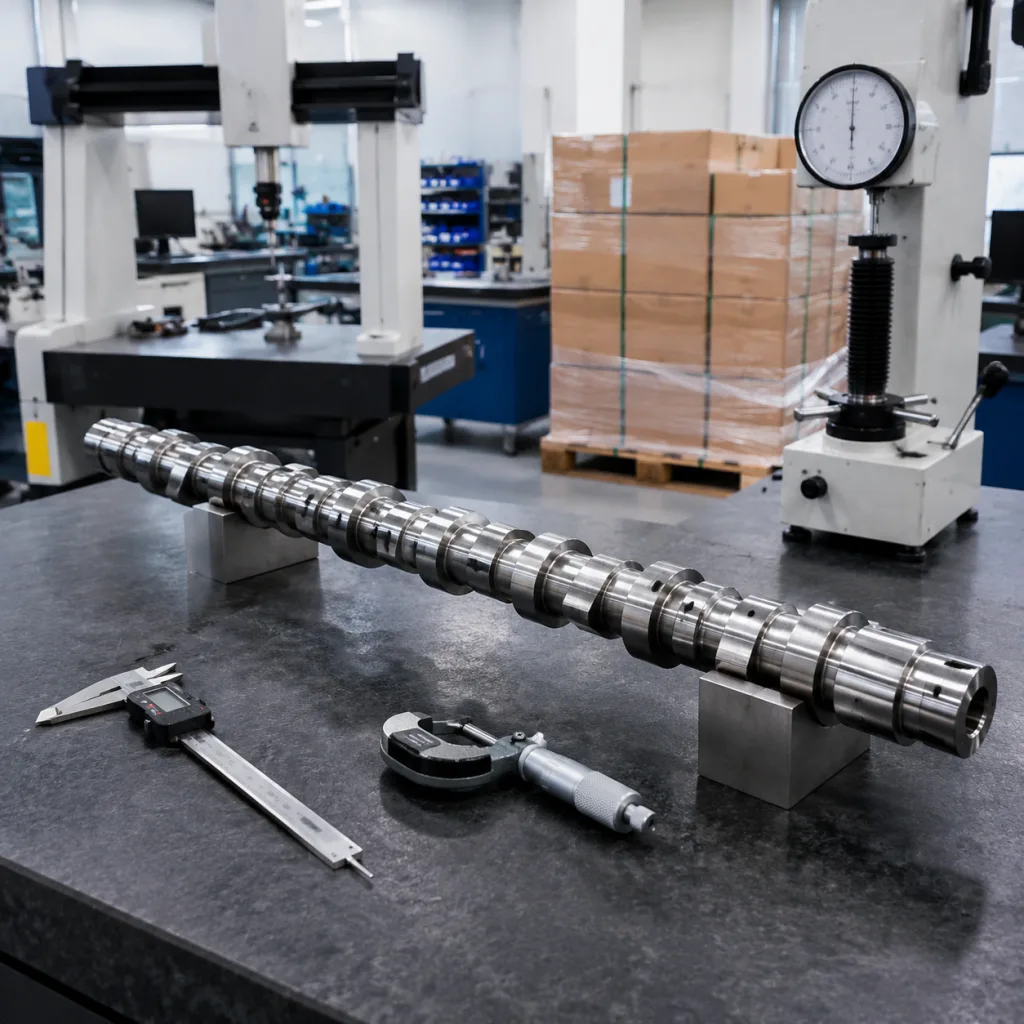
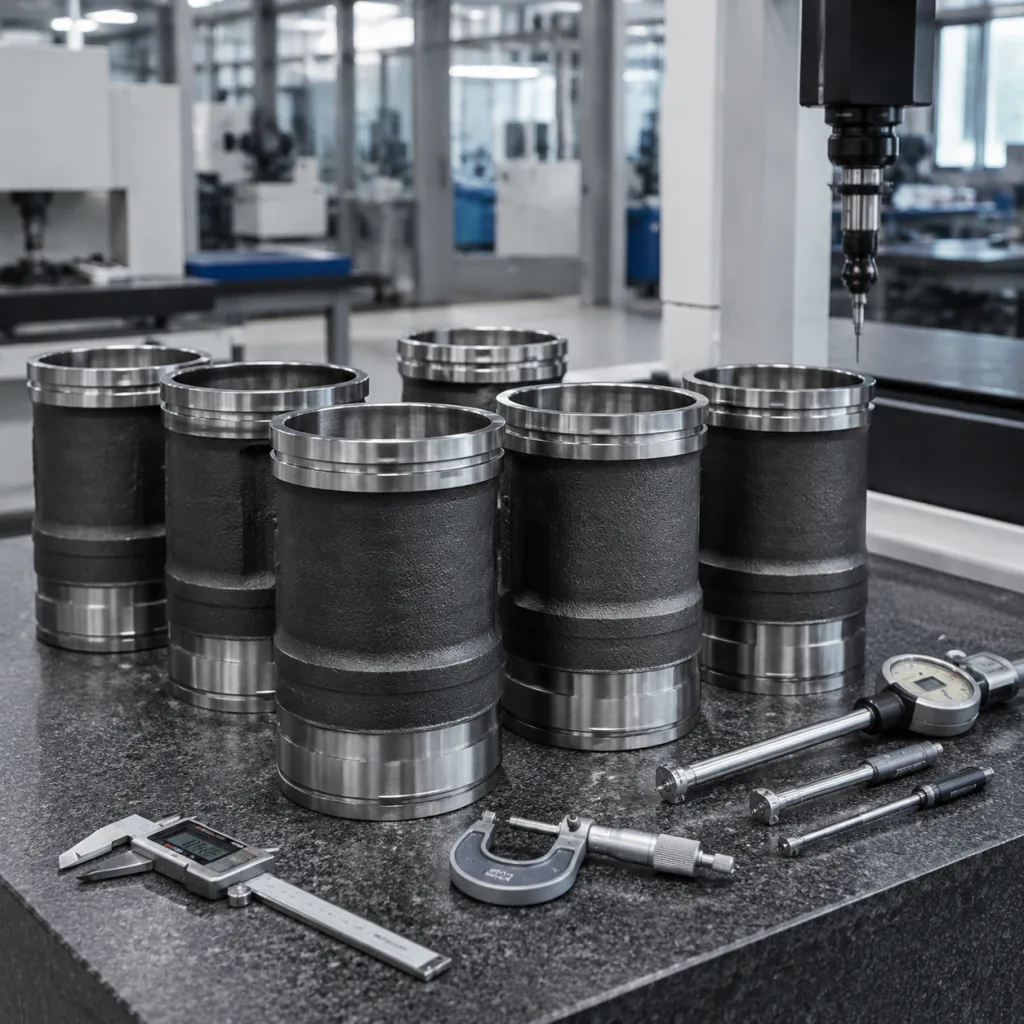
- Inspection capability: CMM, height gauges, dial bore gauges, air gauges where applicable, surface roughness tester, hardness tester, pressure leak-test fixtures, plug and thread gauges, torque tools, and valid calibration records.
- Export readiness: commercial invoice, packing list, certificate of origin where required, HS code confirmation, net/gross weight, carton or crate dimensions, and ISPM 15 evidence when wood packaging is used.
Do not accept “strict quality control” as evidence. Ask for numbers. A useful pre-qualification pack includes the last 3 months of internal rejection data, one anonymised CMM report, gauge calibration due dates, typical casting scrap rate, leak-test pass rate, and photos of sea-freight packing. For mature aftermarket blocks, the supplier should also explain monthly capacity, whether raw castings are stocked, and how many machining fixtures are dedicated to the application.
The better factories connect records to batches. Ask how rejected castings are segregated, who approves rework, how CNC offsets are adjusted after tool wear, and how final inspection data is retained. For critical projects, require record retention for at least 3 years or for the full period needed by your own distribution warranty policy.
Driventus exports engine and powertrain components to 60+ countries and structures supplier discussions around audit readiness, traceability, and repeat production. Buyers can review our catalog for related engine component coverage and use the RFQ stage to define drawings, samples, annual volume, inspection level, and packaging standards.
Where Engine Block Projects Fail: Foundry, Machining, Cleaning, Leak Test
Most engine block problems are not mysterious. They usually appear at four points: the casting does not match the intended geometry, machining datums move, passages are not cleaned, or the leak test is too vague to catch defects.
A typical production route should be mapped before sampling:
1. Pattern and core-box validation against a drawing, approved sample, or agreed reference part, including shrinkage allowance and core print checks. 2. Casting with controlled melt chemistry, pouring temperature, inoculation or degassing where applicable, and stable sand-core placement. 3. Controlled cooling, shakeout, shot blasting, and visual inspection for porosity, cold shuts, cracks, inclusions, sand burn-on, fins, and core shift. 4. Rough machining of datum faces, cylinder bores, oil galleries, mounting faces, and reference surfaces with enough stock left for finishing. 5. Stress relief or heat treatment where the material specification requires it. 6. Finish CNC machining of cylinder bores, main bearing tunnel, deck face, threaded holes, oil and coolant interfaces, sensor ports, and accessory mounting points. 7. Deburring, gallery brushing, industrial washing, passage cleaning, leak testing, anti-rust treatment, plugging, labelling, and export packing.
The control plan should name the characteristics that can stop assembly. Typical aftermarket acceptance targets may include deck flatness within 0.03-0.05 mm over the sealing area, deck surface roughness around Ra 0.8-1.6 μm for many MLS gasket applications, bore diameter held to drawing tolerance with roundness and cylindricity commonly controlled within 0.01-0.02 mm, and main bearing tunnel alignment verified by CMM or line-bore inspection. These are planning references only. The exact engine family, gasket, piston, bearing, and fastener requirements must govern.
Material evidence matters. For cast iron blocks, batch records should show chemistry, carbon equivalent control, hardness results, and microstructure checks when specified. A common hardness verification range for grey iron applications is around HB 170-230, but the drawing or buyer specification takes priority. For aluminium blocks, request alloy certificates, T6 or other heat-treatment evidence where applicable, porosity control records, pressure-test parameters, machining fixture controls, and the policy for thread inserts or repair inserts. If sleeves are used, define liner material, interference fit, protrusion or recession tolerance, and final honing requirement.
Leak testing must be parameterised. “OK” is not enough. RFQs should state test media, pressure, stabilisation time, hold time, and allowable pressure drop or bubble standard. Many block projects request separate oil gallery and coolant jacket tests at 0.3-0.6 MPa for 30-120 seconds, but the correct value depends on the application and design.
Cleaning also needs measurable proof. Request borescope or particle cleanliness checks for oil galleries, magnetic plug inspection for ferrous residue, and confirmation that blind holes and threaded ports are dry, deburred, and protected.
During audit, confirm whether casting, machining, washing, and testing are in-house or subcontracted. Subcontracting is acceptable only if handovers, inspection records, and corrective actions remain controlled. Vertically integrated production can reduce risk because casting feedback can be linked directly to machining scrap, leak-test failures, and final inspection trends.
RFQ Checklist: Data That Prevents the Wrong Quote
A weak RFQ creates a cheap but unreliable quotation. The keyword search may identify suppliers, but the buying decision depends on fitment data, technical evidence, and commercial assumptions.
Include these items in the first request:
| RFQ item | Why it matters |
|---|---|
| Engine family, displacement, year range, and application market | Defines casting architecture and machining interfaces |
| OE-style reference, if available | Supports fitment cross-checks without implying endorsement |
| Physical sample, 2D drawing, 3D scan, or CAD model | Reduces interpretation risk during development |
| Material requirement and heat treatment | Confirms cast iron or aluminium alloy specification and hardness target |
| Critical tolerances | Fixes bore, deck, main tunnel, thread, surface roughness, and leak-test requirements |
| Annual forecast and first order quantity | Determines tooling amortisation, MOQ, production planning, and lead time |
| Inspection requirement | Defines CMM report, leak test, hardness, roughness, cleanliness, and surface checks |
| Packaging method | Prevents corrosion, impact damage, and machined-surface contamination during freight |
| Destination country and Incoterms | Confirms labelling, customs documents, packaging rules, freight logic, and compliance expectations |