camshaft · 2026-06-19

Camshaft Mitsubishi OEM Supplier: Sourcing Guide

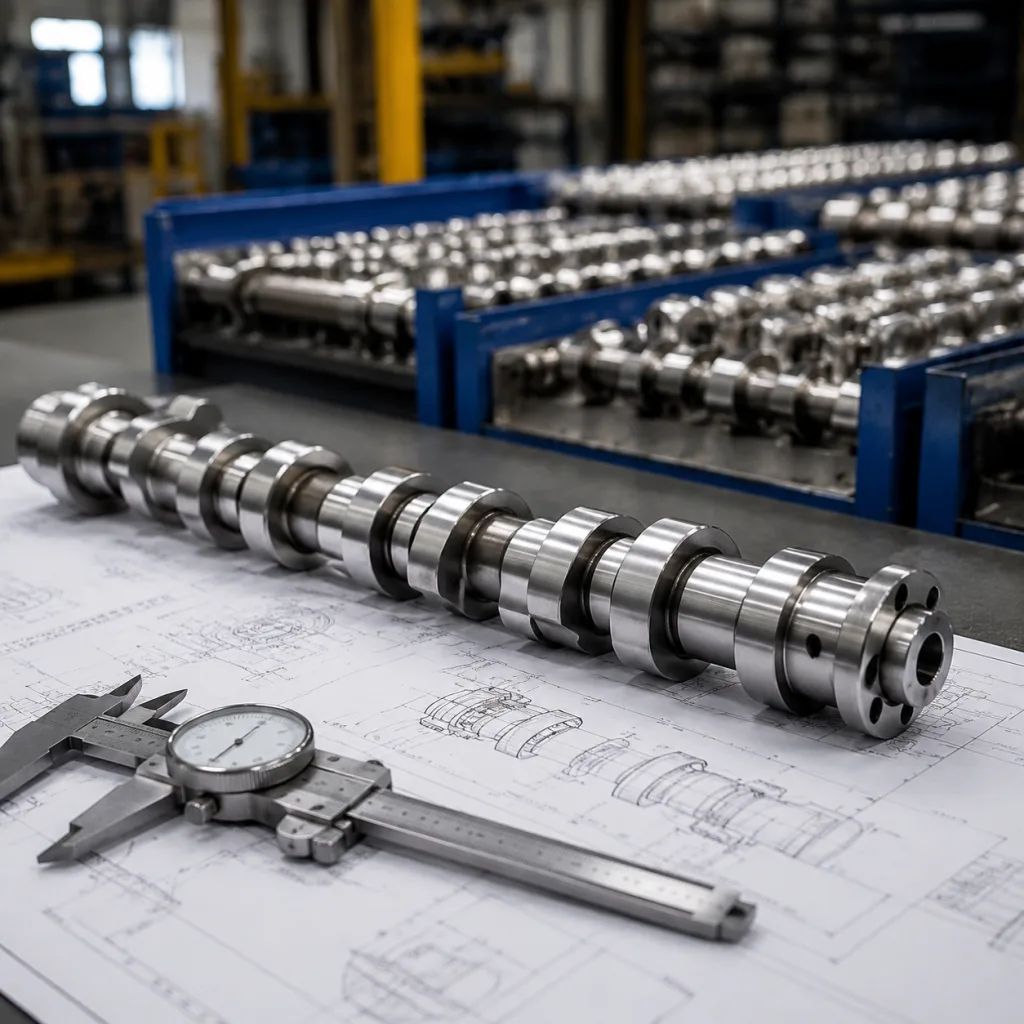
Procurement teams sourcing a camshaft Mitsubishi OEM supplier usually need more than a part number match. They need dimensional consistency, material traceability, stable lead times, and documentation that supports incoming inspection and customer audits. For Mitsubishi applications, camshaft requirements can vary by engine family, valvetrain layout, lift profile, and surface hardening specification. A supplier should be able to confirm OE cross-reference, shaft runout, lobe geometry, journal finish, and packaging controls before shipment.

In practical terms, buyers should expect a controlled spec sheet that states shaft length, journal OD, lobe lift, base circle, nose height, phase angle, and allowable runout, along with the inspection method used. Typical procurement tolerances for aftermarket-to-OE-style programs are often held around ±0.02 mm to ±0.05 mm on critical diameters, with runout commonly controlled at 0.03 mm to 0.10 mm depending on engine family and price tier; final limits must always match the approved drawing or sample master. Driventus serves aftermarket and OEM channel buyers from Taizhou, Zhejiang, with export experience in 60+ countries and manufacturing systems aligned to IATF 16949:2016 and ISO 9001:2015. Driventus is an independent aftermarket manufacturer; brand names are referenced for fitment only. This article explains what buyers should verify before placing volume orders, how to compare supply options, and which documents to request during qualification.

Start with the fitment risk, not the catalogue listing

A camshaft purchase should be treated as a controlled engineering item, not a generic casting. For Mitsubishi fitment, the first check is OE cross-reference, for example OE 06A107065 when the application data uses that format. Then verify the physical and metallurgical requirements used by your receiving inspection team.

Core checks for procurement

  • Base material: chilled cast iron, ductile iron, or forged steel, depending on engine family
  • Hardening method: induction hardening or nitriding where specified; confirm hardened depth, not just surface hardness
  • Journal diameter and lobe lift: must match the target application drawing; request nominal, tolerance, and gauge basis
  • Runout and concentricity: confirm the inspection limit on the supplier report; common acceptance limits are 0.03 mm to 0.08 mm TIR on critical shafts, if the OE drawing allows it
  • Surface roughness: verify journal and lobe finish values on the PPAP or sample report; many buyers target Ra 0.2-0.8 μm on journals and Ra 0.4-1.2 μm on lobes depending on oiling design
  • Packaging: rust prevention, cavity protection, and part-number labelling

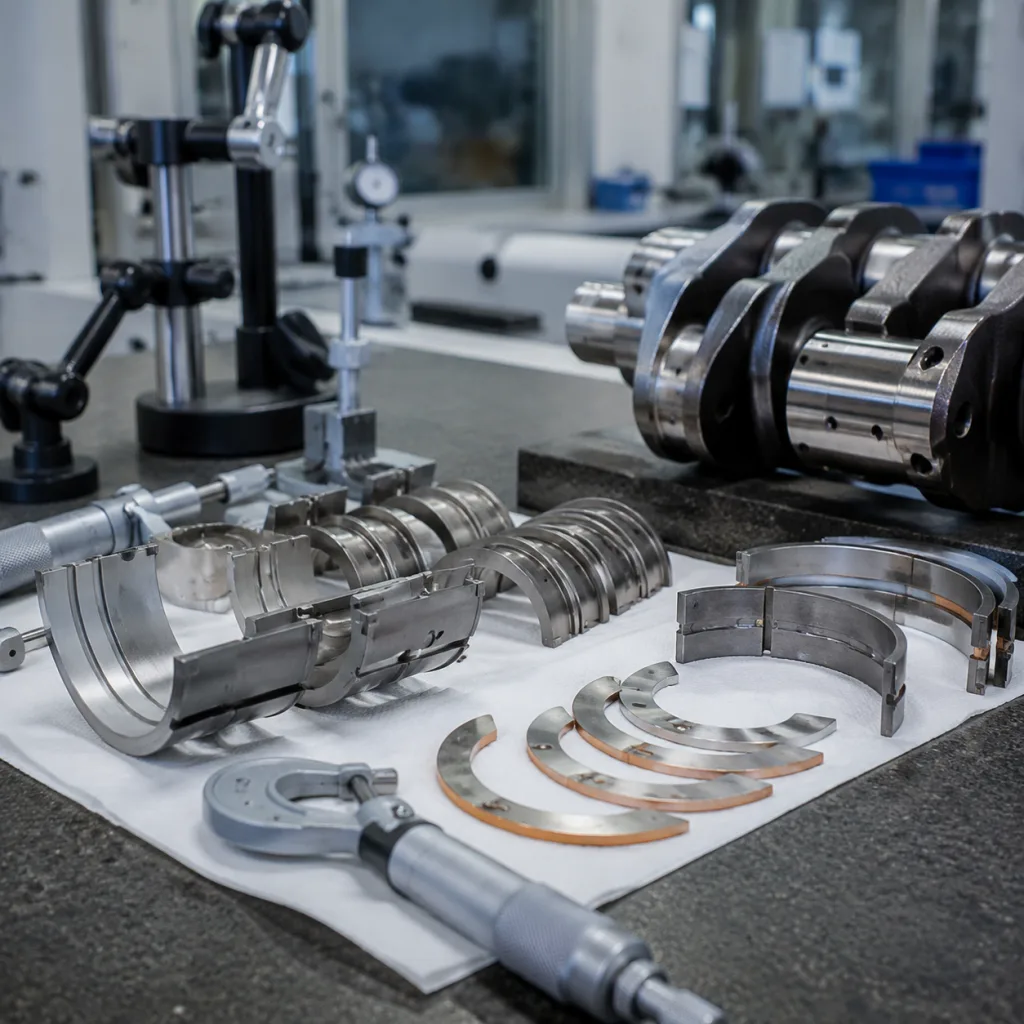
For volume programmes, ask for dimensional reports from first article samples, a material certificate, and batch traceability. A useful sample packet should include the heat number, inspection date, gauge ID, and whether the part was measured at 20°C with a calibrated CMM, micrometer, or air gauge. If the supplier cannot identify the inspection method or tolerance basis, the sourcing risk is high. Buyers should also confirm whether the quoted price is for loose bulk, tray-packed, or VCI-bagged units, because packaging can change both unit cost and claim rate.

What failure modes a supplier should already know how to prevent

A credible Mitsubishi camshaft supplier should operate a documented quality system with clear process control points. At minimum, buyers should look for IATF 16949:2016 and ISO 9001:2015, with inspection records tied to batch numbers. For export into the EU and UK, compliance statements may also need to reference REACH (EC) No 1907/2006 when substances of concern are relevant to coatings, packaging, or process chemicals.

Driventus maintains a documented quality system that supports traceability, in-process inspection, and final release checks. For buyers, this matters because camshaft variation often shows up as noise, timing drift, or valvetrain wear only after installation. A supplier with stable process control reduces the chance of field returns and credit claims. The practical question is whether the plant can prove that process capability is stable over time; for camshafts, buyers often ask for Cp/Cpk data on key features such as journal OD, lobe lift, and runout, with internal targets commonly set at 1.33 or higher for stable production lots.

Where customer programmes require additional validation, request:

  • heat treatment records, including soak temperature and batch cycle times
  • hardness test results, typically stated in HRC or HV, plus test location on the lobe and journal
  • runout measurement sheets showing zeroing method and support points
  • surface finish values with gauge model and calibration date
  • packaging and corrosion protection specification, including salt-spray or storage assumptions where relevant

If you are comparing vendors, ask whether inspection is done on every batch or only on samples. Batch-level control is more useful for repeat orders. For higher-volume programs, it is also worth asking whether the supplier retains golden samples for 12 to 24 months, which helps resolve claims when a customer challenge appears after installation.

Spec sheet deep-dive: the numbers that separate quotes

The exact specification depends on engine code, valve count, and application duty cycle, but buyers usually compare the same technical points across suppliers.

</tr></thead><tbody> </tbody></table>If you are qualifying a new source, request a dimensional sample set from the exact engine family you need. Ask for at least 3 to 5 samples from the same lot so you can compare part-to-part variation, and verify whether measurement data is from pre-production, first article, or mass-production tooling. Do not accept a generic “fits Mitsubishi” statement without the OE reference, drawing revision, and inspection data. Driventus can also support custom manufacturing when a buyer needs a non-catalog specification for a private-label or programme-based order. For price comparison, insist on a quote format that separates unit price, sample charge, tooling/NRE if any, packaging upgrade, and freight term, because those items often determine the real landed cost more than the headline part number.

Spec sheet deep-dive: the numbers that separate quotes

A practical sourcing sequence for procurement teams

For procurement managers, supply reliability is often the deciding factor. A strong camshaft Mitsubishi OEM supplier should state minimum order quantity, sample lead time, production lead time, and packing format before commercial negotiation begins. If these items are missing, the quote is incomplete.

Questions to raise during supplier review

1. What is the MOQ by part number and by engine family? 2. What is the standard sample lead time for dimensional approval? 3. Can the factory support periodic audits or remote document review? 4. Is traceability maintained from material heat to finished carton? 5. What corrective-action process is used for rejected batches? 6. What is the production lead time at 1,000 / 3,000 / 5,000 pcs, and how does it change during peak season? 7. What packaging configuration is included in the base quote, and what costs extra?

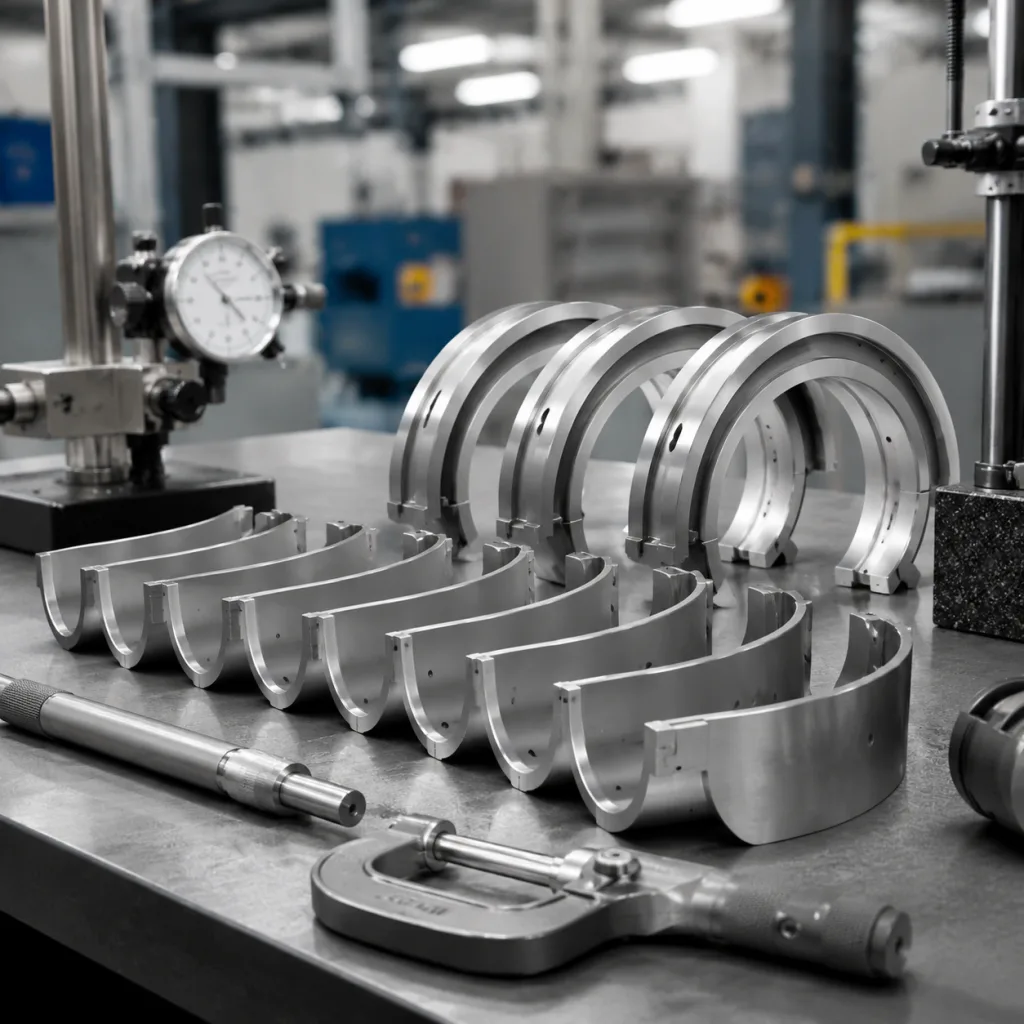
A factory audit should confirm machining capacity, heat treatment control, inspection equipment calibration, and storage conditions. Buyers should ask to see the actual control plan for camshaft grinding and finishing, including in-process checks after rough machining, after heat treatment, and after final grinding. Typical checks include journal OD, lobe lift, lobe indexing, runout, and end-face geometry. A capable supplier should also be able to tell you the calibration interval for micrometers, hardness testers, and CMM equipment, usually 6 to 12 months depending on the instrument and customer requirement.

Buyers often focus only on price, but on camshaft programmes, a slightly lower unit cost can disappear after sorting, freight rework, and warranty exposure. As a practical sourcing rule, ask for at least three commercial scenarios: sample order, pilot order, and annual-volume order. For example, MOQ may be 50 to 100 pcs per part number for a standard catalog item, 200 to 500 pcs for a private-label run, and 1,000 pcs or more for a dedicated tooling or packaging setup. Lead time often ranges from 15 to 30 days for stocked or semi-finished items and 30 to 60 days for non-stock production after sample approval, but exact timing depends on heat-treatment queue, coating, and carton availability. For this reason, many import managers request a sample submission package before approving the first shipment.

Where Driventus fits in a Mitsubishi camshaft program

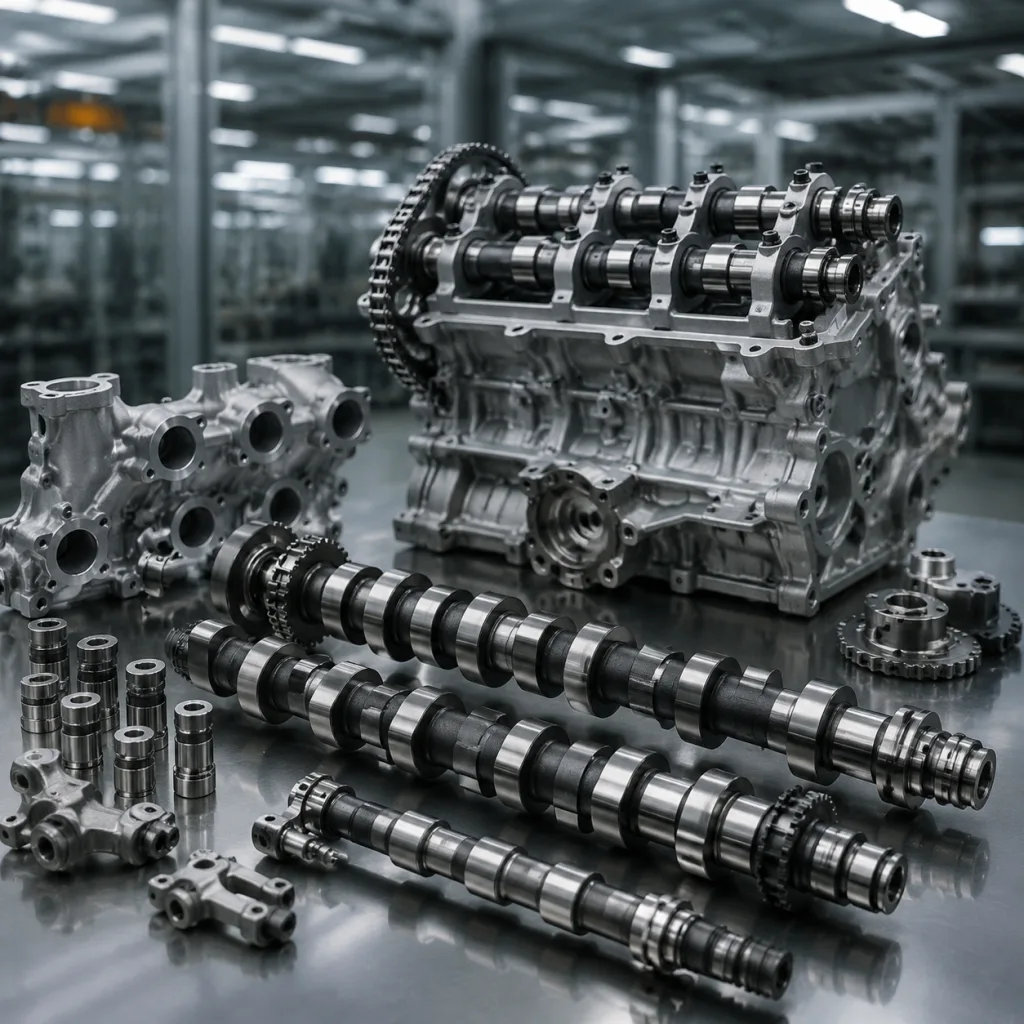
Driventus manufactures engine and powertrain components in Taizhou, Zhejiang, with export experience across aftermarket distributors, OEM / Tier-1 buyers, and repair-chain supply programmes. For camshaft sourcing, the commercial value is not only part production but also consistent documentation and controlled shipment planning.

Buyers reviewing our catalog can compare engine component families and request matching documentation for fitment verification. For broader programmes, the engine components section can help align camshafts with related items such as gaskets, water pumps, pistons, and timing-related parts.

What sourcing teams usually receive:

  • part-number match confirmation against the requested OE reference
  • sample and production inspection records
  • packaging and labelling specification
  • export documentation for customs clearance
  • private-label support for distributor programmes

For commercial planning, Driventus can work from drawing, sample, or OE reference. That means buyers can start with an RFQ that includes target annual volume, first order quantity, country of destination, packaging preference, and required incoterm. In many sourcing cases, the best price is not the lowest ex-works number; it is the lowest landed cost at the required quality level. Buyers should therefore compare unit price, packaging cost, carton master size, pallet pattern, freight density, and defect allowance together.

Driventus is an independent aftermarket manufacturer; brand names are referenced for fitment only. If your team needs a controlled supply path for a Mitsubishi application, use the published contact channel to review drawings, quantities, and target delivery windows.

Where Driventus fits in a Mitsubishi camshaft program

Avoid these procurement traps before issuing the PO

Several avoidable errors appear repeatedly in camshaft procurement. The first is treating all Mitsubishi engines as interchangeable. They are not. Even within one model range, lift, base circle, journal spacing, and sensor drive features can differ. The second is accepting a price without inspection detail. If a quote does not show material, hardening, and test method, it is not ready for comparison.

Another common mistake is ignoring packaging. Camshafts are long, finish-sensitive parts, and transit damage can create corrosion or edge marking before the part reaches the warehouse. Buyers should define carton strength, internal restraint, and corrosion protection in the PO notes. A useful minimum packaging specification is individual VCI wrap or oil protection, end caps or separators, and a carton that prevents shaft-to-shaft contact; for export, buyers should also define whether master cartons must survive a 1-meter drop or equivalent transit abuse.

Finally, do not approve a supplier only on website claims. Ask for documents, sample photos, and batch traceability data. If a vendor is willing to provide those items quickly, that is usually a better sign than broad claims about scale or quality. To reduce program risk, require written responses to your RFQ template, then compare them line by line against the drawing and the incoming inspection plan before issuing a PO.

Frequently asked questions

Yes. Buyers can submit the OE cross-reference, drawing, or sample part for review. Driventus can confirm fitment data before quoting and can support repeat supply for approved applications.

Request material certificates, dimensional reports, hardness results, runout data, packaging details, and traceability records. These documents support internal approval and reduce receiving risk. For a stronger trial order, also ask for sample photos, gauge calibration dates, and the specific drawing revision used for inspection.

Yes. Driventus supports custom manufacturing for defined drawings, programme requirements, and packing specifications. The team can review commercial and technical needs before production, including MOQ, sample approval timing, and carton labelling requirements.

For pricing, sample review, or technical clarification, please [request a quote](/contact.html) and share the OE reference, quantity, and target market. If available, include drawing revision, target annual volume, required tolerance limits, and preferred packaging so the factory can return a more accurate unit price and lead-time estimate.

Request a Quote
Item Typical procurement check Why it matters
MaterialCast iron, ductile iron, or forged steelStrength, wear resistance, cost
HardnessConfirm by Rockwell or equivalent report; many programs target 50-60 HRC on hardened lobes or application-specific valuesLobe and journal wear control
RunoutMeasure against agreed limit; common TIR targets are 0.03-0.10 mmTiming stability and bearing life
Lobe liftCompare to OE or approved drawing; tolerance often held within ±0.02-0.05 mm on critical profilesValve motion and engine output
Journal finishSurface roughness report; typical Ra ranges are 0.2-0.8 μm depending on oil film designOil film retention
Anti-corrosion protectionOil, VCI, or sealed packagingShelf life and transit protection